There are two methods I’d like to explain – you can see them both demonstrated in the videos. One is the Drift Down technique, which is recommended for calm conditions without too much wind for vessels with steerage astern. The other is the Upwind technique, which should be used in windy/rough conditions.
FOR BOTH TECHNIQUES
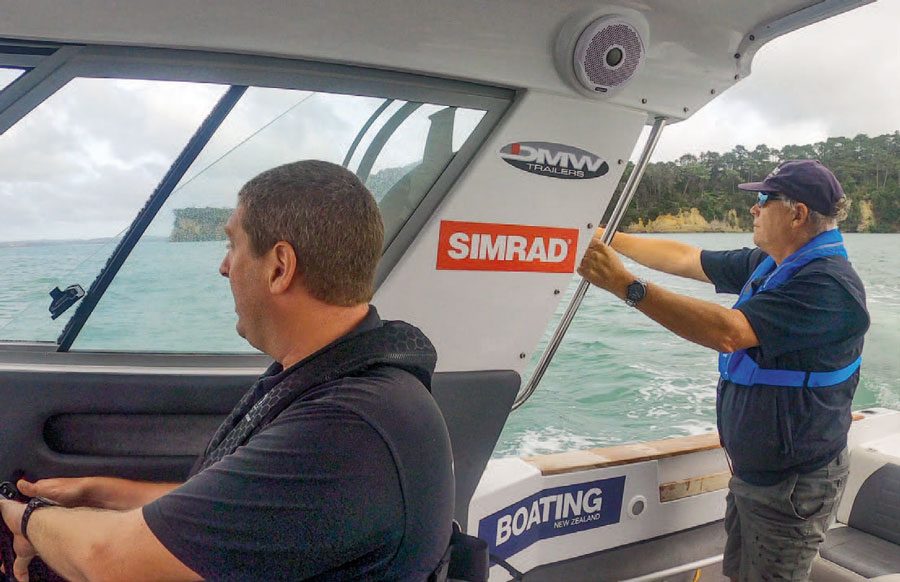
• All crew to remain seated at all times, except the spotter who should hang on securely
• Skipper should drive the boat in a fashion that doesn’t unseat or destabilise any crew (go easy on the power!)

• Tide is not a consideration for either manoeuvre as the boat and man overboard (MOB) move at the same speed with the tide – only wind needs to be considered, which pushes the boat more than the MOB.
WHEN THE MOB ENTERS WATER:
• “Man overboard!” is called. One person in a safe location should assume role of spotter and point at the MOB
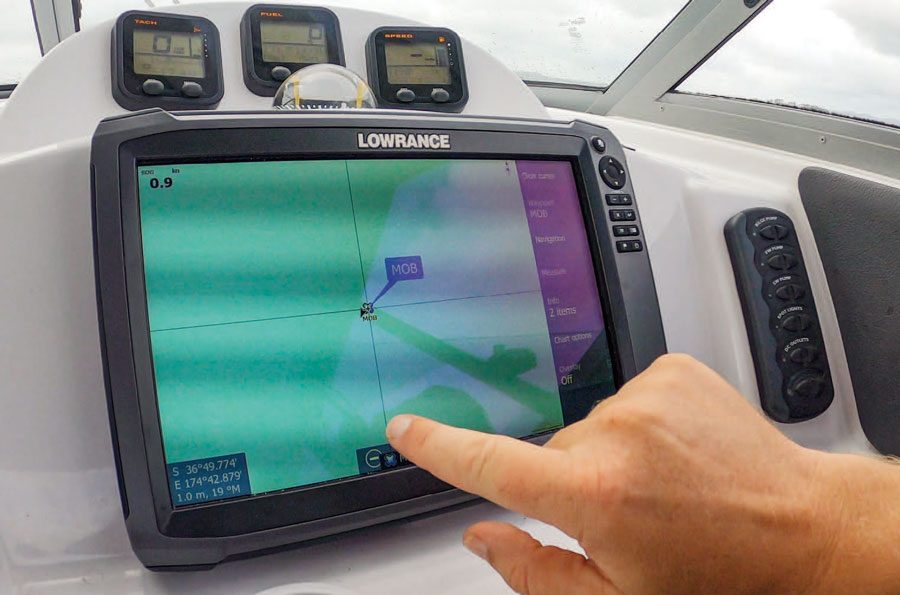
• The skipper should press the MOB button on the GPS (where available)

• If MOB is unconscious or out of sight, broadcast a distress call on the VHF while the crew prepares boathook/lines
• For conscious casualties, a throw rope should be used.
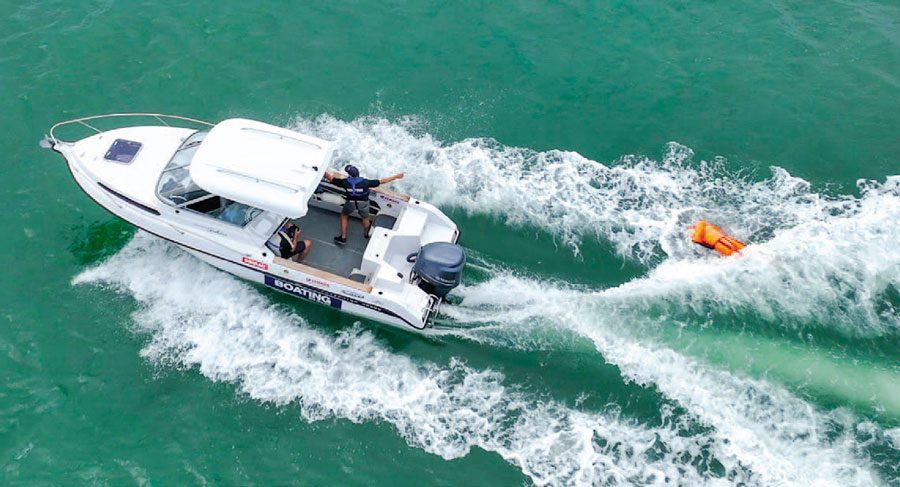
DRIFT DOWN METHOD
• The skipper should manoeuvre the vessel upwind and beamon to the MOB
• The skipper needs to keep the vessel’s side perpendicular to the wind using the engine’s forward and reverse gears
• Allow the vessel to drift down onto the MOB
• Crew should confirm when they are ready to retrieve MOB
• Crew contact MOB and call to confirm; skipper to engage neutral and turn engine off if safe to do so
• Retrieve MOB over stern.

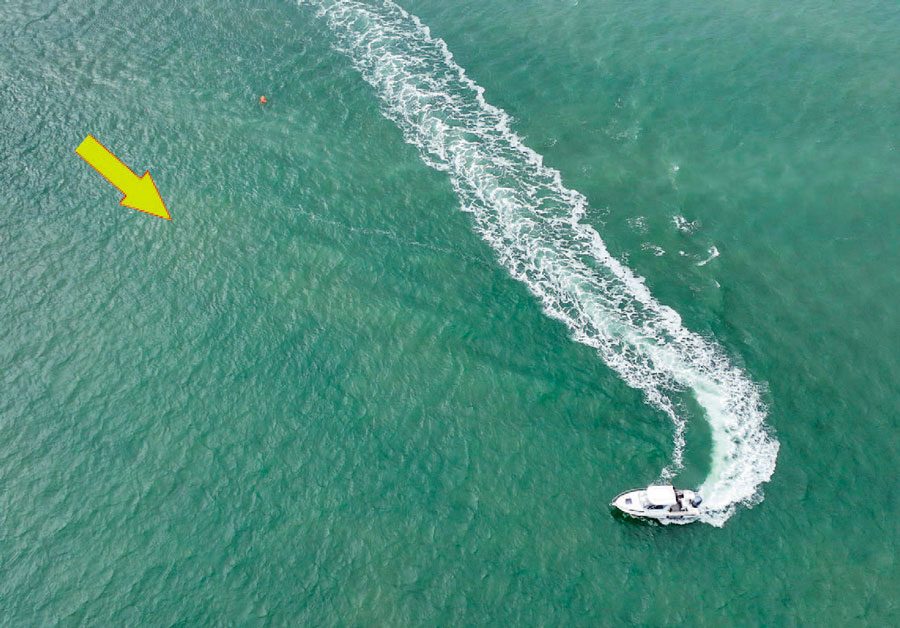
UPWIND METHOD (GENERALLY USED IN ROUGHER WEATHER):
• Get vessel into a position downwind of MOB
• Approach at dead slow speed into the wind, bumping in and out of gear to maintain steerage and minimal speed
• Approach with MOB on driver’s side for visibility reasons
• Crew to confirm they are ready to retrieve
• Crew contact MOB
• Skipper should attempt to present boat’s shoulder to the wind on the MOB side, so the boat blows away from the MOB rather than drifting over him.
• Engage neutral and shut the engine off if safe to do so
• Retrieve MOB over the stern. BNZ
Drifting down on the MOB, using the engine’s forward and reverse gears to hold the boat perpendicular to the wind. Retrieve the MOB over the stern with the engine turned off.