Galvanic corrosion is a flow of electric current between dissimilar metals in an electrolyte such as seawater and, to a lesser extent, in impure fresh water. The solution to this problem is simple. Use a wire to BOND ALL SUBMERGED METALS on the vessel so that they must always be at the same voltage, then attach a less noble metal to the circuit so that the least noble metal (typically zinc) will be eroded instead of the metal parts of the vessel.
Stray current corrosion
Stray current corrosion occurs when an electrical fault allows electric current to flow between the vessel’s hull or other metal parts and earth. This is direct current commonly originating where there is a fault in the vessel’s electrical system. Some engineers might better understand this if I describe it as being similar to the electroplating process, where a flow of direct current takes metal from a source, such as nickel or copper, to be applied (or plated) onto another metal. This only occurs with direct current. Alternating current cannot cause corrosion because any metal transferred in the first 50th of a second is replaced when the direction of current flow reverses in the following 50th of a second.
However, the earth wire is an entirely different thing. The shore power earth is common to all power outlets in the entire marina complex. This means that the immersed metals of all vessels that are correctly bonded to prevent stray current corrosion are now connected to each other, presenting an opportunity for a galvanic reaction to occur between vessels and between any earthed submersed metals of the marina piers.
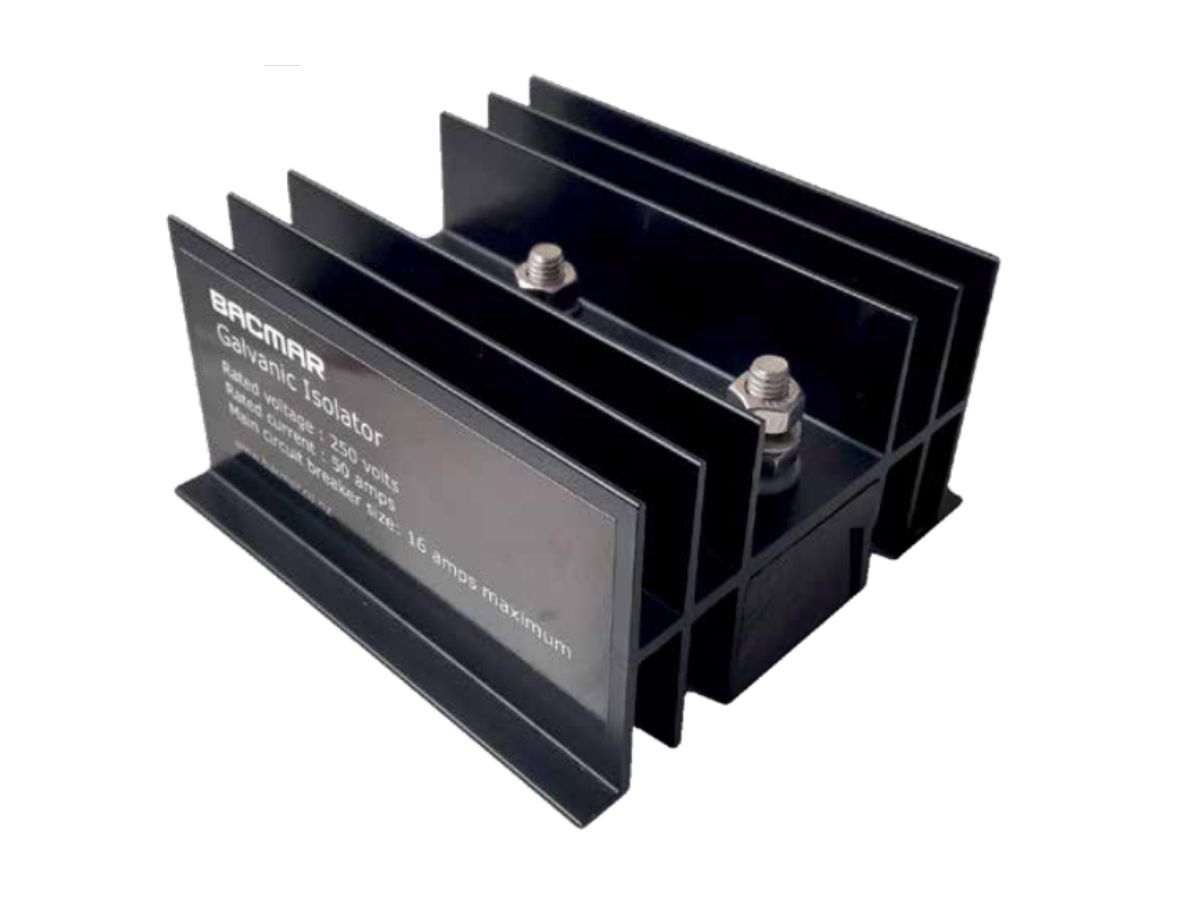
Galvanic action occurs at quite a low voltage. To prevent this low voltage current flow, we use a device called a ‘galvanic isolator’. This device raises the voltage at which current can flow, effectively inhibiting the flow of electric current without affecting the operation of the safety ‘earth’ wire connection.

Because a galvanic isolator is part of the vessel’s 230-volt electrical system, under New Zealand law, they must only be installed by a registered electrician with a current practicing license. BNZ
Letter to the editor found in the October 2025 issue of Boating New Zealand
Dear editor,
With respect to the article in September’s Boating NZ on Galvanic Corrosion, I would strongly suggest owners of WOODEN boats do not follow this advice.
Installing zinc anodes and bonding all metal parts to the zinc can cause significant damage to timber adjacent to any of these fittings. Effectively, the potential (voltage) generated by the zinc will cause an alkali solution to form around these fittings, and this will eventually break down the structure of the timber.

Sadly, a large portion of our wooden boat fleet has suffered this fate with expensive repairs to keel floors, shaft logs, and timber around bronze skin fittings.
The article referenced below by iconic New Zealand boatbuilder, Chris Mc Mullen, should be compulsory reading for all wooden boat owners, as the topic is discussed in
depth.
Colin Pawson
By email