A design born from lobster boats
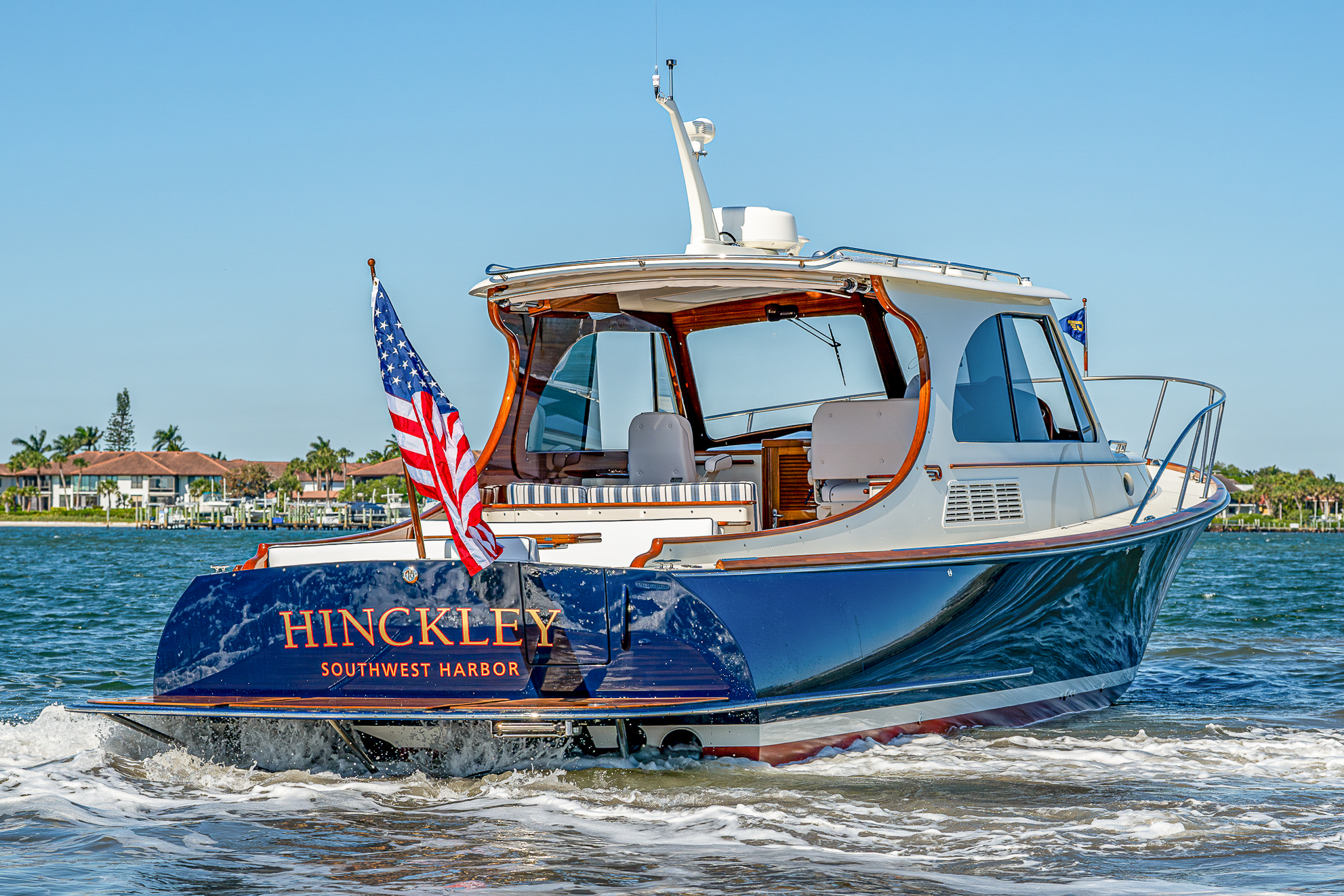
When Hinckley launched its first Picnic Boat in 1994, it reshaped ideas about what a day boat could be. The design borrowed the seaworthy form of Maine lobster boats but added yacht refinement. It had to be safe, stylish, and easy to handle, with space for family picnics, regatta spectating, or island cruising.
The jet drive was the breakthrough: with no exposed propeller, the boat could nose into just 18 inches of water. That shallow draft made secluded beaches, coves, and sandbanks suddenly accessible. Combined with joystick control, the Picnic Boat was effortless to run.
One of Hinckley’s smartest moves was adopting SCRIMP (Seemann Composites Resin Infusion Moulding Process) — a vacuum-assisted resin infusion method first developed for wind turbine blades. Instead of laying fibreglass by hand and rolling resin into it, SCRIMP pulls resin evenly through layers of glass and core material under vacuum.
The result is a hull that is lighter, stronger, and more consistent, with fewer voids or weak spots than traditional hand lay-up. For Hinckley, this meant boats that were stiffer, more efficient, and better able to support powerful jet drives. At the time, it was cutting-edge technology and helped define the company’s reputation for innovation.




Meet the newcomer: Picnic Boat 39
Hinckley still builds only 35 boats a year, including about 10 Picnic Boats. Their latest, the Picnic Boat 39, represents both tradition and evolution.
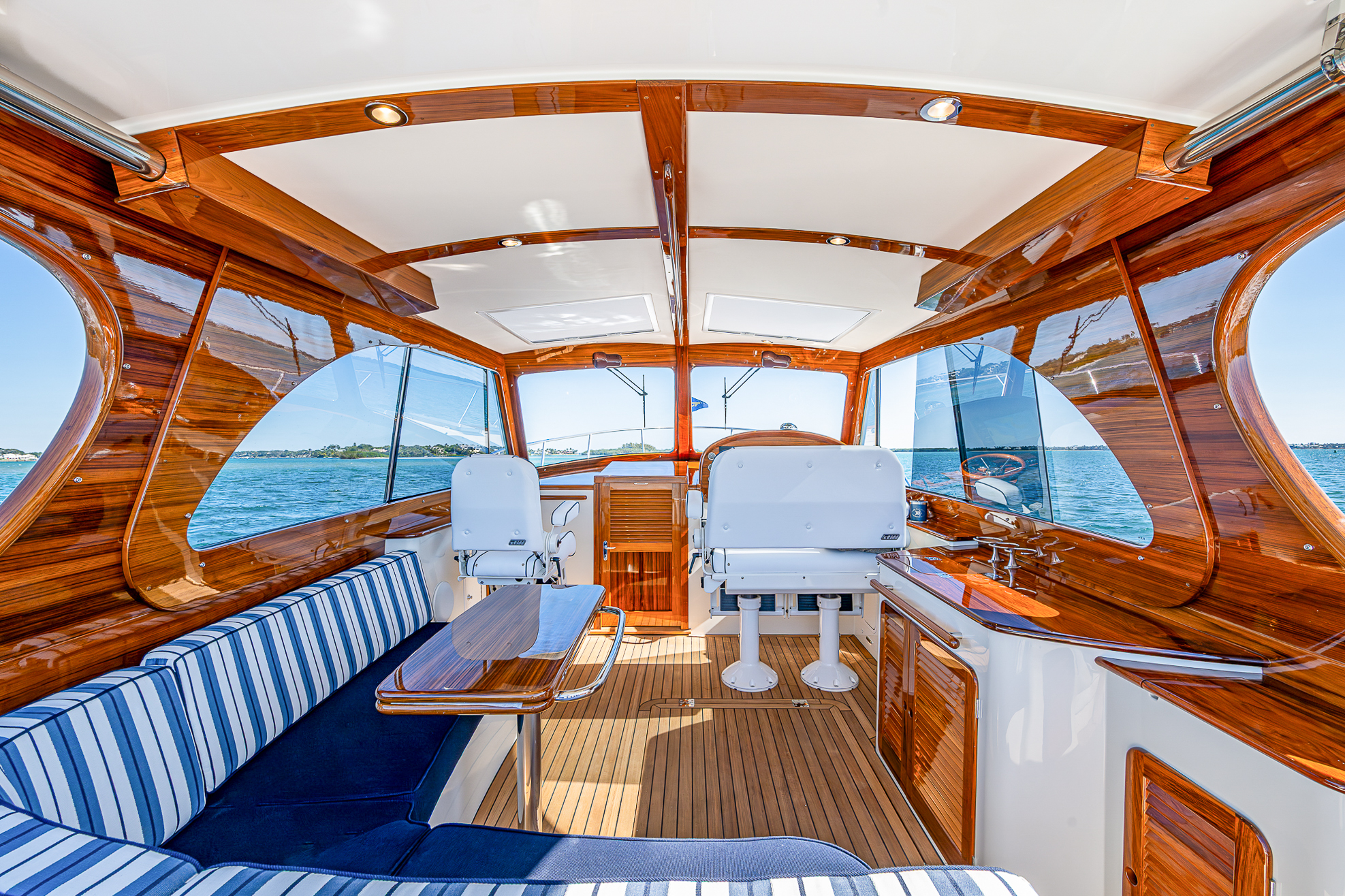
The 39 has three linked seating areas, an improved galley with refrigeration and storage, and a sleek single-curved windshield. Forward seating and a clever sliding window allow easy deck access without clambering along narrow side decks.
Technology is everywhere: JetStick 4 with Dockhold® and G-lock® makes docking or holding position as simple as pushing a button. Shallow-draft Hamilton HTX jets keep the boat nimble, while twin Volvo D6 diesels deliver 34-knot cruising.
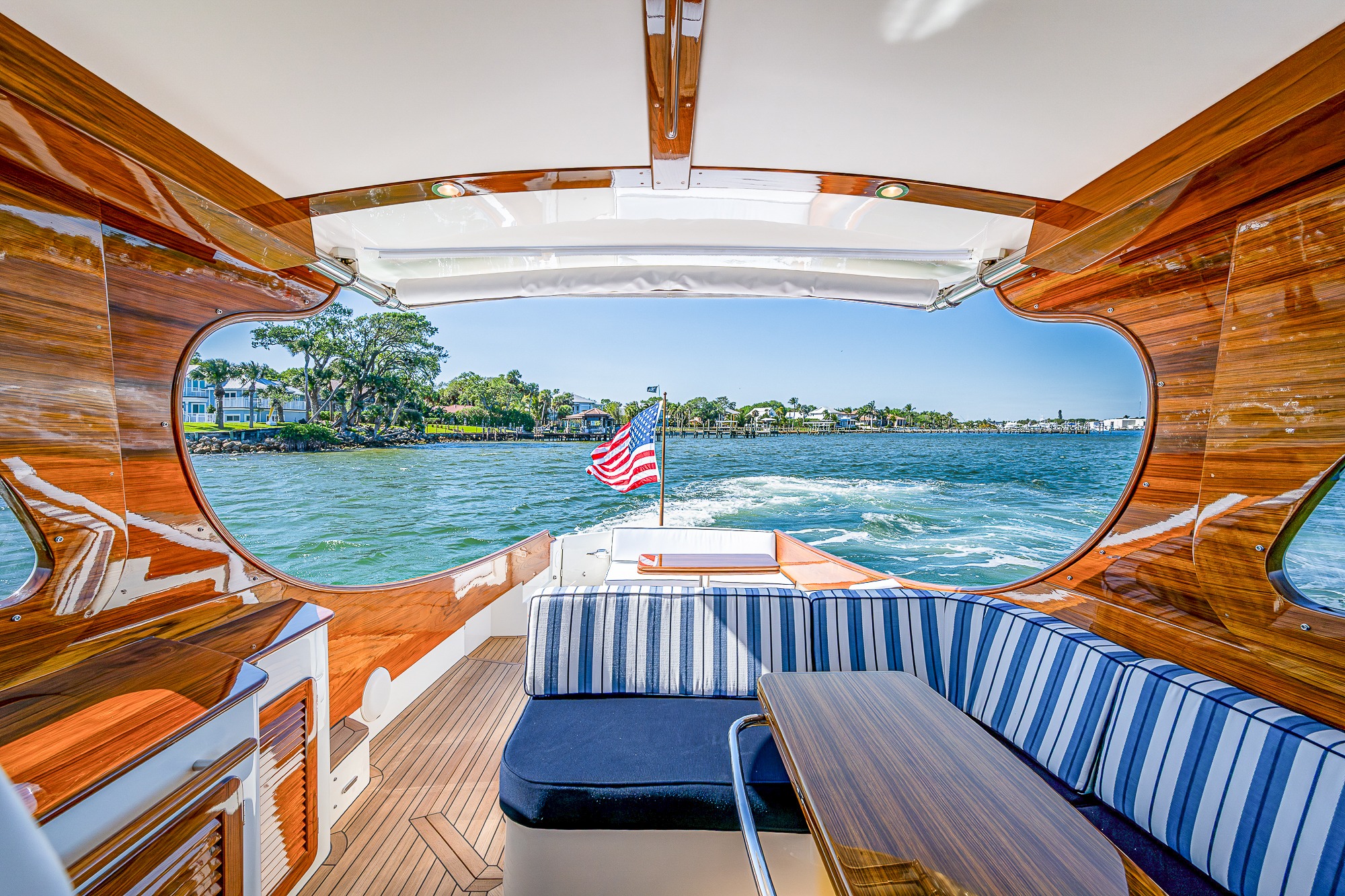
Hinckley’s VP of Marketing, Scott Bryant, describes it best: “Every seat is the best seat in the house.”

Picnic boats in New Zealand
While rare here, New Zealand designers have embraced the concept. In 2012, Dibley Yacht Design created the P25 Picnic Boat for a South Island owner keen to explore the region’s lakes. With classic 1920s curves and an efficient hull, it offered family-friendly style with options for a cuddy cabin.
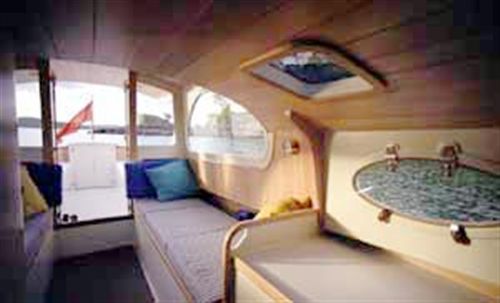
Meanwhile, our sister website, Tradeaboat, tells us about artist and sailor David Barker who reimagined a Logan 33 into Feather. Built in Whangārei and Kerikeri, Feather swapped diesel for a quiet outboard and lightweight composite construction. The result was a sociable, efficient cruiser for Bay of Islands day trips, echoing Hinckley’s ethos of blending artistry with practicality. It is an article worth reading.
More than just a day boat
So is a picnic boat simply another day boat? Not quite. A day boat is any craft used for short trips, but a picnic boat is a carefully designed sub-type. It blends luxury fittings, shallow-draft propulsion, and sociable layouts into one package. Think covered helm, galley, toilet, and spaces made for entertaining — a floating patio with lobster-boat DNA.
In New Zealand, where trailer boats, bluewater yachts, and traditional launches dominate, picnic boats remain a novelty. Yet their appeal is obvious: easy handling, beautiful lines, and the ability to turn an afternoon afloat into something truly memorable.
Like a good picnic, the best ones are all about company, setting, and simplicity — only here, the basket comes with jets, carbon composites, and a dash of classic yacht charm.