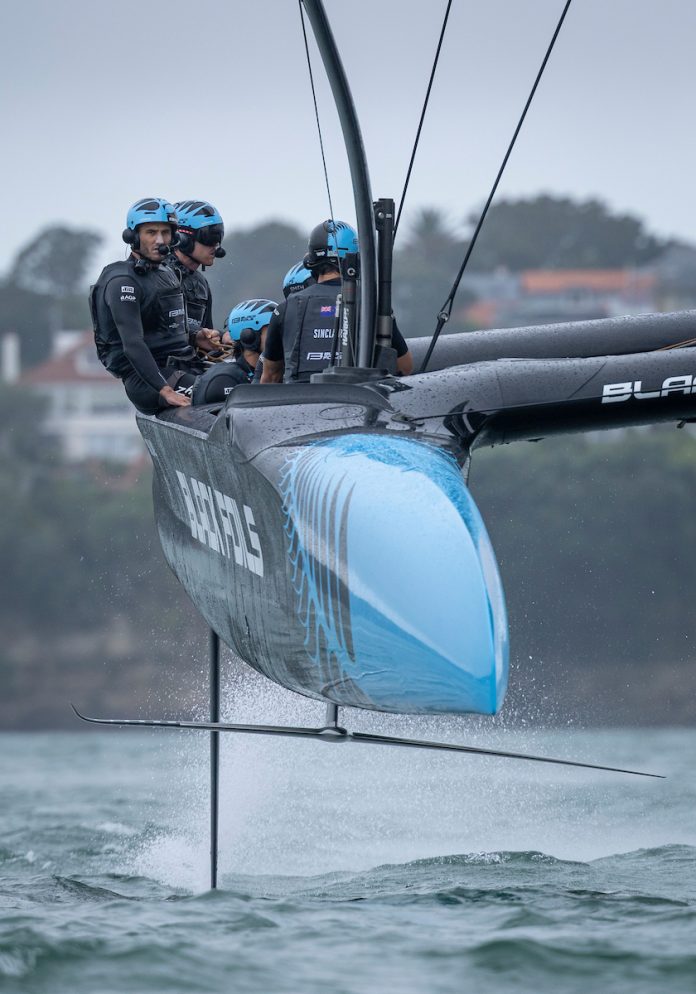
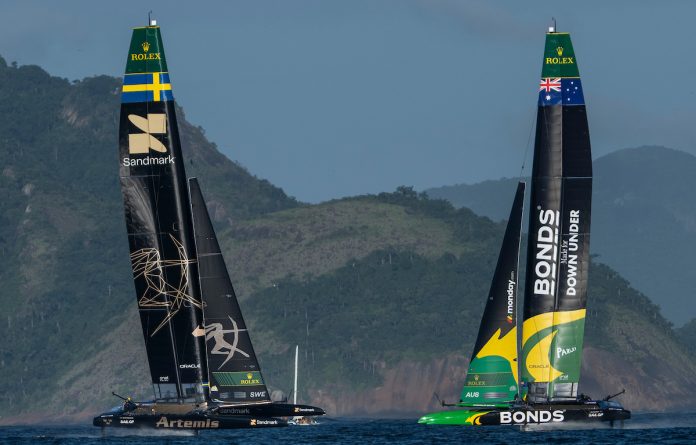
SailGP racing now regularly pushes beyond 100 km/h. At those speeds, the risk to athletes is no longer theoretical. Collisions, capsizes, and sudden deceleration carry serious consequences, and the systems that keep sailors alive are the result of deliberate design rather than chance.
Modern SailGP safety is not based on a single solution. It is the product of equipment standards, training routines, boat design, and on-water response, all developed as the boats became faster and the racing tighter.
Speed has reshaped the problem
The current SailGP F50 catamarans are faster than any previous generation of one-design foiling boats. Improved control systems and refined foils have allowed crews to sail closer together at higher speeds for longer periods.

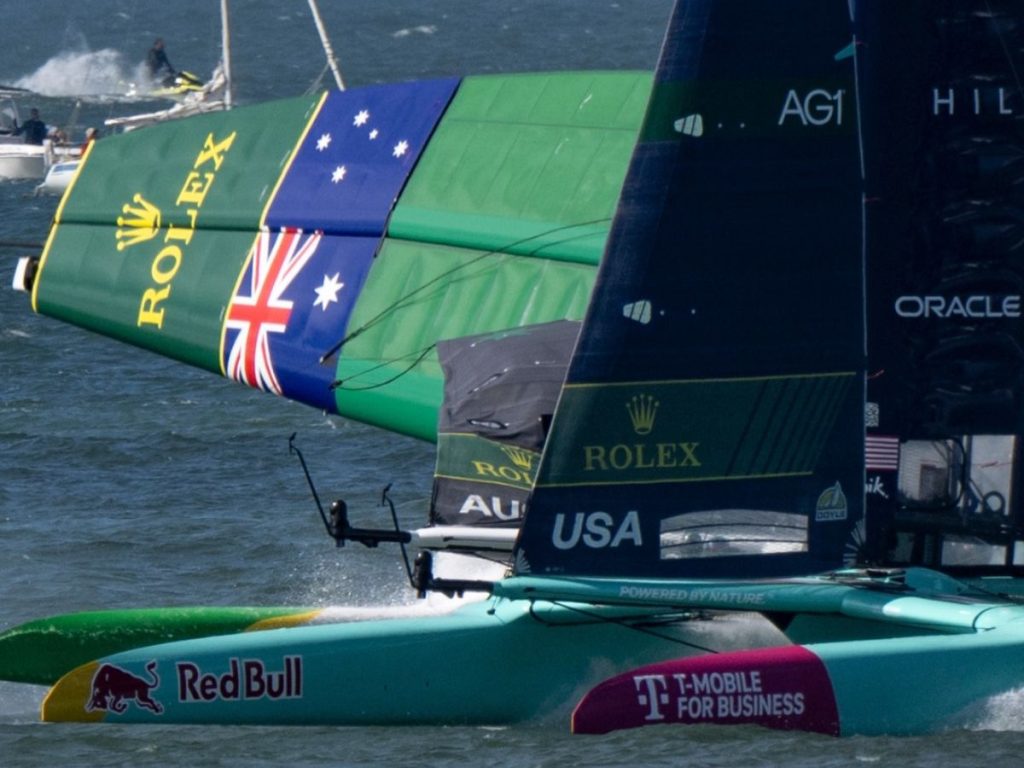
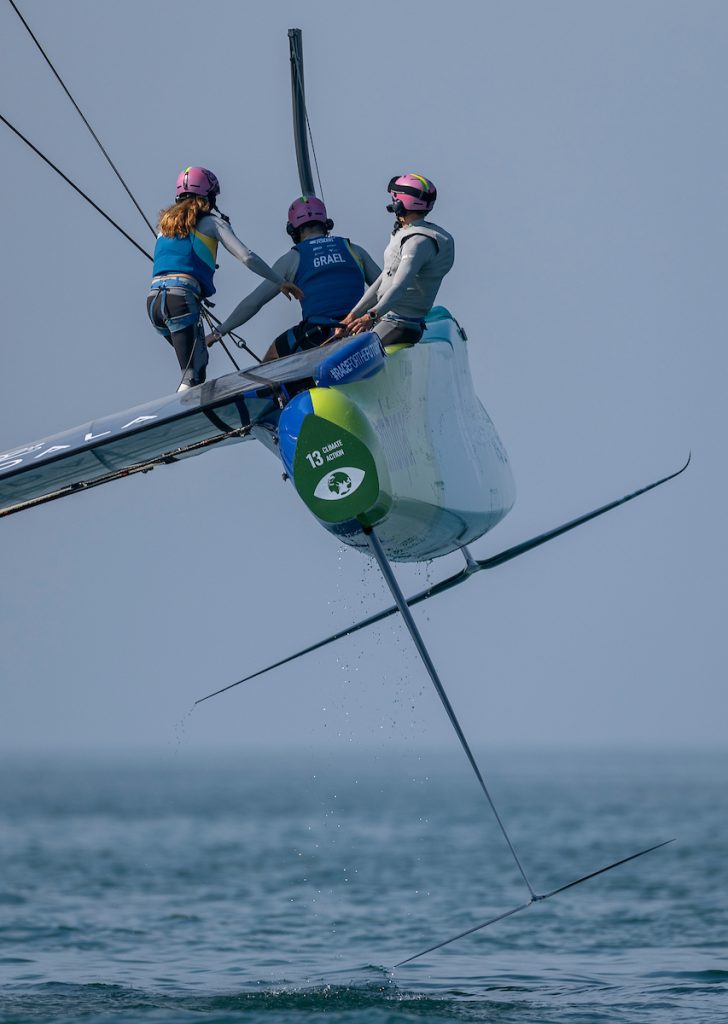
As speed has increased, so have the loads placed on both boat and crew. A fall at these speeds is closer to hitting a solid surface than falling into water. Being thrown clear of the boat can result in immediate loss of consciousness, which is why modern foiling safety focuses first on preventing ejection.
Staying with the boat
All SailGP athletes wear a harness and tether system designed to keep them attached during sudden manoeuvres or impacts. The system utilises a waist-mounted spreader bar to distribute the load and reduce the risk of injury under high forces.
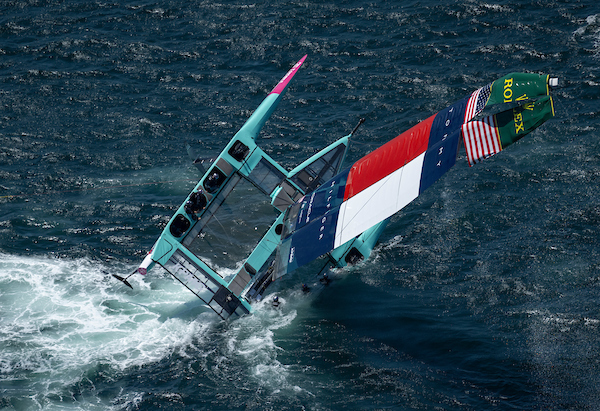
The goal is simple. Staying with the boat reduces the chance of head impact and keeps athletes oriented, even during violent events. The tethers are designed to tolerate loads far higher than those seen in conventional sailing.
Getting free without hesitation
Being attached only works if athletes can detach instantly when required. SailGP uses a single, standardised quick-release system across the fleet. The release point is always in the same location, removing the need to search or think under pressure.
Athletes train to follow a fixed sequence when trapped. Secure air. Control breathing. Release the tether. Move clear of the structure. The order matters, and it is repeated often enough that it becomes automatic rather than a conscious effort.

Breathing underwater
Each athlete carries a compact Emergency Breathing System, developed with diving equipment manufacturers. The system provides a short supply of compressed air, generally around two minutes, depending on breathing rate.
The emphasis is not on escaping immediately. Athletes are trained to pause, take controlled breaths, and then move deliberately. Panic shortens air supply and increases the risk of entanglement. Calm extends time.
Additional air supplies are mounted on the boat, providing a backup if personal equipment cannot be reached.
Training for the worst moments
Equipment alone is not enough. SailGP athletes undergo repeated underwater escape training, including drills designed to elevate heart rate and simulate real stress.
Visibility is reduced. Body orientation is altered. Familiar reference points are removed. The aim is to ensure that reactions remain consistent even when conditions are disorientating.

The repetition is intentional. When things go wrong, there is no time to work through a problem.
Boats built to limit harm
The F50 catamarans are designed with failure in mind. Certain components are intended to break in a controlled manner during impact. Foil tips are sacrificial, reducing the risk of rigid carbon structures penetrating the hull or cockpit.
Escape routes, handholds, and knife access are incorporated into the boat layout. Safety equipment is duplicated and placed in multiple locations. These decisions are made during design, not added after incidents occur.
Changes to foil materials and rudder systems have also improved predictability at speed, reducing sudden loss of control.
Avoiding contact
Onboard systems assist crews by tracking nearby boats and projecting closing paths. Visual and audible alerts warn when separation becomes critical.
These tools do not replace judgement. They support it. Drivers still make decisions in congested areas, particularly during mark roundings where closing speeds are highest.
Experience remains one of the most important safety factors.
Rescue when things go wrong
Dedicated safety teams operate alongside the racing fleet. Their priority is immediate access to the boat and a rapid head count.
Rescue craft aim to reach incidents within a minute. Medical assessment and recovery follow once all athletes are accounted for.
Lessons beyond SailGP
Most sailors will never experience these speeds, but the principles apply more widely. Preparation matters. Equipment must be accessible. Training must be repeated. Systems should fail in predictable ways.
SailGP shows what happens when those principles are tested at the extreme end of sailing performance.
At 100 km/h, survival is not improvised. It is planned long before the start gun.