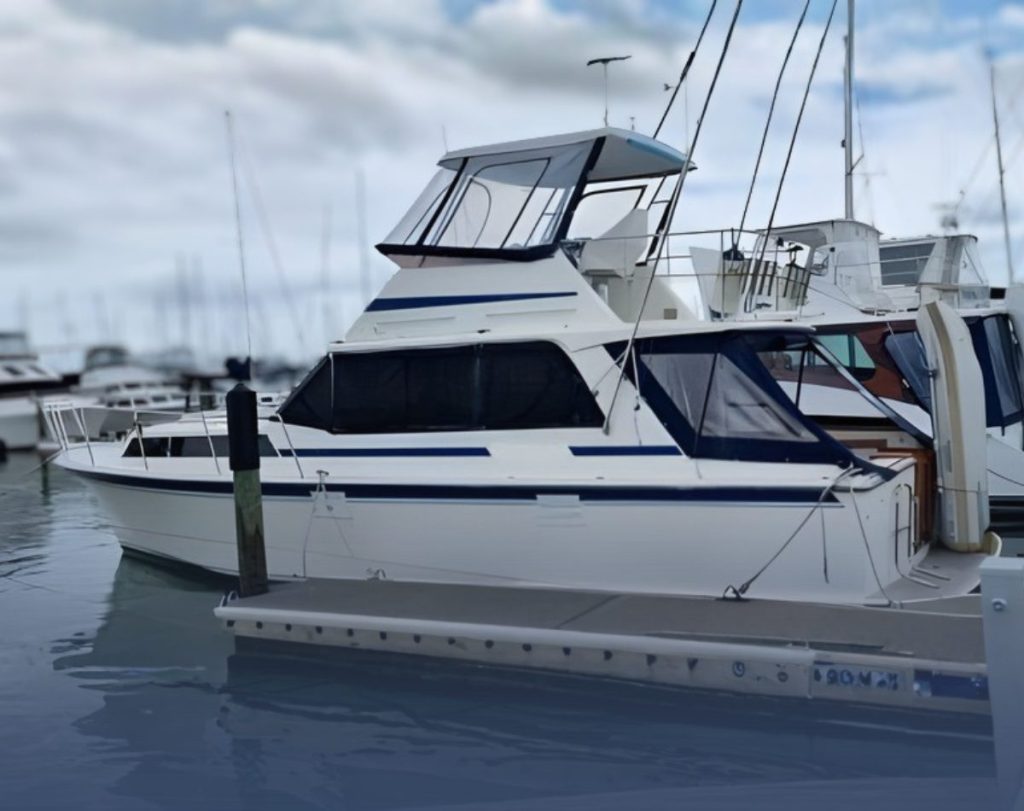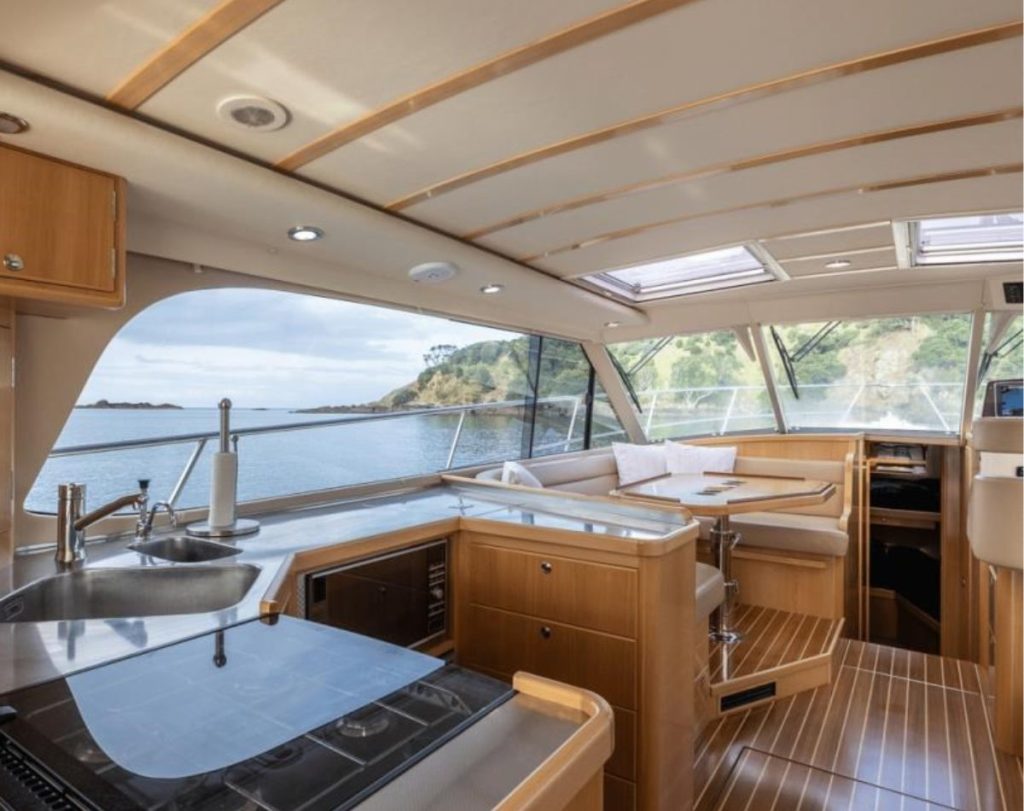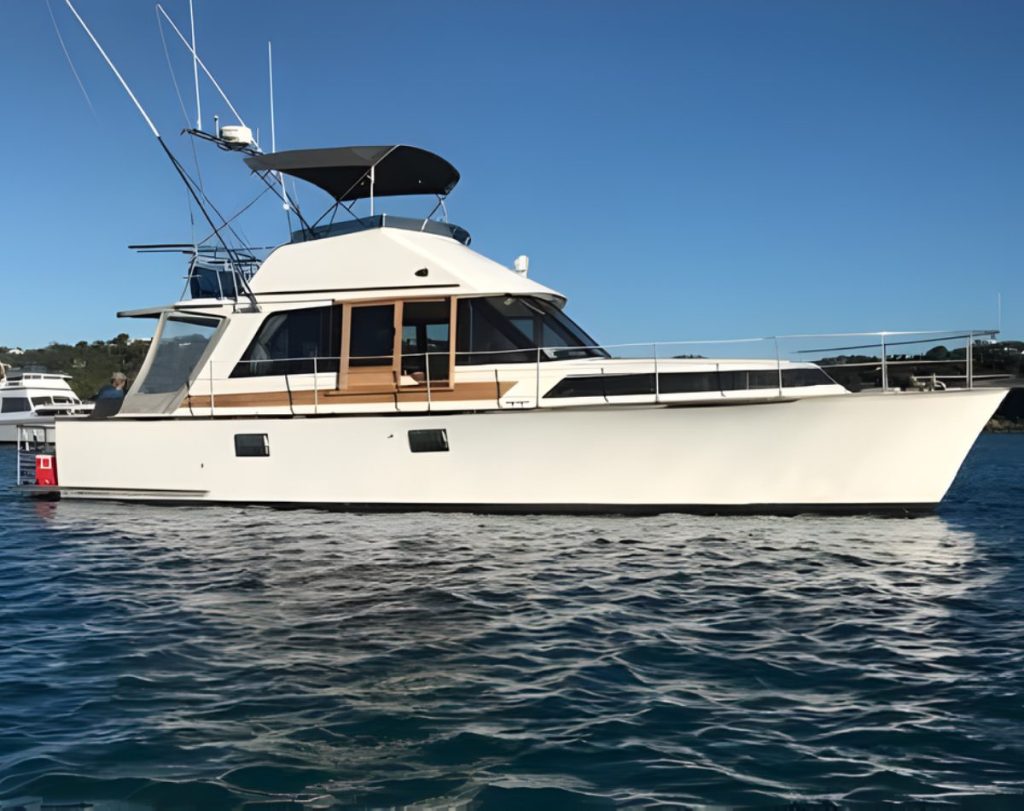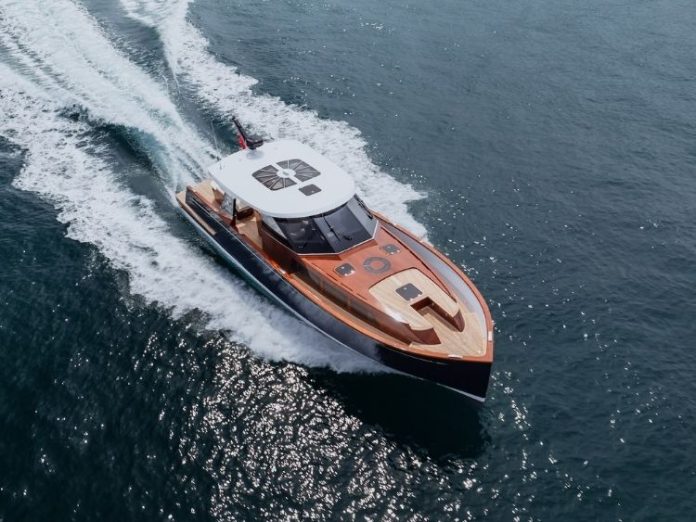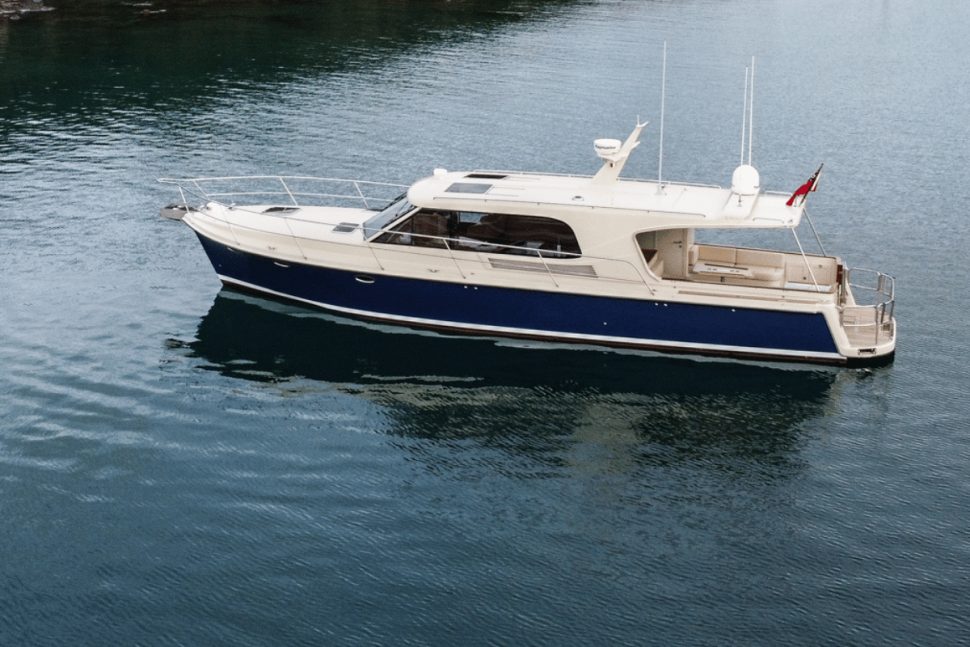
Few names carry as much weight in New Zealand boatbuilding as Salthouse. John Salthouse founded the first Salthouse business, Salthouse Boatbuilders, in 1956, and over the seven decades since, the name has attached itself to wooden launches, fibreglass cruisers, carbon racing yachts, and now a globally recognised line of high-performance RIB tenders. That longevity has a consequence: a deep and active secondary market. Right now, Boating New Zealand and its sister site, Tradeaboat, are carrying an unusually strong selection of used Salthouse-built and Salthouse-designed vessels, ranging from a 1975 timber motor yacht at $140,000 through to a 2015 power catamaran asking $890,000.
The Corsair
The Corsair is the most represented model family in the current listings, and it has earned that presence. Originally drawn by Bob Salthouse as a 36-foot motor launch in the 1980s, the design accumulated a reputation across three decades that few New Zealand production boats can match. More than 160 have been sold, with applications ranging from customs and police patrol vessels through to commercial fishing and deep-sea game fishing. That breadth of working life is not incidental: it reflects a hull that handles New Zealand’s rugged coastline with genuine integrity. Dean Salthouse carried the design forward under Salthouse Next Generation Boats, modernising the Corsair line while keeping the core character intact.
Corsair MkIs
Two 1979 Corsair MkIs are currently listed, and together they make an interesting study in what the same hull can become across different ownership histories.
The larger of the two, at 12.2 metres on a 4.0-metre beam and listed at $105,000, has the more characterful past. She was reputedly built for the Auckland Harbour Board as a survey vessel, which goes some way to explaining the solidity of her construction: a boat ordered for working duty gets built accordingly. Power comes from a Caterpillar 3208 diesel at 210hp, with 2,300 hours on the clock and a reported engine rebuild around 1987. She cruises at 9.5 knots averaging around 12 litres per hour, with a range of 11 to 15 knots available. The open flybridge carries full controls, though the current owner prefers the saloon helm station, which he describes as very comfortable. Accommodation runs to two doubles and three singles with 6’2″ headroom, a midships galley, and a spacious cockpit with duck board for water activities. She has a fastidious current owner and a price set to move.

Midas, at 11.7 metres and $120,000, tells a different story. Where the Harbour Board boat carries the marks of a working life and honest hours, Midas has been through the hands of successive owners who treated restoration as a personal project. The result is a boat that presents closer to new than her age suggests. The Detroit diesel, also 210hp, has been completely rebuilt and carries just 900 hours, the gearbox was fully rebuilt in February 2023, and the heat exchanger has just been reconditioned with a new water pump impeller. The interior was professionally restored with factory teak floors, and the accommodation sleeps seven or more across a double cabin, a two-single cabin, and a saloon with pull-out berths. Hard top flybridge, bow thruster, shore power with a current EWOF, full electronics, fridge, separate freezer, and a recent paint touchup. She is ready for the water now.

Both boats share the same GRP Corsair MkI bones, the same 210hp engine output, and broadly similar cruising performance. The $15,000 gap between them reflects the difference between a well-maintained working classic and a boat that has had money spent on her with intention. Which represents better value depends entirely on how much work the next owner wants to do.
Corsair MkIIs
The success of the MkI laid the foundation for the Corsair legacy. The MkII, introduced in the late 1980s and built through into the 2000s, kept the Bob Salthouse sea-keeping pedigree but introduced more powerful engine options, higher cruising speeds, and refined interior layouts. Four MkIIs are currently listed, spanning 1988 to 2002, and together they trace the evolution of the design across its production life.
All four share the same essential formula: GRP construction, approximately 12 metres, shaft drive, twin-cabin accommodation with a mix of singles and doubles, and the electronics package expected of a capable coastal cruiser. Where they diverge is in power, pace, specification depth, and what each owner has prioritised over the years.
The 1988 Corsair MkII at $125,000 is the most fishing-oriented of the group. The extended cockpit is game-rigged with a game chair and rocket launcher, making it a practical dual-purpose boat for a family that wants serious offshore fishing capability alongside comfortable cruising. Twin 200hp Volvo diesels upgraded to Model 41B with Duo Props stern legs cruise at 15 knots, and the specification runs to auto anchoring, solar panel, shore power, hard top and clears, cockpit shower, fridge, freezer, and a two-burner oven. Two cabins sleep a double and six singles. It carries a current survey history and is listed as suitable for family fishing and cruising.

The 1989 Corsair MkII at $145,000 is the most recently serviced of the group. Twin 170hp Yanmar shaft drives, originally reconditioned in 2004 and carrying 700 hours since, were serviced and antifouled in October 2025. Shaft seal and cutlass bearings were replaced in 2024, and an interior refit was completed in 2021. It is a slightly more modest power package than the 1988, but the maintenance record is thorough and current. Two cabins sleeping four singles and a double, LED lighting throughout, inverter, solar panels, 12V fridge, gas stove and oven, microwave, VHF, GPS combo, and an electric outboard on the inflatable. A clean, well-sorted family cruising launch.

The 1996 Corsair MkII at $178,000 is the performance outlier in the group. A single 400hp Iveco on shaft drive with just 260 hours since new in 2013 pushes her to 24 knots maximum and a 19-knot cruise, a different proposition entirely from the displacement pace of the earlier boats. The specification is leaner on listed detail but the hardware is compelling: double V-berth forward, double bunk cabin to port, engine-driven fridge and freezer, electric bow thruster, new swim platform fitted in 2025, and new clears. A marina berth is available to purchase alongside. For a buyer who wants genuine speed in a proven Corsair hull, this is the one.
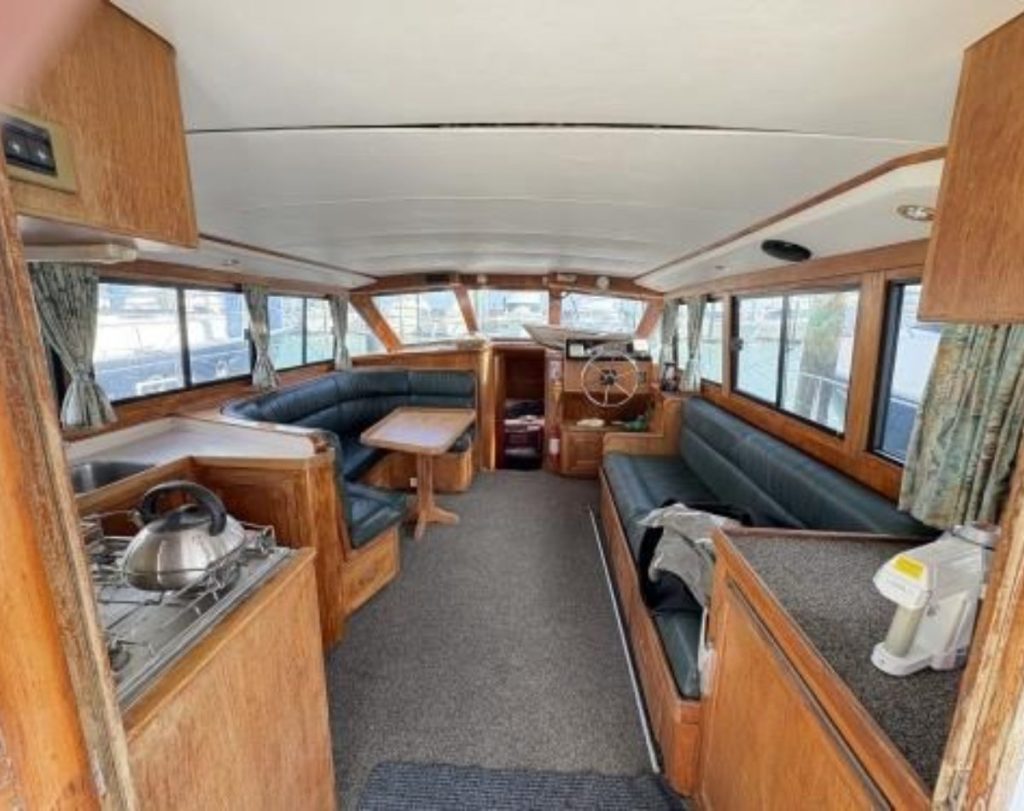
The 2002 Salthouse Corsair 12m at $155,000 sits in a category of its own. Built not by Salthouse but by respected New Zealand yard Miller and Tonnage on the proven Corsair hull design, it is the most thoroughly specified vessel in the group and the most passage-capable. A single Cummins 370hp diesel on shaft drive carries approximately 2,600 hours and returns 2 litres per nautical mile at a 9-knot cruise, with 18 knots available when needed. The 1,000-litre fuel and 800-litre freshwater capacity underline genuine offshore range. On deck, a teak-laid cockpit with full covers, clear windows, swim platform, and a transom-mounted bottom hauler winch. The aft galley opens via sliding windows to the cockpit and runs a four-burner gas hob and oven with 12V fridge-freezer. Below, a polished teak saloon with convertible couch berth, a lockup midships master cabin with double berth to port, a four-bunk bow cabin for family or crew, and a lockup shower and toilet. The lower helm carries three electronics displays, radar, sounder, chartplotter, autopilot, and trim tabs. Bow thruster and solar panels complete the package.

The four together span $125,000 to $178,000 and offer genuinely different answers to the same question. The 1988 is the fisherman’s boat. The 1989 is the tidy, well-maintained family cruiser. The 1996 is the fast one. The 2002 is the passage-maker, built to a higher specification with the range to prove it.
The Corsair Cabriolet
The Corsair Cabriolet 49 carries the name and the lineage, but it is a different kind of boat from everything that came before it. Where the MkI and MkII are GRP monohull displacement and semi-displacement cruisers built for New Zealand’s coastal conditions, the Cabriolet is a 15-metre fibreglass power catamaran, redesigned from the hull up for the 21st century.
Dean Salthouse, working under the Salthouse Next Generation Boats brand, spent over two years re-engineering the classic Corsair planing hull with his father Bob to produce a wider, low-profile, single-level sedan cruiser with European-inspired lines and a layout centred on the seamless transition between indoor comfort and outdoor entertaining. The Cabriolet name reflects exactly that priority: open-air flexibility, a signature roof that shifts between alfresco and enclosed saloon at the touch of a button, and a platform wide enough to make the deck itself part of the living space.
The specification of the 2015 example listed at $890,000 underlines how far the design has moved from the MkI and MkII DNA. At 15 metres on a 4.12-metre beam with a 1.0-metre draft, the multihull platform delivers stability underway and at anchor that no monohull Corsair can approach. The shallow draft opens anchorages that the older boats, drawing more water, simply cannot reach. Two well-appointed cabins provide overnight accommodation for owners or guests.
The differences across the Corsair family are, in the end, generational. The MkIs are classic displacement cruisers, built tough for working coastlines, now offering genuine character and proven sea-keeping at accessible prices. The MkIIs refined the formula with more power and speed, the 1996 example in particular representing a significant performance step. The 2002 Corsair 12m, built by Miller and Tonnage on the proven hull, pushed the specification further again toward serious passage-making. The Cabriolet 49 sits apart from all of them: a ground-up reimagining of what the Corsair name means in contemporary boating, carrying the legacy forward in a boat that shares almost nothing with its predecessors except the instinct for building things well.

At $890,000 it is priced accordingly. But for a buyer whose priorities are stability, shallow-water access, open-air entertaining, and the most evolved expression of the Corsair lineage, there is nothing else in this group that comes close.
The Salthouse Coastal
The Salthouse Coastal series represents a different proposition from the rest of the fleet. Where the Corsair was built for performance and the custom launches for presence, the Coastal was engineered around a more practical brief: maximum volume and liveability in a compact, fuel-efficient, easy-to-handle hull. The most notable models, the Coastal 32 (listed below) and Coastal 35, are compact mid-sized displacement and semi-displacement launches built by Salthouse Marine in GRP, sharing the same blue-water hull DNA and sea-keeping manners as the larger Corsair range while remaining straightforward to single-hand and cost-effective to berth. They found a loyal following among New Zealand cruising families for exactly those reasons.
Glencaran, the 1994 Salthouse Coastal listed at $98,000 is a Coastal 32, measuring 10.5 metres, and it arrives with around 20 years of single-owner care behind it. At 3,100 engine hours the Hino 150hp shaft drive has covered ground, but the listing points to regular maintenance as the consistent theme of its ownership history, and a Hino diesel is a straightforward, well-supported unit that responds well to that kind of attention. Furuno plotter and sounder, fridge and freezer all in working order, Maxwell winch, two showers inside and out, hot water from the engine, and a rubber dinghy with Suzuki outboard included.
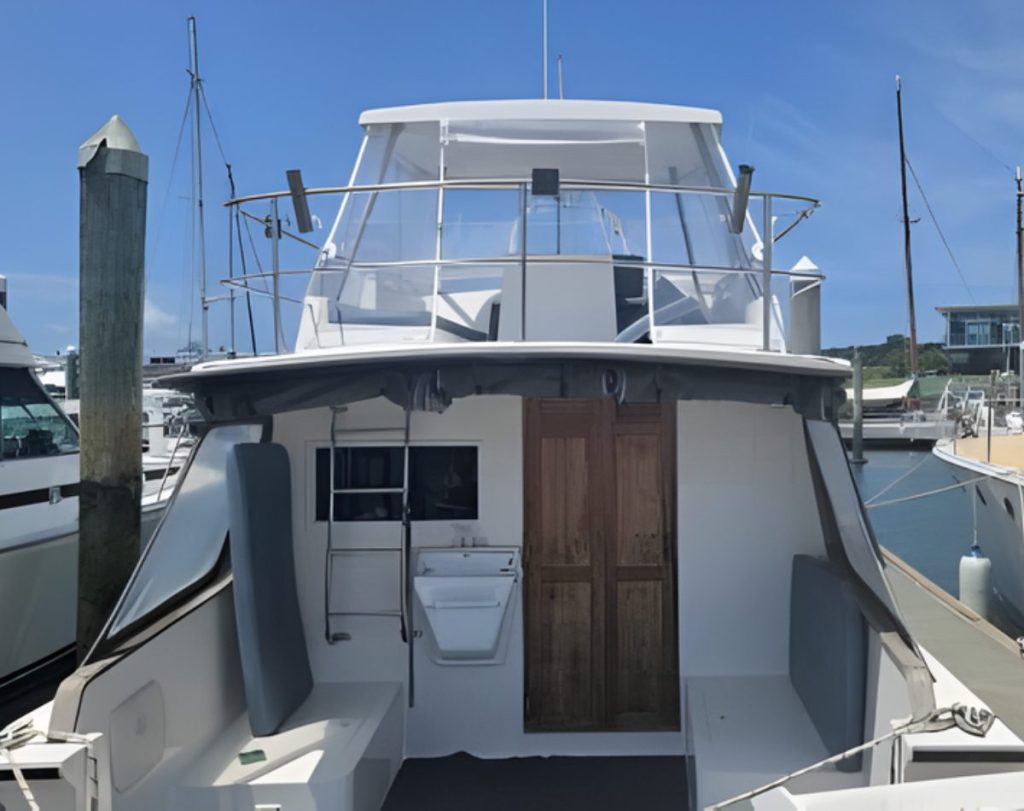
Below decks, one single and two doubles sleep up to six, which is a notable number for a 32-footer and reflects the Coastal’s core design priority: volume relative to length. The cockpit is large enough to fish from, and the listing calls out the Bream Bay and Bay of Islands as natural cruising territory, which is an accurate read of what the Coastal does best: reliable, unhurried coastal exploring with room for a family and enough range to make the next anchorage without drama.
Against the Corsair MkIs, which sit at similar or lower prices, the Coastal gives away length and speed but returns simplicity. A single engine, a straightforward hull, and a layout designed around comfort rather than pace. Against the KB760 at $56,000, the Coastal is noticeably larger and more capable as an overnight cruiser, though the KB760’s more recent Yanmar and lower hours make for an interesting comparison at a $42,000 price difference. The Coastal sits squarely between the two in size, price, and ambition, and for a buyer whose priorities are reliability, interior volume, and a boat that a single experienced hand can manage without stress, it makes a compelling case.
Custom Salthouse motor launches
The legacy of custom Salthouse boat builds represents the peak of New Zealand’s bespoke marine craftsmanship. Beginning in 1956 when John Salthouse founded the original yard in Greenhithe, the family built a reputation over seven decades for launching elite, one-off vessels. Rather than operating mechanical assembly lines, the Salthouse name became synonymous with hand-crafted, semi-production, and full-custom hulls, each built to endure New Zealand’s demanding coastal conditions. The seven custom Salthouse motor launches currently listed on Tradeaboat span nearly five decades of production, range from 8.45 metres to 21.2 metres, and carry asking prices from $56,000 to $450,000. Together they form an unusually complete picture of what the yard produced across its most active era.
The most immediate divide in the group is material. Three are timber builds: the 1975 Salthouse 42 in double-diagonal Kauri glassed over; the 1992 Salthouse 50 in triple-diagonal Kauri; and the 1984 Salthouse 60, a bridgedecker built by Kelly Archer Boatbuilders. The remaining four, the KB760, the 1985 21-metre, the 1990 53 Sportfisher, and the 2002 Salthouse 37, are fibreglass. That division broadly tracks the transition the yard made through the late 1970s and into the 1980s as GRP construction became the dominant material for production and semi-production builds. The timber boats carry the romance and the weight of traditional boatbuilding; the fibreglass hulls reflect the practical shift toward a material better suited to volume building and long-term maintenance.
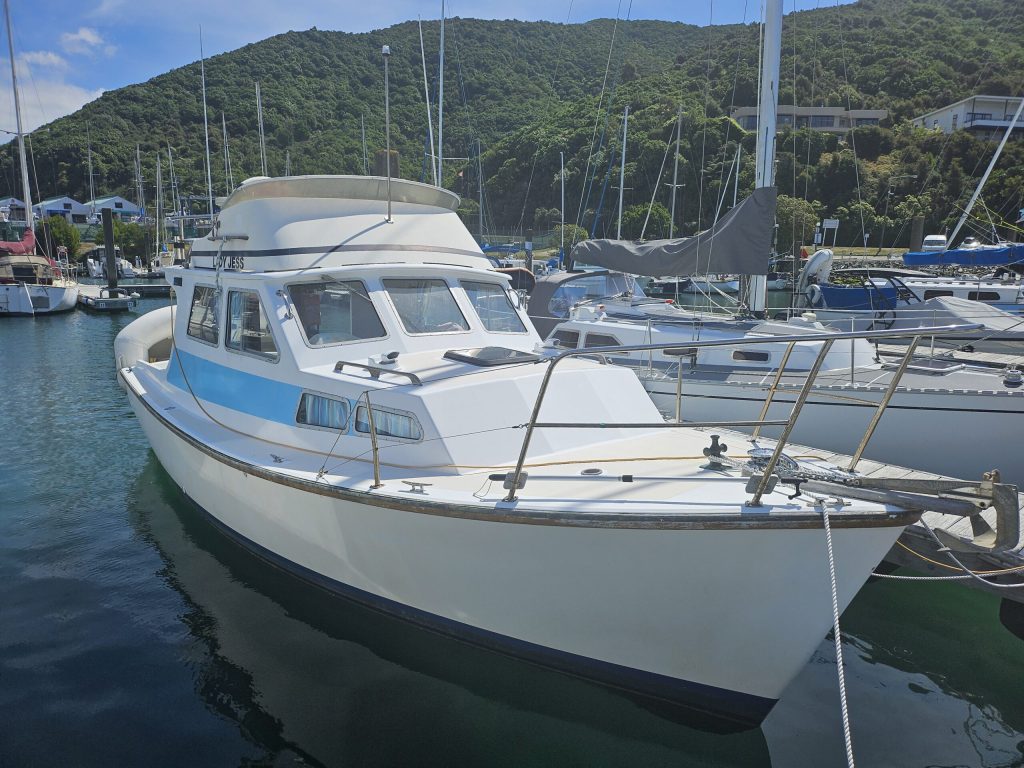
At the smallest and most accessible end, the 1984 Salthouse KB760, Lady Jess, at $56,000 is an 8.45-metre fibreglass family cruiser: a popular design, well-suited to sheltered coastal cruising, powered by a 2020 Yanmar with just 405 hours. Hot and cold showers inside and in the cockpit, fridge and freezer, dual station flybridge docking, shore power, and fresh antifoul, anodes and prop-speed from May 2025.

The 2002 Salthouse 37 at $155,000 sits at the practical mid-range: 12 metres, fibreglass, a Cummins 370hp diesel with 2,540 hours on a shaft drive turning a four-blade prop, delivering 12 to 18 knots. Two forward cabins sleeping seven, bow thruster, trim tabs, auto anchor, large boarding platform, enclosed transom, large fridge-freezer, diesel heater, and a comprehensive electronics package. The listing describes a lovely interior with a huge amount of room for the length. At 2002 vintage it is the most recent build in the custom group, and at 12 metres it shares its length with several of the Corsair MkIIs, though as a custom build it carries a different character entirely.

Campari, the 1975 Salthouse 42 at $140,000, is described in the listing as a very similar hull to a MkI Corsair but larger, which is an apt reference point. At 12.8 metres on a 4.2-metre beam with 1.3-metre draft, the Kauri hull glassed over gives her the structural solidity of the timber era with a measure of GRP protection. The Detroit GM8V71TT on shaft drive was reportedly fully reconditioned in December 2016, and at 3,071 hours she has lived a full life, though the reconditioning puts a floor under that number. Cruising at 9 knots at 1,500rpm averaging 20 litres per hour, with 16 knots available at maximum. Bow thruster, open flybridge, three forward cabins sleeping a double and four singles, and 1.96-metre headroom. A big-volume boat with a generous cockpit and good all-round vision from the saloon helm station.

The 1992 Salthouse 50 at $169,000 is the largest timber vessel in the group and, at 3,800 engine hours on the Caterpillar 3208s, the highest-houred of all seven. That figure needs context: triple-diagonal Kauri construction is among the most durable hull forms ever produced in New Zealand, and the listing characterises her as having great bones. Three cabins, six bunks plus a master double with ensuite, second head with shower, tidy saloon with galley forward by the helm, large hardtop flybridge with second helm aft, bow thruster, and a well-organised engine room. At $169,000 she is priced as a boat that will reward a buyer prepared to put finishing touches on what the structure already offers.

The 1984 Salthouse 60 at $420,000 shares the timber construction of the 1975 Salthouse 42 and the Salthouse 50, but the build provenance sets it apart: designed by Bob Salthouse and constructed by Kelly Archer Boatbuilders, one of the most respected yards in New Zealand’s history. At 18.1 metres it is the largest timber vessel in the group.

The 1985 Salthouse 21-metre displacement launch at $450,000 is the largest vessel across all the current Salthouse listings and the most fully specified. Designed by Bob Salthouse and built by Salthouse Boatbuilders, she is a fibreglass displacement hull powered by twin 300hp Iveco diesels with approximately 2,050 hours, both propeller shafts replaced in recent years. Bow and stern thrusters, stabilisers, diesel generator, watermaker, dinghy crane with inflatable and 50hp outboard, and a Furuno fully integrated electronics package covering autopilot, GPS plotter, radar, fishfinder, VHF and SSB. Below, a teak interior with 6’4″ headroom across three cabins, three singles and two doubles, two heads and a separate shower, with a spacious saloon carrying a steering station, dining area, galley, and additional seating. A Gulf Harbour marina berth is available as a combined package through the broker. No other boat in the group comes close to this level of fit-out.

The 1990 Salthouse 53 Sportfisher at $425,000, Westminster, occupies the most specialised position in the fleet. At 16.2 metres on a 4.75-metre beam drawing 1.35 metres, this is a fibreglass offshore fishing vessel built for a specific and demanding purpose. Three cabins provide genuine liveaboard capability for extended fishing campaigns, and the hull’s sea-keeping and durability are well established. Where the 21-metre displacement launch is a luxury cruiser built for comfort and range, the 53 Sportfisher is built for performance and endurance in open-water conditions. Both are serious vessels asking serious prices. The $25,000 gap between them reflects not just size but also purpose.

Across the seven, the pattern is consistent with what the Salthouse yard always delivered: boats built to outlast their era. The KB760 is the family cruiser, the Salthouse 37 the capable mid-range runabout, the 1975 Salthouse 42 and the Salthouse 50 the classic timber launches for a buyer who values character and construction heritage, the Salthouse 60 the pinnacle of Kelly Archer craftsmanship, the 53 Sportfisher the serious offshore angling platform, and the 21-metre the most complete and luxurious vessel in the entire current Salthouse market.
The Cavalier sailing yachts
The Cavalier sailing range is one of the most successful and enduring chapters in New Zealand’s production boatbuilding history. Originally born from a partnership between Bob Salthouse and John Salthouse, trading as Salthouse Custom Glass Boats Ltd, the Cavalier brand grew through the 1970s to become the largest production sailboat manufacturer in the Southern Hemisphere. The formula was straightforward: robust GRP construction, Bob Salthouse hull design, and a genuine capacity for offshore work. That reputation has held. Cavalier sailing yachts remain among the most sought-after vessels in the New Zealand and Australian second-hand markets, valued for safe handling, structural integrity, and blue-water credentials that most production boats of the era could not match.
Two Cavaliers are currently listed, and they represent opposite ends of the spectrum in terms of material, construction era, and price, while sharing the same design DNA.
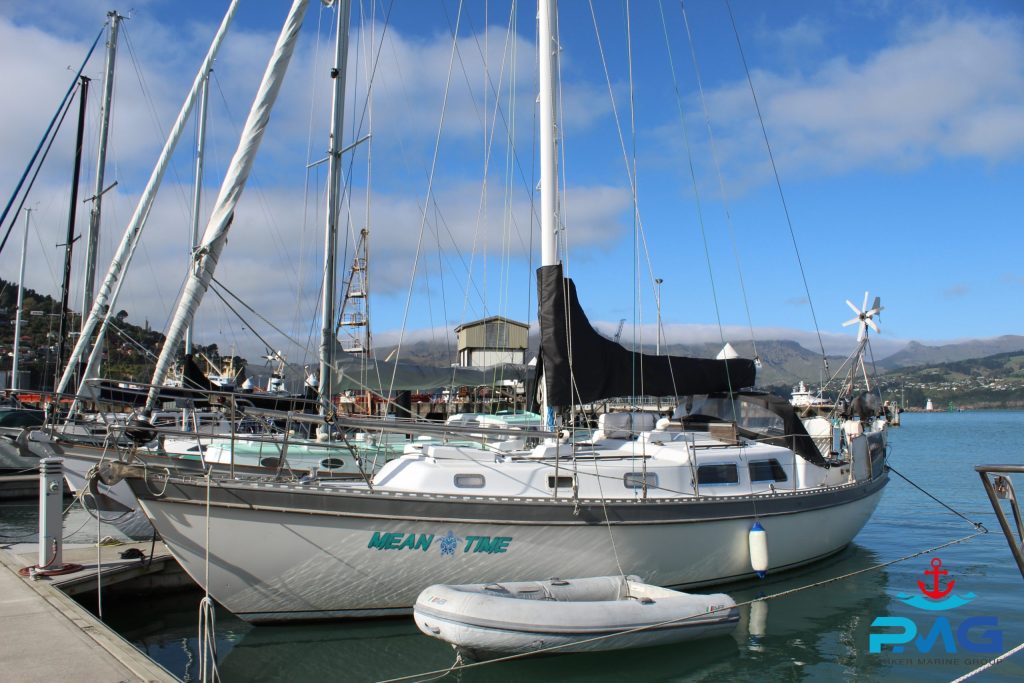
Mean Time, the 1989 Cavalier 39 at $67,000 is the more accessible of the two: an 11.87-metre fibreglass production yacht built by Export Yachts Ltd in Auckland, launched 1989, and carrying just two prior owners across its life. The GRP hull is the proven Cavalier form, set up for coastal sailing and proven in blue water. Below decks, the 1.97-metre headroom and open-plan layout give the boat a spacious, liveable feel, with galley, saloon, and U-shaped dining to port, a full lounge seat to starboard, double berth and chart room aft, and a separate forward cabin with head and hot shower. The engine is a Perkins 4108 with a new gearbox fitted in May 2022, backed by four AGM house and start batteries replaced in August 2022. Solar has been added, the dodger and bimini are new, and 75 metres of anchor chain is aboard. A dinghy and outboard, electric winch, and dehumidifier complete a boat that is genuinely set up for extended living aboard. An option to purchase a mooring in Matawhi Bay, Russell adds further appeal for a buyer looking for a ready-made base in the Bay of Islands.

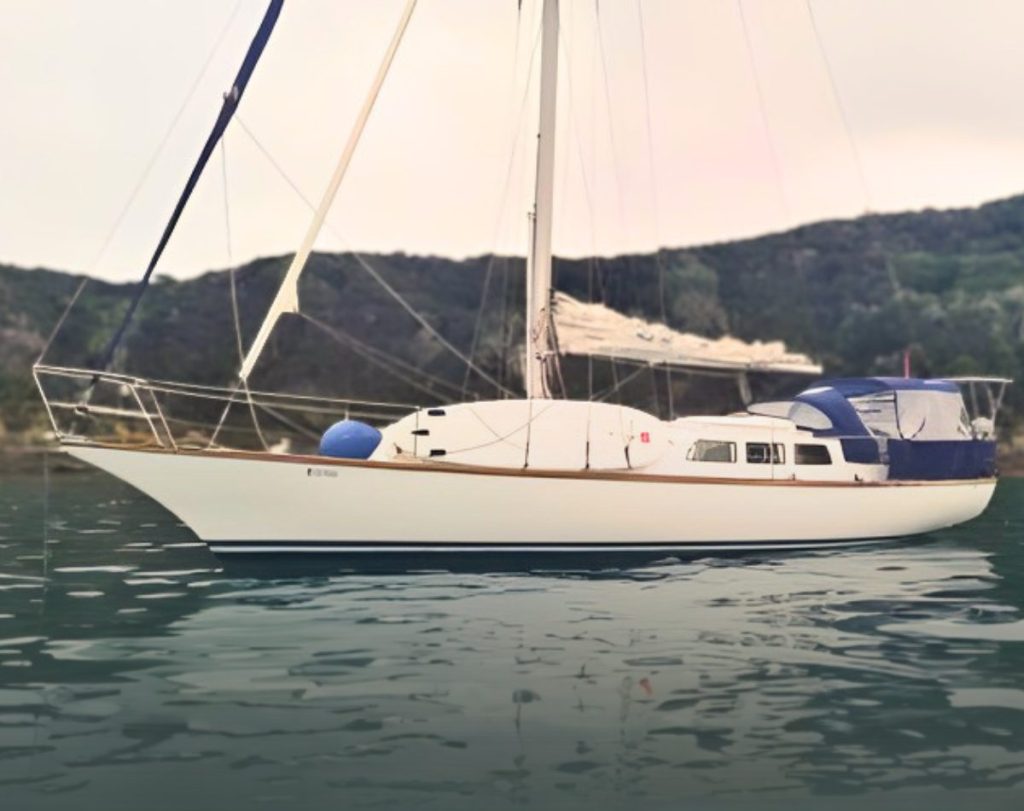
The 2015 Cavalier 40, Mortimer McCarthy, listed at $170,000, is a more unusual proposition and arguably the more extraordinary vessel. Her hull was strip-planked in Kauri over steamed hardwood ribs by master boatbuilder Ross Wynn in the late 1970s, then preserved for decades before being completed and launched in 2015 by a team of skilled craftsmen. Extended to 41 feet with a 3.5-metre beam and 1.8-metre draft, she sleeps six across a warm, characterful interior that reflects her heritage while providing all the practicality required at sea. Power comes from a 50hp Yanmar diesel carrying just 191 hours, backed by a 190-litre fuel capacity and full offshore specification. Where the Cavalier 39 is a proven fibreglass production yacht offering excellent value for a liveaboard or coastal cruiser, Mortimer McCarthy is a hand-built timber vessel with a story that no production boat can replicate.

The $103,000 gap between them is not simply a reflection of size or age. It reflects the difference between a well-maintained production yacht and a bespoke build using materials and methods that no longer exist in volume boatbuilding. Both are genuine Cavalier sailing vessels. One is accessible and ready to use. The other is rare.
The Crusader and the Motor Sailor
Two further Salthouse sailing hulls complete the current listings, each occupying distinct territory.
The 1978 Salthouse 12.8 Crusader, Mystic, at $65,000 is a Bob Salthouse-designed GRP sailing yacht at 12.8 metres, built on solid fibreglass and carrying a category one survey history, which alone marks it out as a boat built to go offshore. At 275 engine hours on a 38hp Nanni Kubota, the auxiliary is barely used. The sail wardrobe is exceptional: full battened mainsail, three genoas, yankee, storm jib, storm main, cutter blade, staysail, and spinnaker. The cockpit can be fully enclosed via the transom door, the traveller sits forward of the bimini for unimpeded movement, and a full suite of electronics including autopilot controls is located at the helm. Below, a quarter berth aft, a large double V-berth forward, and the table and settee converting to two further doubles give flexible sleeping for a crew. The decks have been prepped for painting. Offered below market value for a quick sale, this is a serious offshore sailing yacht at an entry-level price.

Margaret, the 1998 Salthouse Motor Sailor at $275,000 is the largest and most capable sailing vessel in the current listings, and the most versatile. At 13.03 metres with a 4.54-metre beam and 1.5-metre draft, this is a Bob Salthouse-designed passage-maker built for the kind of extended cruising the smaller sailing yachts approach but rarely surpass. Three cabins provide genuine liveaboard capability, the motor sailor configuration delivering reliable power for coastal passages alongside sail versatility that reduces fuel dependency and improves sea-keeping on longer runs. The 1.5-metre draft opens anchorages that deeper keeled vessels cannot reach. Offered at a reduced price of $275,000, it sits at a different level of ambition from the Crusader and the two Cavaliers, but for a buyer whose plans extend beyond New Zealand’s coastline, it is the most credible platform in the group.

Few names in New Zealand boatbuilding carry the weight of Salthouse. Founded by John Salthouse in 1956, the yard produced timber launches, fibreglass cruisers, carbon racing yachts, and a globally recognised RIB tender line across seven decades of continuous production. That legacy has created one of the country’s most active and varied secondary markets, and right now an unusually strong selection of Salthouse-built and Salthouse-designed vessels is listed across Boating New Zealand and Tradeaboat.
This guide works through all of them. The Corsair family alone spans six listings, from a pair of 1979 MkIs at $105,000 and $120,000 through four MkIIs ranging from $125,000 to $178,000, to a 2015 Corsair Cabriolet 49 power catamaran asking $890,000. Seven custom Salthouse motor launches run from an $56,000 KB760 to the fully specified 1985 21-metre at $450,000. The Cavalier sailing range is represented by a 1989 fibreglass production yacht and a hand-built 2015 Kauri hull with a story unlike anything else in the group. Two further sailing hulls, a 1978 Crusader and a 1998 Motor Sailor, round out a market that spans nearly five decades of production and close to $3 million in combined asking prices.
Whether the priority is an entry-level family cruiser, a serious offshore passage-maker, or the most evolved expression of the Corsair lineage, the current Salthouse market has an answer.