Forty-eight years on the water leaves its marks. But on a well-built fibreglass hull from a yard that was, at its peak, the largest production boat builder in the Southern Hemisphere, those marks tend to be character rather than concern.
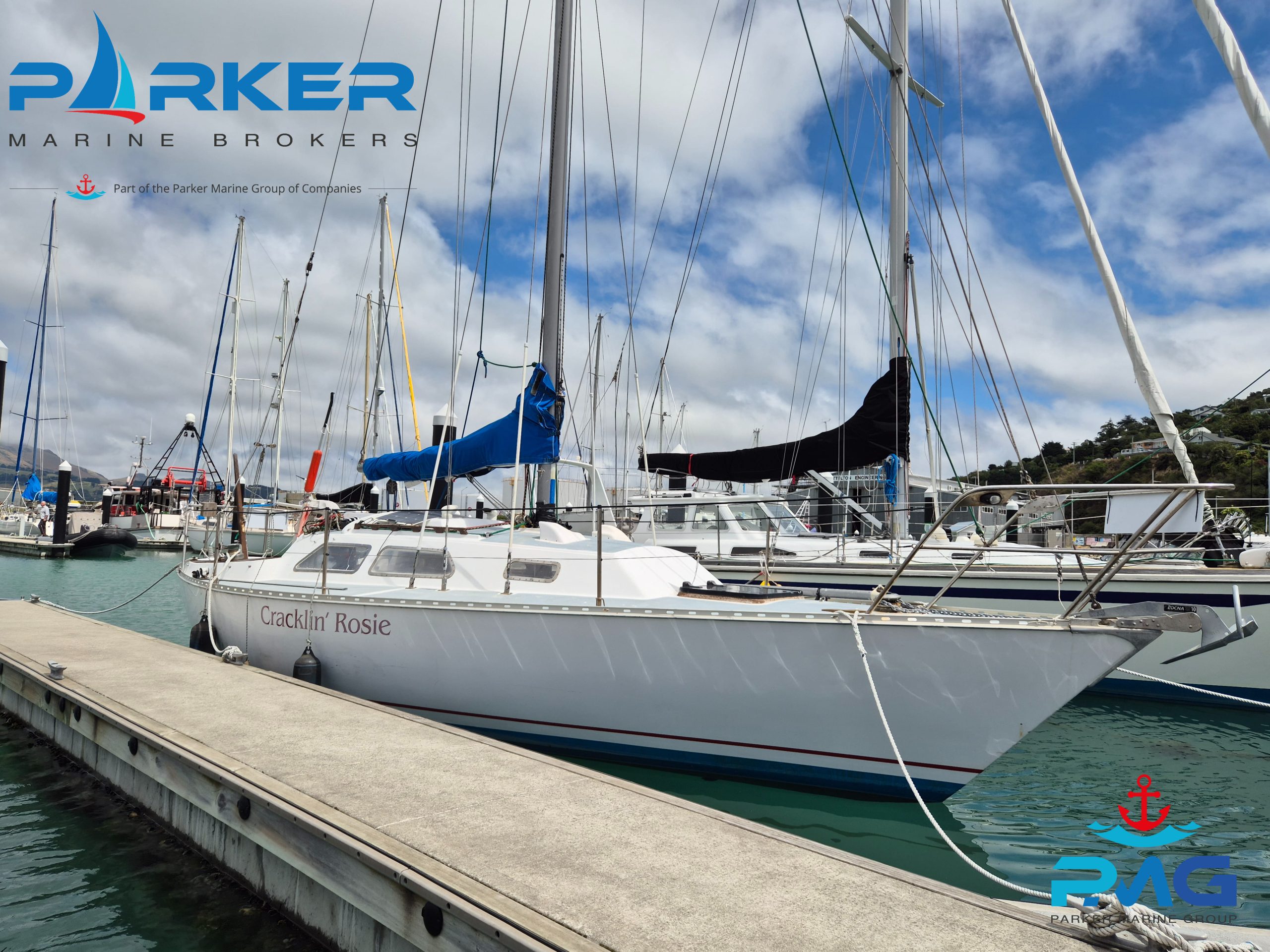
Cracklin Rosie is a 1977 Cavalier 30, sitting in Lyttelton and listed through Parker Marine Brokers at $18,000. She’s white topsides with light blue deck trim, blue canvas, tiller steering, and the kind of honest wear that tells you she’s been sailed rather than trailered to boat shows. Nothing, as the listing notes, that a lick of paint won’t fix.
The Cavalier 30 was part of a remarkable New Zealand boatbuilding story. Cavalier Yachts, founded by Peter K. Smith and John Salthouse, grew through the 1970s to have eleven designs in simultaneous production and a licensed manufacturing presence in Australia and Japan. The 30 was designed for the Half Ton IOR class, the same rule that produced some of the most competitive club and offshore racing of its era. She was built to race, and built to last.
Her designer, the American Doug Petersen (1945-2017), was among the most influential yacht designers of that decade. His IOR boats dominated offshore racing in the mid-1970s, and the design principles he worked with during that period, low wetted surface, fine entry, powerful sections aft, are evident in how boats like the Cavalier 30 still move through the water today.

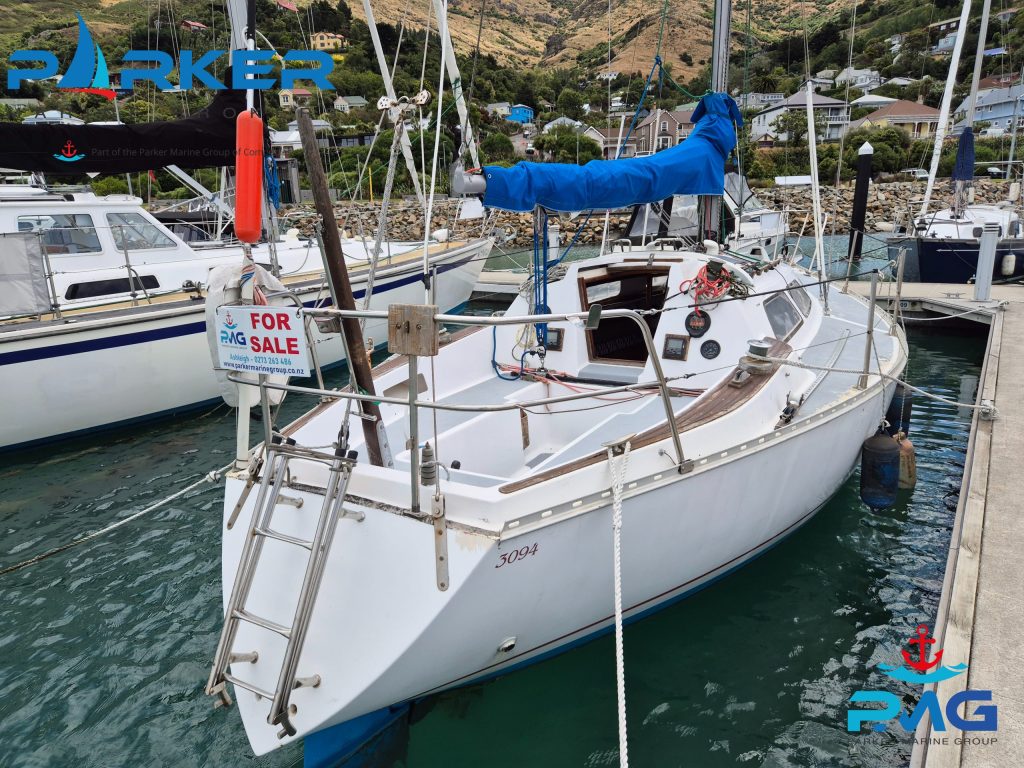
Cracklin Rosie carries a full sail wardrobe, which is worth noting for anyone looking at club racing. Getting a 49-year-old yacht to the start line is usually more about the sails than the hull, and having the wardrobe already aboard removes one significant barrier to entry. The mainsheet traveller sits just at the top of the companionway, a layout familiar to anyone who has raced IOR boats of this vintage, and the high-sided cruiser stern with its dive ladder makes her as practical at anchor as she is on the race course.
Power comes from a 13hp Sole diesel, a marinized Mitsubishi unit with a solid reputation for reliability. She holds 70 litres of fuel, which is adequate for coastal passages, and she has been recently antifouled. The broker’s description is that she’s ready to step aboard and sail away, and the listing details don’t suggest otherwise.
Cavalier Yachts’ story ended badly. In 1979, Prime Minister Rob Muldoon imposed a sudden 20 percent sales tax surcharge on the New Zealand boat-building industry, pricing Cavalier out of international markets overnight and precipitating the company’s collapse. A receiver was appointed and traded the business out, repaying all debts, but the momentum was gone. The Cavalier 30 is a survivor from before that collapse, a boat that came out of a factory that was producing yachts at a rate few antipodean yards have matched before or since.
At $18,000, Cracklin Rosie is an affordable way into competitive vintage class racing or relaxed coastal cruising from one of New Zealand’s best natural harbours. She won’t be the fastest boat on the water, and she won’t be the tidiest. But she’ll be one of the more interesting.

Contact Ashleigh Macdonald at Parker Marine Brokers on 027 326 3486 or ashleigh@parkermarinegroup.co.nz.
Specs at a glance:
Year: 1977 | Designer: Doug Petersen | Builder: Cavalier Yachts | LOA: 30ft | Beam: 3m | Draft: 1.6m | Construction: Fibreglass | Engine: Sole 13hp (marinized Mitsubishi) | Fuel: 70L | Steering: Tiller | Location: Lyttelton | Price: $18,000 NZD