The Lusty & Blundell stand at the Hutchwilco Boat Show has plenty to look at, but two things stood out this visit. One challenges a long-held assumption about cooking on boats. The other is a world-first product display that most people on the floor are walking past without knowing it.
Induction cooking
Gas compliance on vessels is becoming harder to manage. Gas is heavier than air, pools at the lowest point of the boat, and creates a compliance and safety problem that regulators are tightening around. Gas also keeps boats dependent on land. Every trip to the islands means planning around the next refill, and as the crew of sailing YouTube channel La Vagabonde discovered in the middle of the Caribbean, running out in the wrong place is not a simple fix. Different fittings, incompatible connectors, unavailable suppliers, and suddenly you are eating cold. An inverter-based induction system runs on electricity you generate yourself, from solar, alternator, or whatever charging source is aboard.
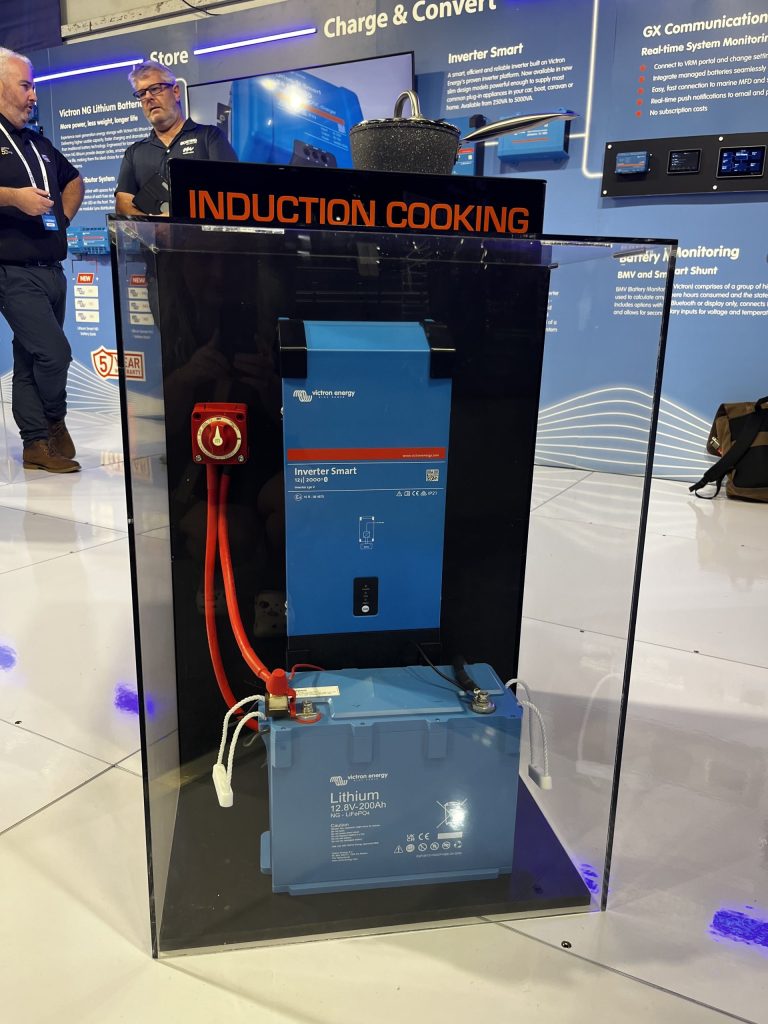
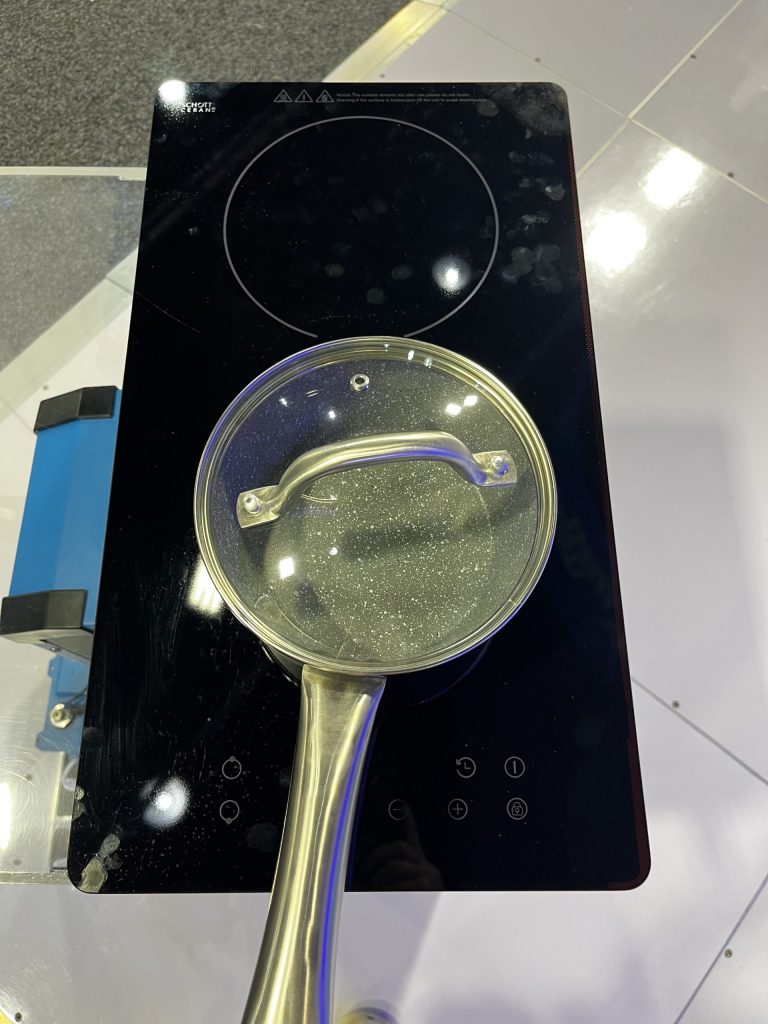
Lusty & Blundell has a Safery marine induction cooktop on the stand to demonstrate the case for making the switch.

The unit is current-limited to 2 kilowatts and power-shares between two elements automatically, keeping total draw within the 2kW ceiling regardless of how the elements are being used. A 2000-watt inverter is the practical minimum for running induction, and the current-limiting means that inverter will not be overloaded by the cooking setup.
Battery demand is more modest than most expect. A 200 amp-hour lithium bank is the recommended minimum. Cooking a steak on average power draws around 15 percent of that. On a 7 to 10 metre boat with 300 to 400 amp-hours aboard, induction is workable.
A gas fitting does one job. An inverter system runs the induction cooktop, the air fryer, the coffee machine, the toaster, and the jug off the same supply. For anyone heading offshore or spending weeks at the islands, the energy source comes with you.
The Safery unit installs flush into the benchtop on a standard cutout. Portable versions are available for boats that want the flexibility without permanent installation.
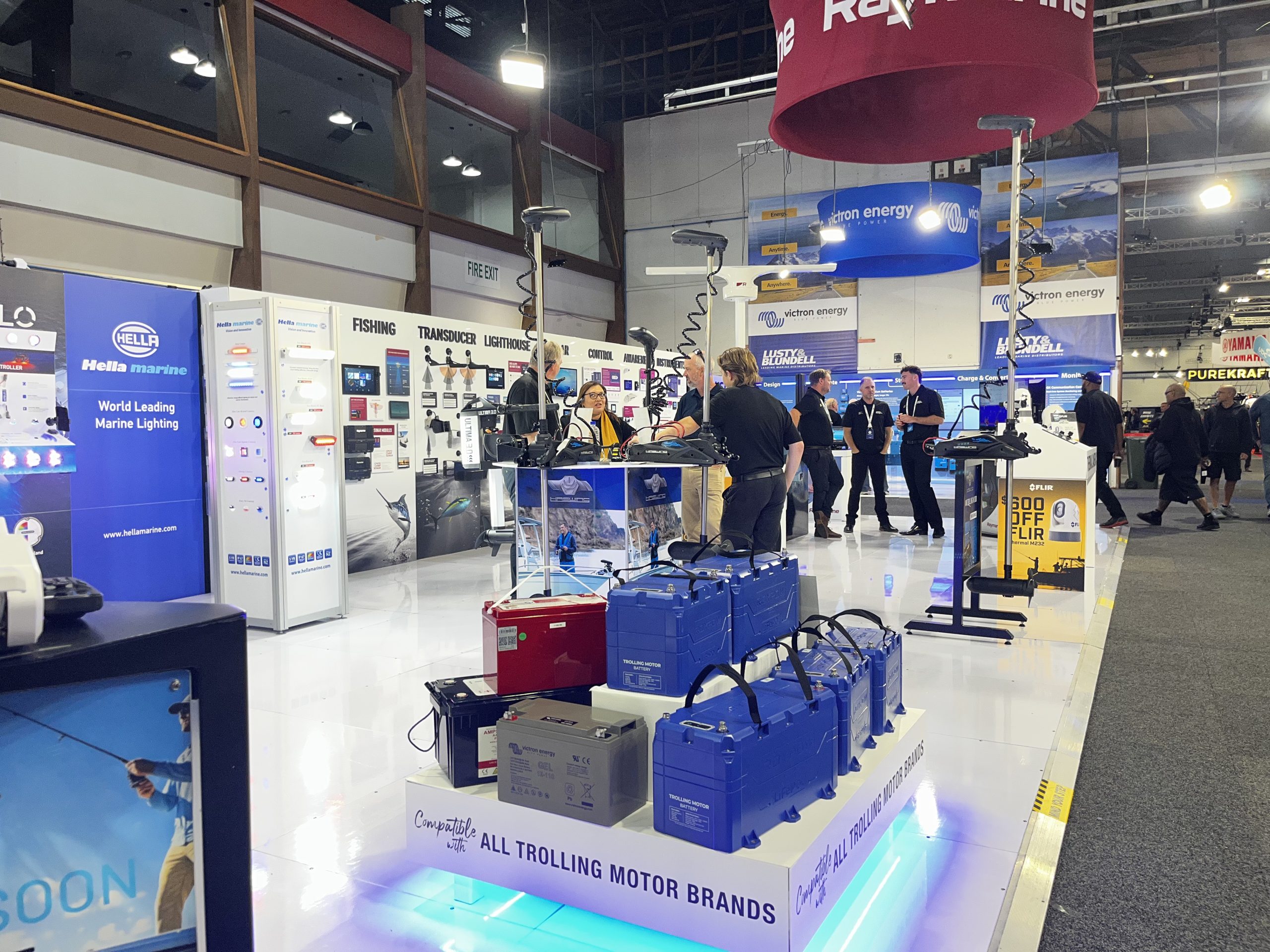
MarineMind trolling motor
Lusty & Blundell is hosting the world-first product display of the MarineMind trolling motor at this show, ahead of its general availability in September. New Zealand stock arrives in August.
Lusty & Blundell has had units running on local boats through the development process, feeding conditions data and practical feedback to the manufacturer. The motor is IP67 rated, fully functional when submerged. Gas-assisted strut for deployment, brushless motor, joystick remote for continuous directional control rather than stepped button inputs.
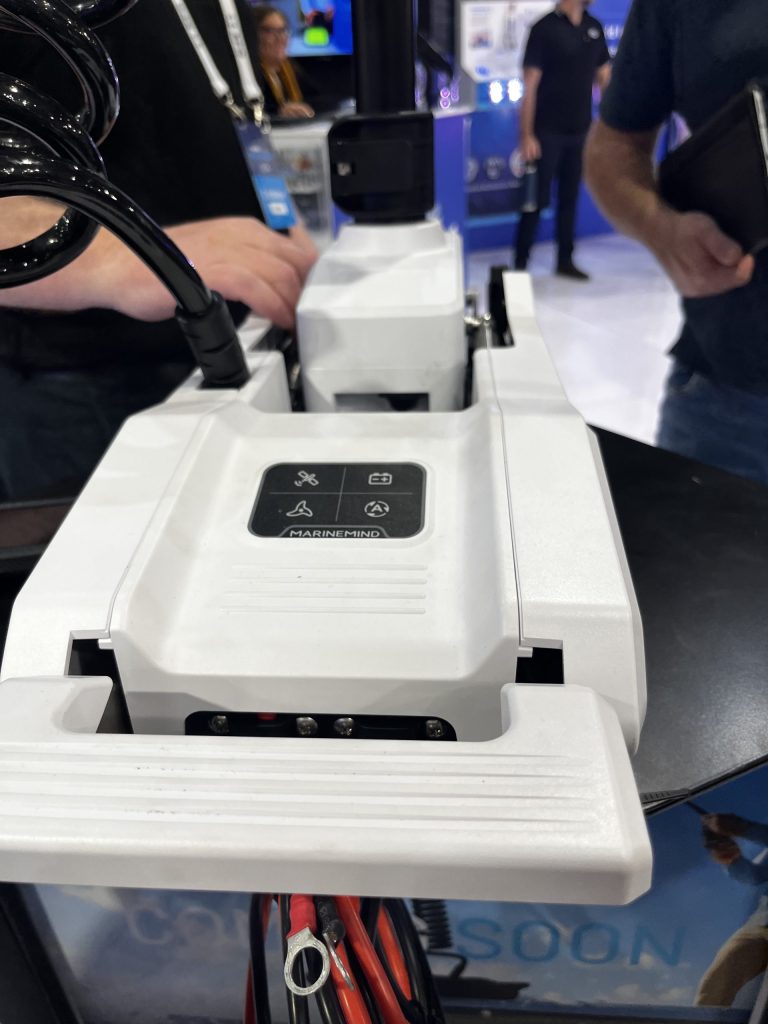
The 24V and 36V models use carbon fibre poles. The 12V aluminium pole is being replaced with fibreglass after real-world testing found alloy bending under load. MFD integration is not in the first release but arrives via firmware update, and units bought from August will be upgradeable when it comes.
The MarineMind is expected to come in at a significantly competitive price. The finish and build are not what you would expect at that price gap. The manufacturer previously built for one of those incumbent brands, built their own product from that experience, and brought it to market at a lower price.
Lusty & Blundell is the first to put it in front of the public outside the manufacturer’s own launch in September.