


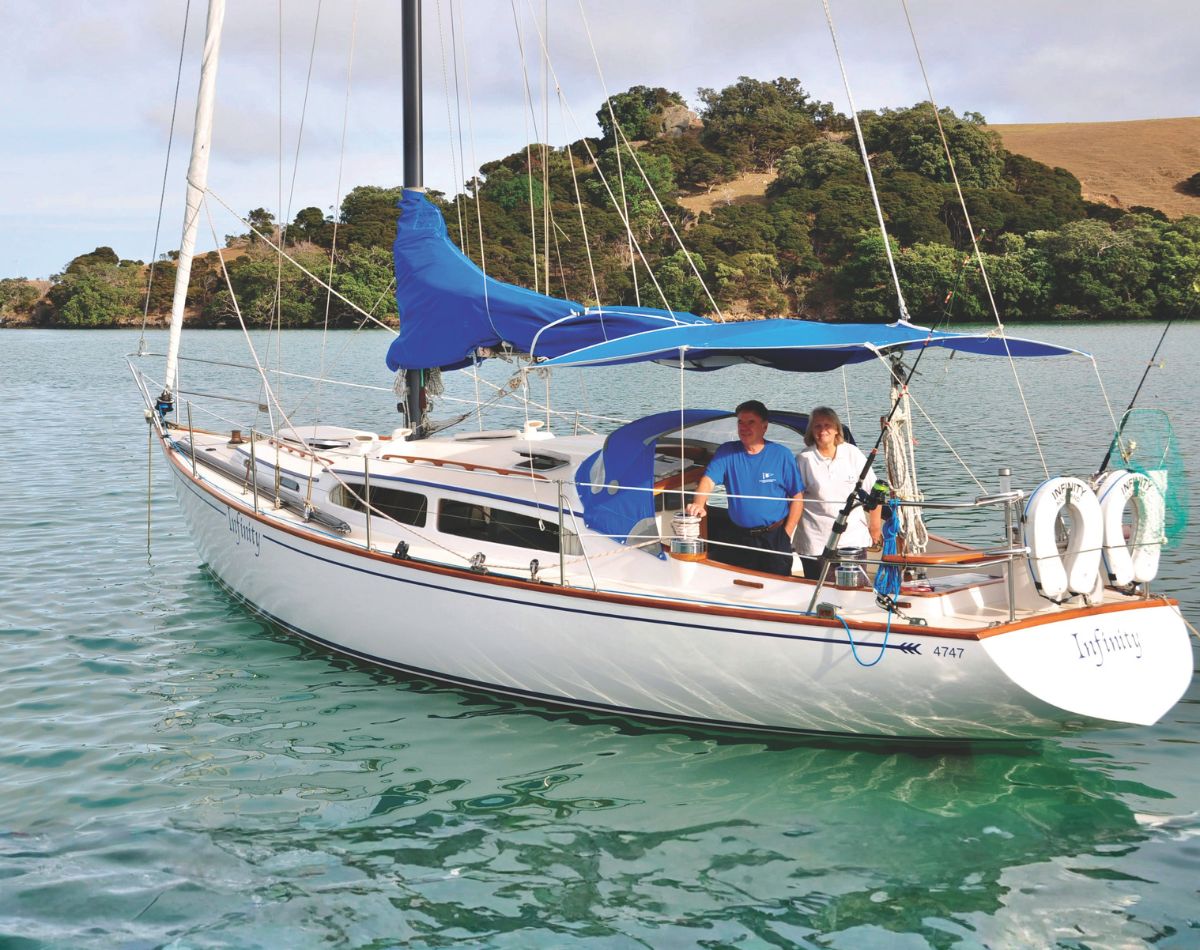
A skilled engineer, boat restorer and sailor, Ron Copeland is a dedicated advocate for our marine heritage. Alongside his engineering pursuits, he and his wife Michelle, have dedicated over 40 years campaigning to halt the ongoing decline of marine facilities around Auckland. This is their story.
Born in 1947 to Raymond and Shirley Copeland, Ron was the youngest of their three children. The Copelands moved to the North Shore in 1950, when the most direct access was by ferry.
A couple of years later, Raymond bought Takapuna Cycles and Models on Northcroft St from the late Bish Laird. Ron got his first mechanical lessons at age eight, helping his father assemble new bicycles shipped from England.
When Ron turned 15, Raymond gave him the family car, a 1934 Austin 10.




“I’m sure this helped set me upon a mechanical career,” recalls Ron.
In 1954, the Copeland family bought a rundown bach on Waiheke Island during the glorious days when middle-class families could afford such things. That same year, Raymond built Ron a P Class (#367), which kick-started his passion for boats.
The P was followed by a Flying Ant, a Cherub (#322), and then, at age 16, Ron built a 4.8m speedboat powered by a six-cylinder Zephyr engine.
By now, Ron was crewing on the late Cal Crooks’ mullet boat Taotane (L38). After a season, Crooks suggested that Ron buy Taotane.

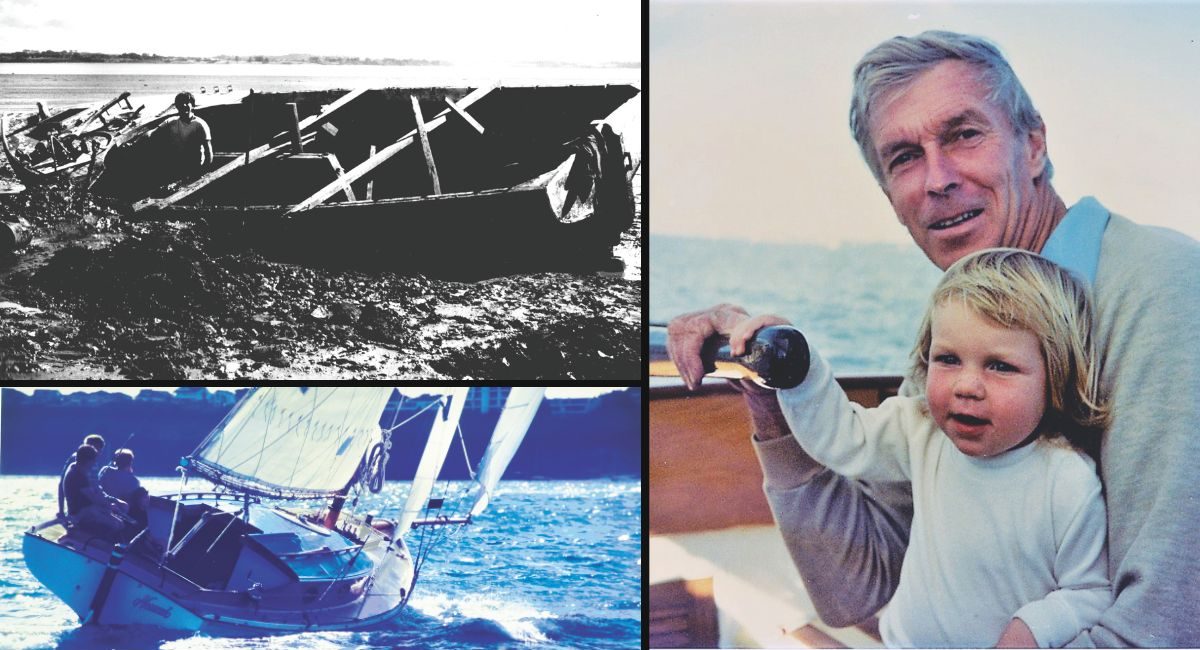
daughter Clair; and Nomad fully restored under sail. // Photo credit: Copeland family archives
“I sold my speedboat, the Cherub, a rebuilt Ford Anglia and bought Taotane for 500 quid, which was quite a lot back then.”
While working on Taotane at Little Shoal Bay, Ron met the custodian, the late Whisk Martinengo, whose daughter Michelle was also a mullet boat sailor. A perfect match, readers can guess the rest; the pair became an item and later married.
Before this, Ron left Westlake Boys High School at 15 to begin an apprenticeship as a mechanic with Brown & Nuttall Garage in central Auckland. Taking to a mechanical career like a duck to water, Ron earned his Trade and A Grade certificates, then spent several years working for various garages, including a stint with Earnie Seagar’s marine engineering company.
In the early 1970s, Ron started working at Cotter Ford in Albany, where he quickly earned a promotion to Service Manager, overseeing four mechanics. At that time, he was the youngest Ford Service Manager in New Zealand.
Ron and Michelle first joined the PCC, the home of mullet boats, in 1963 and have been members ever since.
By now, Ron and Michelle had married and bought their first home on the Bayswater waterfront for $6,500. There were a few reasons for the low price; the house was rundown, its seawall was crumbling, and the only access was a steep set of concrete stairs.
Over the next few years, while raising their three children, the Copeland family renovated the house, rebuilt the seawall, and purchased the house next door, which was also only accessible by concrete steps. Cleverly, by merging both legal walkways, Ron gained enough space to create vehicular access.
Thinking outside the box, Ron designed and built a steel-and-concrete bridge. This was done cost-effectively; for example, the steel was sourced from the Kings Wharf Cargo Shed, which Michelle laboriously stripped of paint and rust before Ron welded it into truss frames.

Of course, the Auckland Council’s building department had numerous questions regarding Ron’s engineering calculations.
“In the end, Council left [the design] to me because they were so out of their depth,” chuckled Ron.
After the bridge was built and approved, Ron set up a series of triangular workshops and storage units underneath it, but more about these later.
Around 1974, Lyon Motors hired Ron as their foreman. He oversaw 30 mechanics and apprentices, managing up to 60 jobs each day. Ron quickly realised that outsourcing machining work caused delays for customers and led to a backlog in the workshop. With his boss’s approval, Ron set up a lathe and surface grinder in a corner of their shed and spent part of his week machining disc brakes and cylinder heads as a subcontractor. This setup worked well for both parties until 1978, when Ron left to start his own business.
With three young children to support, Ron’s motivation was high.
“We took on anything engineering-related – vehicles, boats, printing machines – mostly jobs no one else was willing to tackle.”
Besides these one-off jobs, Ron began specialising in reconditioning power steering units. This happened when Ford Australia encountered issues with their XA Falcon power steering units. Initially, Ford replaced the units under warranty, but Ron developed a repair that proved successful.
Their power steering business grew so successful that in 1979 they moved to larger premises on Porana Rd, Glenfield. Years later, the Copeland family bought the building and paid it off in just five years. This success enabled the Copelands to give more time to their favourite yacht club, the Ponsonby Cruising Club (PCC).
Ron and Michelle first joined the PCC, the home of mullet boats, in 1963 and have been members ever since. Ron served on the Sailing and Management Committees for over 30 years. Ron was on the Sailing Committee in the early 1970s, when the PCC ran over 150 races each year and became the first Westhaven yacht club to organise a winter series, which at one stage had 450 yachts entered across 13 divisions.
Ron was elected Commodore in 1994. He served in this role for seven years, making him the longest-serving Commodore in the club’s 120-year history.
Typically, Michelle worked just as hard as the Club Secretary, and the Copelands were at the club nearly every day, organising races, working out handicaps, collating results, and arranging prizes.
On behalf of the PCC, Ron organised the purchase of the building from Ports of Auckland and secured an 80-year lease. The couple’s valuable contribution has been recognised with PCC life memberships.
Ron has undertaken numerous boat restoration projects. The most renowned is the 26ft mullet boat Nomad (H5), designed by Chas Collings and built by Hori Mendoza for Sanford Brothers and Rolly Sharrock in 1924. In 1928, Nomad was sold to the late Tom Townson, Des’s father, who, after refurbishing her interior with mottled kauri, sold her to the late Tom Solomon in 1936.
After being laid up for over 20 years, Nomad was relaunched in 1967. Soon after, she came off her mooring, washed ashore, and was left to decay in the mud. To cut a long story short, Ron persuaded the Solomon family to sell Nomad in 1974.
First, he had to drag Nomad’s badly damaged hull out of the mud, float her, and then have her towed to his Bayswater front lawn. Over the following 12 years, he undertook a thorough restoration. While Nomad’s planking was salvageable, Ron needed to rebuild all new ribs, keel, centrecase, coamings, cabin, and interior.
Relaunched in 1986 with a marinised Ford Escort engine, the Copelands used Nomad for racing and family cruising for over 20 years. Sadly, successive owners have allowed her to deteriorate, which is a huge shame.
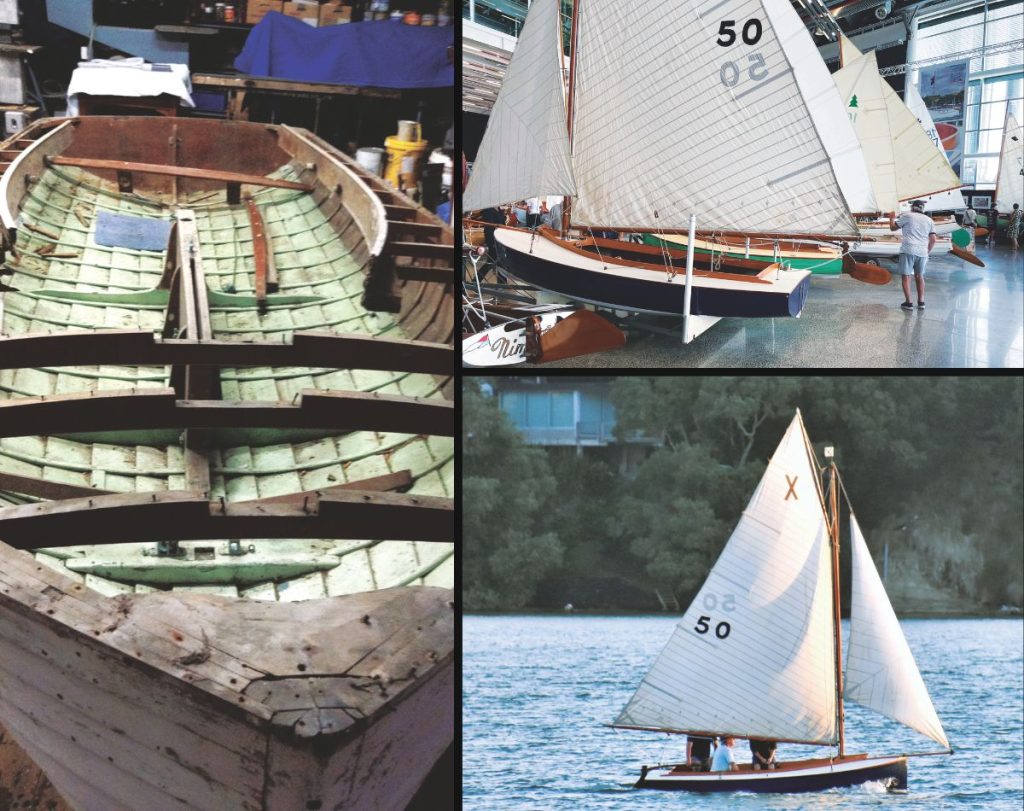
There have been other restorations, including the 4.4m rowing and sailing skiff Ida, built in 1890 by Robert Logan, which he still owns; the 3.6m Silver Fern Tamariki Jnr; and the Silver Fern, Matariki, which he has owned for nearly 40 years.
“She’s ready for another restoration now,” he said ruefully.
Ron’s current restoration is the X Class Clare, the last gaff-rigged example built by the late Billy Rodgers.
Seeking a more comfortable cruising yacht, Ron and Michelle sold Nomad in 2004 to buy the Townson 36 Infinity, which they still own today. Built by Geoff Armitage for Ivan Kriletich and launched in 1982, many consider Infinity to be one of Townson’s finest designs.
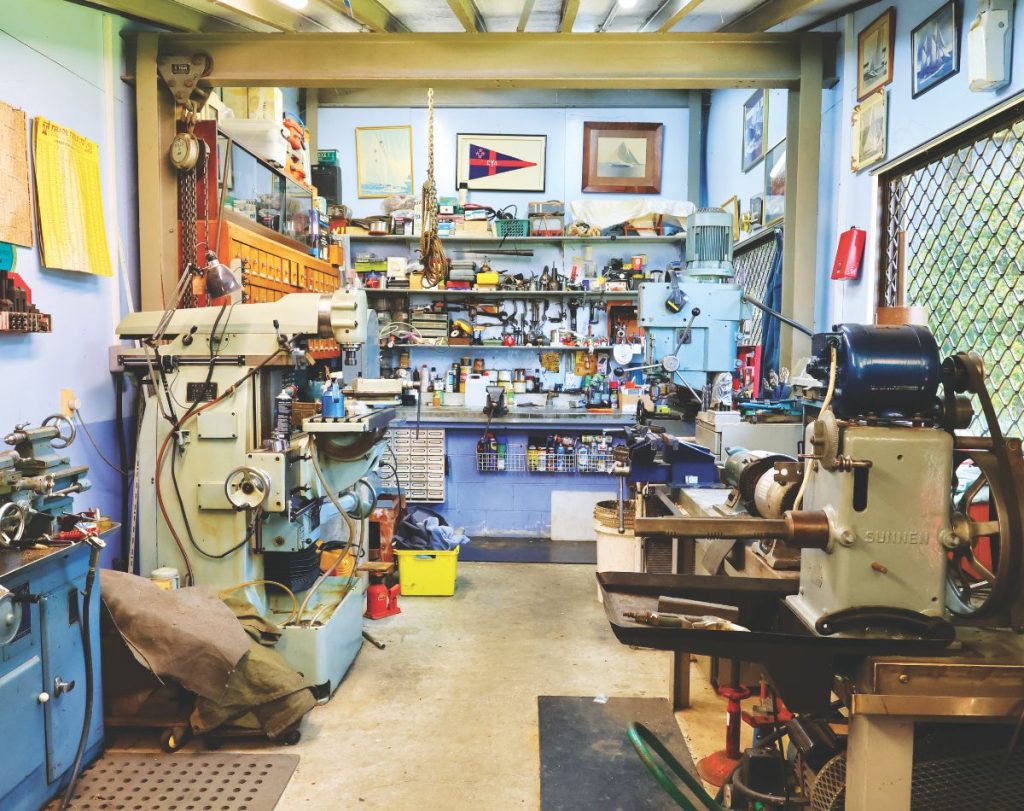
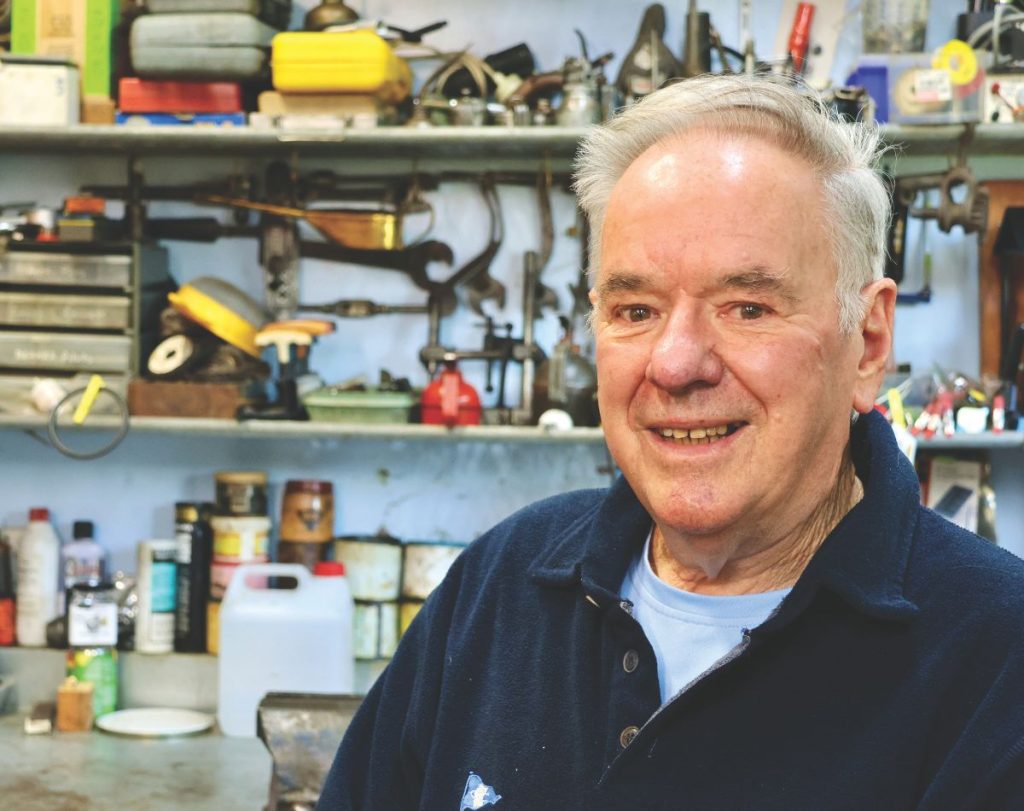
Ron and Michelle’s waterfront property is a boatie’s dream. Largely hidden beneath the concrete bridge is a triangular workshop. While snug, it contains all the facilities of an engineering workshop – lathes, drill presses, a horizontal press, a folder, a milling machine, and more. Each tool has its designated spot, and every centimetre of space is utilised.
Two metres from the high-water mark is Ron’s double garage, which houses the woodworking section and sail loft. Once again, everything is expertly arranged and includes a wide array of vintage and veteran tools.
Countless projects have emerged from Ron’s workshops over the past 56 years. Besides the dinghies and mullet boats, there have been numerous restorations of vintage outboard and inboard marine engines, model engines, metal and woodworking machinery, and hundreds of jobs for friends. The man is a walking encyclopedia of marine engineering, woodwork, and boatbuilding, and his innovative thinking is legendary.
However, Ron and Michelle’s most significant contributions to the marine scene have come from their guardianship of Auckland’s boating community. They have dedicated thousands of voluntary hours to preventing designated marine-related land from being lost to developers seeking more profitable commercial and residential projects.
In a future column, we will examine in detail one of their campaigns: defending Westhaven Marina from being sold to offshore interests. Ron and Michelle have also spent over 30 years protecting the isthmus of waterfront land at Westhaven that hosts the four yacht clubs. This land has always been zoned exclusively for that purpose. However, commercial interests have been attempting to merge three of the four yacht clubs located there – PCC, Victoria Yacht Club, and Richmond Yacht Club – into a single entity, with plans to re-zone the remaining part of the isthmus for commercial use. So far, this effort has been thwarted, but that fight is far from over.
The Copelands have also worked tirelessly for years to protect Auckland’s haul-out areas such as Little Shoal Bay, Okahu Bay, Pier 21, Bayswater Marina, and the Hobsonville haul-out site. Unfortunately, many of these locations have been lost to apartments and other commercial developments, which conflicts with Auckland Council’s aim to keep boat bottoms free of invasive organisms.
One has to ask the obvious: how is it possible to clean boat bottoms if there’s a major shortage of facilities to haul them out?
Ron has worked tirelessly to protect key anchorages around Rakino Island from being replaced by permanent moorings and has strongly opposed losing Hobsonville marine commercial space to housing. Space prevents sharing more about Ron and Michelle Copeland’s contribution to the Auckland marine community, but suffice to say, Auckland boaties owe them a huge debt.
The biggest challenge the Copelands face is overcoming complacency. Wendell Phillips, warning against complacency in 1852, wrote, “Eternal vigilance is the price of liberty.” Today’s boaties are well advised to heed his words; history demonstrates that what’s lost through complacency is rarely regained.
Ron and Michelle Copeland, Boating New Zealand salutes you for your decades of fighting to protect the fundamental right of Auckland boaties to simply muck about in their boats.
Anyone attending the Wooden Boat Festival on 12-13 March at Auckland’s Viaduct Harbour can meet Ron inside the Events Centre with part of his collection of vintage and veteran marine engines, tools, and marine memorabilia. It’s well worth a visit.

Enjoyed reading the story on the Copelands and the contribution they have made to the boating community.
I am looking forward to the next article on the work they did when the Ports of Auckland put Westhaven Marina on the market for sale.