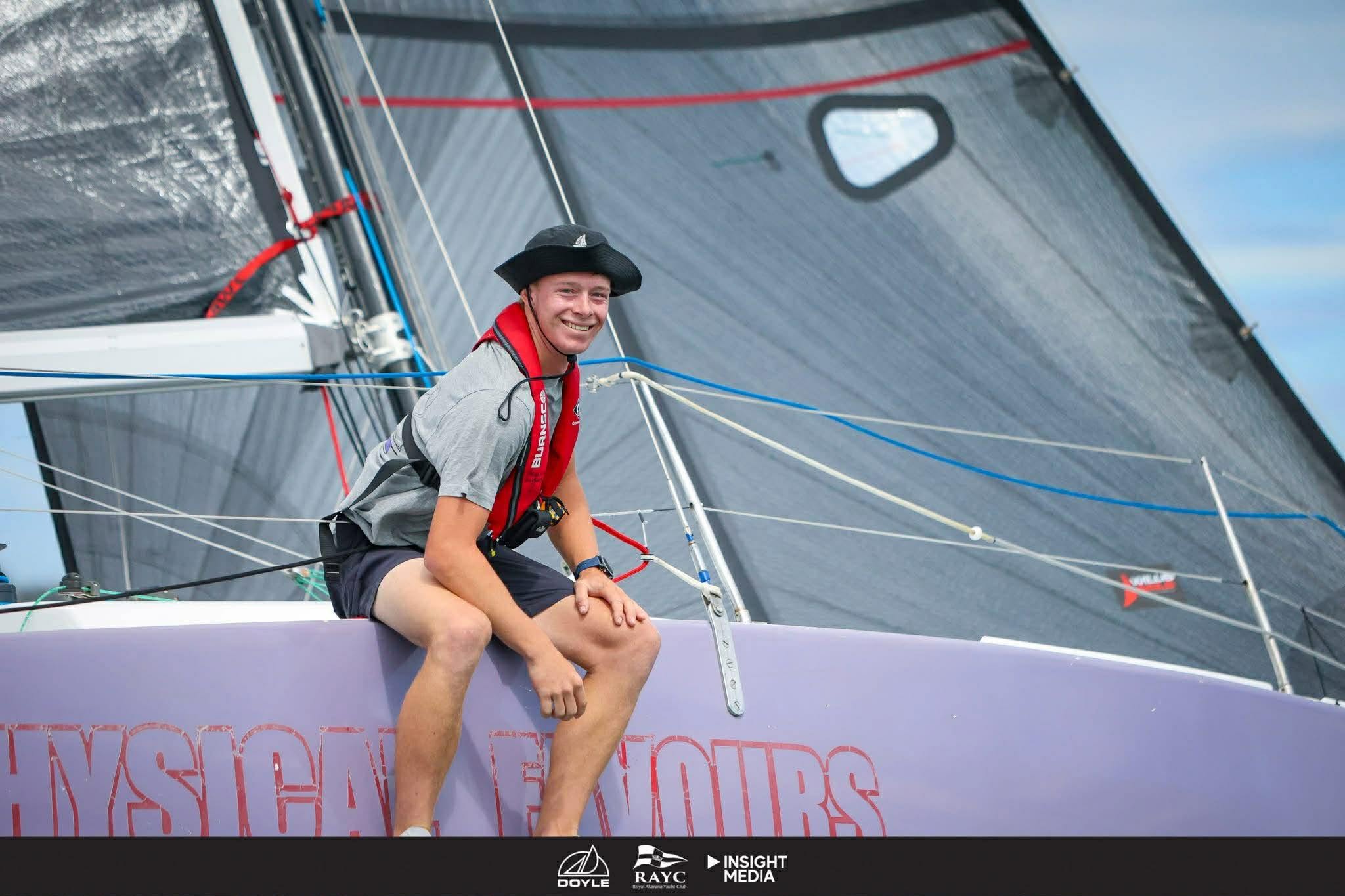
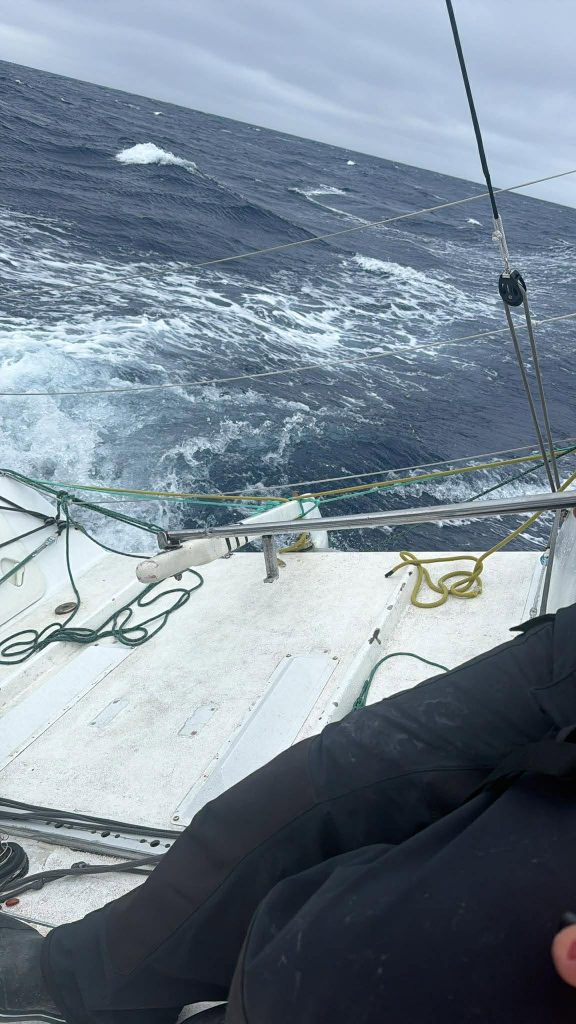
Fifty miles short of New Zealand’s East Cape, Ryan McCready was steering a boat with no rudder. The lower gudgeon had failed somewhere north of Napier, leaving the rudder blade hanging off the top fitting alone, the bushes blown out and a 20mm pin rattling loose in a 40mm hole. McCready and co-skipper Andrew Child lashed the assembly together with Dyneema (a super-plastic that is ridiculously strong). They tied it low and high, then ran the lines forward to the winches and hauled them tight. Not able to use their engine, they sailed the remainder of that final leg under deeply reefed main and larger headsails. They balanced the boat by feel rather than steering it conventionally. It was not their first structural problem of the 2026 Doyle Sails Round North Island Two Handed Yacht Race (RNIs). During Leg 2, the anchor box in the bow had chafed through its straps. It punched through the bulkhead, breaking a ring frame on the way through the bow.
Yet Physical Favours kept going.
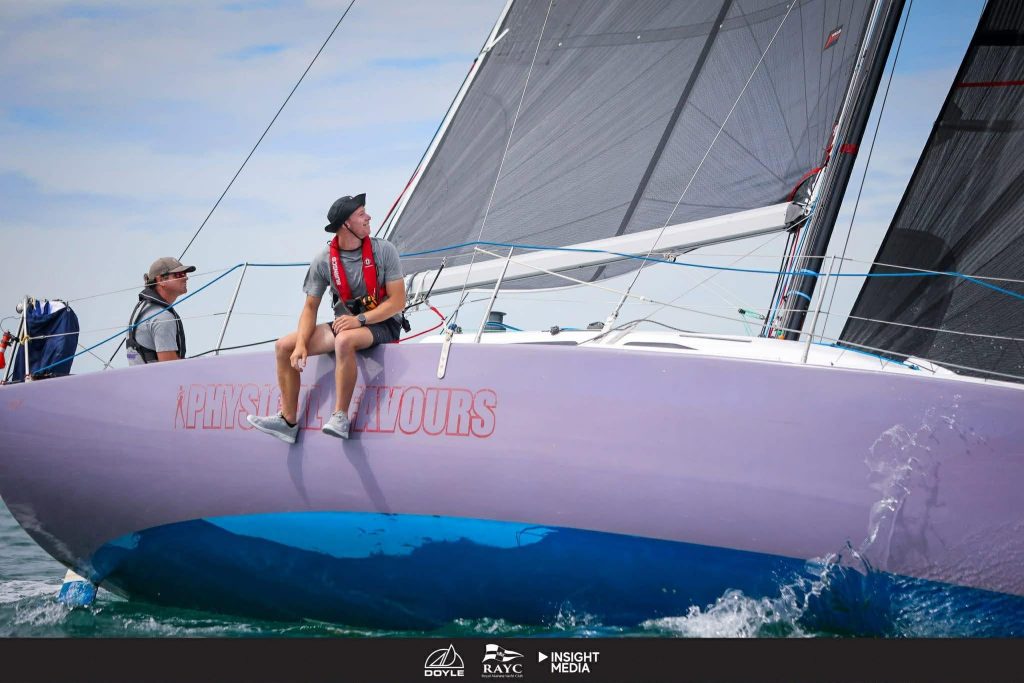
McCready is the youngest co-skipper to have entered the 2026 RNIs. It is widely regarded as one of New Zealand’s toughest offshore yacht races. At the time he’d owned Physical Favours, a Ross 914, for just two years. The years growing up sailing alongside his dad, Ric McCready, plus the two years he’d just spent refitting the boat himself, mostly with his own hands, explain the composure.
His journey with Physical Favours started well before then, at the Kerikeri Cruising Club, where Ryan sailed alongside Ric and Pete Woods, a family friend who owned the boat. Woods had built it himself in the late 2000s, with the RNI race in mind. He competed aboard her in the 2011 edition. When he could no longer continue sailing, he passed the boat to Ryan outright.

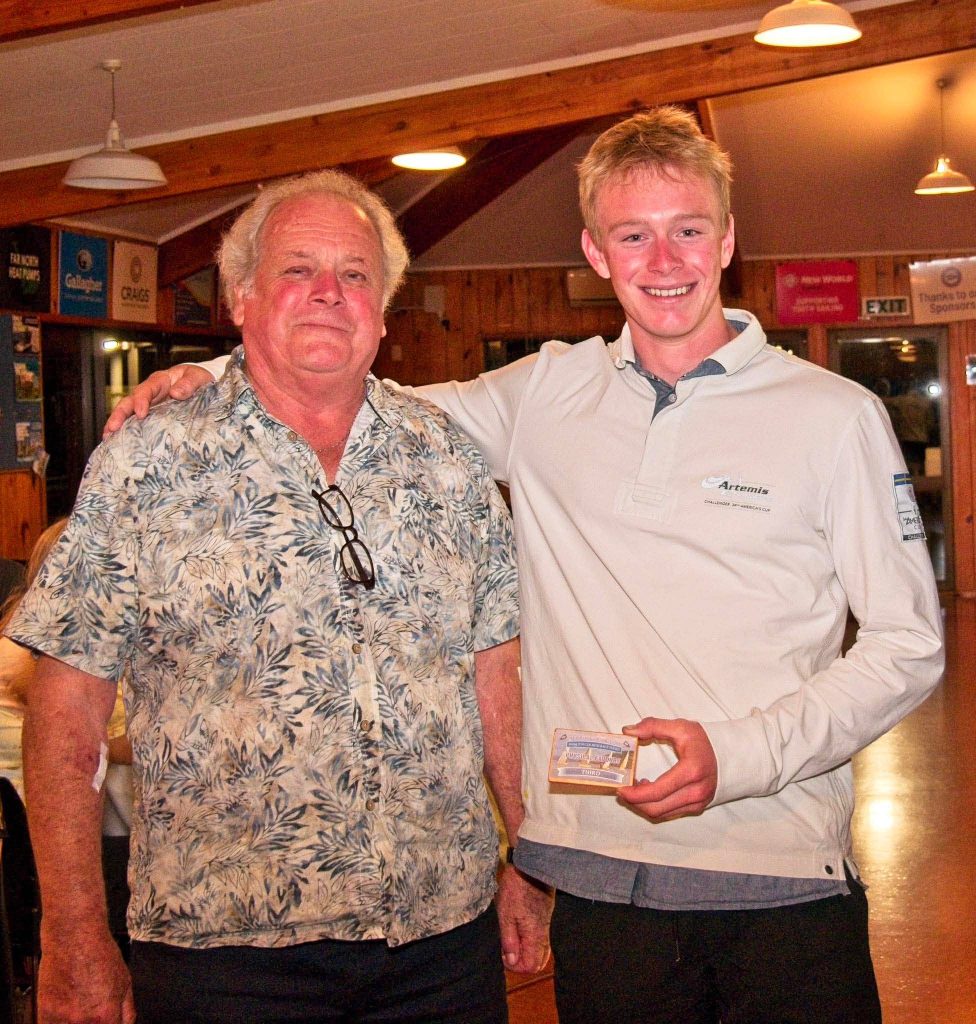
There was an understanding attached. Ryan would race the boat hard, or at least give it a proper go.
When Ryan took ownership, Physical Favours needed attention almost everywhere. Fifteen years of hard racing had taken their toll, and there was plenty to work through.
For Ryan, the boat became more than a sailing project.
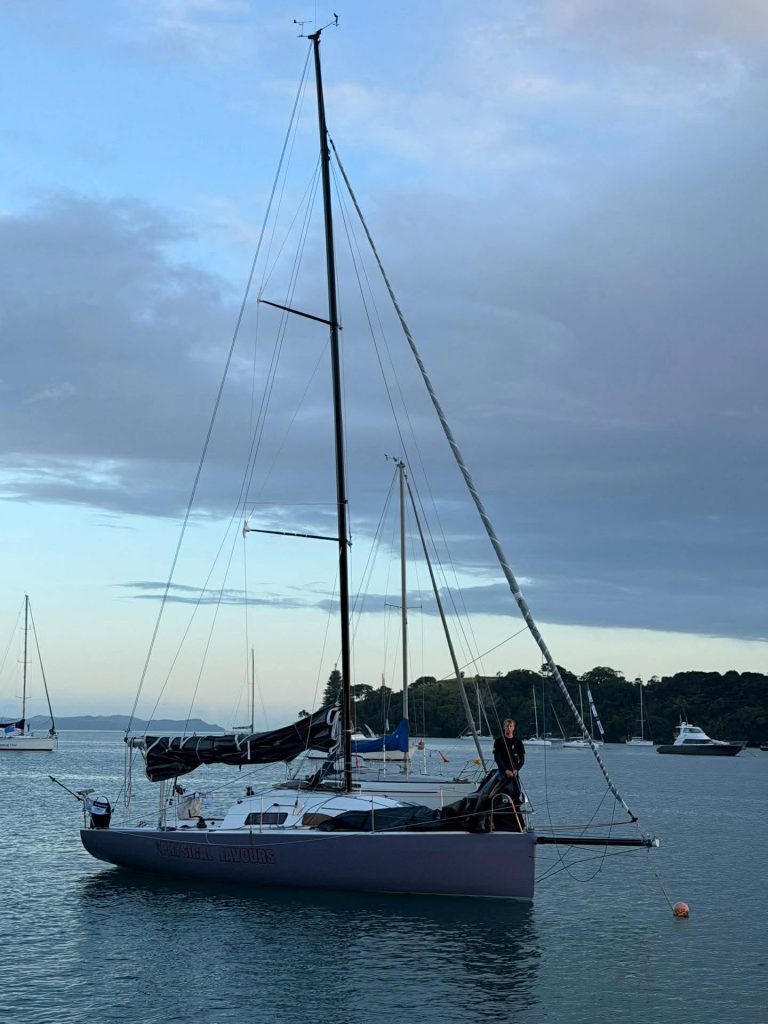
By then he was working as a rigger at NZ Yacht Services in Opua, having started part-time while still at school before moving into full time work as soon as he left. The job gave him practical skills and access to people who understood what he was trying to achieve. Over the following two years, he rebuilt Physical Favours from the hull upwards, mostly with his own hands. Ryan pulled the outboard out entirely and installed an inboard diesel engine from scratch. He built a new engine bed for the saildrive, then fitted the controls, cooling system and exhaust. He rebuilt the rudder and gudgeons. He pulled the rig twice in the lead-up year. He repainted the decks, replaced all the running gear, and fitted new sails. He also added stringers to stiffen the hull. During the rebuild, Physical Favours came out of the water at Opua three times.

Ryan did most of the work himself, but he was not alone. Craig Gurnell and David Ferriss at Willis Sails looked after the sails, and cloth was supplied by Bill Barry of Covers and Canvas. Craig Partridge and Doctor Dave brought boatbuilding knowledge and racing experience when the problems became more complicated. His boss, Paul Smith at NZ Yacht Services, supported Ryan throughout the refit.
A mate completing a similar repower helped Ryan work through the engine conversion. Child also rolled up his sleeves. So did his parents, who gave up more weekends than anyone counted to laminate, sand and tackle whatever else needed doing.
By the start of the 2026 RNIs Physical Favours was ready. McCready and Child lined up in Division 3 against 3 other boats, all well proven in their own right. Child brought considerable experience as a New Zealand sailor and sailing coach. For Ryan and the boat he had rebuilt, however, this was still a significant step.
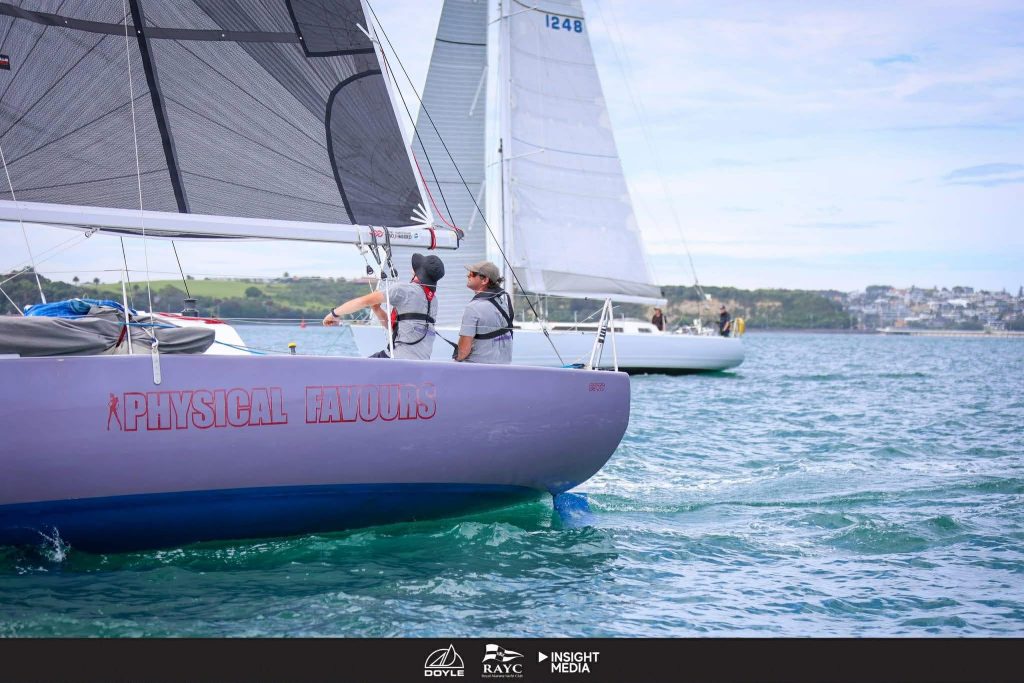
The early stages went well enough. The first leg was a warm up for the next three. Leg 2, the longest leg, ran from Mangōnui to Queen Charlotte Sound. It tested the entire fleet. On the first night, McCready and Child pulled into Spirits Bay to repair a damaged bulkhead. Once the repair was secure, they continued south and rejoined a fleet pushing into strong headwinds and rough seas. They made it, crossing the line 23rd overall. It was a hard lesson in what McCready, Child and Physical Favours would face during the remainder of the race.
Leg 3 began a few days later. After leaving Waikawa, they sailed east through Cook Strait before turning north towards Napier. Off the coast, a wave Ryan didn’t see coming knocked the boat down hard and threw her sideways. They recovered well. The Ross 9.1 had been built for tough offshore sailing and took the punishment. Then came Leg 4, Napier to Auckland, and the rudder.
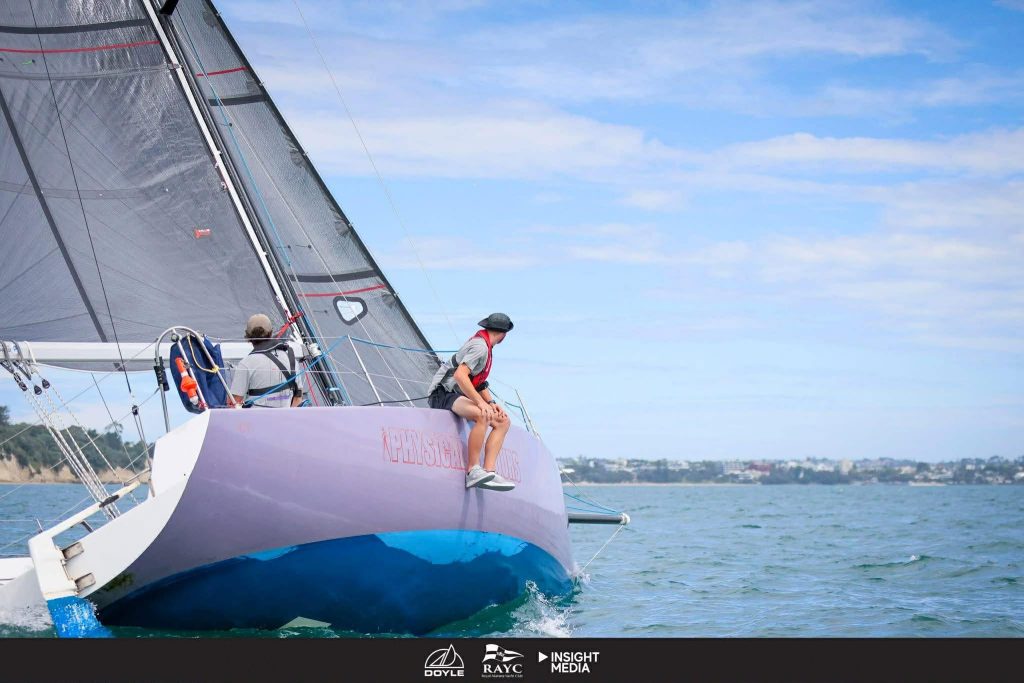
Despite everything, Ryan calls the race the best experience of his life. He’s already planning for his second RNI.
In the meantime, he is gaining experience aboard other boats. Earlier this year he crewed on the Ross 1066 Higher Ground in the Royal New Zealand Yacht Squadron’s Three Kings Offshore Yacht Race. He joined the four-person crew onboard the boat alongside skipper John Seely, Nigel Bish and fellow young crew member Luke Tucker.
For Ryan, much of the value came from watching how another crew worked through problems he had previously tackled largely alone.

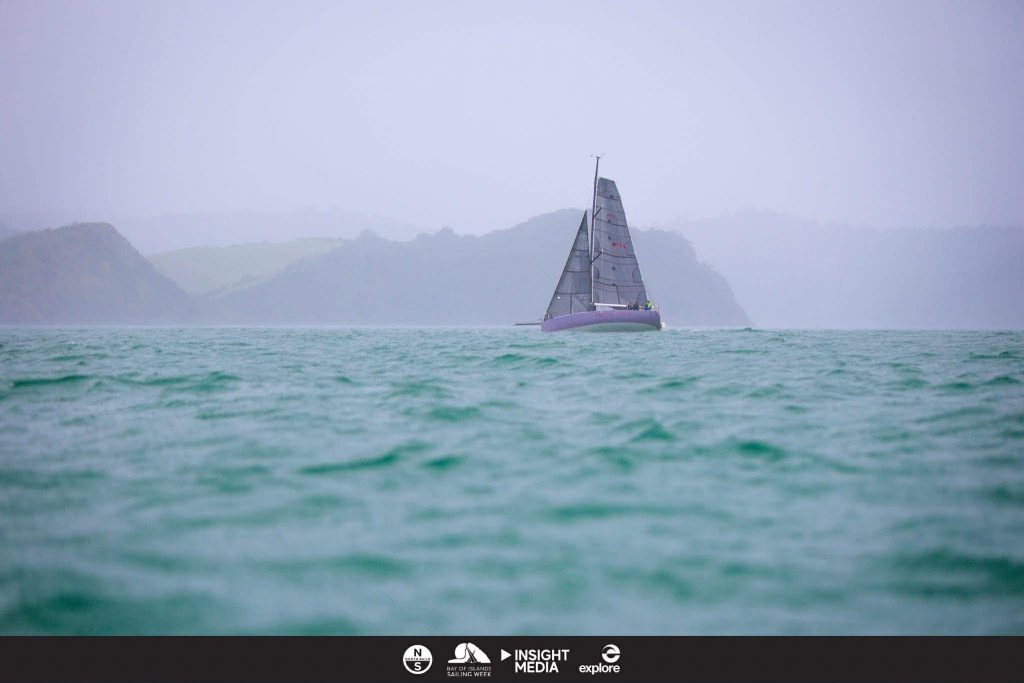
He is also sailing the SSANZ Lewmar Triple Series aboard Higher Ground with Seely. Ryan then expects to race Physical Favours in the 2026 PIC Coastal Classic, followed by Bay of Islands Sailing Week in January 2027.
Meanwhile, work on Physical Favours continues. Ryan plans to add a water ballast because the boat wants to heel and slide sideways when sailed short handed in stronger breeze. He is also rebuilding the cockpit with a dogbox arrangement to keep more water outside. The halyards will run through tunnels back to the helm. This should allow one sailor to complete manoeuvres that previously required two people. A new rudder will use a through hull arrangement, replacing the external system that failed during the race. Ryan is also adding more ring frames in the bow.
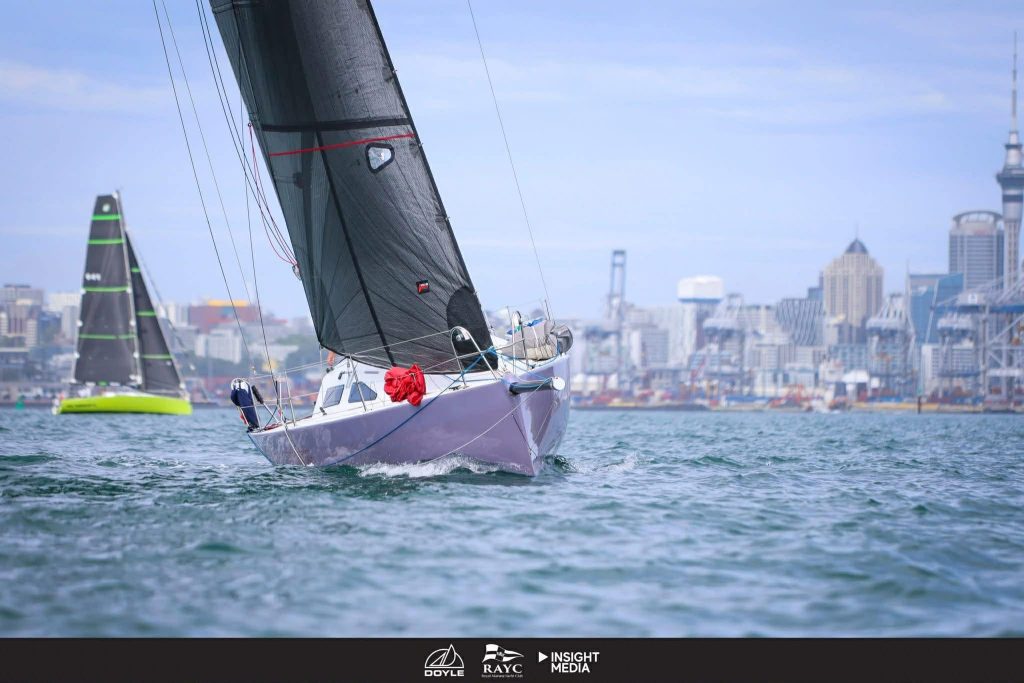
What comes through most clearly when talking with Ryan is his determination to bring other young sailors with him. Many of his mates who have raced aboard Physical Favours were new to this level of sailing. It did not take long for them to become hooked, particularly after a 30 knot ride under spinnaker along the coast.
Ryan wants to push the boat harder and show what she can do with a full crew. He also wants more young people to experience offshore racing, rather than keeping the opportunity within an established circle.
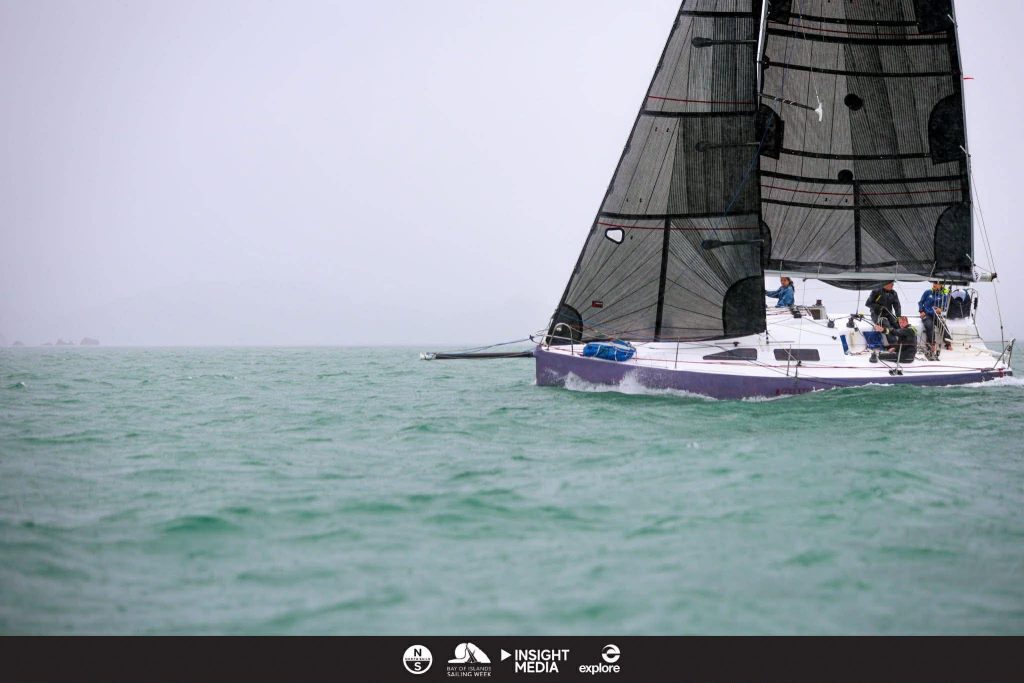
Offshore racing has a reputation for requiring decades of experience and a large bank balance. Ryan’s first two years with Physical Favours point towards another route. It began with a boat passed from one sailor to another. Ryan added practical skills, countless hours of work and support from people who believed in the project. When the rudder failed off Napier, he added the final ingredient.