On the evening of 31 May, less than 48 hours into the 2026 Solo Trans-Tasman Yacht Challenge, Doug Esterman turned Fair Seasons around.
Graeme Francis had activated his EPIRB north of the Three Kings Islands. Francis had already withdrawn his boat Robbery from the race. Then started to suffer water ingress. Esterman turned around, going two knots into the wind and sea to reach him, standing by through the night. He didn’t resume his own race until just after 9pm that same night. He circled again the following morning. He wasn’t properly back on course until the early morning two days later.
Asked later why he did it: “It was because I wasn’t happy.”
That single sentence tells you everything you need to know about Doug Esterman. At 62, on his first solo offshore passage of any kind, racing a family heirloom across 1,170 nautical miles of the the Solo Trans-Tasman Yacht Challenge, his first instinct when a fellow sailor was in trouble was to turn around. It surprised nobody who knew him. A long-time family friend who called us after the race remembered a young Doug Esterman exactly the same way: always ready for an adventure, always looking to help others. Some things don’t change.

The Race Committee said it plainly in their official statement: “Despite being in the middle of his own Solo Trans-Tasman Yacht Challenge, Doug immediately altered course and stood by to aid if required. His actions exemplify the spirit of seamanship and camaraderie that exists among offshore sailors.”
Graeme Francis’ friends and family had been watching the tracker through the night, in constant contact with both Graeme and the rescue services. Maureen Wood, a close friend of Francis, wrote on Facebook afterwards: “Heartfelt thanks for turning round to get closer to and help our good friend Graeme if it was required. As we, friends and family, were watching his course constantly, keeping in contact with both Graeme and rescue services and supporting him through the day and night, it was so good to see someone was prepared to forgo the race and help him. You are amazing. We are all forever grateful.”
The response from the sailing community was warm and immediate. Colin Howie wrote: “If someone gives me the Southport Yacht Club bank number I will pay his drinks first night ashore.” Kaye Maree Brotherton replied: “I’ll pay the next night. What an absolute champion.”
They needn’t have worried about him missing the party.

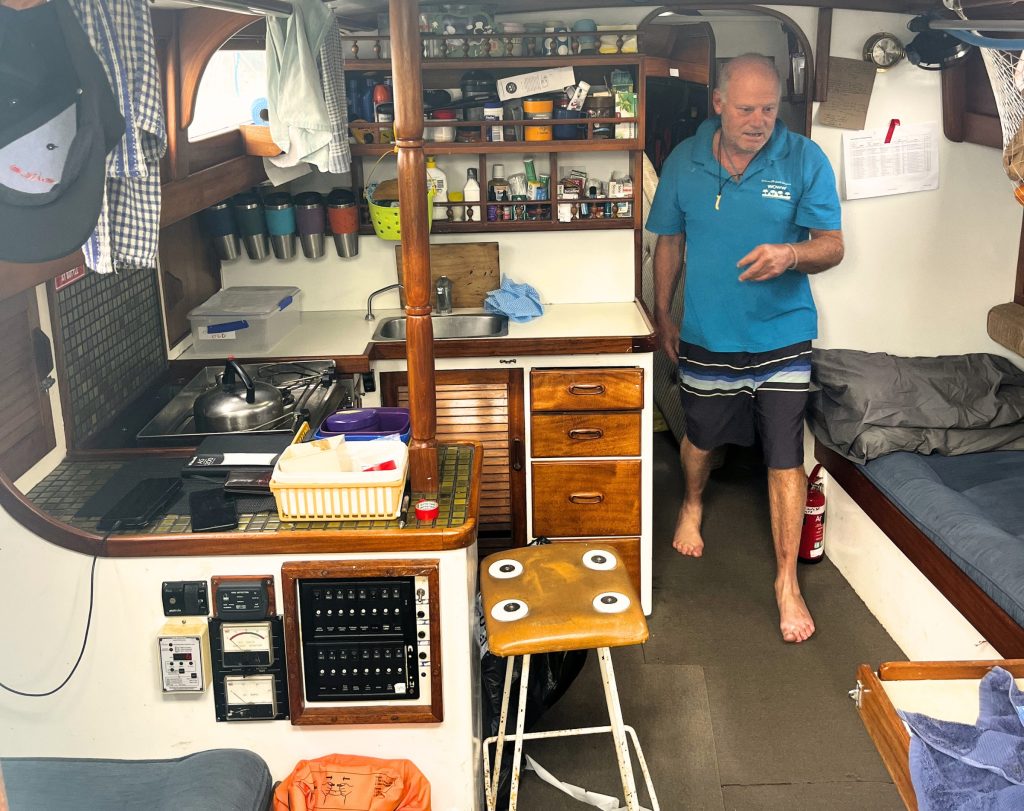
The man and the boat
For Doug Esterman, the journey has always been about more than his own miles. Before he had to qualify for this race he had to go solo offshore for some serious miles, but even though he’d sailed 12,000+ NM none had been solo.
His first proper solo overnighter came just two months before the race, a 500-mile loop, five weeks after a hip operation. He loved it. Fair Seasons, an early 1970s Salthouse Cavalier 39, and also a family heirloom did well. After fifteen years at the helm, and 40 years of accumulated knowledge of what goes wrong and why, “There’s a lot of things that go wrong with boats. Well, I’ve had 40 years of things going wrong on this one. At least I’ve got an idea where most of them come from.”
Two weeks later he went out again and was seasick for 24 hours. He put two autopilot systems onboard after hearing what happened to a competitor who hand-steered 1,100 miles when his autopilot failed a day into a race. “I’ve been going, I don’t think I could do that.” As it turned out, neither of his autopilots worked reliably for most of the crossing. He had little choice, he steered anyway.
At 62 Doug Esterman takes on the Solo Trans-Tasman for the first time
The race
At 20 hours Fair Seasons was tracking well, projected to finish inside ten days. By 46 hours his 24-hour distance had dropped to 77 NM. By 55 hours, 44 NM, a quarter of what the race leaders were posting. By 68 hours, just 11 NM in 24 hours, effectively stationary in the wind hole that swallowed the back of the fleet. His projected finish had slid from 8 June to 13 June in the space of two days.
That same morning he and retired entry Bill Kidman passed each other as Kidman sailed Pretty Boy Floyd heading home. On 3 June he passed Glen Jeffery’s Wave.
The Tasman continued to give him everything else it had. The autopilot failed repeatedly. The Starlink went overboard in strong winds — damage to the pushpit, a moment of misplaced confidence about where it had been secured. “I looked back and I was stupid where I’d put it. You look at it and you think, couldn’t have had that happening, and I did.” Sailing in silence from then on. He was sick for several days.

The improving conditions of the final days lifted him. His projected finish moved forward by nearly two full days in the last 72 hours.
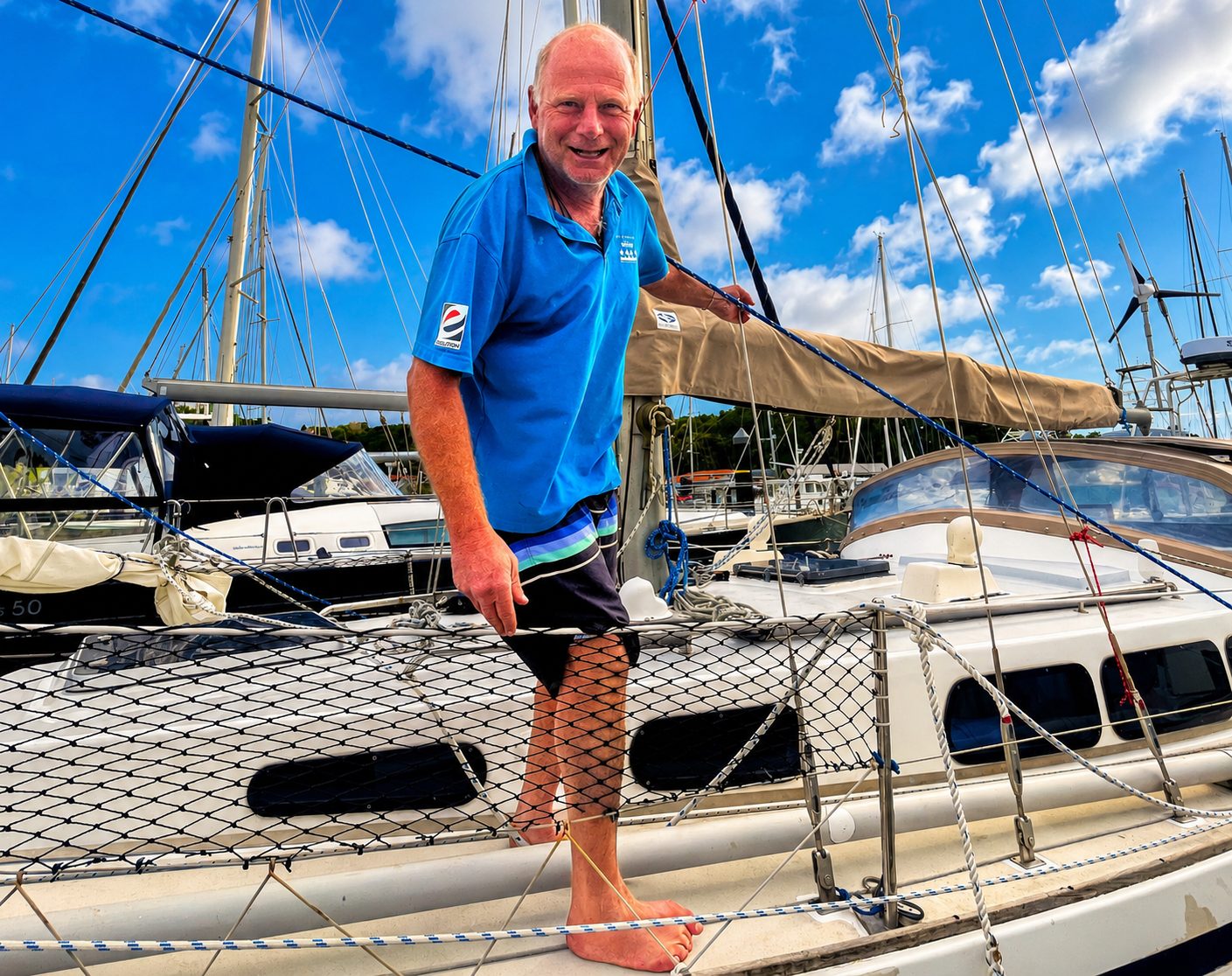
Doug Esterman and Fair Seasons, still out there, still loving it
The finish
With 521 miles to go, Esterman called in to have a chat with Boating New Zealand on a poor connection. He was coming back from being sick, navigating without Starlink, steering by wind vane when the autopilot gave up. Asked about the prize-giving at Southport Yacht Club: “I don’t want to miss the party.”
And he hasn’t. Today he crossed the line at 12:03pm NZST (11 June), in daylight, a bonus. He had sailed 1,366 nautical miles. Eleventh overall on line honours, ninth on PHRF corrected time at 8 days 8 hours 24 minutes and 53 seconds.
After the race, no flight home is booked. His osteopathy practice is wound down for the year. There is a possible drift north toward Vanuatu and Fiji, where Esterman has previously done volunteer osteopathy work in island communities. The months ahead are deliberately open. That is the kind of man he is.
In 24 years of Women on Water, Esterman helped hundreds of people find the ocean. On 11 June 2026, he found his own finish line.
Well sailed, Doug. You made the party.