Sam Goodchild has already crossed into the Arctic Circle, but for most of the fleet battling upwind toward 66° North, the real work is just beginning. The polar boundary lies just hours ahead for the trailing competitors in the Vendée Arctique, and they’re picking their way through an increasingly alien seascape: endless daylight, wind-hammered islands, and the peculiar weightlessness of sailing at the edge of the map.
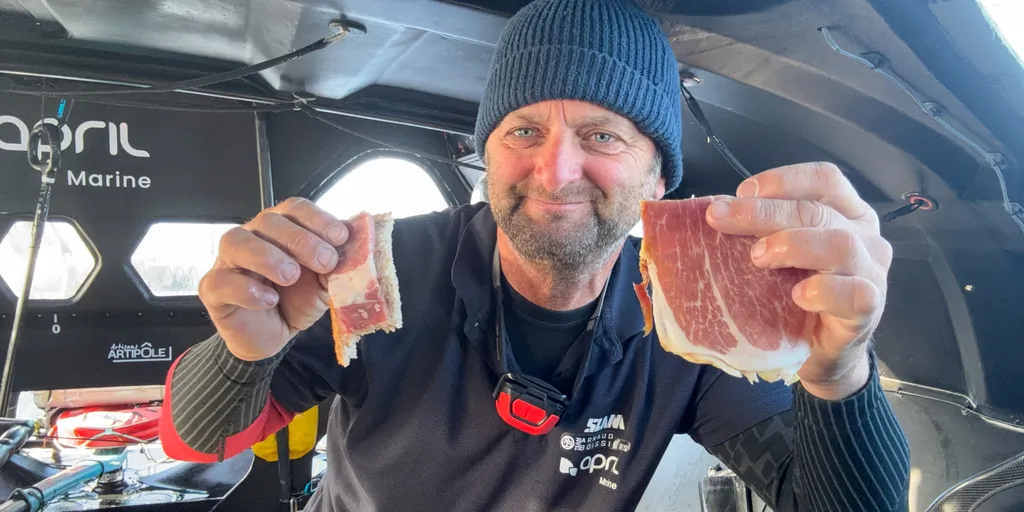
Arnaud Boissières pulled back from the helm of APRIL Marine to take stock of his surroundings. “It’s a pity I can barely see the Faroes,” he said during a lull that had him nearly becalmed. “Visibility is terrible. But I’ve had nothing but time to absorb the landscape since I’ve been practically stopped all morning.” He paused, the reality of the situation catching up with him. “Honestly, though, it’s extraordinary to be racing up here. The polar circle is less than 300 nautical miles away now. That alone makes you grin.”
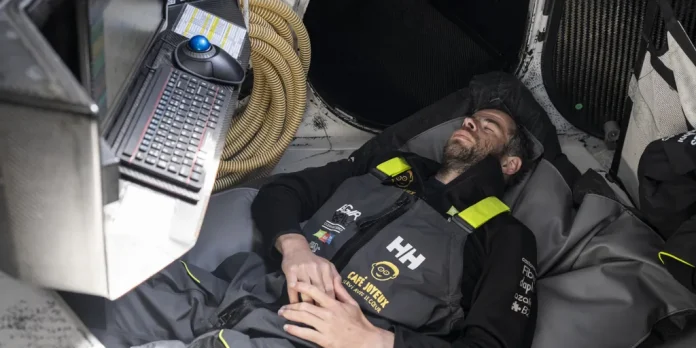
The conditions were shifting and strange. Boissières noted that the air had turned cool, though not unpleasantly so. Earlier, he’d spotted a small cargo vessel—a jarring sight in such remote waters. Sunlight had lingered for hours without really setting. “It’s genuinely magical to be up there,” he said. The boat had slowed to a crawl in slack wind, forcing him to rig a different sail and search for breeze. Sleep had become a priority; when the boat went dead, he seized the chance to rest properly. No heavy seas, no danger, just the luxury of solid rest. “I managed decent sleep sessions. It recharged my batteries, and I feel ready for whatever comes next.”
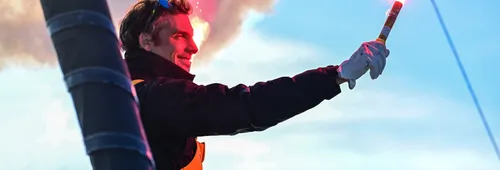


His approach to the polar circle remained fluid. Boissières still had options, still hadn’t locked in his exact crossing point. Twenty-four to thirty hours seemed plausible, depending on how the wind rebuilt. Getting clear of the becalm mattered first. Everything else could wait.
Nicolas d’Estais aboard Café Joyeux and Ambrogio Beccaria on Allagrande Mapei were working through their own calculations, hunting for the best passage and adapting to an environment that transformed hour by hour. For all three skippers, the Arctic represented neither dread nor mere logistics. It was a threshold they’d trained for, and now that arrival was near, the strangeness of it—the permanent light, the isolation, the sheer improbability of being there at all—was sinking in. “I’m lucky to be here,” Boissières said simply. “Really lucky.”