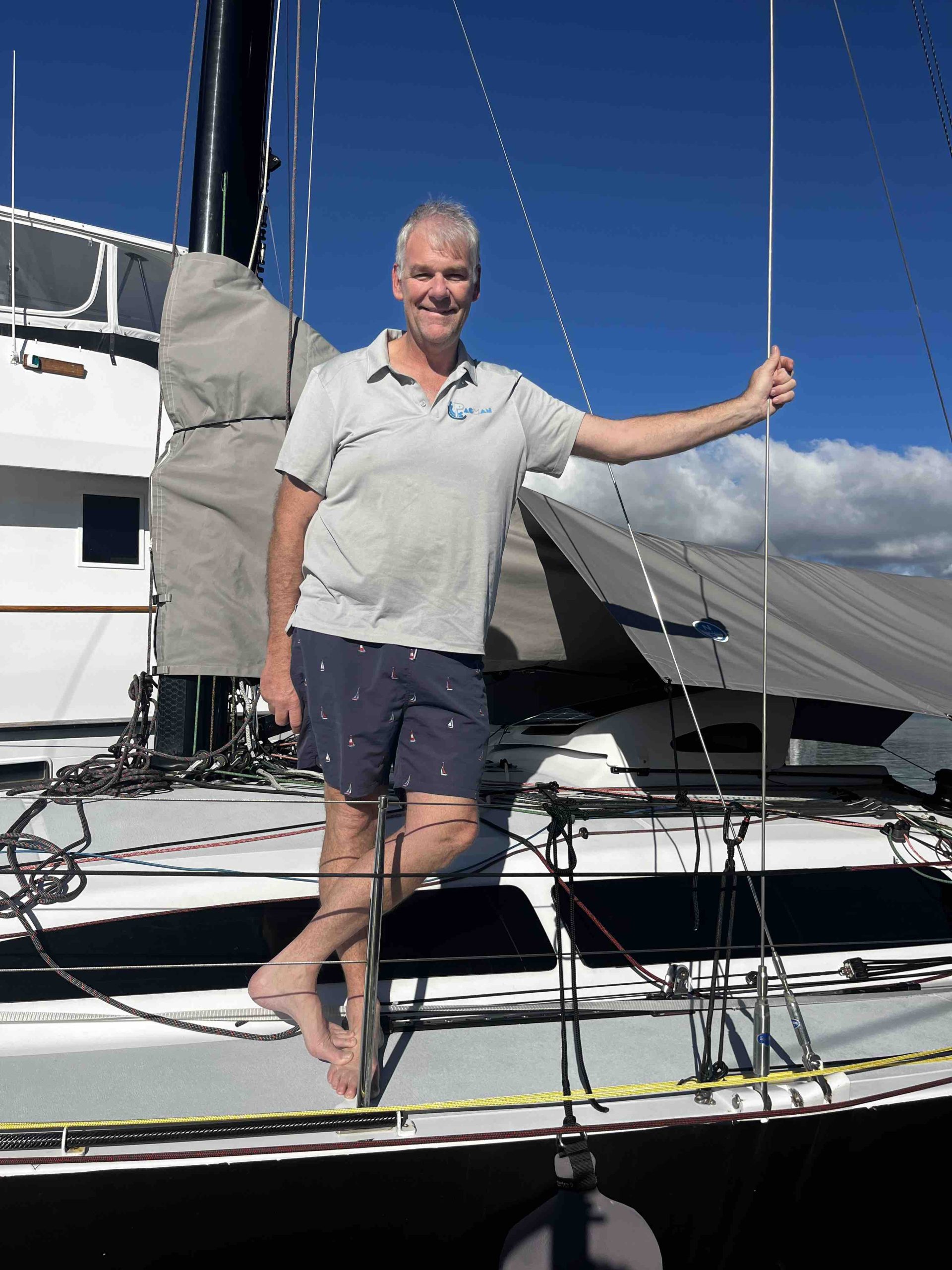
Peter Elkington had a Young 11 as a kid. His family sailed one for 15 years. When he spotted one for sale in 2018, he bought it. Then he looked at what 40 years had done to the class and started pulling it apart.
New keel with a lead bulb, new rig, bowsprit, new rudder, water ballast, powered winches, and loose-luff sails on furlers. The boat came out of the water in late 2022 and came back as something quite different. Pacman now tips the scales at around 4.3 tonnes, the keel running almost a metre deeper than standard. Elkington knows it’s not light. “It’d be nice if it was half a ton lighter. ” But it’s also got a teak interior, hot water, showers, and a microwave. The family takes it up the reef. He’s not apologising for the compromise.
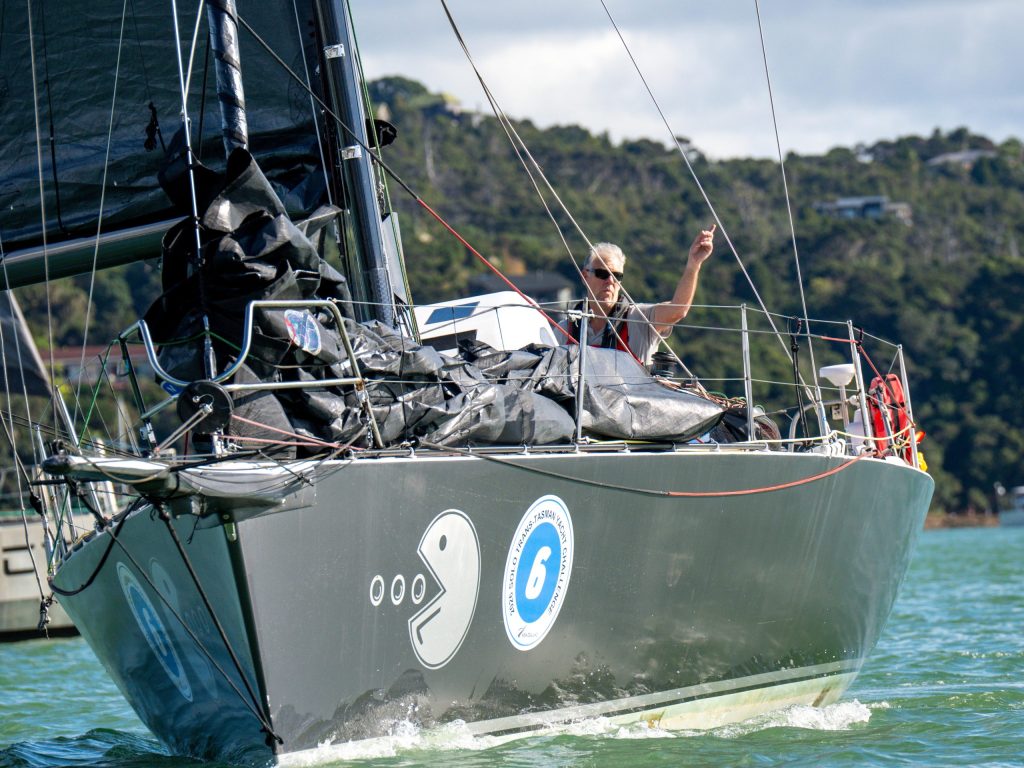
Two-handed to now
Elkington arrived in Opua six weeks before the start, the first of the four Australian competitors to make the crossing. He waited for a weather window and came when conditions were good. He is under no illusions about the return trip.
The racing background is two-handed rather than solo: four Sydney to Hobart races, most of the Australian coastal offshore circuit, deliveries, time on 50, 60, 70, and 100-footers. From those bigger boats, he borrowed the system’s logic. “If you translate them down to a boat like this it makes doing it single-handed relatively easy.” Almost everything runs from the cockpit: furled sails, powered winches, and ropes going everywhere.




Weather and routing
The forecast at the top of New Zealand is what the fleet is talking about. Gusts to 50 or 60 knots by the time the leaders get there, with the question being whether to push further north for a lighter breeze at the cost of extra miles.
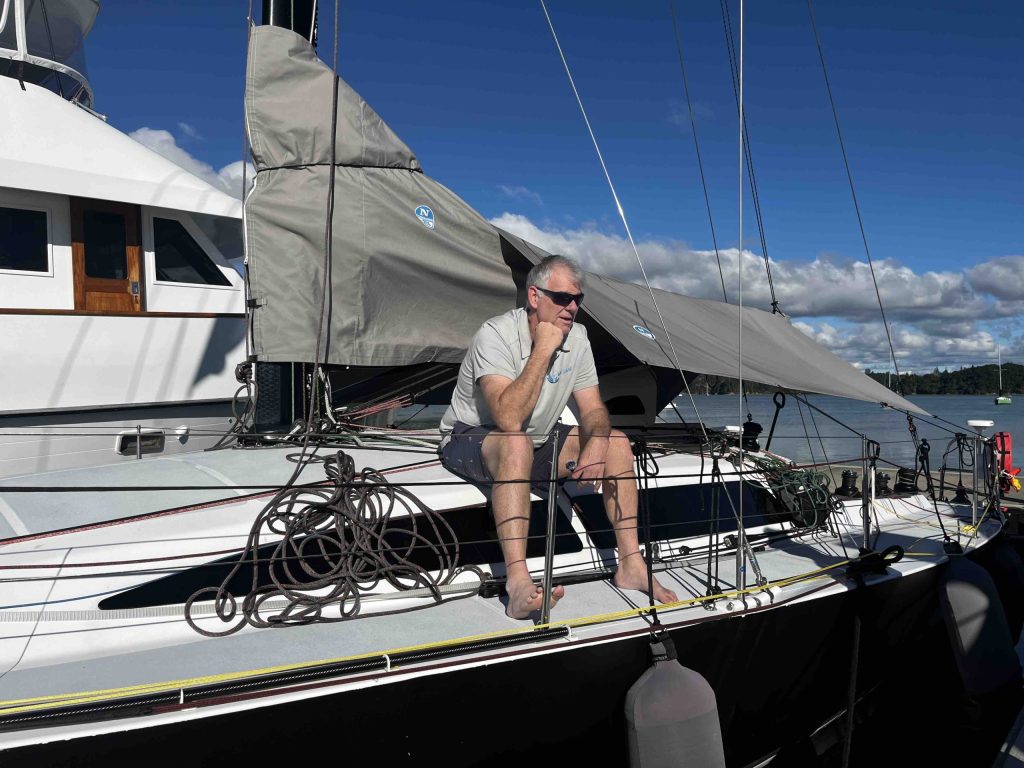
Elkington doesn’t have a strong view yet. “A hundred miles might have five or ten knots less breeze, but it’s slower overall, so it’s just a function of what works.” He puts himself a day to a day and a half behind the Class 40’s and the trimaran, racing the other modified cruisers through the middle of the fleet. The routing call, he says, is one for when you’re actually at the top of New Zealand and can see what it’s doing.
Sleep when you can
On sleep, Elkington has three words where others have a plan: sleep when you can. “If the pilot’s managing it and the boat’s going okay, then have sleep. If it’s not, then don’t.”
He drops off in 20 minutes. More than an hour, and he’s harder to wake. Alarms cover wind shifts, heading changes, and performance drops. AIS is aboard. No radar.

A couple of weeks before the start, the fleet did a medical course with Dr Dave.
“Don’t do dumb shit,” Elkington says. “I think that’s a pretty reasonable approach.”