Papua New Guinea doesn’t see many cruisers due to its reputation for being crime-ridden with raging tribal warfare and corrupt police. And it’s true, there have been assaults on boats in past years – in 2024 one yachtie got murdered by locals in Milne Bay.
But to conclude from a few isolated incidents that the whole region must be given a wide berth would be like declaring the whole of the US a no-go zone because of the high crime rates in cities, or like skipping Italy during a tour of Europe for fear of the mafia.
We visited PNG twice in the last two years, avoided risky areas, and had a great time cruising the islands and atolls on the eastern and northern side of the country.
Sailing up from the Solomon Islands, the closest, most logical port of entry for PNG would be Buka, the capital of the autonomous region of Bougainville. But with travel warnings on www.noonsite.com and on various government websites, we didn’t dare to stop in Bougainville and instead checked in at Kavieng (New Ireland), which is a well-known stop for cruising boats with a safe anchorage off Nusa Resort. There we found friendly, easy-going officials and surprisingly good shopping in a town with welcoming, positive vibes.
New Ireland and New Hanover
For most boaters Kavieng is just a stop-over on the way to Indonesia, but we stayed in the area for about two months. According to statistics, May to November should bring SE winds in the area, which are then supposed to switch over to the northwest from December onwards, but we experienced very light easterlies or no wind at all during December and January. We used the calm weather to island-hop through the maze of islands just off Kavieng and then up the chain of low-lying coral islets on the barrier reef of New Hanover Island.
Initially we felt constantly on the edge. We had installed metal bars across all the hatches to be able to safely leave them open at night, mounted motion sensor lights to warn us if anybody tried to board Pitufa at night and stored everything that couldn’t be locked below deck to avoid attracting thieves.
The first time we saw an open boat full of men approaching us at high speed we briefly panicked – would they ram the side of Pitufa, jump aboard and murder us? But no, they waved, stopped for a chat, and offered us some freshly caught fish. For free! Ashamed of our paranoid reaction we sheepishly dived into our gift-box to look for something to give them as a thank-you.
We had also read that it is crucial to visit the chief of each island right after anchoring, to bring presents, ask for permission to stay, and more importantly, be under his protection in case somebody would try to rob us or demand anchoring fees.

This may well be true in anchorages on the mainland, but on many of the little islands, we were often directed to the ‘chairman’ (like a mayor) for a very informal welcome with neither anchoring fees nor obligatory presents expected. Even so, we continued our habit of visiting each village and bringing small gifts anyway.
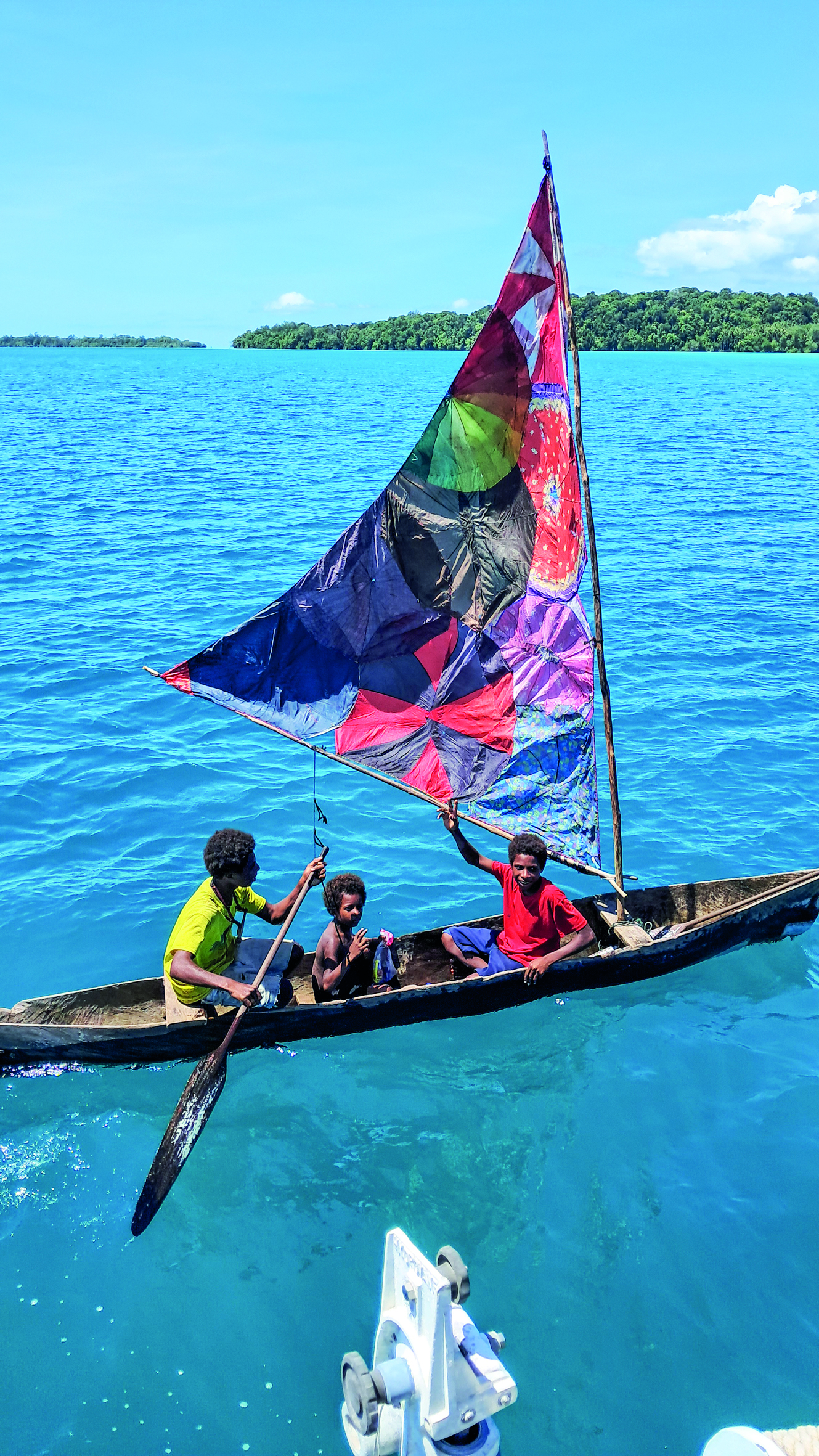
…we soon had canoes paddling towards us: sometimes just curious kids; on other islands, mainly adults coming to trade.
Wherever we anchored, we soon had canoes paddling towards us: sometimes just curious kids; on other islands, mainly adults coming to trade. The first day was usually the busiest with everyone eager to meet the strangers and check out their weird, floating home. We sometimes had a fleet of 10 canoes circling us and couldn’t get any work (or rest) done as we felt obliged to give one group after another a tour of the boat. I can imagine crews quickly hopping from anchorage to anchorage would soon get tired of this kind of invasion fleet, but the trick is to stay longer in any one place – once the first excitement has worn off, life aboard returns to normal with only occasional visits.
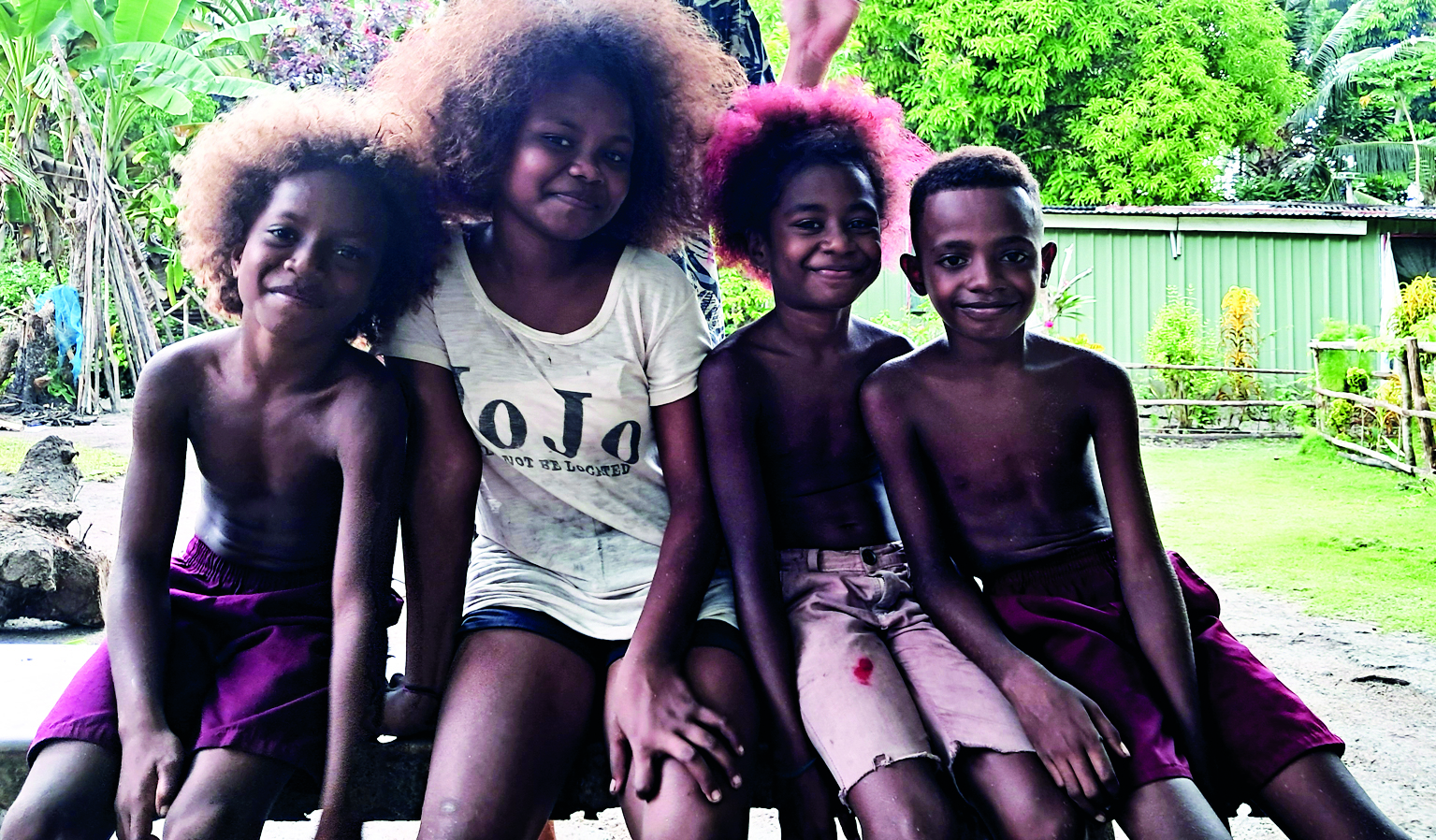
We really can’t blame the islanders for rushing out in excitement at the sight of a sailing boat though – on most islands we were told that we were the first boat to call in 10 or even 15 years! “We used to have yachts coming here, but no more…” A shame really, as the islanders would be happy to have more visitors, to ‘tell stories’ (PNG Pidgin for chatting) and also to barter.
St. Matthias group
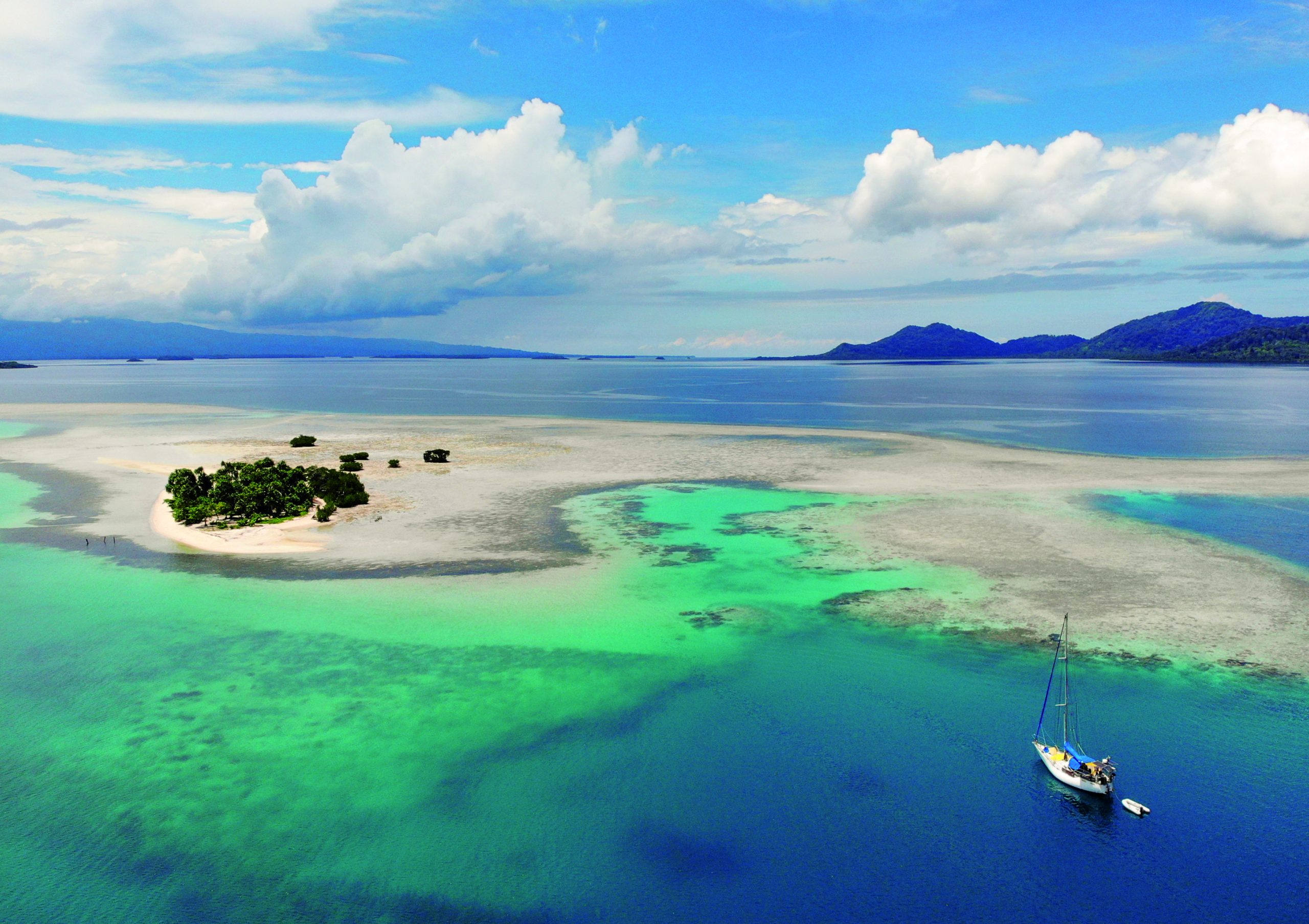
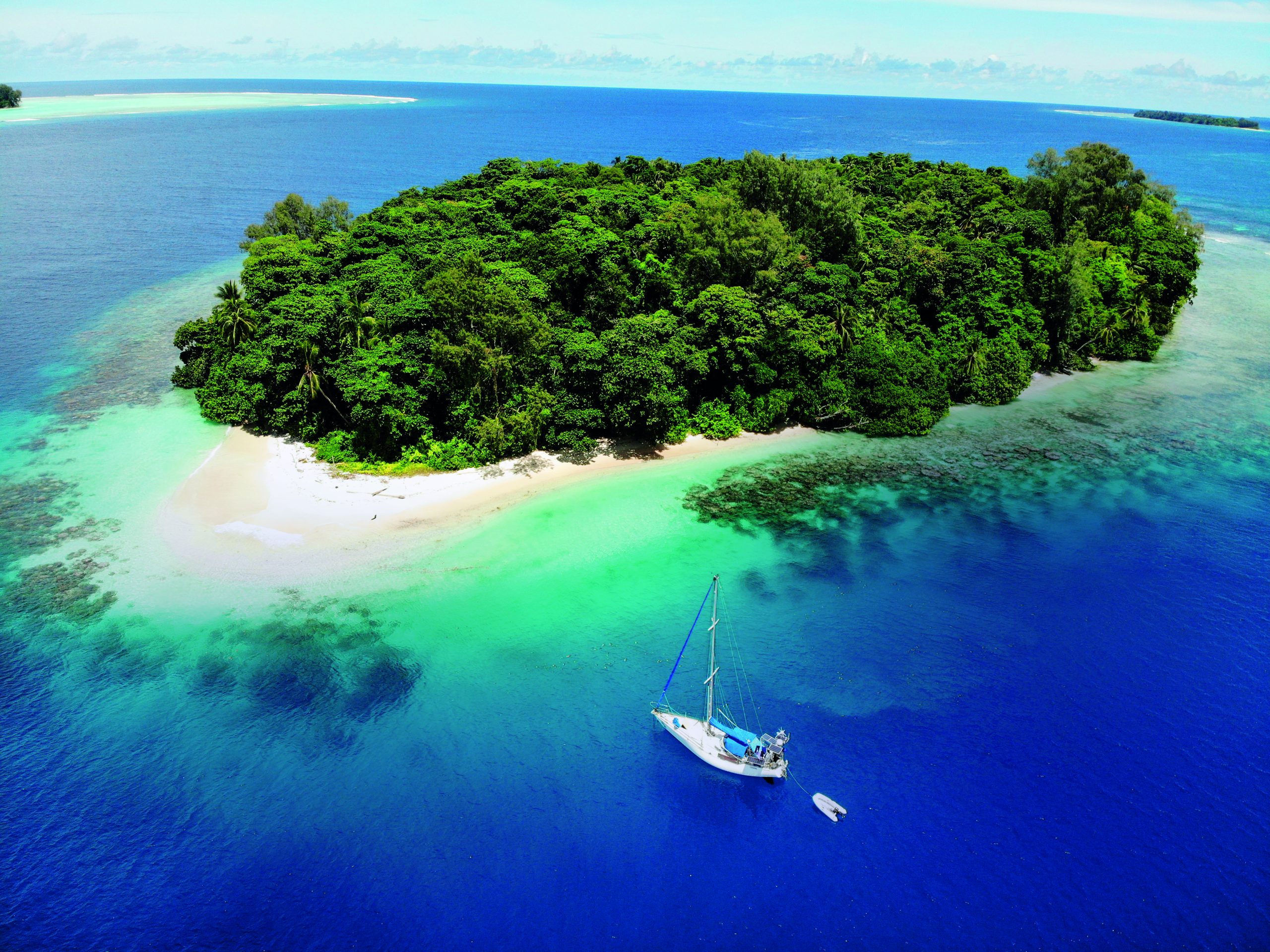
We sailed up to the nearby St. Matthias group and found some pretty anchorages in the shallow lagoon of Eloaua. There, the formerly irregular supply ship has stopped calling altogether, so you can imagine how keen the people are to trade locally grown vegetables and fruit for second-hand clothes, school supplies, sunglasses, reading glasses, basic supplies like rice, sugar and instant noodles, and even household equipment like frying pans and towels. Used spinnaker material for the sailing canoes would be a perfect gift as well, but please don’t encourage spearfishing by giving away snorkelling gear – the reefs desperately need herbivores like parrot fish and surgeon fish to keep the algae at bay. Better to give out fishhooks and lines that target less vital species like snappers, jacks, etc.
We sailed up to the nearby St. Matthias group and found some pretty anchorages in the shallow lagoon of Eloaua.
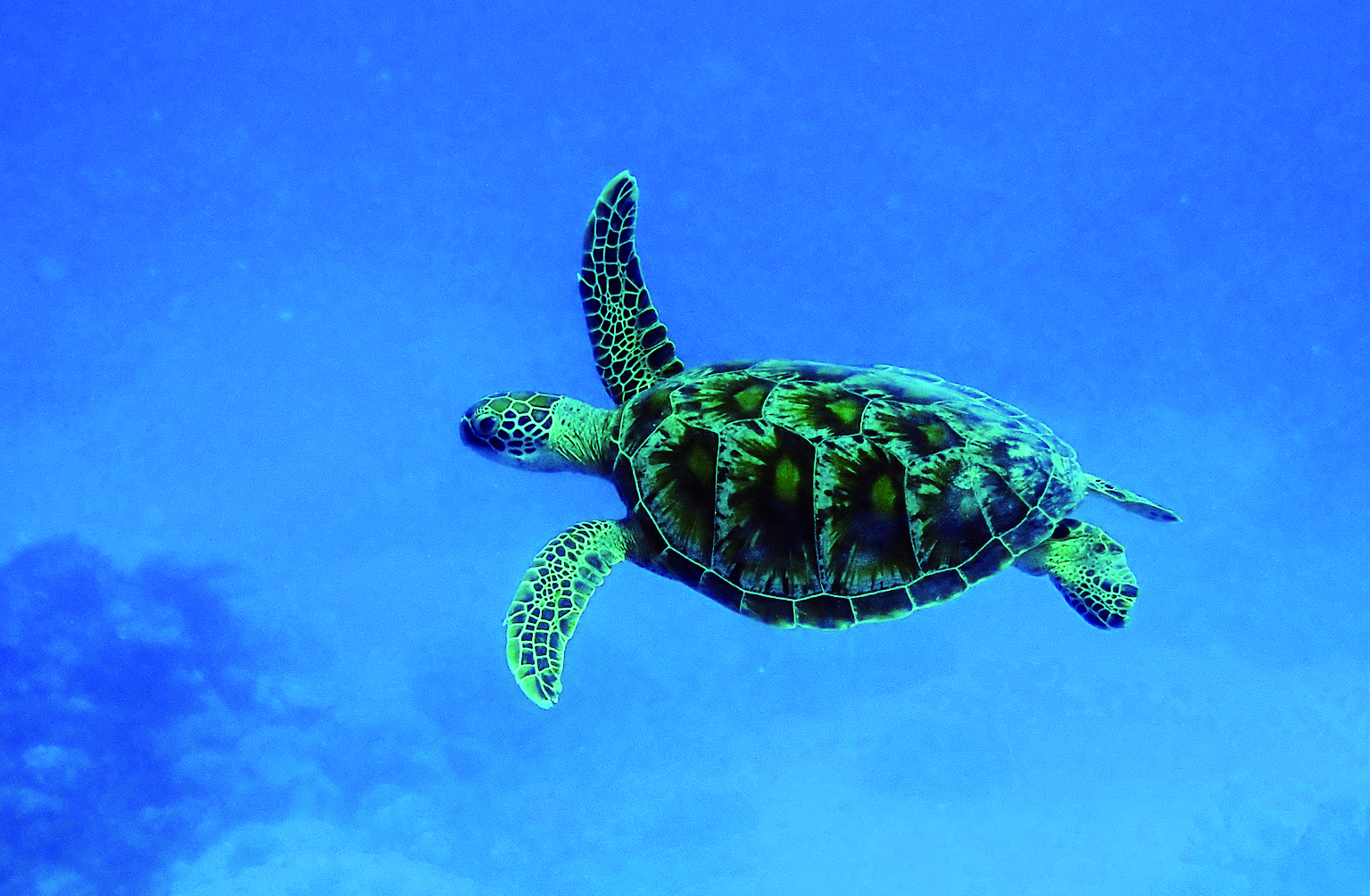
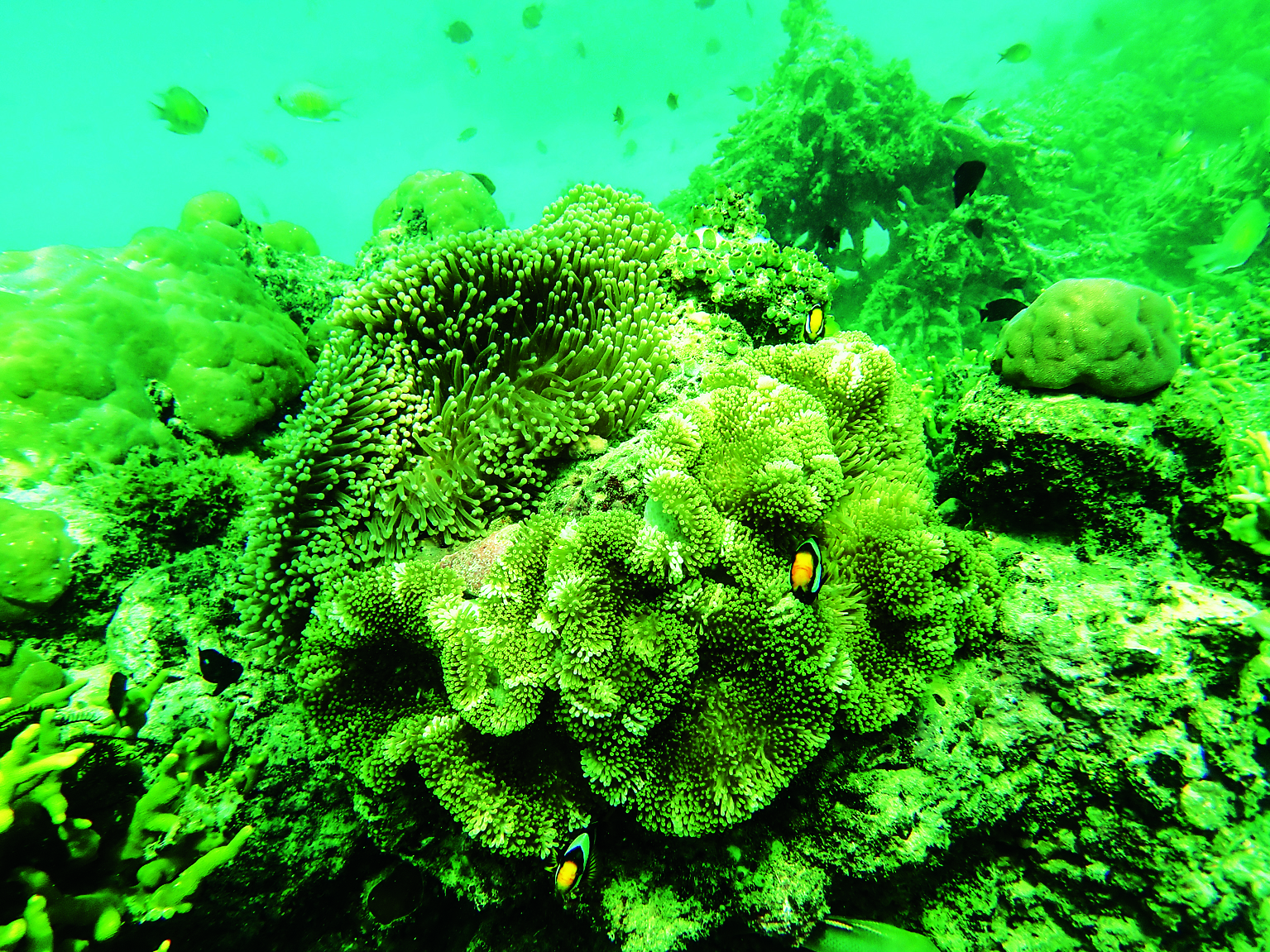
We were surprised to find the reefs teeming with turtles, giant clams and lobsters, not because of conservation efforts, but for a much more prosaic reason: most of the islanders had converted to Seventh Day Adventism which forbids them to eat such animals.
The autonomous region of Bougainville
Our first sailing trip to PNG made us realise that reports and rumours need to be taken with a grain of salt, so we were a bit bolder the next time around. Locals on outer islands had assured us that the reportedly ‘lawless’ autonomous region of Bougainville was a friendly place to visit, so we decided to check in at its capital Buka when we sailed northwards from the Solomons once again in October 2025. Retrospectively we could have cleared customs halfway up the island at Kieta, the harbour of the former capital Sarawa, but we didn’t know that then, so we proceeded to the northern end of Bougainville Island, where Buka straddles both sides of the Buka channel.
We had read reports from boats that were allegedly warned by officials in Buka not to linger, as it wasn’t safe. Well, either the situation has changed or the officials. We were greeted with warm smiles and reassurances that we were perfectly safe in our anchorage next to Sohano island and welcome to stay as long as we wanted.
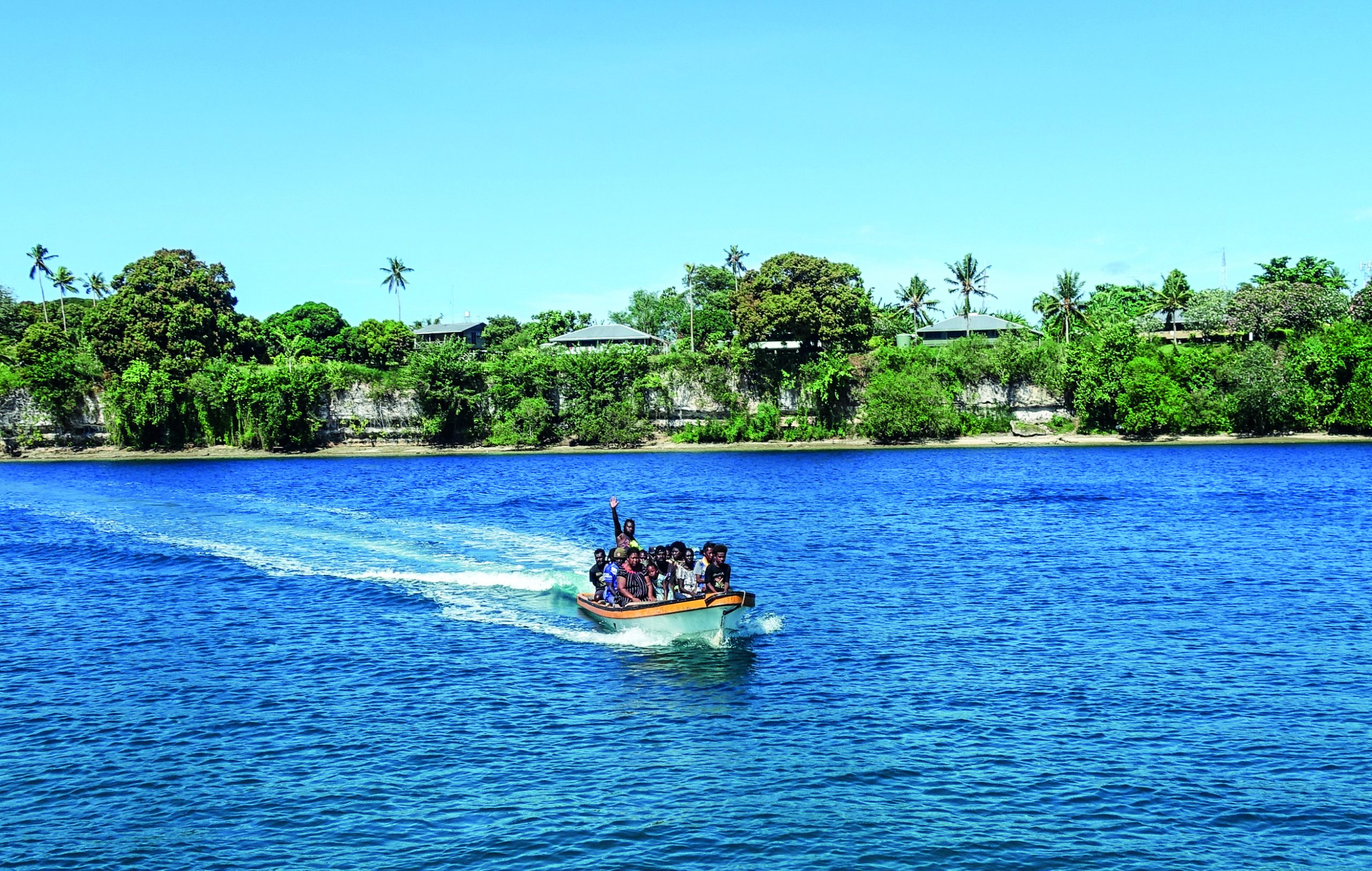
We had done our e-visa online and emailed ahead to all officials (details and contacts can be found on our blog www.pitufa.at in the ‘Our Guides’ section), so the clearance was quick and we were free to flag down one of the many water taxis and buzz over to Buka town. Theoretically you could take your own dinghy to run errands, but the waters of Buka channel are often churned up by strong currents and standing waves in opposing winds, and on top of that the traffic is frightening with dozens of taxi boats connecting the two sides of town, private boats, and two ferries adding their wake to the boisterous ride.
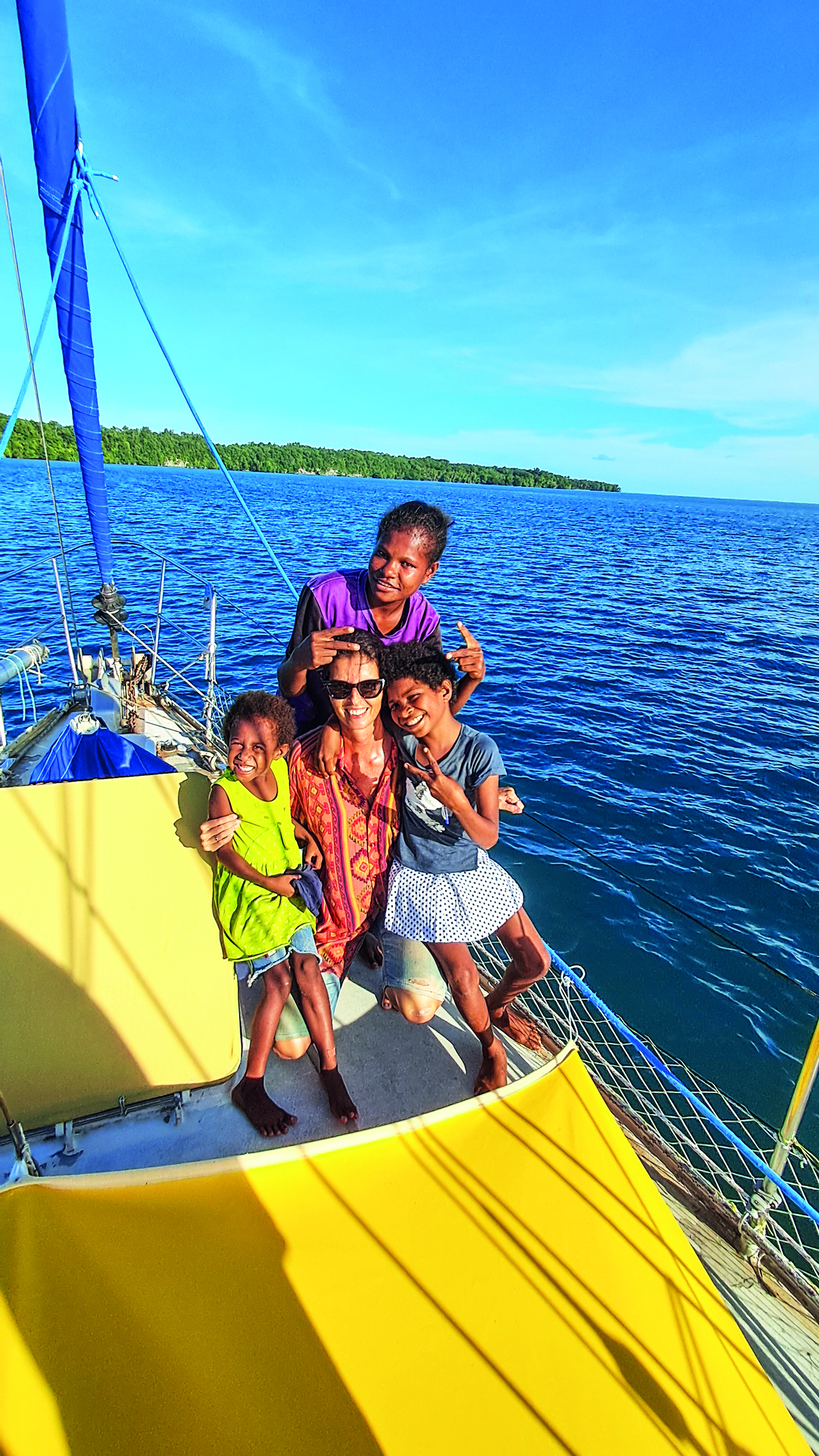
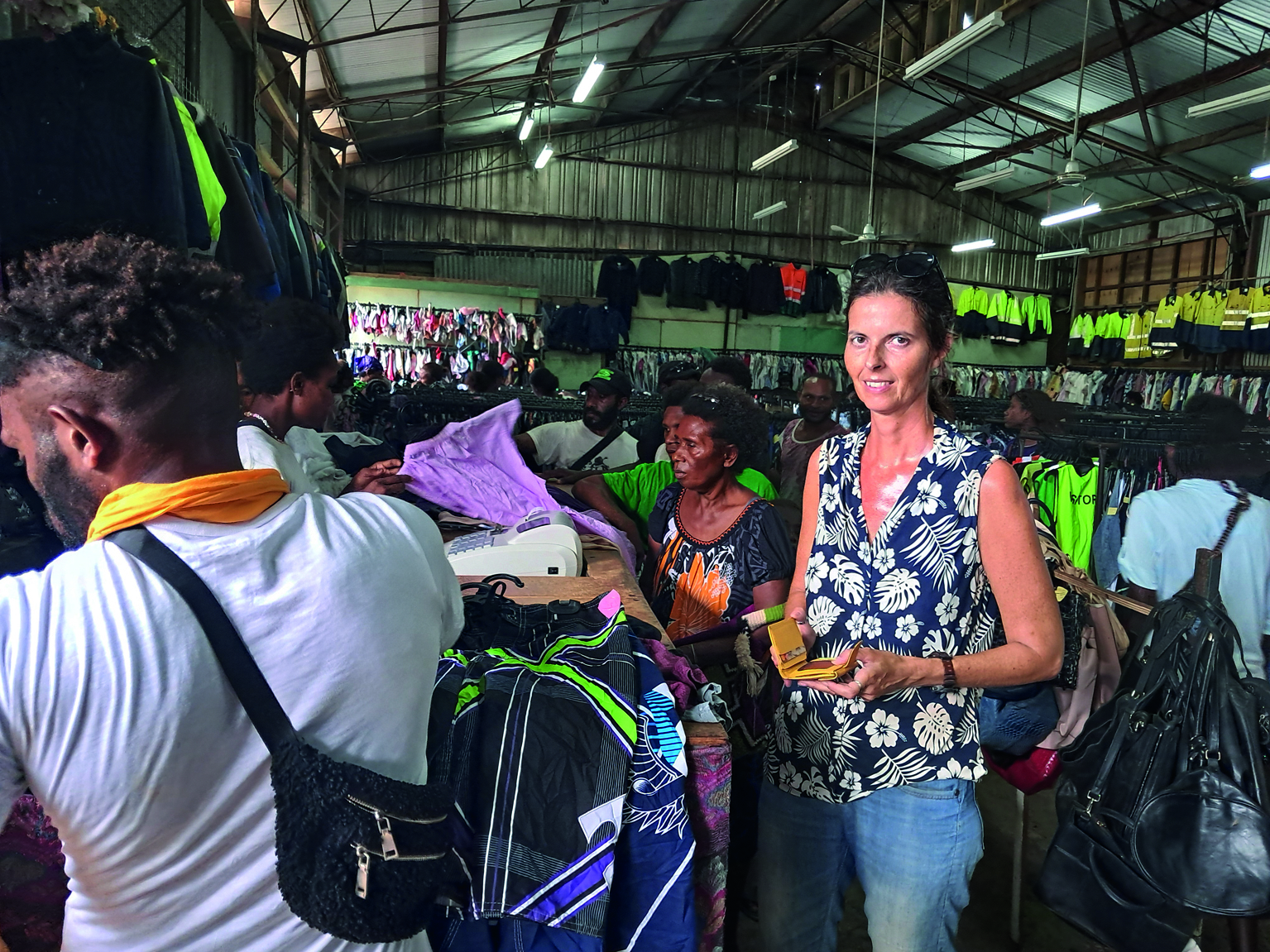
We stayed in town for about a week, stocked up on provisions in the basic supermarkets, got some fresh veg at the market, did a diesel run with jerry cans, and a sightseeing road trip along the paved(!) coastal road. We have hardly ever before felt so welcome in a place: smiling faces on the road, strangers stopped for a chat, the bus driver insisted on taking us not just to the station but directly to our destination, and at the taxi boat stop we had a hard time choosing a boat as all drivers were yelling “Sailboat, come!” to get the chance to see our floating home up close.
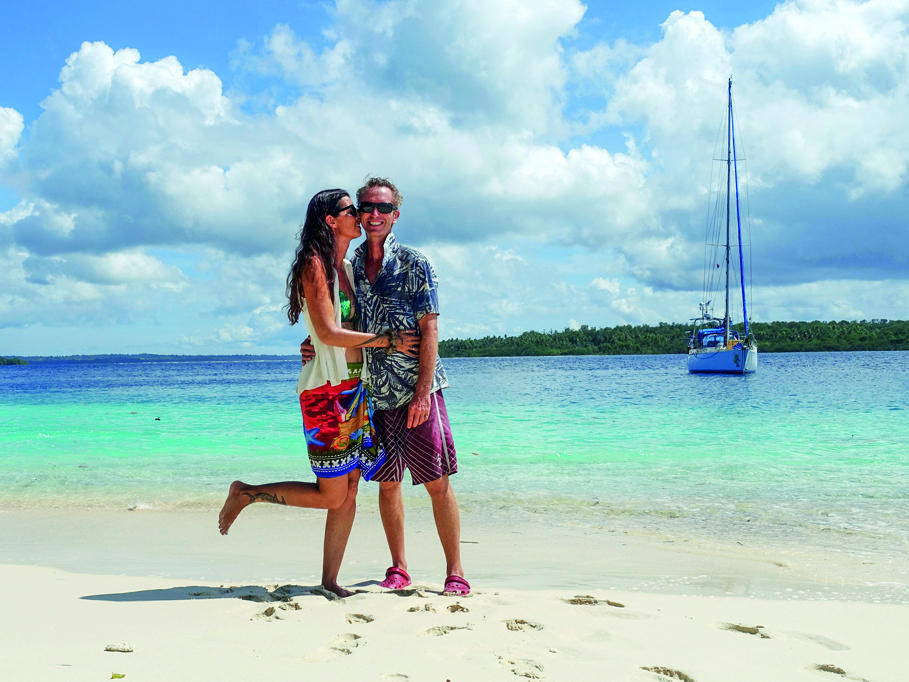
We explored the reef maze in the lagoon just west of Buka town, anchored in some of the deep bays on the northern side of Bougainville Island and found postcard-perfect, scenic anchorages off densely forested islands with white beaches on the eastern side of Bougainville. We didn’t visit the western side of Bougainville as locals warned us about risky areas there. Reading online, we found that there have indeed been incidents with robbers boarding yachts at night years ago, but of course the situation might have changed in the meantime.
The interior of Bougainville would be worth a trip as there are spectacular, rugged mountains, an active volcano and several crater lakes waiting to be explored. These days it’s even possible to visit the central area and the former capital of Arawa, where the long-closed Panguna Mine is located. Bougainville is culturally, historically and geographically closer to the Solomon Islands than to PNG, yet the colonial powers made the island part of Papua New Guinea when giving the region independence in 1976. The Australian operated Panguna Mine, where copper and gold were extracted from 1972, caused protests right from the start as the mine was polluting the mountains, lakes and sea while profits went to Australia and the central government in PNG. In 1989 the protests culminated in a civil war that raged for 10 years and cost the lives of approximately 20,000 people.
“We have a culture of peace,” the mayor of the village in Rava Bay told us and showed us a stone carved by their ancestors with peace agreements.
That bloody history is long forgiven: “We have a culture of peace,” the mayor of the village in Rava Bay told us and showed us a stone carved by their ancestors with peace agreements. Eco-tours and lodges are starting to attract visitors, the islanders are hoping to attract more yachties, and some companies are trying to get on the market with organic coffee, cocoa, chocolate and spices. Bougainville is striving to become independent in 2027 – and without ratification from PNG and a major upgrade in infrastructure that won’t be easy – but we wish those friendly, industrious people all the best for a peaceful transition and a successful future.