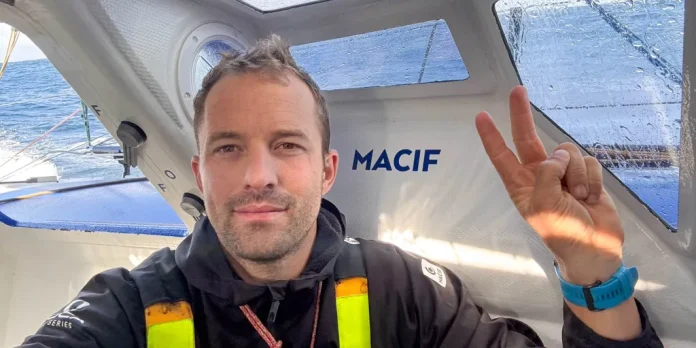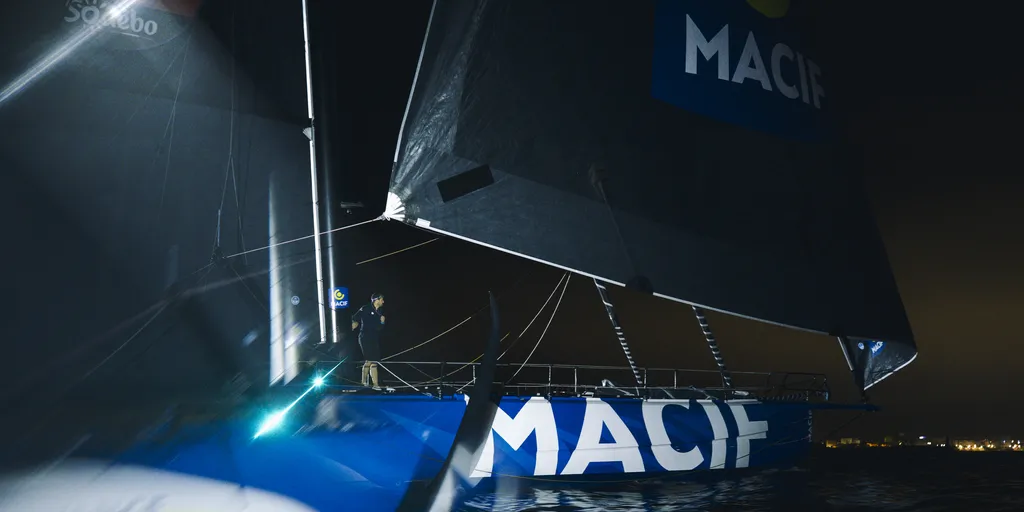
Sam Goodchild held the lead for nearly nine days. He’d owned the Vendée Arctique race from the first night, threading a perfect line through every tactical choice, every weather decision, every moment of pressure that comes with carrying a target on your back. Then, a few hours from the finish, a windless void swallowed the course and his victory with it.
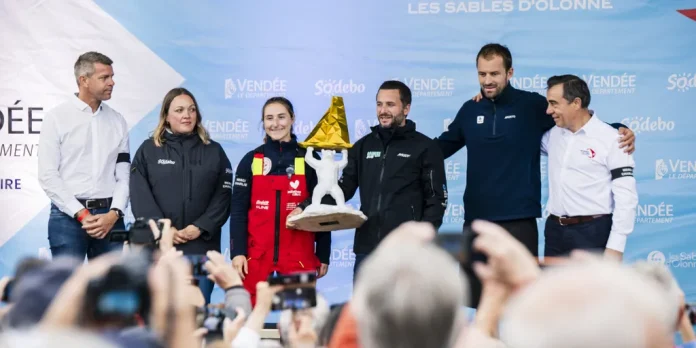
Ambrogio Beccaria crossed the line on Monday 16 June (NZST) at 2:38 pm, with Goodchild following 1 hour 15 minutes and 3 seconds later. The Franco-British skipper had covered 3,219.86 nm at an average speed of 15.5 knots over 8 days 15 hours 20 minutes 53 seconds. He’d done nearly everything right. The finish just wasn’t his.
Goodchild arrived at the Vendée Arctique as the bookmaker’s favourite with MACIF Santé Prévoyance, a shift from his outsider days racing under Vulnérable. He’d prepared publicly for that weight, telling journalists he needed to “respond to the expectations it brings.” That’s the kind of pressure most skippers try to hide. Goodchild owned it.

He seized the lead on the first night and never relinquished it—not when Corentin Horeau pushed hard aboard MACSF before being forced to retire, not when Élodie Bonafous tried to track his sistership across the Arctic. Goodchild set the tempo. He made the calls. When the fleet crossed the polar circle and turned south, he threw down an ambitious line between Ireland and England through the North Channel, the sort of move that belongs to his younger Figaro Beneteau years.

Then came the doldrums. Predictable enough on a weather chart from three days out; brutally unfair when it actually happened. Goodchild hit the windless zone first on Monday afternoon (NZST) and watched his lead evaporate as Beccaria caught and passed him. He had no answer. The wind simply wasn’t there.
This loss lands differently for Goodchild than for others. His IMOCA record already carries weight—third in the Transat Jacques Vabre, victory in Return to Base in 2023, the Caps Race and The Ocean Race Europe last year. He’s proven himself among the best in the class. A second place on the Vendée Arctique won’t change that, though the manner of it—so close, so controllable until it wasn’t—will sting harder than most defeats.
The Arctic race simply reminded everyone what ocean racing always does: dominance counts for nothing when the weather decides otherwise. Goodchild will be back with that lesson burning.