Seven races. Six different winners. The 2026 Tour Voile offshore sailing event is living up to its billing as a wide-open competition where no team can afford to relax, and Saturday’s second day of racing proved exactly why the fleet remains so stubbornly resistant to hierarchy.
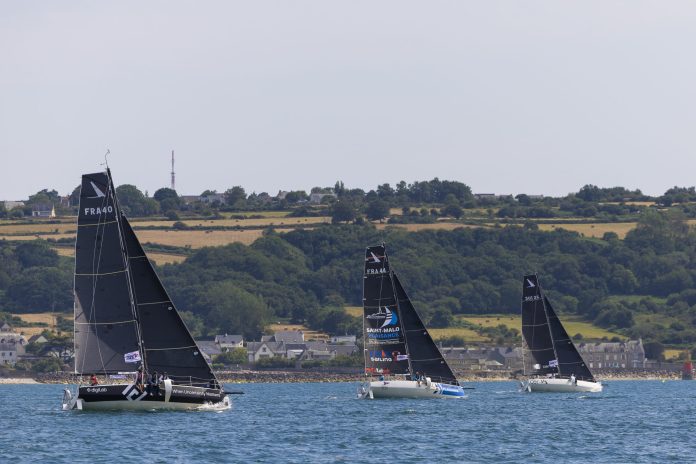
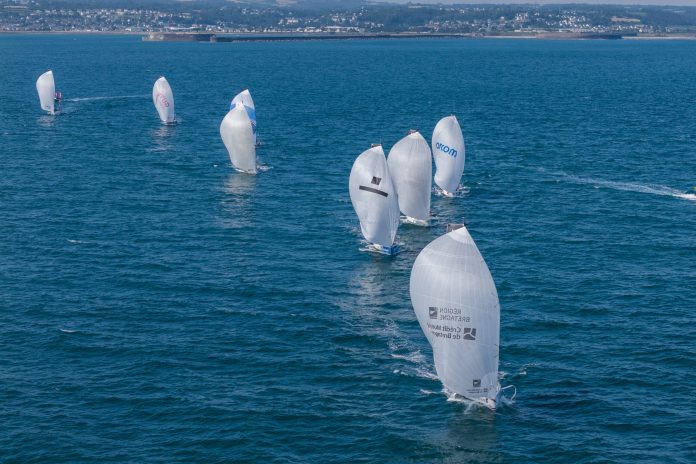
After Friday’s steady breeze, the nine competing crews faced an entirely different challenge: light, unstable wind that shifted constantly in both strength and direction under a storm system hovering near the Cotentin peninsula. Three new races—one nine-mile coastal leg and two constructed courses—saw APCC Centre de Formation, CER – Ville de Genève, and La Réunion each claim a victory. Région Bretagne – CMB Espoir continues to lead overall and has secured the Cotentin Grand Prix through the early stages.
When Mental Stamina Mattered More Than Horsepower
The contrast with Friday could not have been sharper. Where yesterday’s crews could lean on a steady wind, Saturday demanded constant reading of the water. Oscillations, pressure shifts, fleeting gusts, and current effects turned each tack into a puzzle that seemed to have no single correct answer—until the conditions shifted again. Boats that were ahead by hundreds of metres one moment found themselves behind the next, with tactical decisions made in seconds producing immediate feedback.
“The brains were overheating today,” Aurélien Barthélemy of La Réunion said with a grin, describing the mental toll. Victor Le Pape praised his crew’s tactician, Lola, for the concentration required: “There were pockets of wind everywhere. She really had to dig deep.” Positions shifted relentlessly, gaps closed and reopened. Three races, three different winners—a scenario few organisers could have scripted better for keeping suspense alive in the opening phase of the Tour Voile.
Opportunism and Resilience Rewarded
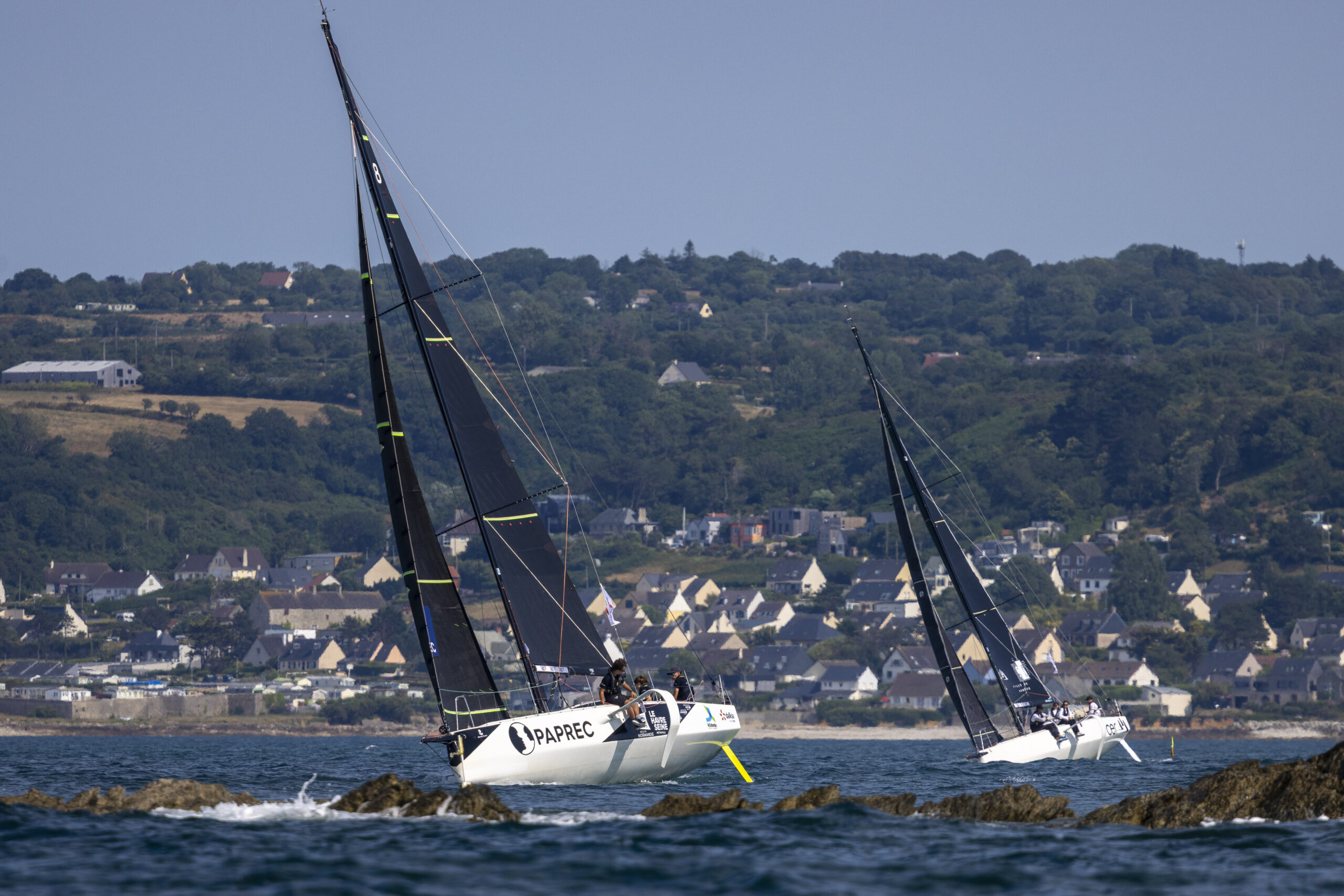
APCC Centre de Formation mastered Saturday’s traps through patience and clear-eyed decision-making in conditions where haste proved costly. Enora Percheron explained their approach: following oscillations, hunting pressure zones, and managing a strong current on the coastal leg. Though they didn’t start well, they hugged the rocks more closely than rivals leaving the harbour—the decisive move. “Everyone is capable of leading this race,” Percheron noted, underlining the fleet’s competitive depth.
La Réunion, opening their win column, showed similar resilience. Barthélemy acknowledged they fell short on the coastal race where the Figaro racers’ experience clearly showed, but patient tactics brought them back repeatedly until victory rewarded their perseverance.
CER – Ville de Genève’s swing from last place in one race to winning the next illustrated both the day’s unpredictability and the Swiss team’s comfort in oscillating conditions. Nils Palmieri noted that Lake Geneva’s daily weather teaches the same lessons: “We almost race at home in these conditions.” Yet he kept perspective: a win validates their setup and shows they can compete, but consistency remains the real challenge.
Région Bretagne – CMB Espoir, despite an early start on the coastal course, recovered quickly through well-executed tactical play in the current and consolidated their lead with another strong performance. Victor Le Pape reflected the leadership’s mindset: “We’re navigating even better than yesterday, finding our marks, really starting to gel as a team. But nothing is locked in. The gaps are tiny and every crew is getting stronger. In two weeks, staying in front will be brutally hard—and that’s what makes this Tour Voile so compelling.”

The Long Race Begins
For two days, crews have traded blows over races spanning mere miles. Starting Sunday, the scale shifts entirely. The next leg is a 226-mile rally to Saint-Malo via Needles Fairway at the western tip of the Isle of Wight. This is no longer about winning a single race; it is about building a coherent campaign across a genuine offshore passage. The Tour Voile’s true test begins now.