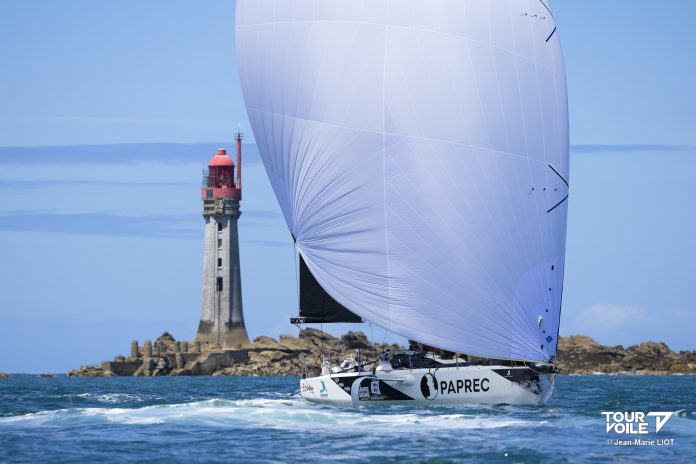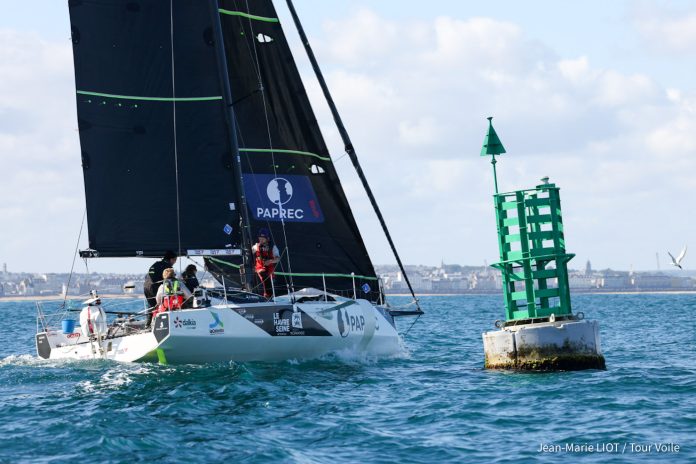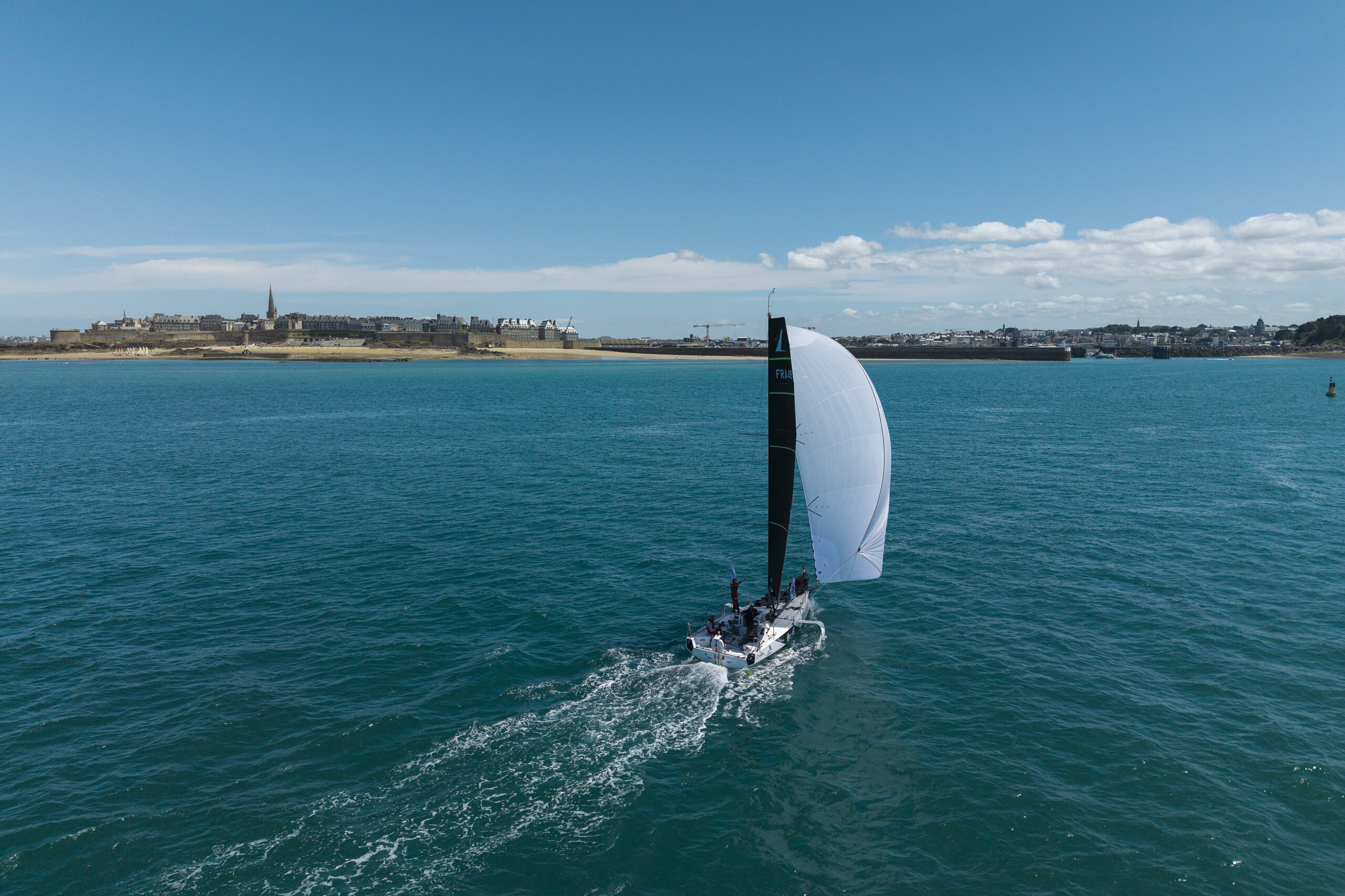
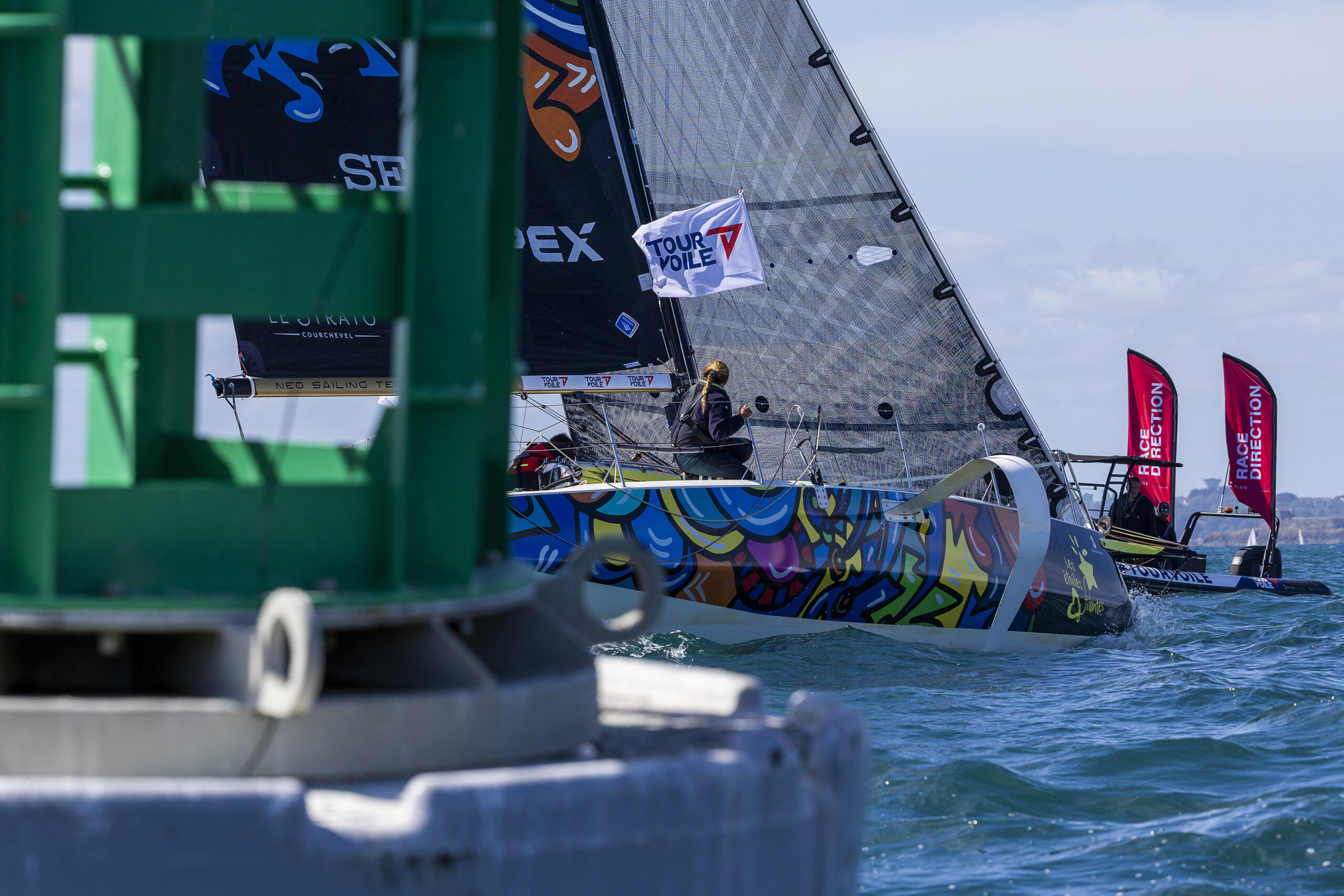
The nine Figaro Beneteau 3 crews competing in the 47th Tour Voile had barely secured their lines in Saint-Malo when they learned their next start time. Just hours after finishing the opening rally from Cherbourg-en-Cotentin, the fleet heads back out for a full day of racing in the Bretagne Plaisance Grand Prix. It’s a punishing schedule that characterizes Tour Voile—an event designed to grind down competitors through sheer volume of racing and time at sea. Crews will need to shift between three constructed courses and a coastal leg, each demanding different tactical reads and boat handling approaches.
Gates Open Early
The racing window runs from 9h16 through 20h01, giving the fleet just over ten hours on the water. Three geometric courses will come first, potentially followed by a longer coastal race if conditions cooperate. That final leg covers about 22 miles, threading through the waters around La Saint-Servantine, Vieux Banc Est, the Basse du Boujaron, and Fort La Latte. The mix—buoy racing alternating with coastal navigation—forces crews to recalibrate continuously.
Forecasters expect 6 to 8 knots this morning, light and patchy enough to punish sloppy trim or a wandering helm. Afternoon winds should fill to 10 to 12 knots, gradually favoring more aggressive tactics. By sunset, the fleet will have spent a full day chasing wind shifts, managing boat angles, and reading current set in unfamiliar waters.

The Fatigue Factor
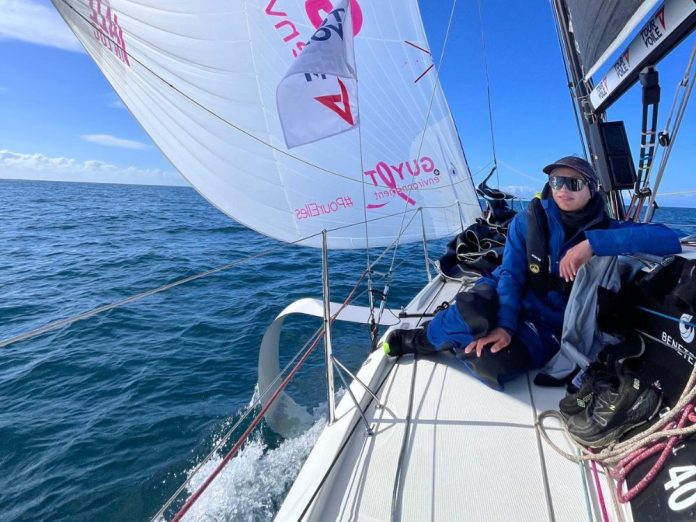
What separates this kind of racing from a single offshore leg is the accumulated wear. Crews arrive damp, sleep-deprived, and already thinking about what needs fixing on deck. Wet foulies that never truly dry between legs. Salt-stiff lines. A boat requiring endless small adjustments to track properly. These details compound over hours. A helmsman who’s sharp at sunrise loses edge by mid-afternoon. A trimmer’s calluses bleed. Communication gets clipped, miscues happen—the small mistakes that don’t cost you a single race but steal a placement across a fleet.
Tour Voile doesn’t build in recovery time. The event calendar expects crews to accept that exhaustion is part of the challenge. Physical fitness and tactical skill matter, certainly, but the real test becomes holding concentration when concentration feels harder to hold. The boats that win aren’t always the fastest ones on a single leg—they’re the ones whose crews maintain discipline and focus when everybody else is running on fumes.
For these nine teams, the next 24 hours represent Tour Voile in its essential form: relentless, unforgiving, and indifferent to how much rest anyone got the night before.