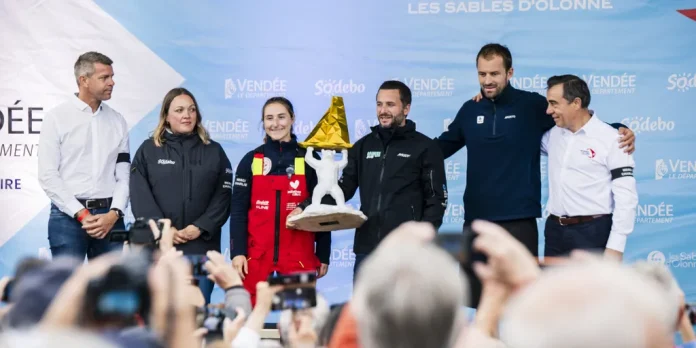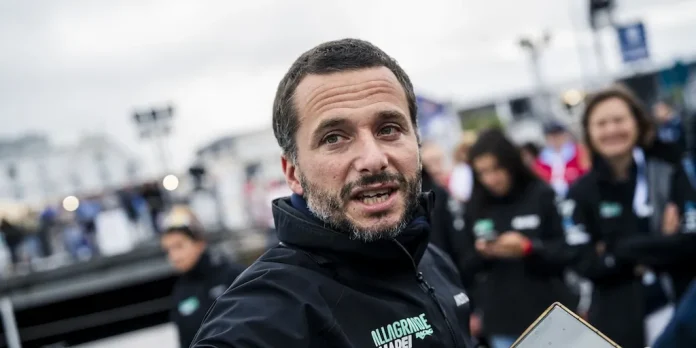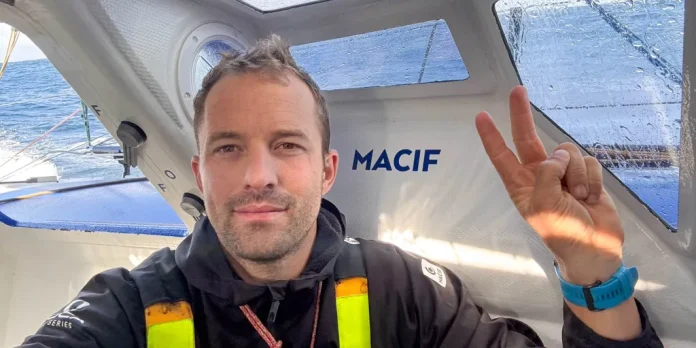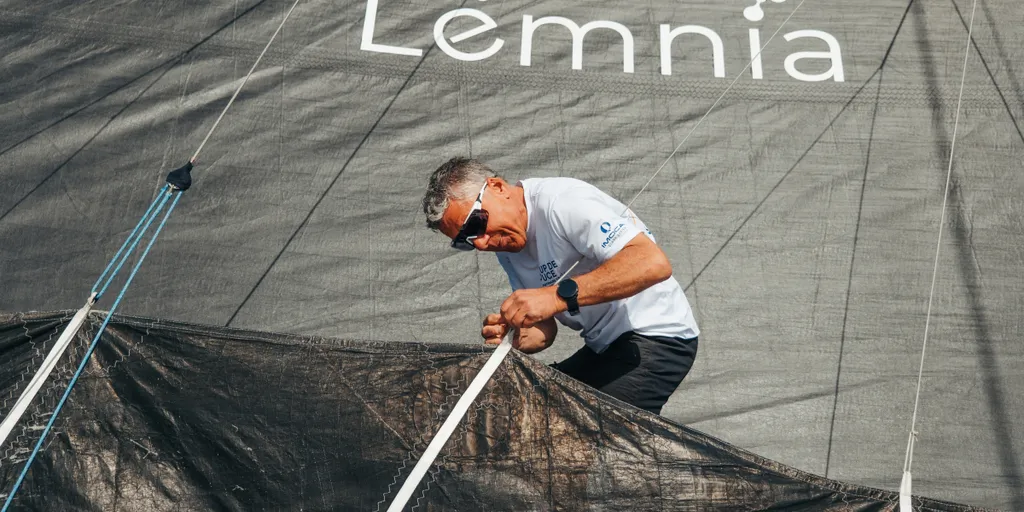
Nico d’Estais crossed the finish line of the Vendée Arctique at Les Sables d’Olonne last evening. Hours later, deep into the night, Arnaud Boissières followed him across. Now only one IMOCA remains on the water between the Arctic and home, and Manu Cousin faces a battle that has little to do with the boats ahead of him.
When rivals are already tied up at the dock and the podium feels settled, the nature of racing changes entirely. The competition shifts from what’s happening on other boats to something far quieter and considerably harder: the conversation between a skipper and himself.

Cousin knew this moment was coming. A late relaunch and winter repairs to his Coup de Pouce—some of it untested in genuine ocean conditions—had quietly widened the gap to the front runners. Mechanical gremlins accumulated. The distances grew. At some point, the race rankings stopped mattering.
“The competition as it was supposed to unfold is behind me now,” Cousin said. “My objective is straightforward: get the boat home as quickly as I can, and in the best possible shape. It’s still a race, but one against the clock and against myself.”

Lone offshore sailing demands a particular kind of toughness. Watching names tick off the finish list while you’re still thousands of kilometres away isn’t a small thing. For anyone who has raced the Vendée Globe, the sensation is familiar: colleagues land while you push on in apparent futility, and the gap suddenly feels concrete rather than abstract.
“There’s always a little sting when the others arrive,” Cousin admitted. “It reminds you exactly where you sit.”
But he won’t let that become the whole story. Instead, he’s chosen to extract everything the Vendée Arctique still has to teach him. The miles that remain between him and Les Sables d’Olonne aren’t punishment. They’re curriculum. And that’s a shift in thinking that separates those who simply endure ocean racing from those who truly understand it.