Last week we reported that the Thames Coromandel District Council had flicked the switch on a new online platform for its ten paid boat ramps, live from the first of July. This week, we went a step further. We sat down with the team from TCDC and the team from Stellar, the company behind the system, for a full walkthrough: how it actually works, what changed under the hood, and why some of the bigger decisions, like camera enforcement, are still a year or more away.
Thames-Coromandel Boat Ramps Requiring Payment
Correct as at July 2026
| Ward / Area | Boat Ramps Requiring Payment |
|---|---|
| Thames | Kōpū Boat Ramp |
| Coromandel-Colville | Te Ariki Tahi/Sugarloaf Ramp |
| Mercury Bay |
|
| Tairua-Pāuanui |
|
| Whangamatā | Beach Road Boat Ramp |
Boat ramp charges are set by Thames-Coromandel District Council and may change. Confirm current fees and locations at tcdc.govt.nz before travelling.
The new platform, called vPermit, covers both parts of the ramp experience: parking your car and trailer where space allows, and launching your boat through any of the council’s managed ramps. Stellar built its name on car parking technology for councils around the country, and TCDC’s boat ramps are its latest application of that same thinking.

This is what we came away with after going through it with the people who built it and the people running it day to day.
For years, the process ran on paper and physical stickers, and later on a basic IT system that TCDC staff had to manage by hand.
“We as staff were having to deal with those changes and keeping a spreadsheet,” says Briar Sturgeon, TCDC’s boat ramps lead. “The new system takes all of that away for us.”
Before that, permit holders simply displayed a sticker on their windscreen, similar to a warrant of fitness label, with no digital record behind it at all.
How it works
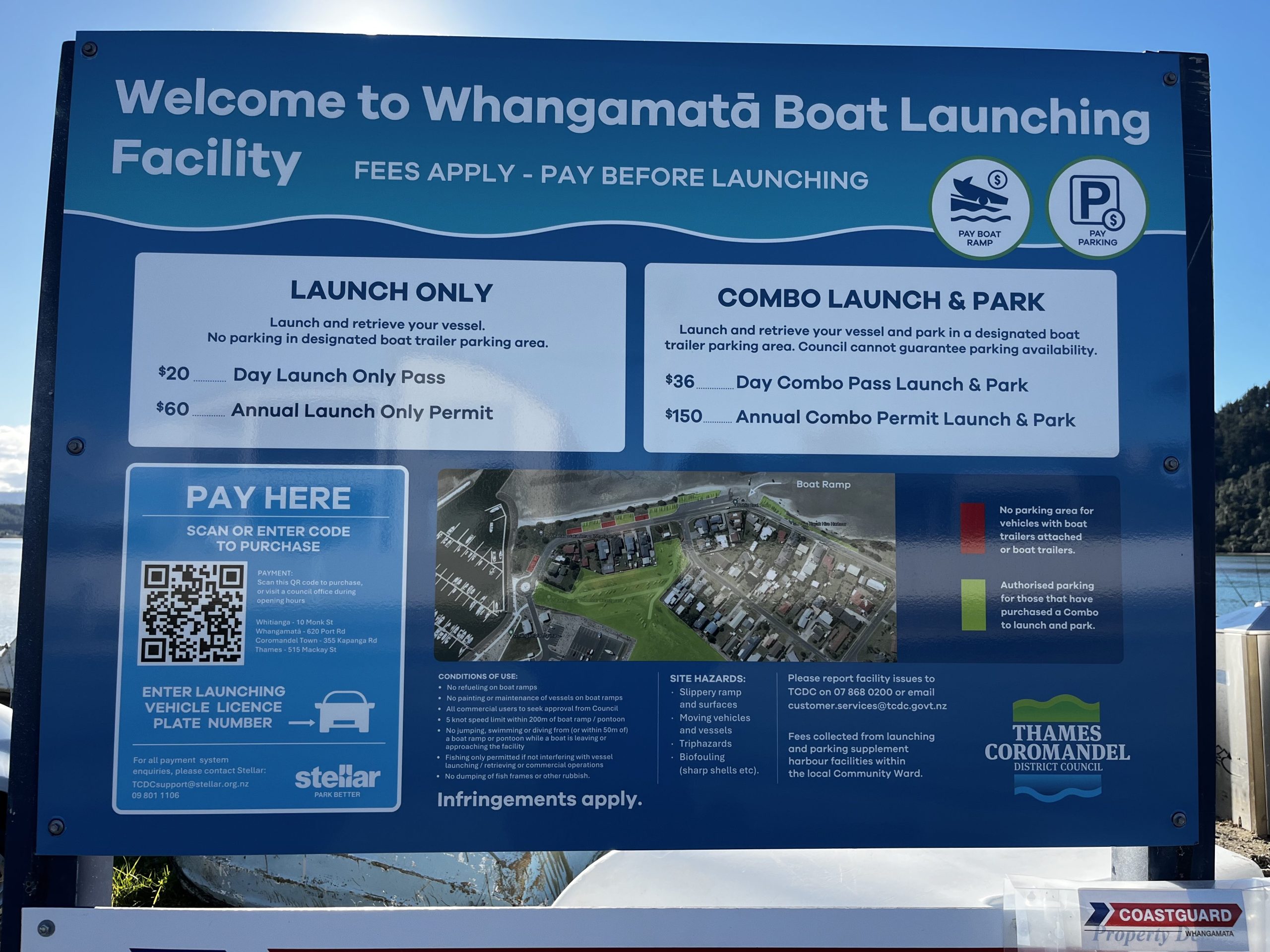
Every ramp now carries new signage with a QR code specific to that location, so the council knows exactly where each pass was bought. Scan it, and boaties land on a page for that ramp with two choices: a day pass or an annual permit, each available as launch-only or as a combo covering launching and parking.
Day passes are bought as a guest, no account required, and run for 24 hours from the moment of payment. They can be bought at the ramp via the QR code or through any TCDC office.
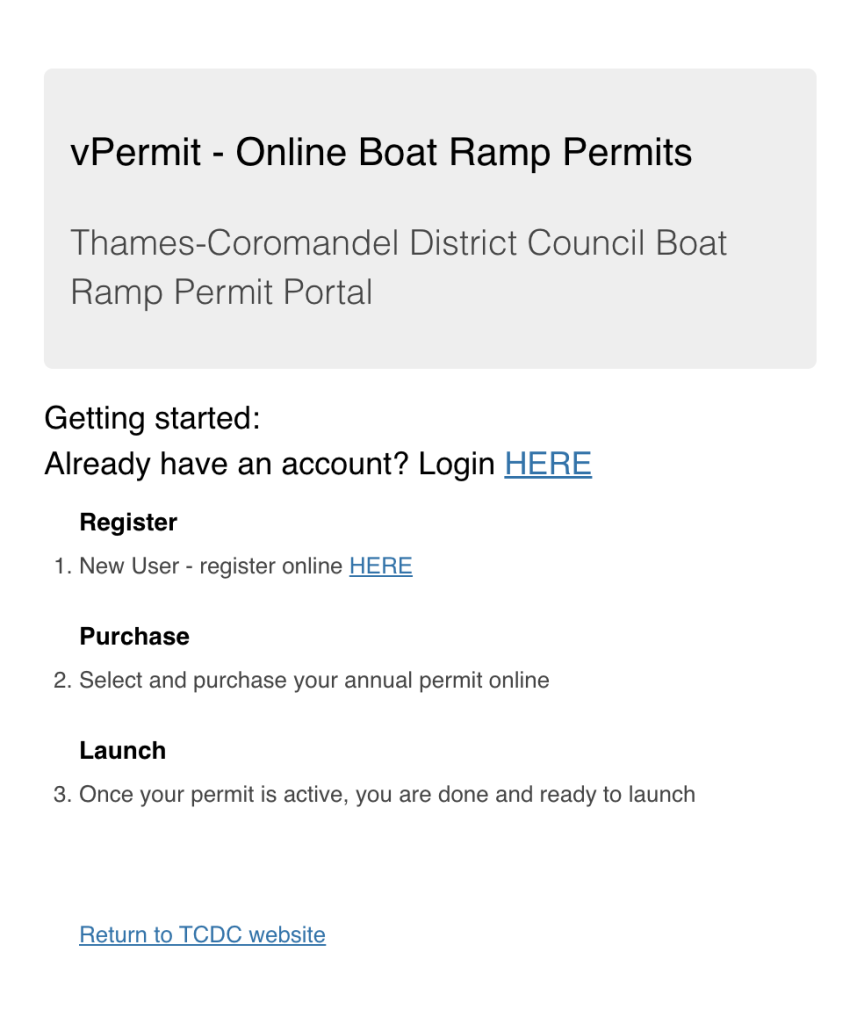
Annual permits work differently. Buying one means creating an account, which unlocks a permit dashboard, the ability to update your details, and a receipt that doubles as a tax invoice. Permits run for a full 12 months from the date of purchase, not a fixed calendar year, and once bought, they’re valid at any of the ten paid ramps across the district, not just the one where you signed up.
“Whether it’s a day pass or an annual permit, you can use them at any of our ten paid boat ramps in our TCDC district,” Sturgeon confirms.
Payment options cover credit and debit card, Google Pay and Apple Pay, with account-to-account transfer available for anyone without a card.
The bigger shift: plates, not stickers
The most significant change under the bonnet is what identifies a permit holder. The old system was built around a boat trailer’s registration plate. The new one is built around the plate of the vehicle towing it. We asked why, and the answer came down to enforcement.
Automated enforcement using number plate cameras simply doesn’t work on trailer plates, Stellar’s JP Kilham told us, because too many boats share trailers, get sold on, or are towed by different vehicles over their life. A vehicle’s plate stays put in a way a trailer’s doesn’t, which makes it the more reliable thing to check.
Permit holders aren’t locked into one plate either. Recognising that vehicles get sold, borrowed or replaced, each permit allows the registered plate to be changed twice during its 12-month term, done entirely by the user online, no phone calls to the council or to Stellar required.




Built for the follow-up, not just the sale
One of the loudest complaints about the old system was silence after payment with no receipt, reminder, or way to check your details. The new platform answers all three automatically. Every purchase triggers an instant email receipt, and annual permit holders get an automated reminder two weeks out from expiry, so nobody finds out their permit has lapsed the hard way, at the water’s edge.
“That’s one of our big complaints that came from the old system,” Sturgeon says. “We’ve had some really good wins with this new system around providing a better service to those paid boat ramp users.”
Support is split between council and supplier. Stellar fields phone enquiries weekdays and email seven days a week, covering everything from a mistyped plate number to refund requests when someone’s paid twice by accident. TCDC’s offices remain available to the public who require assistance purchasing at the boat ramp, however TCDC encourage the public to give the new system a try.
What enforcement looks like now, and later
Compliance officers continue to walk the ramps, check plates, and issue infringements where required. Because the old and new systems are linked, officers can see valid permits regardless of which platform they were bought on, a deliberate overlap built to run for a full year while every existing annual permit transitions across.
That transition period is also the reason automatic enforcement isn’t switching on immediately. A future phase, still subject to council approval, would introduce number plate recognition cameras at ramps, moving compliance checks from a physical walk-around to something automated. We asked directly what those cameras would and wouldn’t capture. “The cameras that we use are specialised number plate cameras capturing the licence plate of the vehicle only at a particular point in time,” Kilham said. “They don’t record footage.”
Behind the branding, vPermit stands for “virtual permit”. It’s the same platform Stellar runs for the Department of Conservation’s parking permits elsewhere in the country, giving TCDC a proven system rather than a bespoke build, and one with a network of other councils already relying on it.
For a district with 24 Council boat ramps, ten of which are paid boat ramps and a boating population that runs from weekend trailer boats to serious offshore fleets, it’s a straightforward improvement to something that used to run on paper and good luck. Fewer trips to a shop that might be shut, a receipt that actually turns up, and a notification before your permit runs out rather than after.