It started as a creative quest to find affordable housing in Auckland. It developed into an extraordinary boating adventure – and one with a few chapters still to come.
When I’m working on the hard, I take a look at all the boats around me, and guess at which one would have the most stirring tales to tell. That’s because I reckon a big part of boating is that it can rightly be considered an activity primarily designed to go out and collect the best seafaring stories.
Yarns. They are the irrefutable currency we have. Sit down at any boating club bar and say something like, “Did I tell you the story about the shipwreck I had?” – and within seconds, guaranteed, you’ve got an attentive audience and a shouted drink in your hand. You’re all set. You’ve arrived.
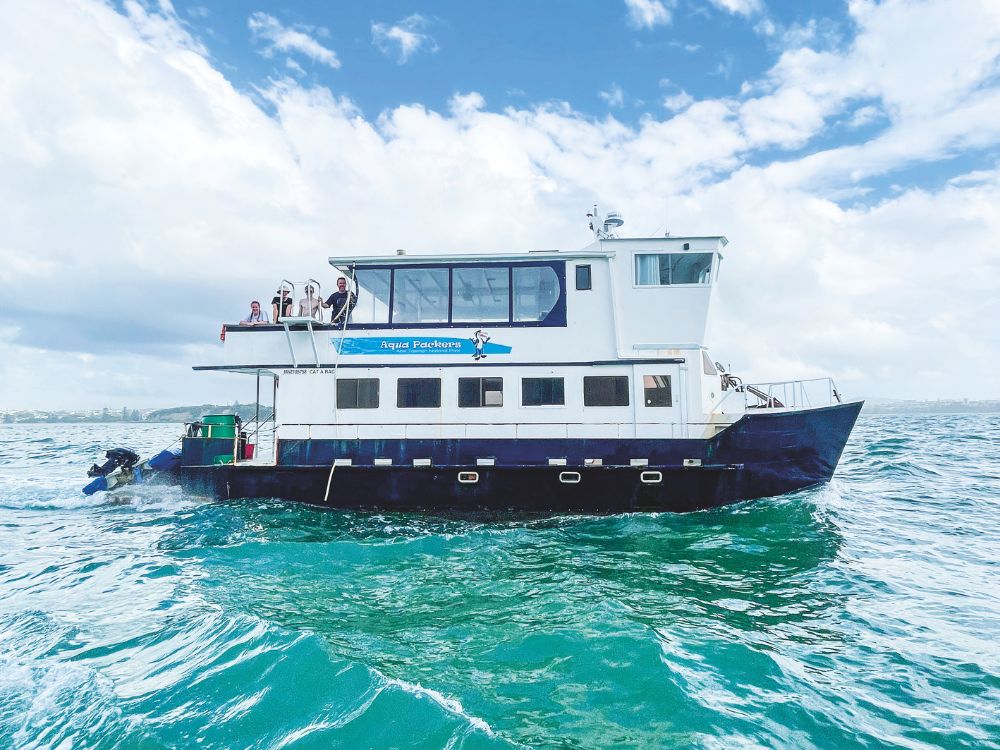
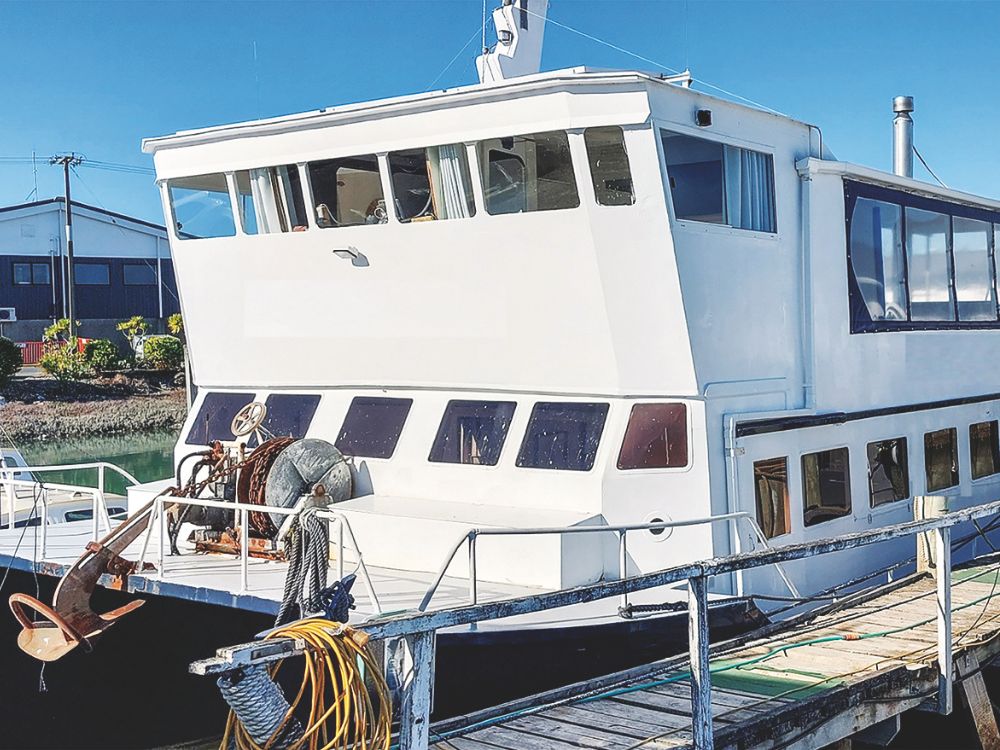
Looking around the boat yard this time, I misjudged. For the most remarkable story comes from an unlikely quarter. A boxy steel houseboat on a catamaran hull configuration, some touches of rust, tucked away behind the racy yachts, almost kept from sight… But from Cat A Rac came the story that bested us all.

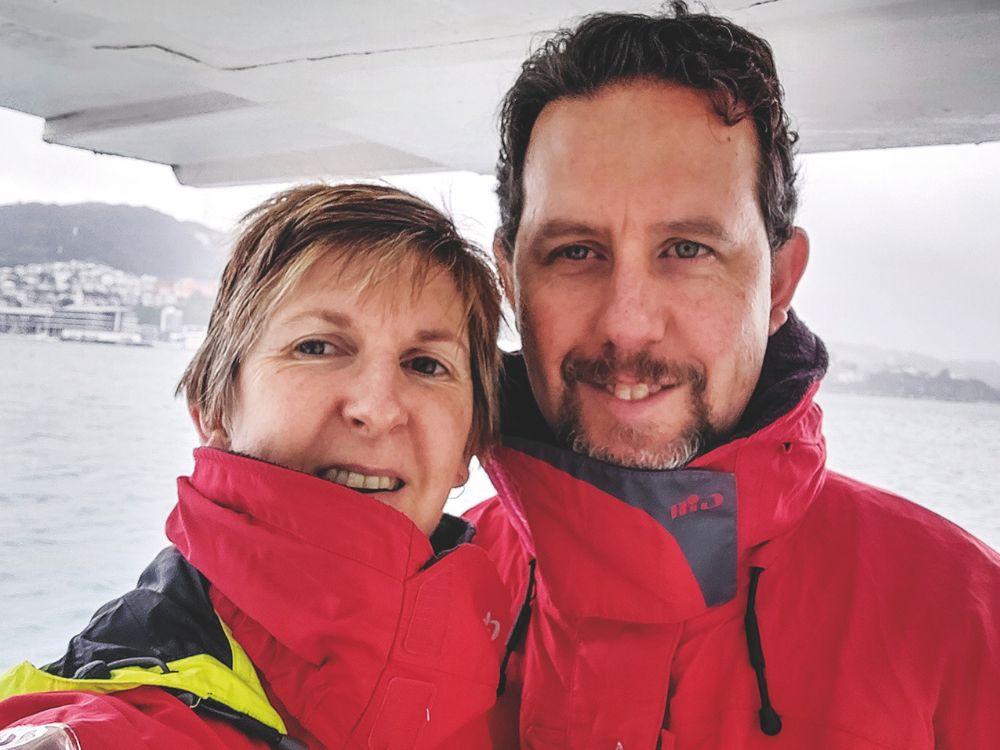
A couple of years ago Brett and Sheena Parkin were casting around for a clever way to achieve affordable housing for themselves in Auckland. Even harder for recent immigrants to the expensive city.
Brett read an article – he can’t remember where exactly – about living aboard a boat. So despite the couple not having any boating experience at all, they started looking for a houseboat.
Still, the idea persisted, like one of those songs that stick in your mind and won’t go away.
Sheena takes up the story, in their compelling blog:

“So, in typical Brett style, the master of Google search… nothing is not possible in his eyes… there had to be a way… and creative he is!! Over the years we have had many interesting conversations and he has shown me some very way-out ideas, but he feels that to beat this cost-of-living situation; we can live on a boat!!!
“So… from time to time, when he gets bored, he keeps an eye on TradeMe and then shows me his searches and convinces me that we must go and have a look-see. Well, indeed, some interesting things we have seen – too small (Brett couldn’t even stand up straight, all six foot of him in the shower cubicle), or it smells funny! Brett keeps a close eye on me to see what colour shade green I turn, as I do have an issue with motion sickness!”
Only the living-aboard boat they found was at the Motueka Marina at the top of the South Island. A wee way away from Auckland. And with a forbidding coastline between them.
Sheena writes:
“So, in March, he sent me a TradeMe link to this boat…
“Ooooh that looks interesting, I said…
“Next, there was a phone call to the seller…
“Then air tickets were booked to go and view the boat in Motueka, near Nelson…
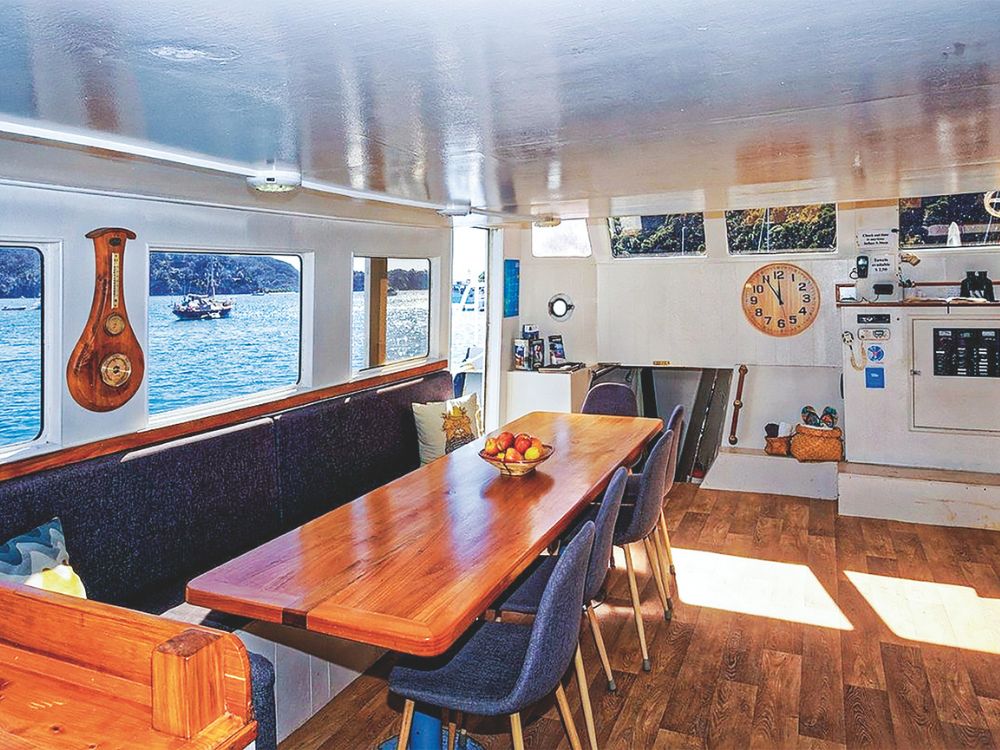
“And so, this is where our journey begins.”
And it gets even more interesting from there.
Accelerated learning
To fast track their boating learning curve, Brett and Sheena first volunteered for Coastguard New Zealand’s North Shore unit. That got them on the water, and learning quickly from the experienced skippers and crew in that unit in their custom-built rescue vessel (a respectful bouquet to them from the Parkins). All the while negotiations proceeded about the purchase and delivery of Cat A Rac from Motueka to Auckland. In July 2022, they drove the houseboat for the first time.
Not easy. The boat had been the host for a company called AquaPackers, a floating backpackers’ lodge, but a tourism enterprise that had not survived Covid. The sale was viable, the delivery trip another challenge altogether.
Sheena continues: “Now that we own a boat, we needed to work out how to get her back to Auckland. Thus ensued extensive Google research, many chats with the crew in our Coastguard whanau, and a bunch of phone calls…
“We were presented with many options – tugged, barged, tow assist, trucked, or skippered – all came at quite a price too!
“After assessing the options, and covering all the safety aspects we came to a decision: we will be driving her up the East Coast, to home in Auckland where she will be berthed in Bayswater Marina.
“With spring in the air and the weather and tides improving, this is our chance to prepare for the voyage.”
cost-of-living
situation; we can
live on a boat!!!
Passage planning
Sketch out the possible route, and it involves some of the biggest challenges of New Zealand coastal boating. The huge tides of Golden Bay, around 4m (Motueka Marina dries out completely at low tide). The passage through French Pass, the fastest-running tidal race in New Zealand, more like a horizontal waterfall. A crossing of Cook Strait. Then up the rugged Wairarapa coastline, almost devoid of havens between Wellington and Napier, and including a rounding of the notorious Cape Palliser. Then around East Cape. The last leg, from Tauranga to Auckland seemed almost easy by comparison, despite having to traverse the often rough Colville Channel, between the tip of the Coromandel Peninsula and Aotea Great Barrier Island.
A new home for Brett and Sheena was possible. Only it was going to come complete with an epic delivery adventure. Or two. And things turned out exactly that way.
All on! Now, just needing to get the boat to its – and the Parkin’s – new home berth.
Brett engaged professional skippers for each leg of the journey. Though some took on the job on the basis of being advisors, leaving Brett as official skipper. “You gotta learn about the boat,” said one old salt. “I’ll just be here for emergencies.” A propensity for seasickness meant Sheena was going to sit out some of the longer passages.
The previous owner of Cat A Rac joined them for the first part of the delivery voyage. Things went surprisingly well from Motueka to Wellington. French Pass traversed at exactly the right moment of slack tide; Cook Strait crossing no worries, despite one motor hinting at future foibles. One exciting moment was doing nine knots across the ground in the Karori Rip.
A couple of weeks recovery in Wellington. Sheena joined Brett for the next leg to Napier. Now it got real.
Brett tells it best: “Proceeding out of the channel we faced an in-coming Cook Strait ferry so, in accordance with the maritime rules of the road, we turned to starboard, allowed him to pass on our port side and then passed well clear astern of him.
“Yip,” I thought, “We got this!”
Unfortunately, that left them a little further from the coast than they’d planned. No real problem. They pointed to the next waypoint, steamed up to it (slow and steady), and continued.
Wellington weather
“At this point, the seas were getting a little lumpier than we’d expected. Nothing that I hadn’t faced in the earlier leg of the voyage, but all new to Sheena. She was beginning to question whether we should be continuing. I assured her this was quite normal and we were still very safe.
“After rounding Turakirae Head we had a choice to make: steam straight across Palliser Bay and try round Cape Palliser as quickly as possible, or follow the coast into and around the bay. Remembering the advice we’d been given, we decided to hug the coast. This, at least, gave us the option of dropping anchor for a sleep if the need arose.”
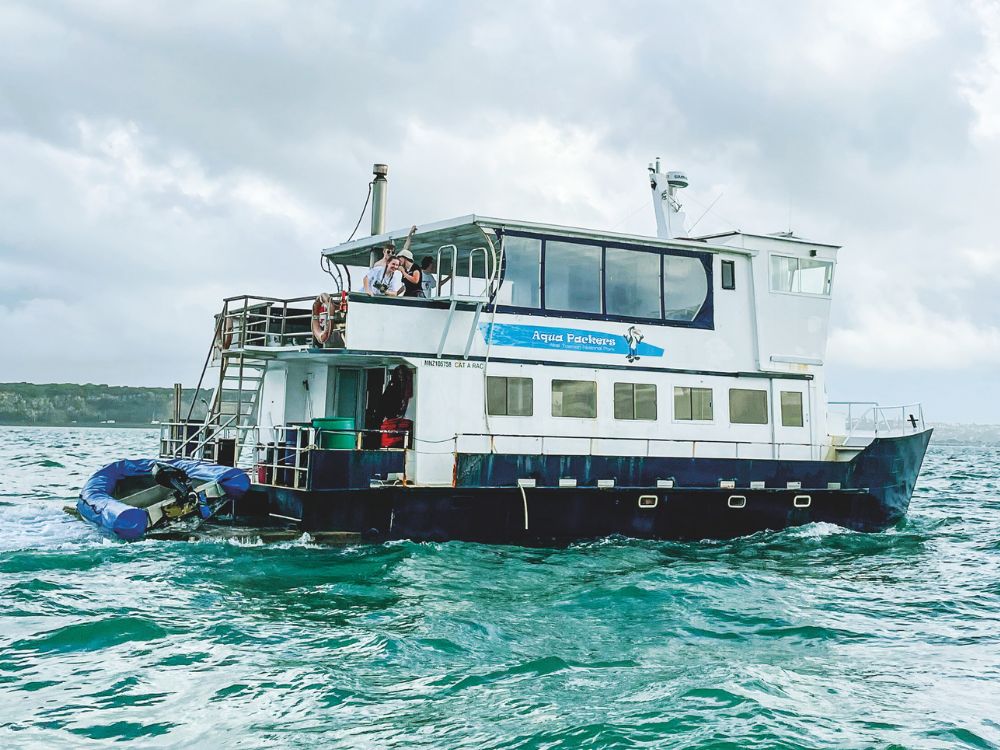
But true to the Wellington coast’s form, the wind and seas were building – and not letting up.
Brett was bemused to find that “Often the direction we were travelling (Course Over Ground) and the direction we were facing (Heading) were perpendicular to each other! We were travelling sideways! We were also facing some pretty big swells. While we were able to keep our bow roughly into the swells, we were fairly comfortable. Lots of pretty scary up and down, but not terrible. It was when we were side-on to the swells that things did get… well… not good!
“I was completely absorbed in keeping the boat facing the right way into the swells and wind, desperately trying to push her on towards a point we’d previously identified as a safe anchorage. Sheena did not have that luxury. She was completely at the mercy of the sea and my helmsmanship, and was, quite understandably, terrified!”
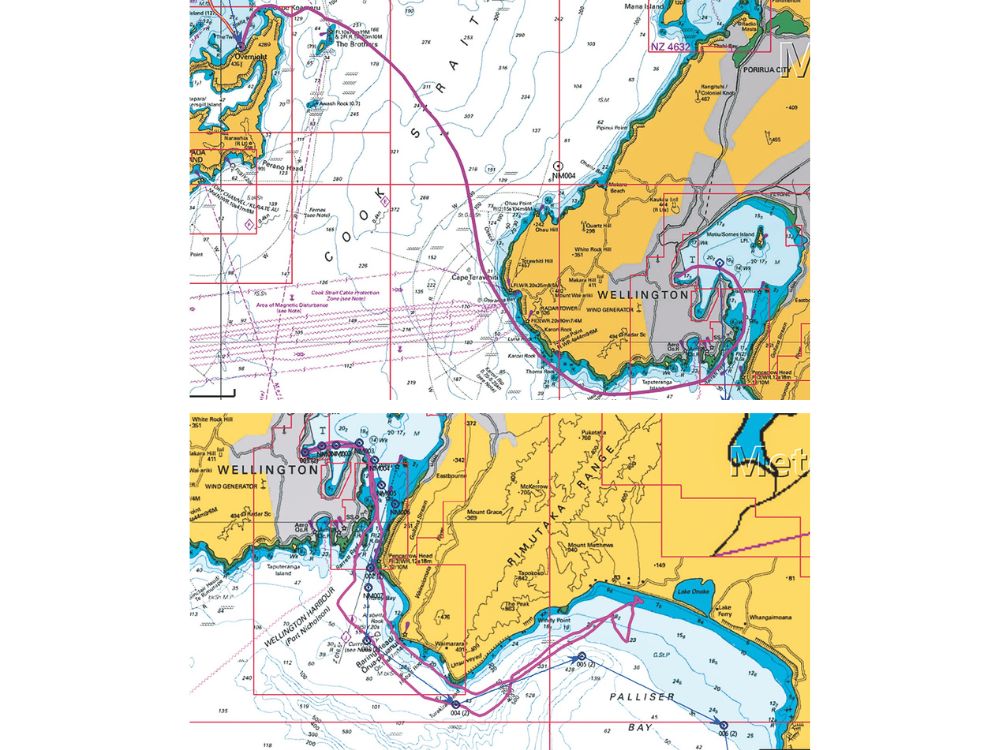
Now it got scary for Brett too: “To gain a little extra turning power into a particularly big swell, I pushed the throttle down on one engine and watched in horror as the engine died on me. Down to one engine and in the roughest conditions I’d experienced on Cat A Rac, I was lost.”
Brett called Mark, a shore-based mentor, and outlined the situation.
Fortunately, “Mark is one of those guys who responds to pressure and calamity with absolute calm,” Brett observes.
“He patiently walked me through some remote troubleshooting and problem solving, then gave me simple clear instructions on how to rectify the problem. The engine had overheated due to sucking air into the fuel line when I went hard on the throttle. With Sheena bravely on the wheel, I was down into the engine room, topping up the coolant and bleeding the fuel lines.
“I couldn’t believe it when I got back to the helm and started the engine on the first go! What a relief!”
Crisis averted – for now. Cat A Rac was steered as directly as they could for the anchorage Brett had previously identified. “Around midnight we had the anchor dropped and made calls back to Wellington Maritime and to Mark to let them know where we were and that we were all fine, if somewhat shaken, before crawling into bed for a few hours’ sleep.”
Waking to relative peace in the morning they realised they had to make a call on continuing – or returning to Wellington.
Brett reflects:
“The safest option, we realised, was to return. As someone trying to prove that ‘I could do this’, returning felt like admitting I’d been beaten. In hindsight, I realise that is nothing compared to the possible risks we could have faced. As the skipper your primary responsibility is for the safety of those on board, and for the safety of the vessel. Any other decision would have been reckless and irresponsible.”
enough to be
eccentric, so crazy
will have to do!”
“We turned back into the swells and wind we’d been facing the previous night and began the battle back into Wellington. At least this time we were travelling in daylight and we knew that, even if we were feeling a little knocked about, our trusty Cat A Rac was well up to handling the conditions.”
The intrepid pair had one more challenge to address: “The channel into Wellington had some traffic! We kept to our correct side of the channel and managed not to get into the way of either of two Cook Strait ferries or the container ship and pilot boat that passed us. This, along with ensuring we kept a safe distance from the rocks that the wind and swell seemed determined to push us into.
“I tried my ‘Push the hammer down to turn into the swell’ trick again, and was answered with the same response, a dead engine.” Bugger
Of course, on this occasion Brett now knew the drill.
“Put Sheena on the wheel facing into the swells and battling the unrelenting southerly wind, while I headed down into the engine room, topped up the water, bled the fuel line, and rushed back upstairs.”
After almost 24 hours underway, Cat A Rac made it back to Queens Wharf. “Tying up in our current state was challenging, but we got it right eventually. When you’re tired and shaken, mistakes can happen so easily. We made sure to slow down what we were doing, keep safety as a priority, and ensure no-one around us could hear me cursing at the wind!”
Another rest-up in Wellington. Then choosing the weather carefully to try that leg of the journey again. This time all went well. The rest of the voyage to Auckland is all duly logged on Brett and Sheena’s blog. It make’s irresistible reading.
Boat vs house
There’s a strange anomaly in this housing/boating thing. Sheena says she’d have been quite happy looking for a tiny house. On land. A houseboat has a similar footprint – the LOA and beam of Cat A Rac are about comparable to just the dimensions of a suburban lounge and deck.
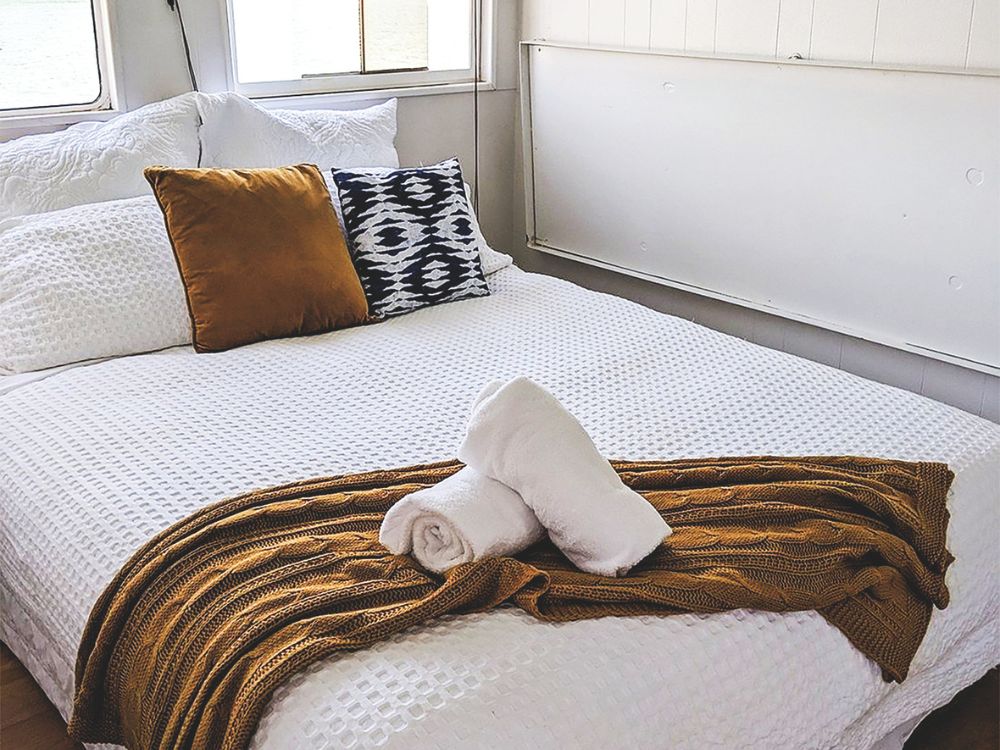
But boats pack in the beds in a concentrated way. Cat A Rac has bunks for 25 people. But Brett and Sheena were only going to use one of its double-cabin ensuites. Still, the numbers stacked up. This was certainly going to be more cost effective than bricks and mortar.
Living aboard for a good few years at Bayswater Marina in Auckland’s Waitemata Harbour, the Parkins lived through two cyclones, including the epic Gabrielle in February 2023.
They’ve done weekend trips to Little Shoal Bay, Islington Bay and Waiheke Island. Their first long-ish trip after the period of marina living was to Whangarei in late 2025 for an upkeep haul-out. That took 22 hours of steaming.
Cat A Rac is now undergoing an extensive refit at the Port Whangarei Marine Centre. Brett and Sheena travel up there almost every weekend. The ongoing work is epic. They reckon they’ll be on the hard for six months.
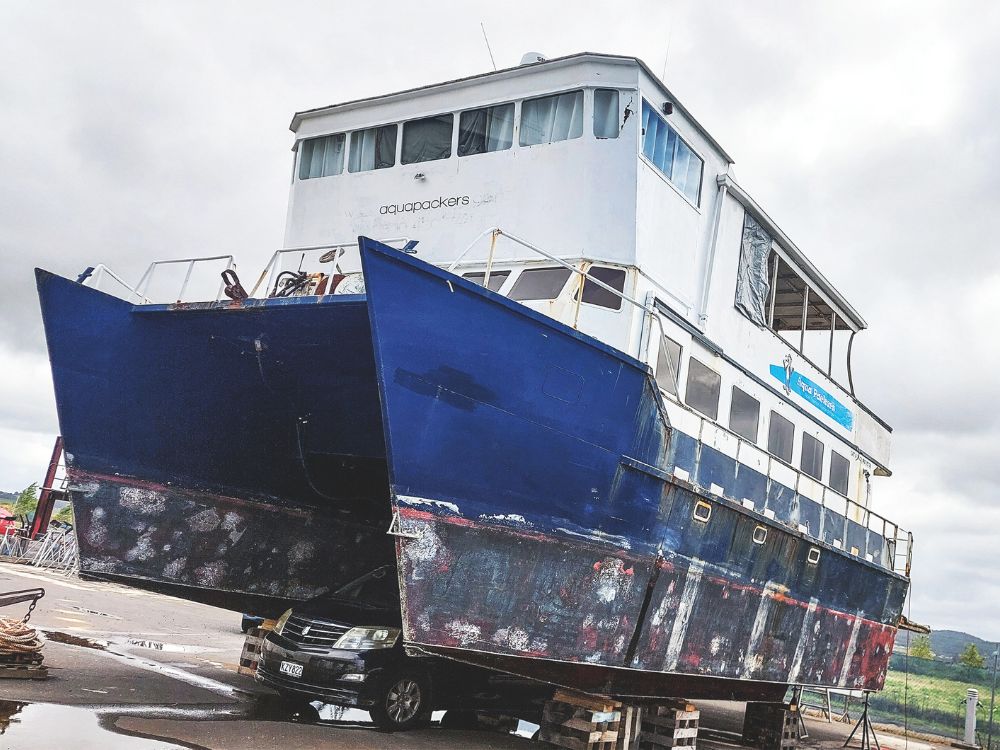
The future
But the Parkin’s accommodation scenario has changed a tad. They have now found a home in Auckland. So Cat A Rac‘s new life will be a re-invention as their Northland bach. Once a few things are sorted along the way, and a mooring up there is found…
Brett thinks he might have the last word: “I’m not rich enough to be eccentric, so crazy will have to do!”
But let’s not kid ourselves, fellow shipmates – for it’s our female partners who really can and do sum it all up.
Over to you Sheena: “We come away from this experience a little wiser, a little more cautious, even a little shaken, but ultimately, better sailors…. hopefully!” BNZ
Specifications
Hull: Steel
Length: 13m (42.63 feet)
Beam: 7.2m
Draft: 1.2m
Engine: 2 x 1980 Ford D series diesels
Fuel: Diesel
Diesel capacity: 600 litres x 2 tanks
Fuel burn: Approximately 8l/hr
Cruise speed: 5 knots
Fresh water capacity: 1500 litres
Accommodation: Two double cabins, plus bunk beds
Berths: 25
Surveyed for: 30 day-guests
More information
Life and adventures on board Cat A Rac, starting with an epic voyage north.
Brett and Sheena are the brave (or crazy), but very proud, owners of Cat A Rac, their catamaran house-boat.