Opened to the public in 2024, the new Canadian Canoe Museum of Peterborough pays tribute to a type of vessel that can reasonably be considered a national symbol.
Canadians claim that if it wasn’t for canoes and other paddled watercraft their country would still be partially unexplored.
A country that places such importance on canoes naturally merited a dedicated home for them. Such a museum was originally established on the collection of the late Kirk A.W. Wipper (1923-2011), a native of Manitoba and a pioneer in the development of outdoor education. When his original collection outgrew the venue’s capacity, he accepted the proposal of some individuals affiliated with Trent University to relocate his items to Peterborough, Ontario, a major centre of canoe manufacturing. A few years later, the collection was transferred to the nascent Canadian Canoe Museum (CCM), which first opened in 1997.
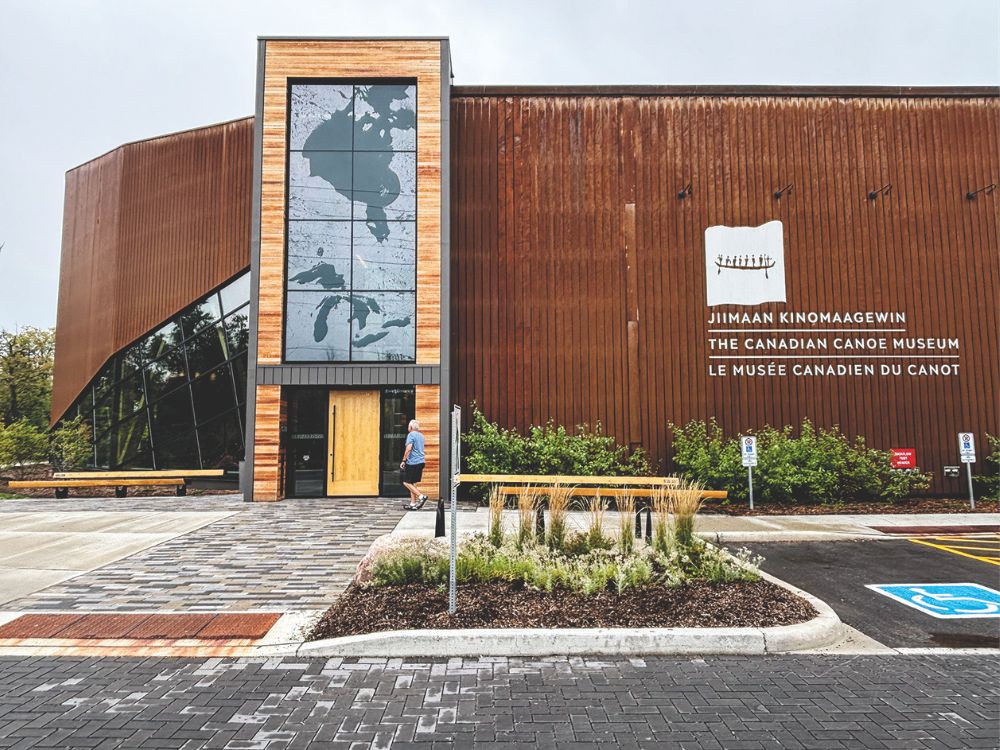
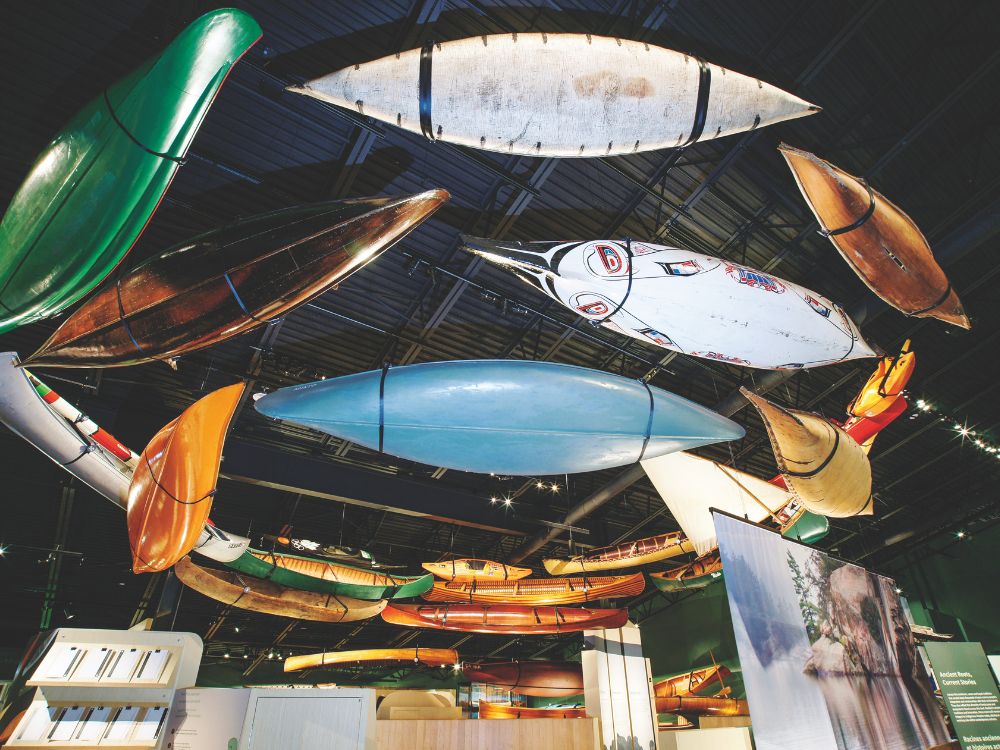
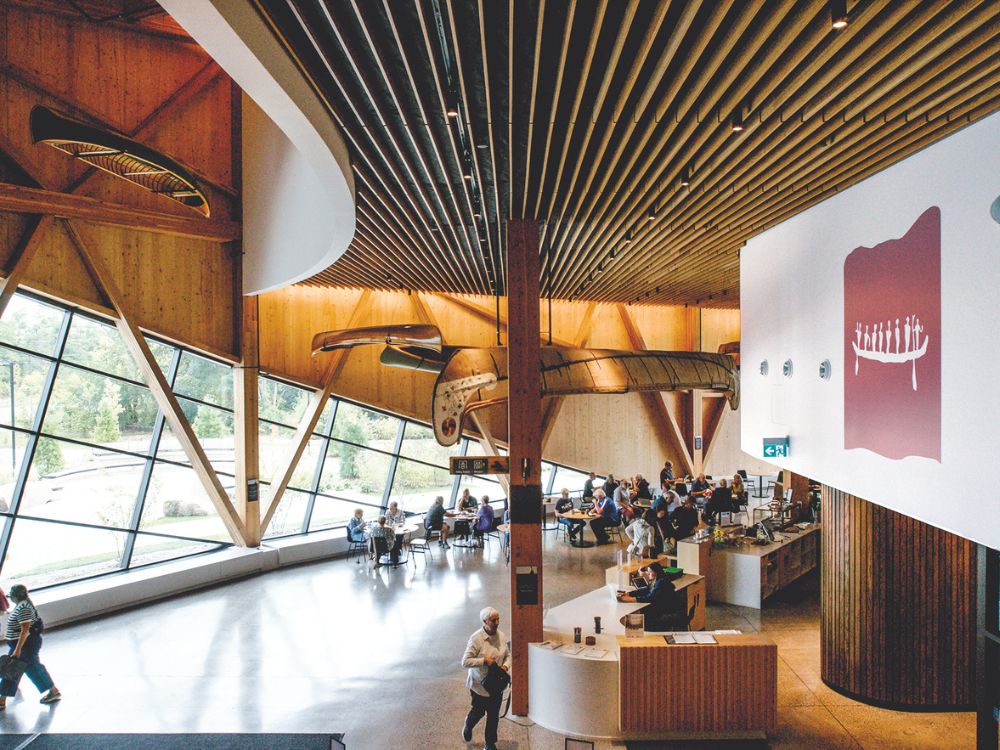
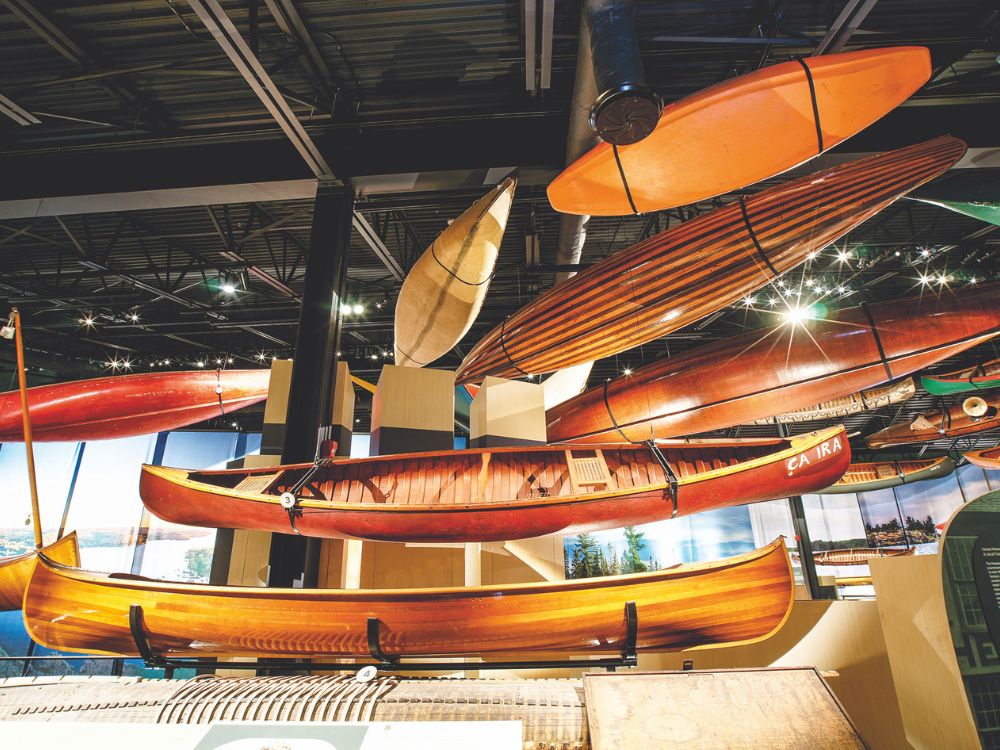
Since May 2024, the museum has a brand-new home that showcases at its best the history of these watercraft, so crucial to Canada’s anthropological history. The new CCM is situated on the waterfront of the Otonabee River and boasts a collection of 660 paddled craft. Of these, over 100 are displayed in the Exhibition Hall, which is divided into six thematic exhibits. Although this is architecturally functional and extraordinarily evocative in its layout, the part that most impresses the visitor is probably the Collection Hall, which can be seen through dedicated indoor windows, or viewed via tours.

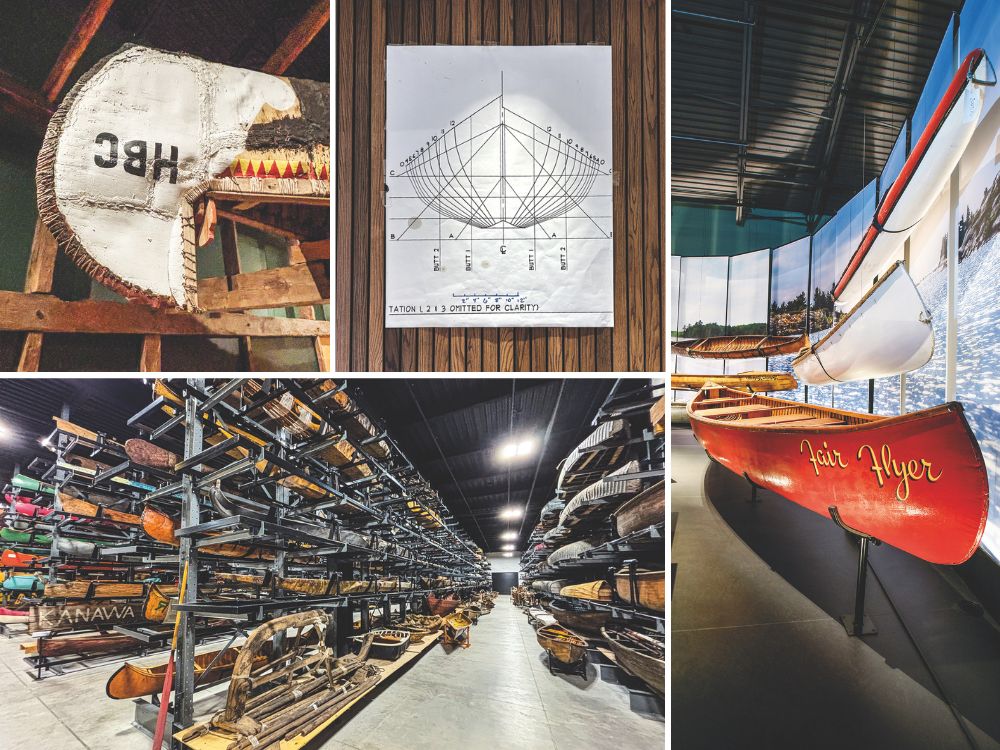
In the Collection Hall, which stretches over 1,800 square metres, some 540 watercraft are stacked on custom-built racks and cradles, all arranged by construction type.
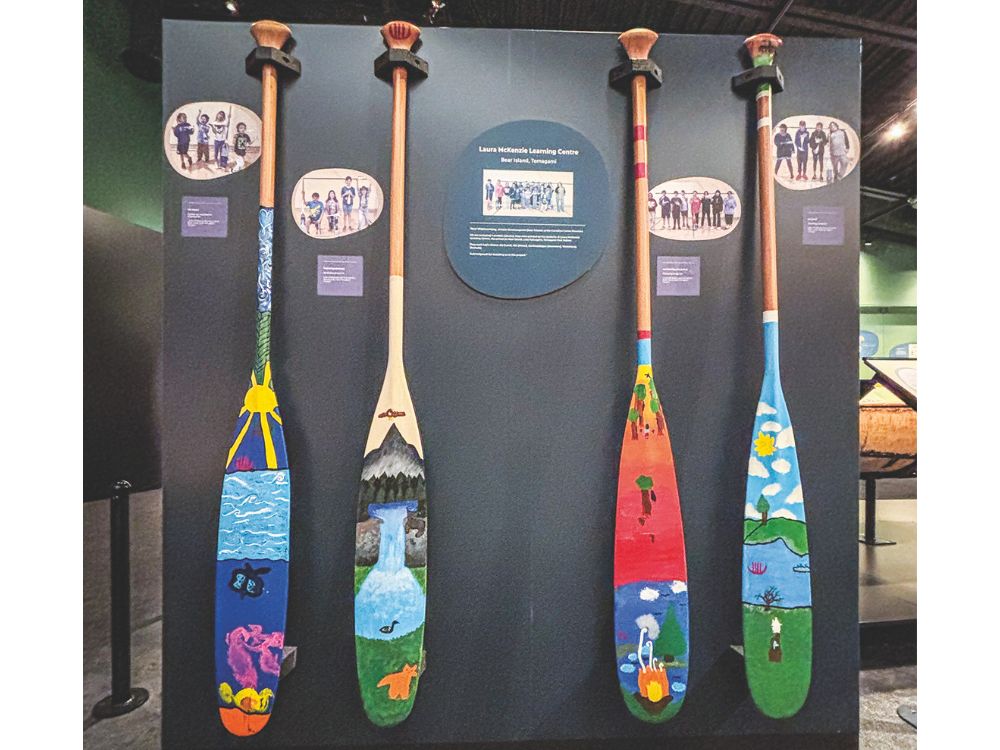
The museum also features a library, small-scale models and nearly 800 paddles.
The canoe: Origins and types
Thanks to its lightness and relative ease of construction, the canoe has proven itself over the centuries as the ideal vehicle for subsistence and trade in a vast, waterway-rich country like Canada.
The word ‘canoe’ has Central American roots and originally referred to any type of vessel in the Caribbean region, regardless of its shape. Subsequently, the term – thanks also to literature, animation and film – became associated with a specific type of long, narrow vessel, with a high, rounded bow and stern, which we are all familiar with today. However, it should be emphasized that canoes are extremely diverse vessels and have been built for centuries by diverse cultures using a wide variety of techniques, styles, and materials, depending on availability or their intended function.

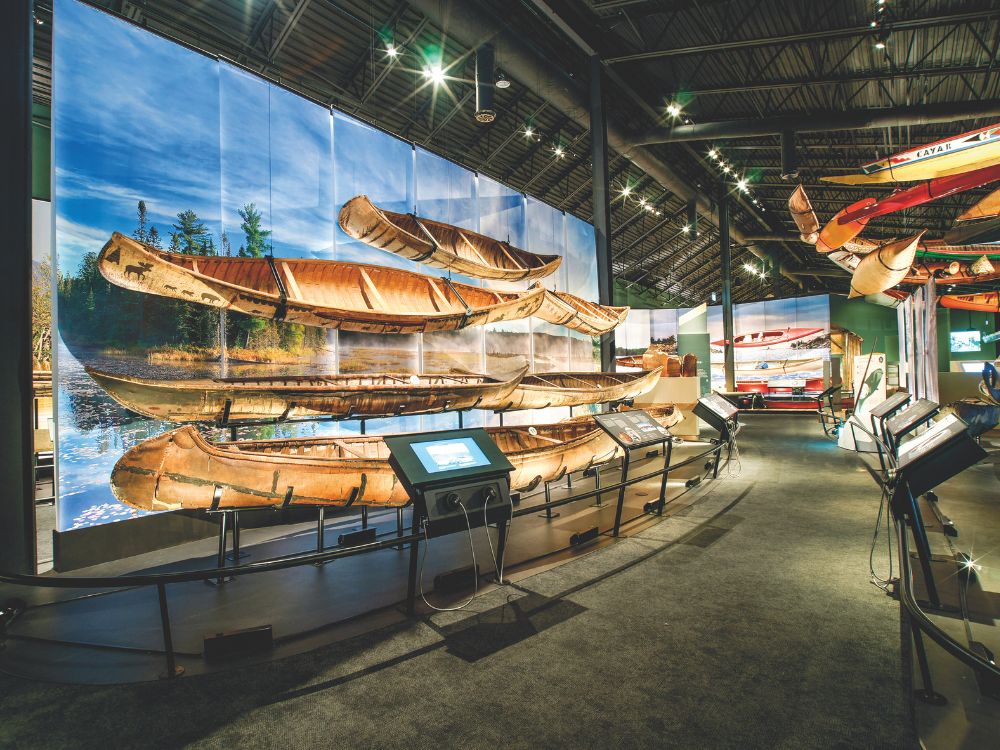
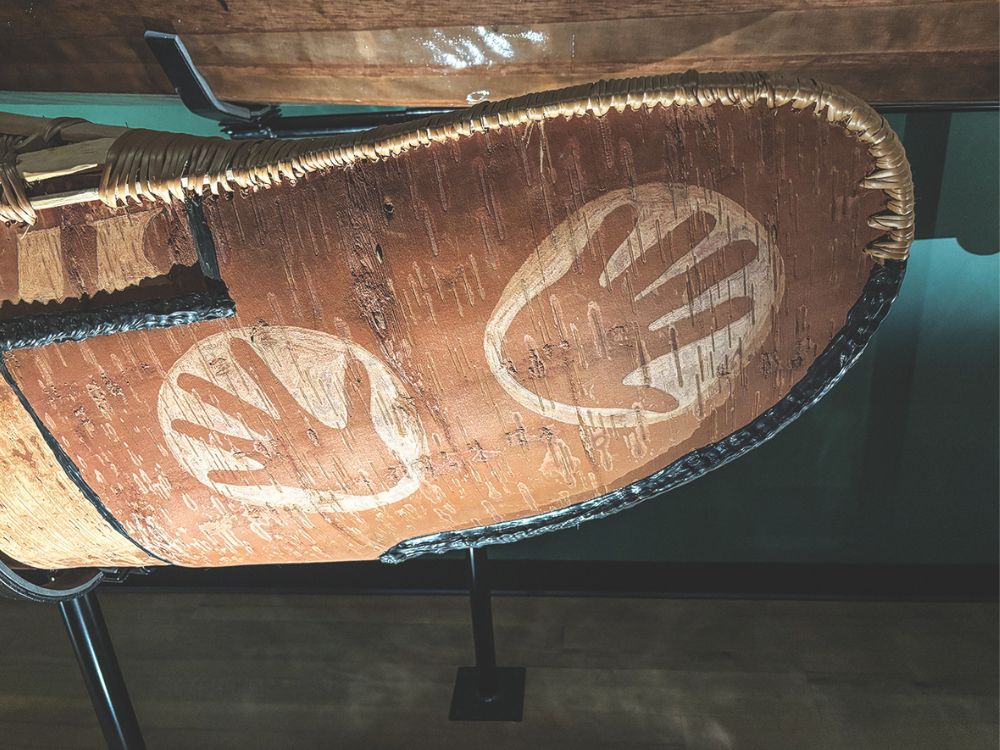
Traditional indigenous watercraft in Canada can be divided into four main families: birch bark canoes, which honour traditional indigenous methods and are the most common; dugout canoes, which are carved from a single log; and skin-covered kayaks and umiaks.
The latter two are characteristic of the northernmost and most rugged regions of Canada, Alaska and Greenland.
However, beyond sailing at similar latitudes and being both covered in skin, kayaks and umiaks differ significantly in appearance. The kayak is easily recognisable: it is small in size and generally accommodates just a single individual, although there are bigger versions. It is mainly used for fishing and seal hunting, and its modern sporty plastic version is widespread worldwide.
The umiak is an open craft, larger than the kayak, used both as transport and for hunting whales, walrus and other large marine mammals. The umiak is often equipped with oars and oarlocks (a configuration preferred by women), paddles (preferred by men), and a gaff rig for sailing.
The above ‘families’ only partially coincide with the construction techniques, which can be reduced to six typologies: birch bark canoes, which were instrumental to many activities, including the legendary fur trade between the 17th and 19th centuries; solid wood dugout canoes; wood-and-canvas; all-wood construction; skin-on-frame (an ancient technique using a frame covered with animal skin); and, last but not least, today’s composite specimens, built with fibreglass or other lightweight materials.
Mother Nature and building materials
In the past, the only way to build a canoe was to make it with the resources offered by nature. Canada’s geography helps understand the close relationship between available materials and the appearance and characteristics of the final craft.
In the tundra populated by the Dene, for example, hunting canoes were built with a frame of spruce or birch wood and covered mostly with birch bark. As inhabitants of regions essentially devoid of trees, the Inuit could only build their craft from driftwood and branches carried by the sea currents, while the hulls were mostly covered with seal or walrus skin.
Where trees are abundant, as in British Columbia (populated by the Haida and Salish), the Great Lakes region (Algonquin), and the Atlantic region (Mi’kmaq, Abenaki, and Maliseet), wood constituted almost all of the material used for canoes, with the exception of resins – harvested from spruce trees – the fat used to waterproof the hulls, and spruce roots used like ropes to lash and sew various parts of the vessel.

Where large trees were abundant, big trunks were hollowed out with tools to create a hull that was both heavy and sturdy – ideal for weathering ocean waves. This is the case for the canoes made from cedar or spruce wood typical of western Canada. The aggressive, angular lines of the dugout canoes of the Haida, generously decorated along the sides, are famous and recognisable masterpieces of design.
Strolling around the Museum
In both the Collection and Exhibition Halls of the CCM, one can essentially identify every type of canoe and its derivatives. The collection spans different cultures and continents – Americas, Asia and Africa – and indeed represents a rich diversity.
Some of the items are significant because they are simply unique. This is the case for all the oldest pieces on display – objects made from a wide variety of woods, embellished with depictions using plant dyes and, as in the case of the canoes from tropical latitudes, decorated with beads, shells and the like. One of the most iconic items belonging to this group is a Haida dugout canoe (known as ‘Eagle canoe’) crafted in Canada from a single cedar log by carver Victor Adams between 1967 and 1971. No such canoes had been built within living memory, and Adams was therefore mentored by an Elder.
Other crafts are relevant because they represent a link between various eras and construction techniques. This is the case with a late 19th century Penobscot canoe, a type which marked the shift from birch bark watercraft to wood-and-canvas canoes crafted on solid forms. It’s also the case with a Canada PlyCraft specimen, which showcases an innovative construction method using wood veneer layers, fused with resin and cured in a specialised autoclave furnace, a technique honed during the Second World War for a range of wartime applications.
There’s also an all-wood cedar strip canoe built using a longitudinal strip method patented by John Stephenson in 1883. Special mention is deserved for the wood-and-canvas freighter canoe Cheechoo, crafted in the 1950s in Waskaganish, Québec, a type designed to carry motors for the big waters of the Hudson’s Bay region.
Other craft are part of Canada’s popular history. Some belonged to prominent figures. Such is the case of a composite recreational expedition canoe formerly owned by folk singer-songwriter Gordon Lightfoot (1938-2023), who in 1999 – 23 years after the release of the hit The Wreck of the Edmund Fitzgerald – dedicated a song titled Canary Yellow Canoe to his beloved craft.
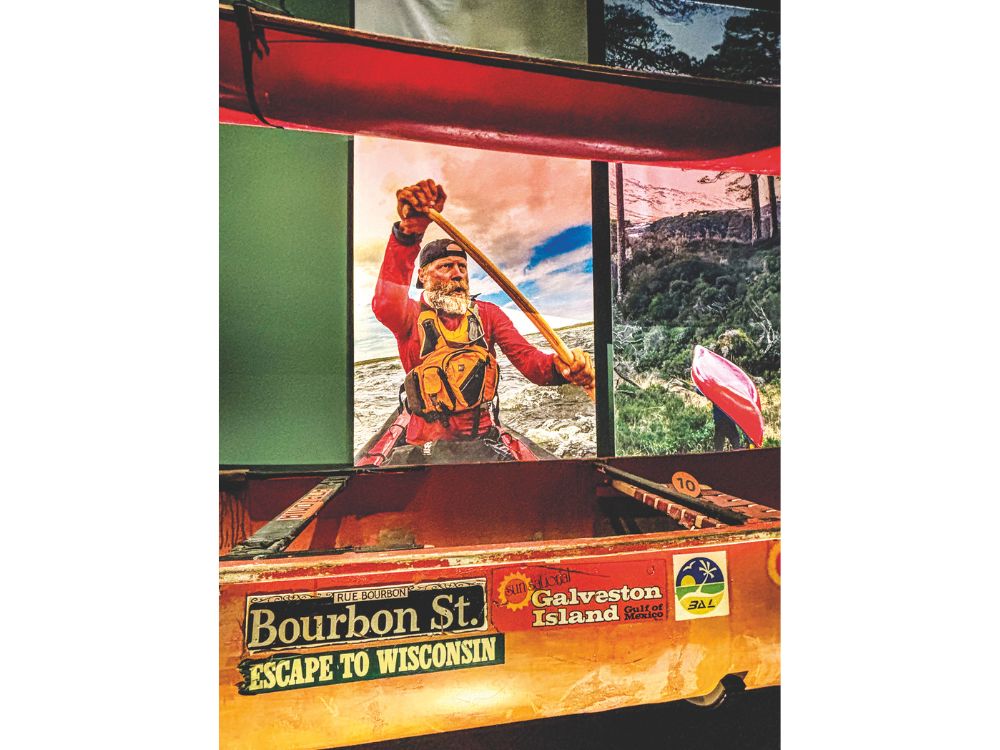
Other famed items include a 16-foot red Prospector-type canoe and the legendary Orellana. If the former was used by naturalist and filmmaker Bill Mason (1929-88) during some of his most successful productions, the latter is a battered fibreglass specimen recognized in the Guinness Book of Records in 1986 for the longest canoe journey: 12,000 miles from Winnipeg to the Amazon, with adventurer Don Starkell (1932-2012) and other members of his family onboard. It is an achievement with which Starkell has written yet another indelible page in the romantic history of canoes, the boats that helped shape Canada and its very identity. BNZ
The writer wishes to thank Cara Walsh (City of Peterborough), Carolyn Hyslop and Jeremy Ward (Canadian Canoe Museum) for their invaluable support.