Two hulls? You betcha! More speed, more stability, more possibilities, more room, room, room. But what about you?
Good news! The polarising, super-annoying monohull vs. catamaran debate is over, and you have won. Right now there is a mind-boggling choice of catamarans to behold: bigger or smaller, fast or not so fast, each with a blizzard of options. And nope, despite marketing claims, one cat does not do it all. The designed- and built-for-a-purpose variations of 40- to 60-foot production cats, previously owned cats, and custom cats favour specific cruising purposes.
Pardon me if I probe too deeply here, but then there’s you, and you have not popped out of a mould and, when considering a catamaran, you have a purpose or a dream in mind. But what about your boat budget? How will your work life and family life fit into your two-hulled breakaway? The first step is introspection.
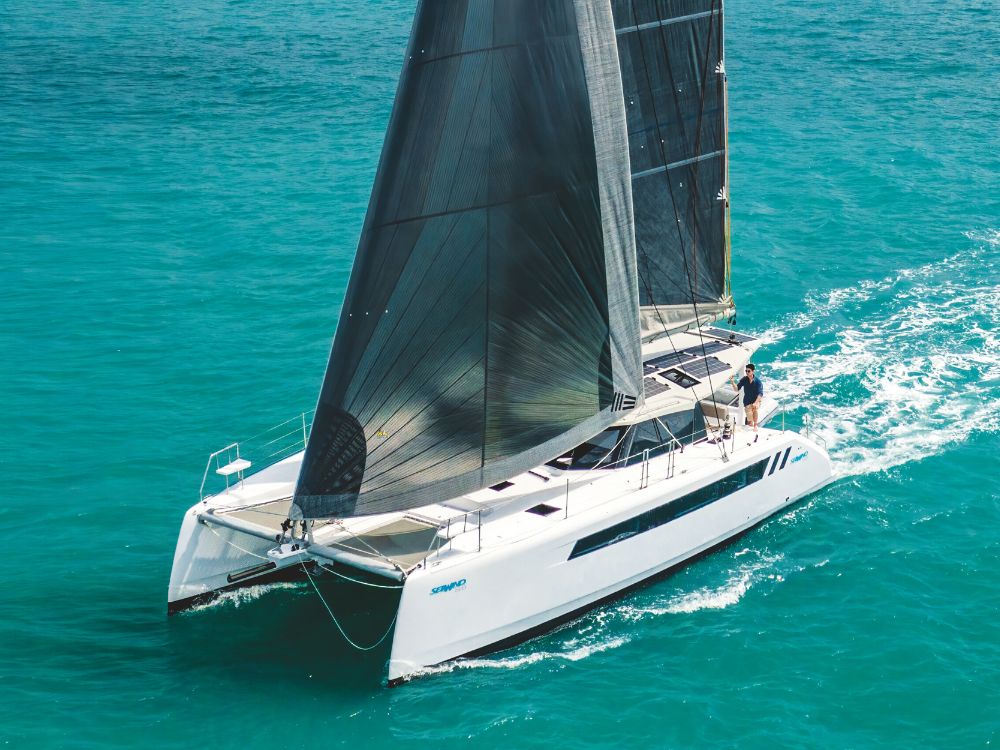
The round-the-globe gambit
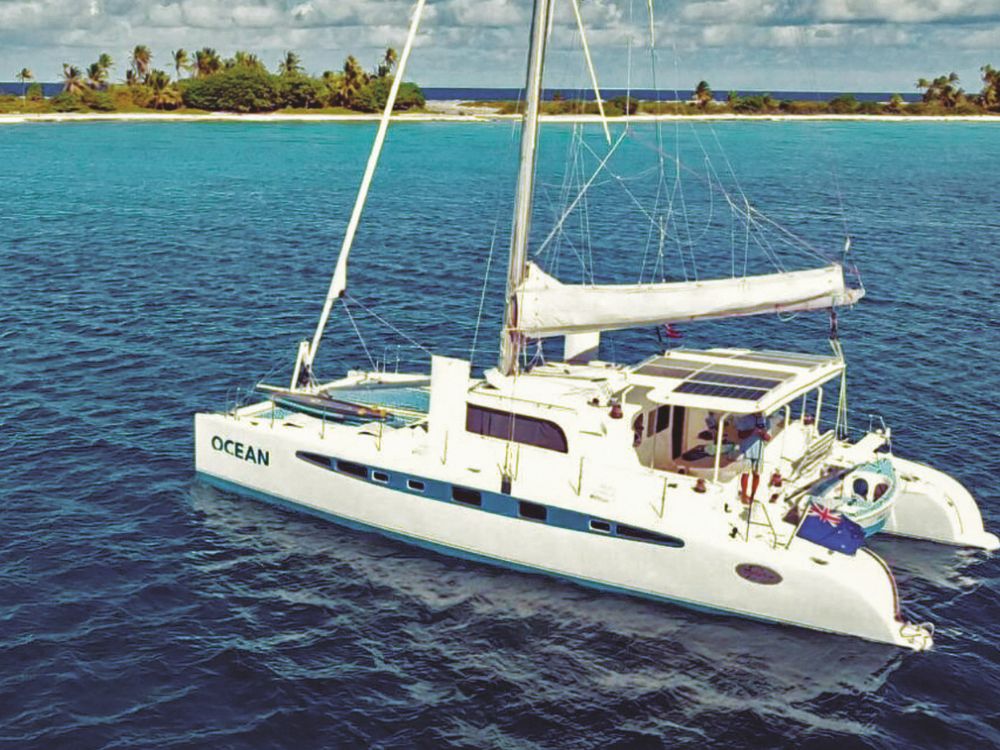
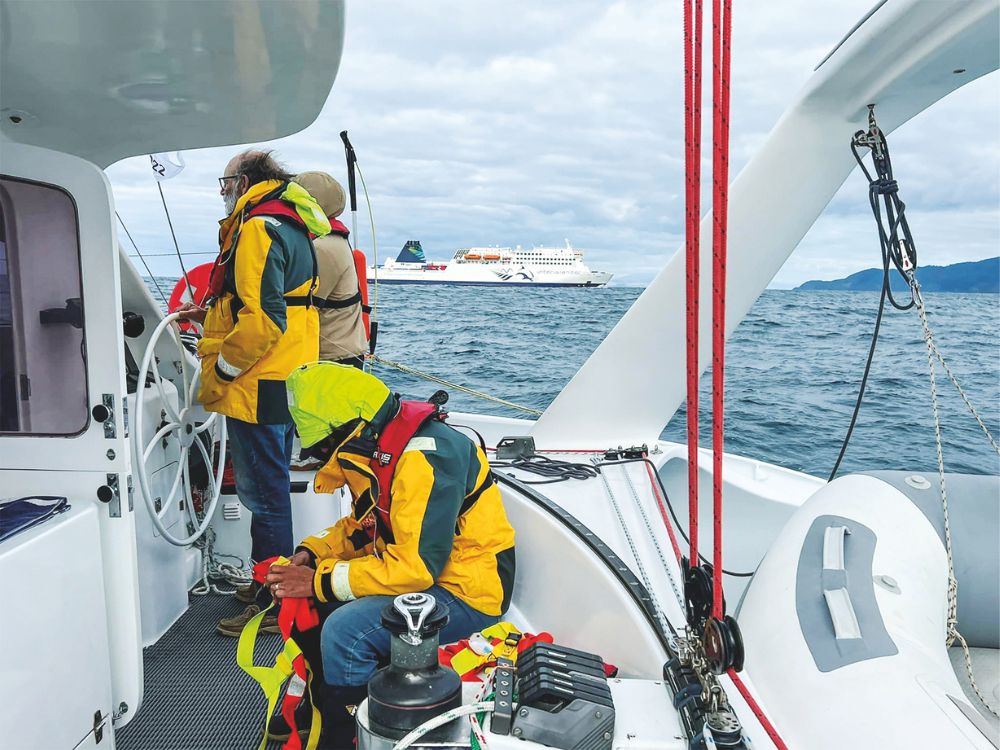
Circumnavigation is powerful, life-changing, alarmingly uncertain, and exceedingly memorable. If circumnavigating occupies your mind, the cat you choose will be crucial to the success of your endeavour. You are in for a lot – really a lot, lot, lot – of passagemaking, most of it downwind but plenty of it with the wind forward of the beam. Direct your search toward modern production boats with a voyaging pedigree. Have a significant number of owners successfully taken these boats bluewater? Results, not marketing slogans, matter.

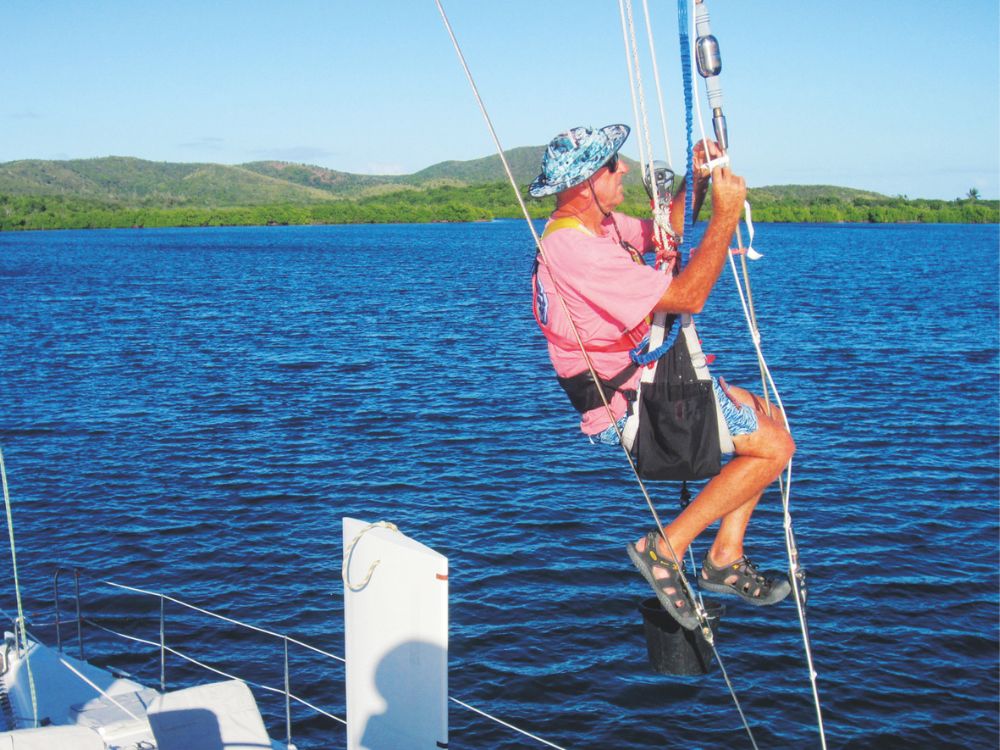
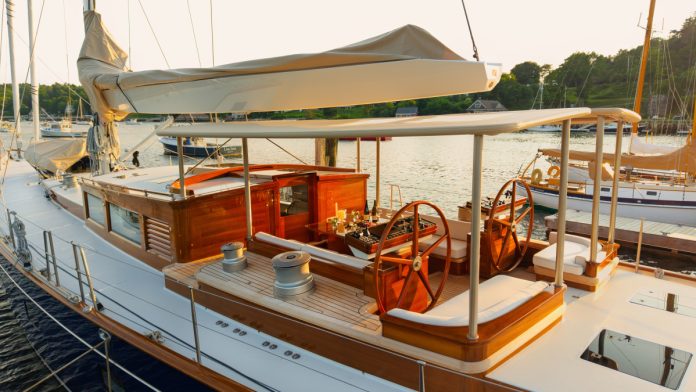
Consider also the tried-and-true voyaging catamarans of the early 2000s, such as those built by Fountaine-Pajot, Catana, Outremer, and others, which have been designed and constructed to cross oceans. Their low freeboard means you’ll feel less G-force motion at sea, and their sailplans are basic, bordering on conservative. You’ll probably need to upgrade and rehab the electrical system and electronics. Plus, add to that a power-generation system, such as solar panels or a wind generator (but you’ll likely need to do that with a new production cat, too). Sure, older cats look outdated alongside today’s muscular breed, but oldies are still reliable, fast sailboats.
The holiday home habitat
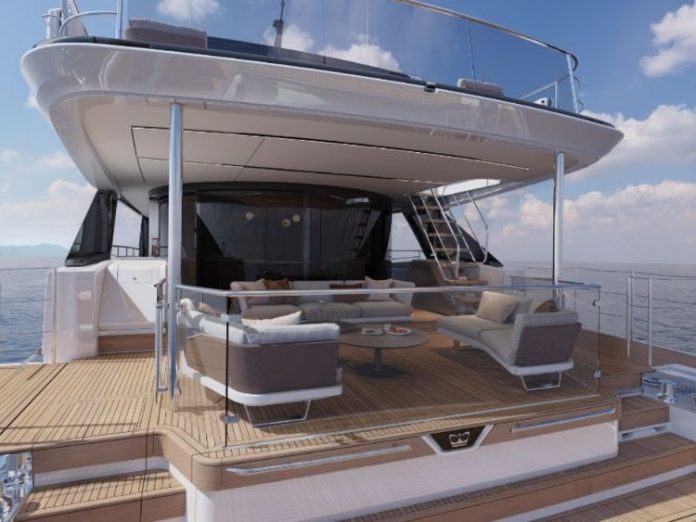
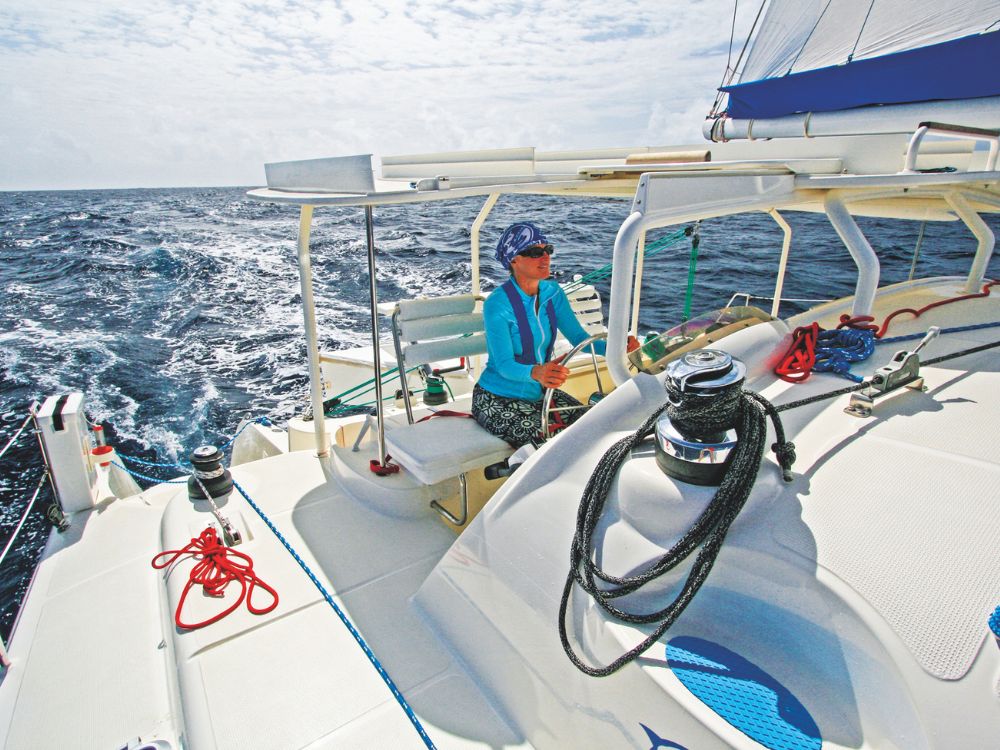
Cruising centres such as the Bahamas, the Caribbean, the Med, Baja California, Oceania, and many places all over the world, are thick with docked, anchored, moored, and hauled-out boats, their fly-in owners returning when the season is right. Their owners cruise to a nearby island or harbour, but long-distance passagemaking? This crowd is over it. If this laid-back lifestyle appeals to you, it makes sense to lean toward a cat with charterboat-style open spaces and accommodations. This means berths for all your family members and friends, many heads and showers, large water and fuel capacity, multiple dining spaces, ready stowage for water toys, lounging spaces on the flying bridge, and every cabin wired for communication and charging everyone’s devices. Don’t forget the dive gear and compressor, the big-screen TV, the large, high-powered inflatable for wakeboarding, the icemaker and the blender – you get the drift.
“You won’t be camping out, but smaller boats have a way of focussing your life on the essentials…”
The close to home getaway
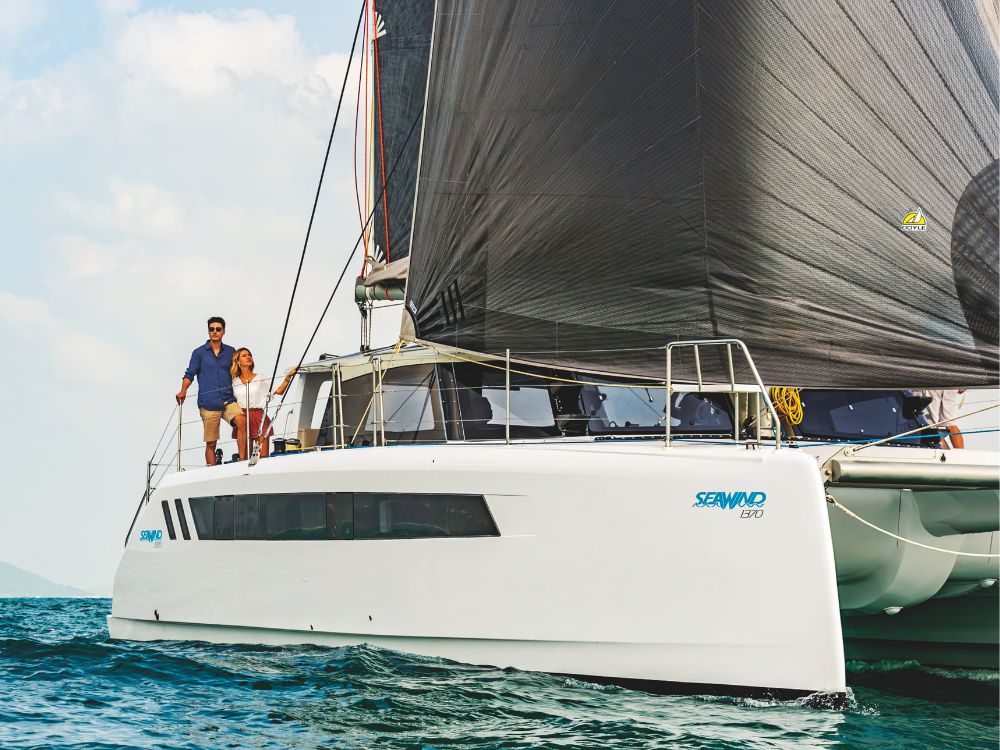
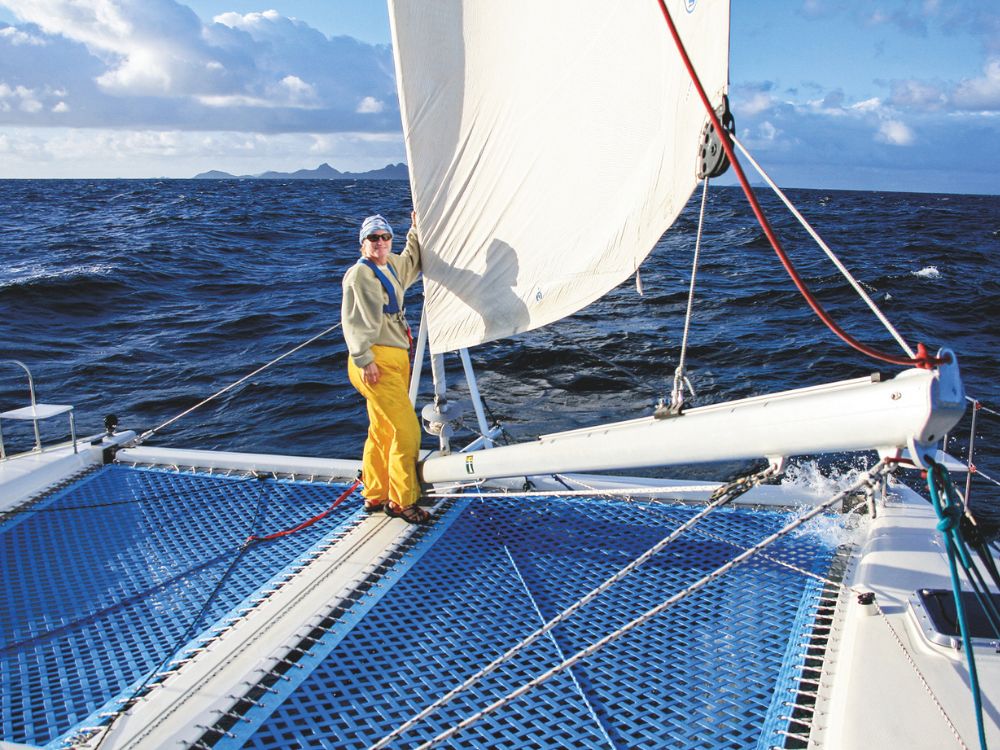
Realistically, given the demands of work, family, and your garden, is coastal cruising more your thing? Take a look at small cats with daggerboards and lifting rudders, and consider foldup, trailerable trimarans, which are zippy and fun to sail. You won’t be camping out, but smaller boats have a way of focussing your life on the essentials: fresh croissants from the local bakery you have paddled to, or savouring sundowners in shoal-draft secret spots with your sweetest shipmate. You’ll be happy as a clam (and digging for them, if your getaway vehicle is beachable) in spots where monohullers fear to tread. Say farewell to monthly berth fees, haulouts, and scraping bottom paint. Plus there’s a bonus: with your asymmetric on the prod, you’ll zip past the plodding keelboats enroute to your hideaway.

The dockaboard life
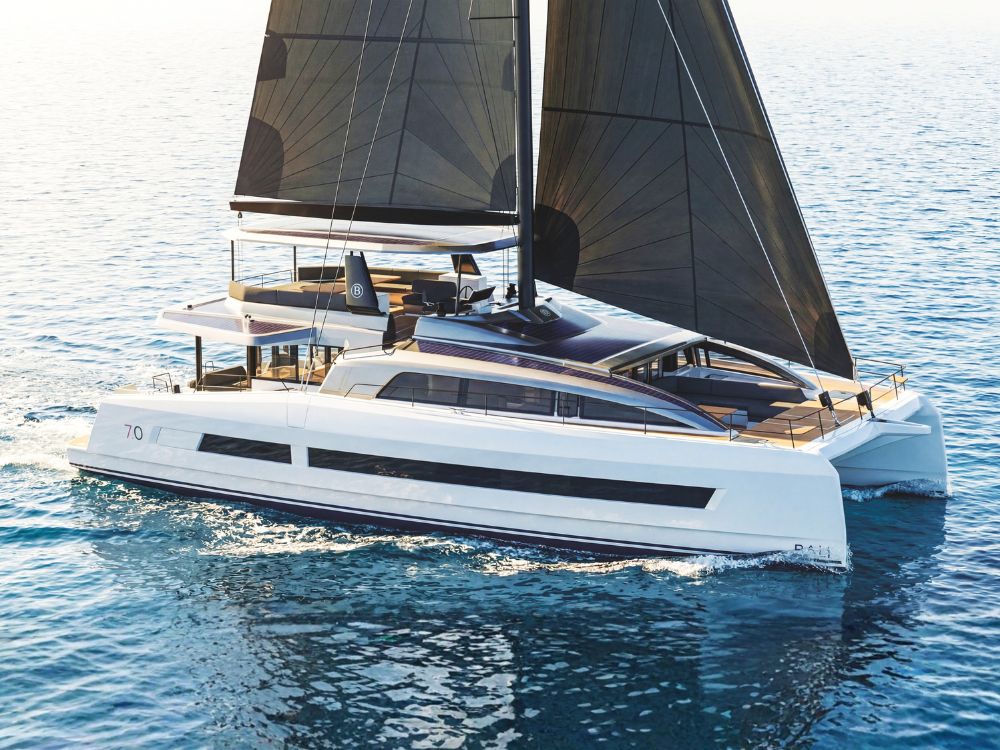
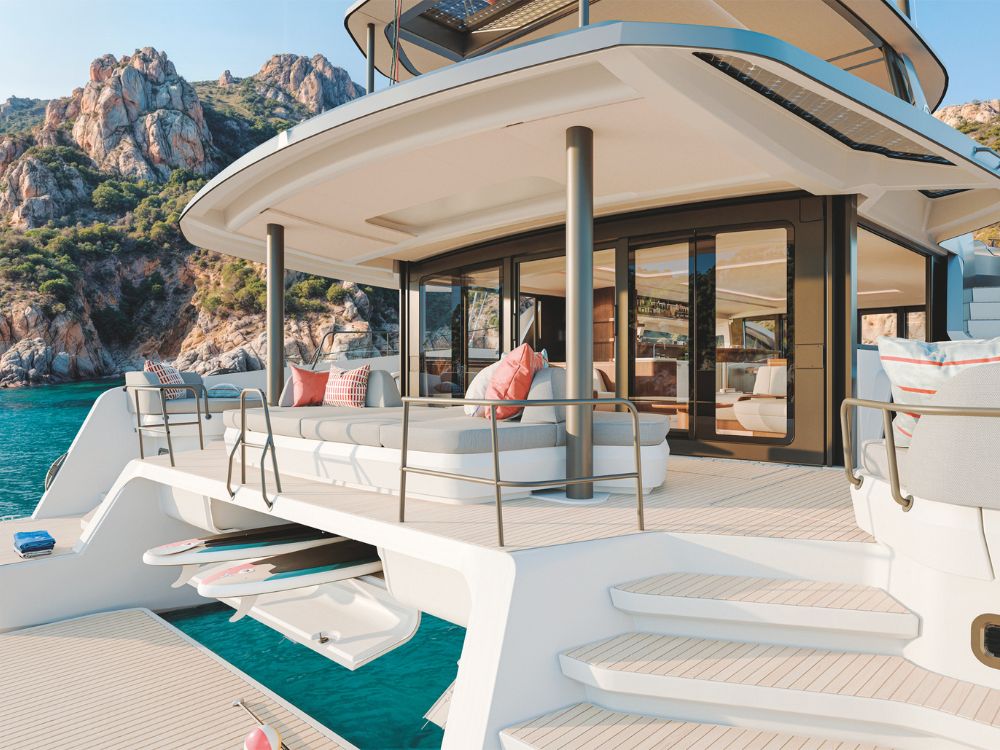
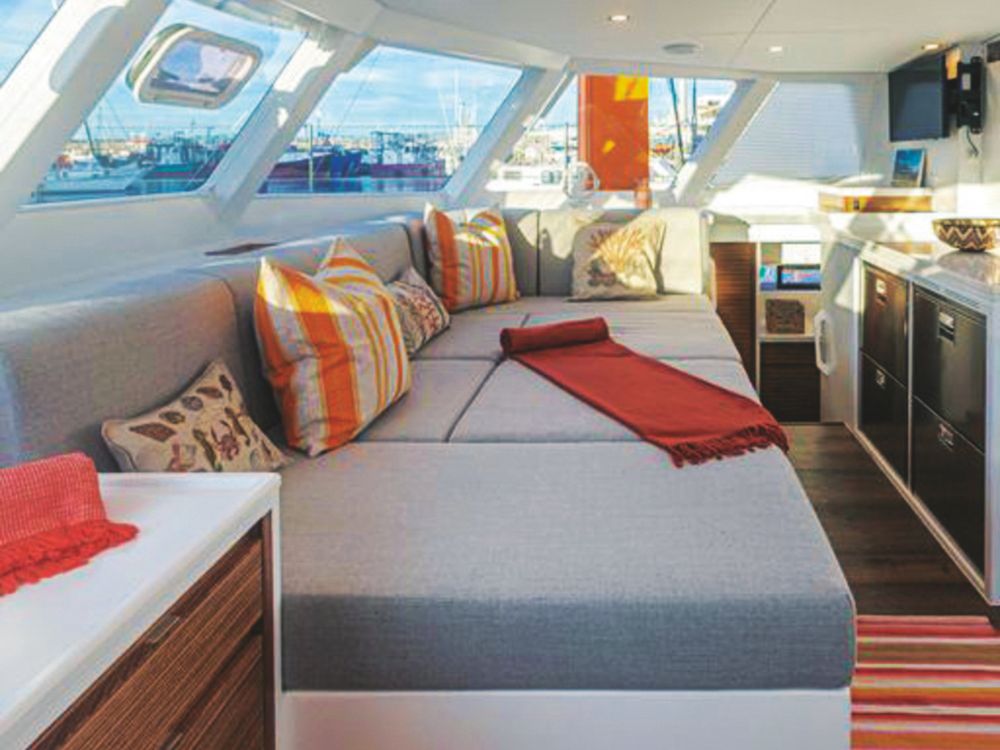
There’s no shame here: There is nothing wrong with enjoying your catamaran at the dock. And you could go voyaging, if and when your insanely-busy life eases up. If this sounds cool to you, investigate cats that offer amazing amenities. A roomy, ergonomic layout, an interior designed by an actual interior designer, with fabrics, surfaces, lighting, and cabinetry that makes you feel not only lucky but wealthy. The new breed of ‘condocats’ are, in fact, excellent retirement villas. You’ll have a water view, there won’t be common-wall neighbours above or below or beside you, and you’ll have cabins for kids or grandkids for the weekend or a coastal hop. You can take your work colleagues out for a cocktail hour put-put around the harbour or under the bridge, and they’ll be openly admiring and secretly jealous. And someday you could just do it, cut the cord and go to sea. But not right now. But someday.
The workaboard scheme
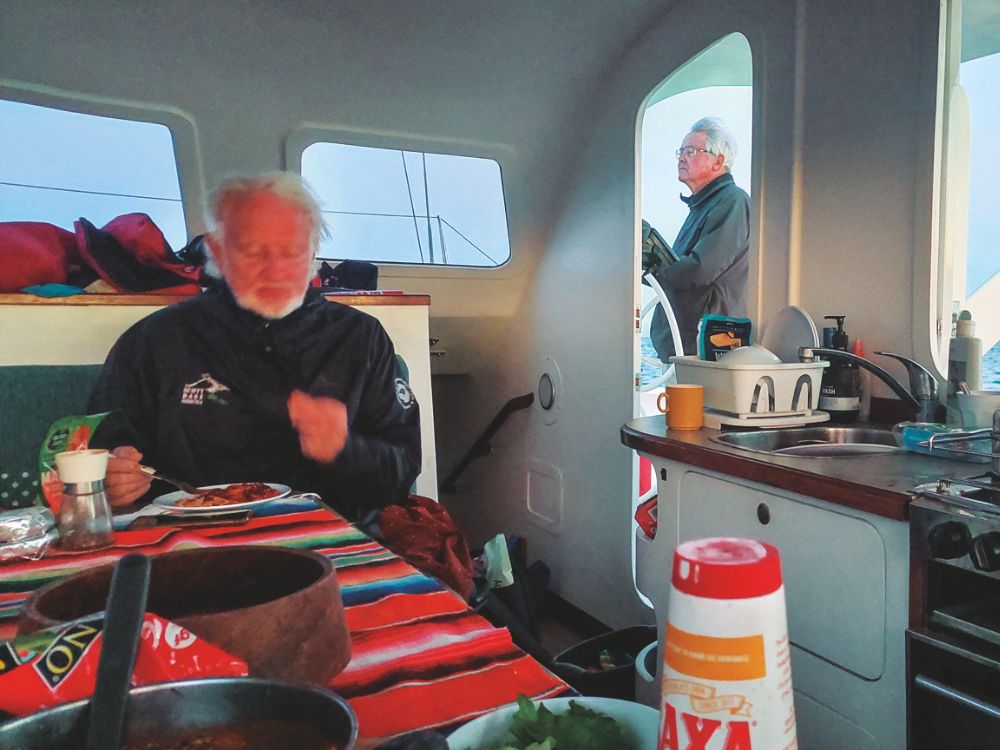
Today’s communications technology has made the floating, travelling office a reality. If instead of commuting to work, your work can travel with you, consider a cat with a home office option. If this is not available in your boat of choice, a carpenter can convert an unused cabin into a workspace. And any other unused cabin can be converted into a kids’ playroom, or a workshop. In liveaboard reality, unused sleeping cabins end up being parking places for ‘stuff.’ The workaboard option can fit into whatever flavour of catamaran that has a cabin or two up for grabs.
Boating New Zealand Insert
Windward Work: Daggerboards or Minikeels?
Comparing leeway-fighting options for catamarans
Sailing to windward is part of catamaran cruising. With the apparent wind angle at 40°, a cat’s sails produce much larger forces pushing the boat sideways than they do pulling it forward. Catamaran hulls, being long and skinny, have some resistance to being pushed sideways, but that alone is not nearly enough for efficient windward sailing.
| Option | How it works | Upside | Downside |
|---|---|---|---|
| Fixed Fins (Minikeels) | Unballasted fins slightly deeper than the rudders, fighting leeway while protecting rudders and props. | Simple, robust, no moving parts, protects gear from grounding damage. | Less effective upwind performance than daggerboards on their own. |
| Daggerboards | Lightweight, foam-core fins that drop vertically from a heavily-reinforced, watertight case in the hull. A favourite with high-performance cats. | Strong leeway resistance, better steering and less autopilot work downwind when deployed. | Risk of breaking on impact with a hard object at speed, though this protects the trunk and hull from worse damage. |
| Pivoting Centreboards | Resembles a daggerboard when down. Rotates around a pivot pin and retracts into the hull on impact. | Similar performance gains to daggerboards, safer response to underwater strikes. | More expensive to build, heavier once water in the case is accounted for, and the exit slot can add hull drag. |
What I prefer in Javelin, my Atlantic 55 cat, is a fixed fin combined with a retractable fin. The fixed fin protects the props and rudders from grounding damage and provides a very robust exit slot for the retracting fin. If one of the daggerboards strikes a coral head the impact is transmitted to the fixed fin, which is isolated from the hull.
The widespread belief that adding a daggerboard will turn a poor-performing cat into an upwind rocketship is not true. Excellent windward sailing performance requires a reasonable displacement-to-length ratio, quality sails, a powerful sailplan that can be sheeted to the proper angles for upwind work, feathering or folding props, and an efficient hull underbody.

Chris White, author of The Cruising Multihull, has designed more than 90 cruising multihulls over the last 50 years. www.chriswhitedesigns.com
The bespoke cat
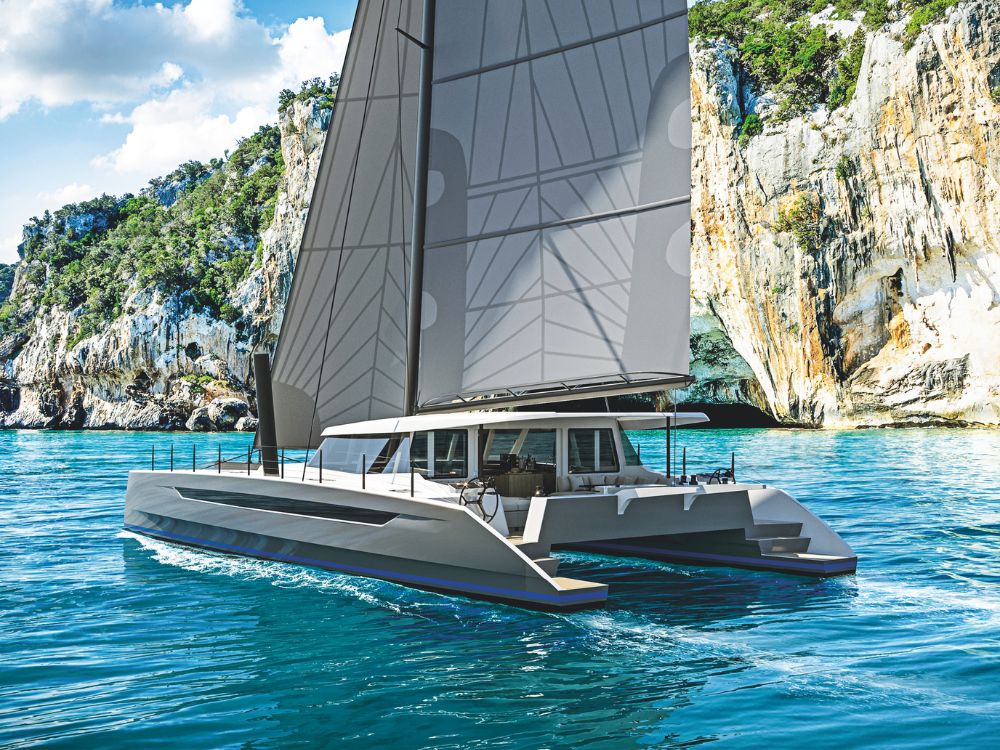
You’ve seen these custom creations – the water around them seems to sizzle. Avant-garde, high-tech, edgy. They are big, they are light, and they are damn fast. They look super-expensive because they are super-expensive. But if you are playing in that league, why not play? Before you pull the trigger, understand that there are risks; not every custom design and build is totally successful, and cost overruns and delays should be expected. You will discover the agony and the ecstasy of creating a signature cat. You will be at the table with renowned builders, designers, equipment makers, and professional sailors, and you will be making many decisions of consequence. Your sails, rig, and sailhandling systems, for example, will be cutting-edge – elegantly curved carbon, maybe a wing mast, or two wing masts. You and your crew of young guns will be known and, if all goes well, feared at glitzy regattas in Antigua and St. Barths, at race weeks all over the map. And you will know the satisfaction of notching up fast passages, because your cat is one big fast mind-blowing ride.
Your mission now
First, take a victory lap: You won! In almost every way, cruising on two hulls is better than rolling and heeling on only one. Your mission is twofold: run the numbers, and canvass your constituents. Can you support the purchase cost, the options and upgrades, the berthage, insurance, and maintenance? (Much of these outlays, of course, come with monohulls as well.) Even more important, are your spouse and kids on board? And what will you do about your career? Stir the figures and feedback into your crystal ball. Then lie awake at 3am, watching it all swirl.
No doubt you’ve already been online, sifting through claims of cat manufacturers and comparing the models that catch your eye. If you are new to sailing or to cats, Cruising World magazine’s Ahoy! podcast, “From Charter Curious to Catamaran Owners,” is an informative interview with a couple making their leap into catdom. There are, of course, many self-proclaimed ‘expert’ blogs and YouTube videos out there (caveat emptor with this stuff). Talking directly with cat owners is more enlightening.
The next time you are near a gathering of cruising boats, position yourself on the dinghy dock or grab a seat in the local café or bar. Chat with a few cat owners. Are they still happy that they switched to two hulls? What are the pros and cons of the boat they chose? What equipment and systems have proven to be the best, or the worst? You’ll get a raft of opinions, of course. But in my 15 years of cat ownership and immersion in the world of cruising cats, one opinion is rock solid: I have not found any cat cruiser who wants to go back to just one hull. BNZ