An expanded Racing for the Ocean Teams Challenge features new awards for ocean impact
The Ocean Race Atlantic is adding teeth to its sustainability messaging. Rather than simply racing across the Atlantic next year, the six IMOCA teams competing in the inaugural event will simultaneously compete in a parallel challenge: proving they can reduce their environmental footprint while advancing ocean conservation.
The Racing for the Ocean Teams Challenge, developed with IMOCA and support from 11th Hour Racing, marks a significant expansion on similar efforts run during The Ocean Race Europe 2025. This time, the scoring rubric has grown considerably. Teams racing from New York to Lorient in 2026 will be measured against 30 sustainability criteria covering everything from operational emissions and boat building practices to climate advocacy, science communication, and diversity initiatives.
It’s a competitive framework that takes the vagueness out of greenwashing. Rather than letting teams self-report their environmental credentials, the contest establishes clear categories where measurable impact matters. A team might excel at carbon reduction but lag in science education, or vice versa. The approach rewards those making genuine, broad-based contributions rather than those simply ticking boxes.

Lucy Hunt, Ocean Impact Director at The Ocean Race, framed the logic plainly: “Sailors in The Ocean Race spend more time at sea than almost anyone else, so they understand the growing pressures it faces first-hand. This gives them a unique platform to inspire others, speak authentically about why the ocean matters and explain why protecting it is so important.”
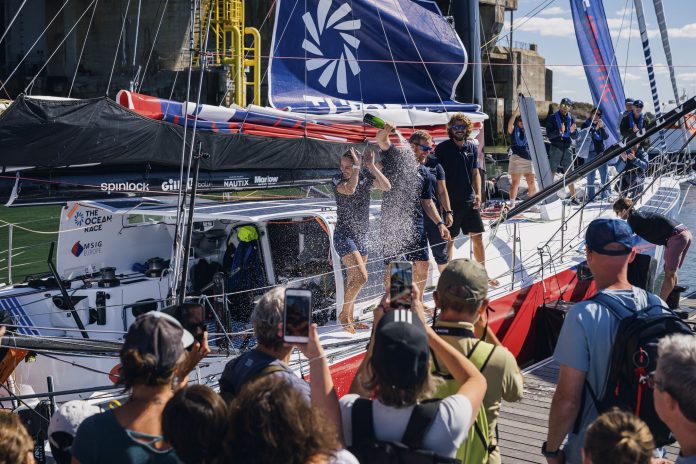
Holcim PRB took out the inaugural award last year during the Europe campaign, but 2026 will offer a more complex prize structure. Separate accolades now exist for lowest carbon footprint, best individual effort, most effective ocean science communication, and support for equity and access. This shift acknowledges that ocean action isn’t monolithic, and different teams may contribute meaningfully in different ways.
The trophy itself, crafted from recycled ocean plastic, carries its own message. Winners also receive 1,000 euros for their Impact Partner project, creating a tangible incentive for teams to invest in follow-up initiatives beyond the racecourse.
The Ocean Race Atlantic itself represents a first for the organisation’s 50-year history: a point-to-point race rather than a circuit. That format, combined with the mandatory 50-50 gender-balanced crew requirement, positions it as something more than a traditional offshore racing campaign. Whether the Racing for the Ocean Teams Challenge becomes a genuine catalyst for systemic change in how the sport approaches environmental responsibility, or remains a well-intentioned gesture, will likely become clear in Lorient come September.