


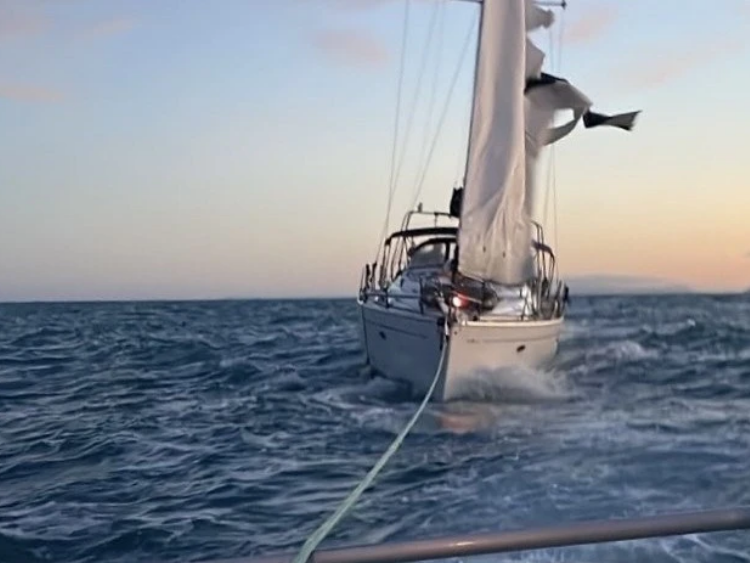
Coastguard Gisborne volunteers spent 11 hours helping an injured skipper return to port through rough seas.
Māhia yacht rescue begins with a call for help
A solo sailor called for help on Tuesday after his anchor became stuck off Māhia Peninsula. The skipper, described by the New Zealand Herald as being in his early 70s, had injured his ribs. He was also dehydrated after hours spent trying to free the anchor. He had left Napier on Sunday aboard his 42 foot yacht, bound for Gisborne, and anchored overnight off the peninsula.
Local boaties support the Māhia yacht rescue
Police coordinated the response, arranging for a local boatie and two crayfishing boats to stay with the yacht. Four Coastguard Gisborne volunteers departed aboard Gisborne Lion Foundation Rescue at 10.34am. They faced winds around 20 knots and choppy seas, reaching the yacht just before midday. Hato Hone St John, Coastguard Hawke’s Bay and the Hawke’s Bay rescue helicopter also supported the operation.
Two volunteers join the skipper aboard
The yacht’s foresail had come loose and was badly tangled and torn. Two volunteers boarded to assess the skipper and bring the sail under control. They then got the engine running. The skipper wanted to remain with his yacht, so the rescue helicopter was stood down. Both volunteers stayed aboard for the passage to Gisborne.
Rough seas slow the return to Gisborne
The yacht initially travelled under its own power, but rough conditions slowed progress. Coastguard eventually took it under tow from Young Nicks Head. It reached Eastland Port’s inner harbour basin shortly after 9pm, where paramedics were waiting.
Coastguard Gisborne Master and President Aaron Boyle acknowledged the volunteers’ long day.
“It was a long haul for our volunteers, but it ended the way we want every job to end, with everyone home safe.”
Calling for help makes the difference
“He was able to call for help, and that made all the difference,” Boyle said.

Coastguard encourages boaties, particularly solo sailors, to carry two separate waterproof ways to call for help. Options include a VHF radio and a mobile phone in a waterproof bag. It also recommends logging a trip report, checking the marine forecast and always wearing a lifejacket.
Learn more from Coastguard New Zealand.
