The data helps residents and holidaygoers make informed choices about when and where to enjoy swimming and other water-based recreational activities.
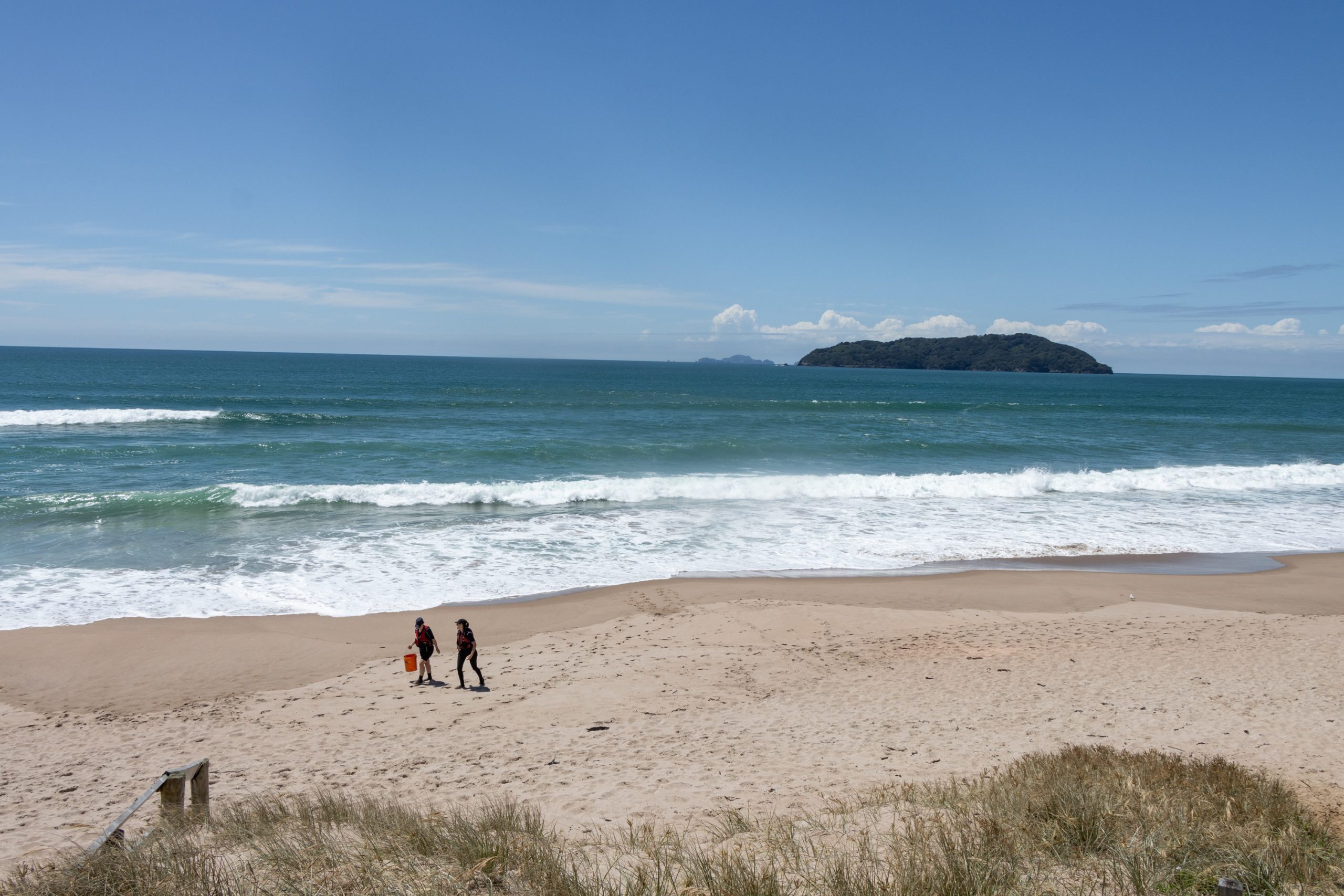
The annual programme is bolstered by university students over the summer, who undertake the weekly collection of water samples which are tested for E. coli and/or enterococci, bacterial indicators of faecal contamination.
Sampling for enterococci takes place at nine popular beach sites, while four estuary sites are tested for both E. coli and enterococci.
Waikato Regional Council Coastal and Marine Science Team Leader Dr Michael Townsend explains why estuarine sites are tested for both.

“Estuaries are popular with beachgoers, but because they are in closer proximity to land activities and where seawater is diluted with freshwater, we’re more likely to see bacteria levels that exceed guidelines there. That’s why we sample for both enterococci (the seawater indicator) and E. coli (the freshwater indicator),” he says.
The monitoring results are shared with Land Air Water Aotearoa (LAWA), territorial authorities, iwi, community groups and public health officials in the region.
The public can find the water quality results for the last time of sampling on LAWA’s Can I Swim Here? website. Results that may have public health implications will be communicated, with signs put in place.
Most of Waikato’s beaches maintain excellent long-term grades with very few exceedances. The estuarine swimming spots see more fluctuations and poorer water quality, being closer to catchments and the increase in freshwater influence, especially during rain periods due to flushing.

Dr Townsend says Earth Sciences New Zealand (ESNZ) forecasts a warmer than average summer for Waikato this year.
“We’ll be keeping a close eye on our estuarine sites. We always recommend checking LAWA, especially if it’s been raining in the week prior.
“As always, if it doesn’t look right, stay out!”
Coastal sites monitored until the end of March:
-
- Buffalo Beach (Whitianga)
- Hot Water Beach
- Tairua Beach
- Pepe Inlet at Tairua
- Pauanui Beach
- Whangamatā Beach
- Whangamatā Harbour entrance
- Onemana Beach
- Whiritoa Beach
- Ngarunui Beach (Raglan)
- Raglan Harbour (near the motor camp)
- Maraetai Bay (Port Waikato)
- Sunset Beach (Port Waikato).
“We focus on the region’s busiest beaches, where potentially hundreds of people will be enjoying the water over the course of a day,” says Dr Townsend. “We have also tried to focus on beaches patrolled by Surf Life Saving New Zealand, so the public are getting the best combination of advice on water safety.”
Using the LAWA Can I Swim Here? online tool
LAWA’s Can I Swim Here? online tool enables you to check a spot’s water quality before you choose where and when to take a dip. Just click on a site to see the water quality test history, available facilities, how to get there, and to understand more about recreational water quality monitoring.
It will only give an indication of what water quality was like at the time of sampling, so it’s important to check the water before you dive in. LAWA recommends a simple trick known as the ‘toes test’. At your swimming spot, stand in calf-deep water. Can’t see your toes? It’s a no-go.