Maritime safety experts say it shows that even when boaties do everything right, things can still go wrong.
Reporter Mary Argue speaks to the skipper, credited with saving multiple lives that day.
Sunrise is still hours away when Darren Teague wakes his kids.
The 12 and 14-year-olds are bundled into the car, along with one of his mates, and they hit the road heading west from Waikato, his late-model fishing boat in tow.

They roll into Raglan and as daylight breaks on 1 November, launch the game fisher with Teague at the helm.
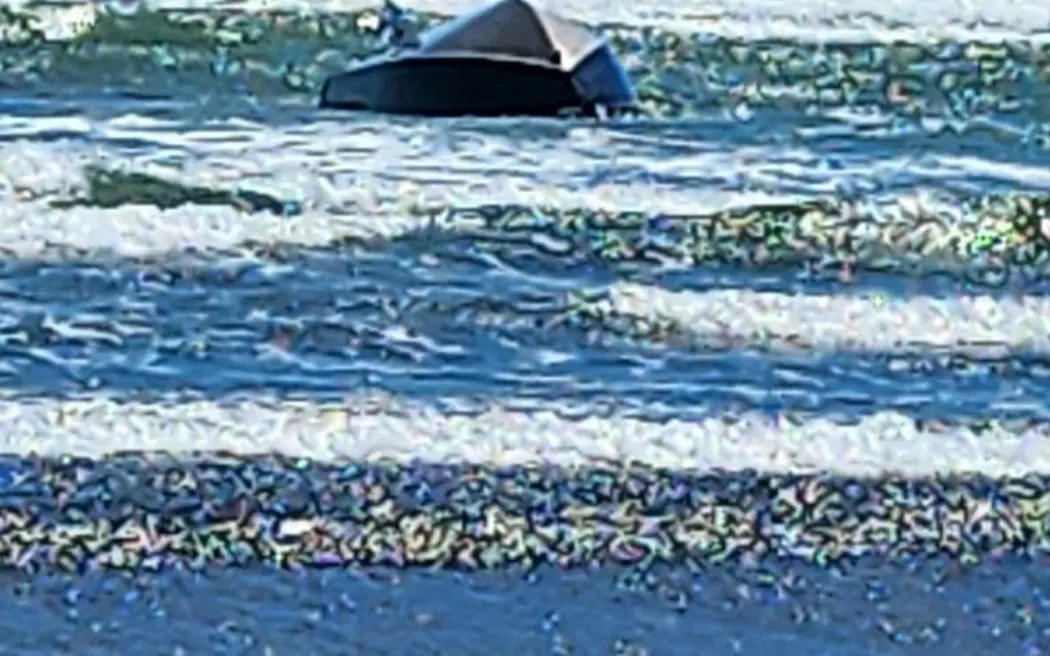
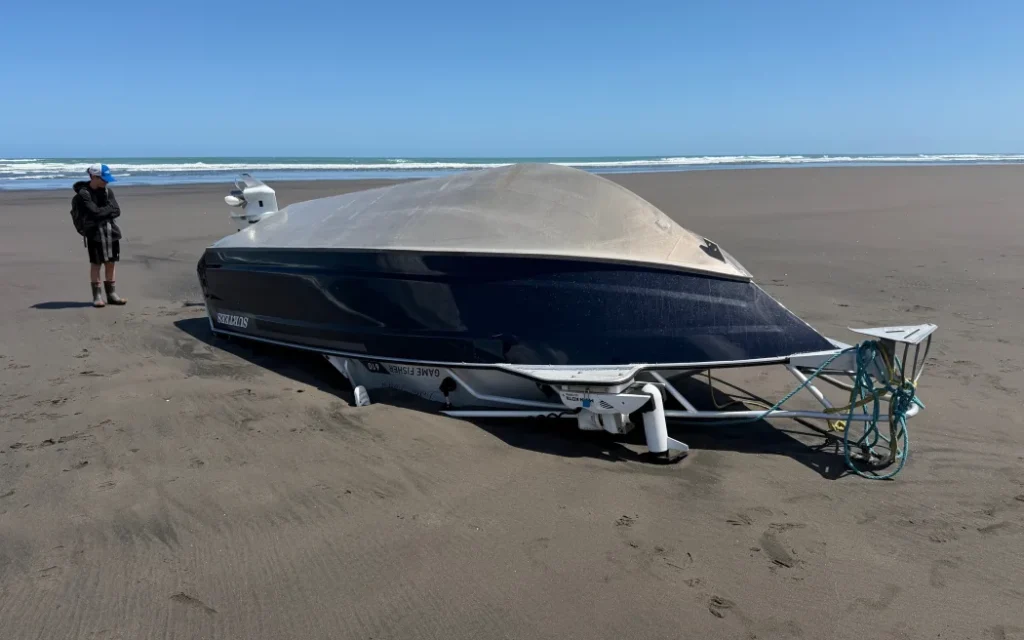
In a little over four hours’ time, all four will be in the water – their boat upside down in the surge and wash of the infamous Raglan Bar.
“I remember looking at just two waves standing up in front of me,” Teague says.
“[It was] like trying to put your seatbelt on halfway through a car crash. I couldn’t have done anything at the time.
“I can’t emphasise how fast it happened. It was seconds.”
Weeks later, he can clearly recall the panic on his kids’ faces.
A deadly and dangerous feature
According to Maritime NZ, bars are the most dangerous feature on New Zealand’s coast – costing five people their lives in 2024, and necessitating the rescue of more than twice as many.
The build-up of sand at the entrance to a harbour, or river, can dramatically reduce the depth of the water and increase the height of waves – especially at low tide.
The Raglan Bar is one of about 100 in the country, and Teague, a keen fisherman – mostly in the Gulf and off the east coast of the North Island – is the first to say he’s no Raglan boatie.
But the Morrinsville father isn’t a novice either. He’s had a couple of boats and his fair share of dingies and runabouts.
Over the years, he’s made a point of ticking off as many boating courses as he could – skippers, radio, and one on bar crossings.
Teague checked the weather before embarking on his fourth Raglan outing. Conditions were pretty good, but as the boat approached the edge of the harbour, he pocketed his personal locator beacon (PLB), just in case.
“The bar was good at that stage,” he recalls, noting another boat was also biding its time for a break in the waves.
Both of them crossed without issue, and Teague and his crew headed to deeper water.
“We were looking forward to a good day’s fishing,” he says, but what began well didn’t last.
“There was just a big swell coming through, and every now and again I get seasick … that day was just particularly bad, I started spewing.”
He says when the kids started feeling crook too, they called it. With a dozen snapper on board – “a few good feeds, more than enough” – the day’s fishing had wrapped before 10 am, hours ahead of schedule.
Teague says the bar was rougher than anticipated as they headed to the harbour, but heard two boats confirm a successful crossing over the radio.
His locator beacon went back in his pocket, and a crossing report was logged with Coastguard.
“I thought, ‘People are going in, it’s obviously okay.’ In hindsight, I probably should have sat there and watched it a bit longer.
“[But given] how I was feeling at the time, I was just bee-lining it back in.
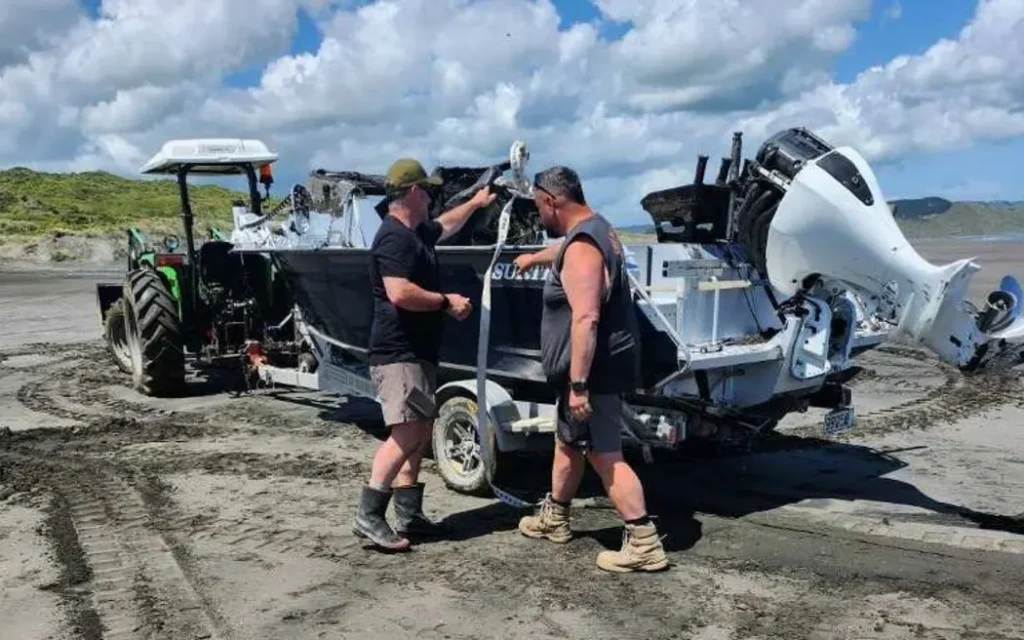
“So, I just carried on, went over the bar, which was fine – my friend was standing behind me spotting waves out the back – and it was in the joggle where we came unstuck.”
‘I could see the panic’
The crew hit the frothing water on the harbour-side of the bar, and within seconds, it was chaos, with two waves bearing down. Teague says there was nowhere to go but directly into them.
The boat fell into a trough, spinning sideways as it nose-dived, and waves crashed over the windscreen and side of the boat.
“One of them came straight over the side and just washed the kids straight out into the water – all in one hit.
“It was pretty surreal, but I knew it was happening, and I looked at them, and I could see the panic.”
Within seconds, the boat had rolled.
“I only had enough time to tell them – they were trying to scramble back on the boat – and I just said, ‘Get out of it,’ and then I ripped it [the motor] out of gear.”
He tried to grab his mate, who’d become trapped in the back corner of the boat, and then it all went quiet.
At 10:12 am, Coastguard Raglan was alerted to a report of a capsized boat on the Raglan Bar. The first rescue jetski hit the water within 10 minutes, followed by a second jetski and a rescue boat.
Around the same time, two senior Raglan lifeguards – who’d just arrived at the club for patrol – got a call about an overturned vessel.
A couple of minutes later, their Inflatable Rescue Boat (IRB) was on the water speeding towards the bar.
The underwater calm didn’t last long.
As he came to the surface, Teague clocked his kids but not his friend.
He tried desperately to get back under the boat, but couldn’t, and admits feeling a huge sense of relief when his mate finally popped up.
However, he was without a lifejacket – he’d been forced to unclip it to get out.
Teague grabbed the children, and the four of them clung to the hull of the upturned boat.
“I’ve said it to a few people, but it turns out there’s not too much to hold on to on the bottom side of a boat … we ended up back in the water.”
A floating squab became their refuge, and it was around this time that his locator beacon floated out of his pocket – he grabbed it.
“I was trying to hold on to the kids – I didn’t want to let them go – I couldn’t set it off [immediately], but a boat had gone past us then, and I knew that they were going to radio for help.”
In between the onslaught of waves and reassuring the children, Teague managed to set the beacon off.
“I could see it flashing, it was going, and then it was just a waiting game, I knew that people would be coming.”
Crew ‘did everything right’
Raglan Surf Lifesaving director, Fletcher Harnish had launched a jetski upon hearing about the distressed vessel and was in hot pursuit of his colleagues in the rescue boat.
Boaties inside the harbour directed the rescuers to where the stricken boat was last seen.
The Coastguard and surf lifesavers linked up, and just beyond the surf zone, they saw them – four people and a capsized boat.
“The two children were picked up and put into the IRB, and the adults on the back of the Coastguard jetskis,” Harnish says.
Back on shore, the four patients were assessed by Hato Hone St John.
“They were in quite a good position; they’d done everything right. They were calm, just a little bit cold and shaken up.”
Coastguard Raglan volunteer and jetski Master, Harry Series agrees – Teague and his crew “did everything right” – logging a bar crossing trip report with Coastguard, wearing lifejackets, and activating their personal locator beacon.
“But unfortunately, things can still go wrong,” he says.
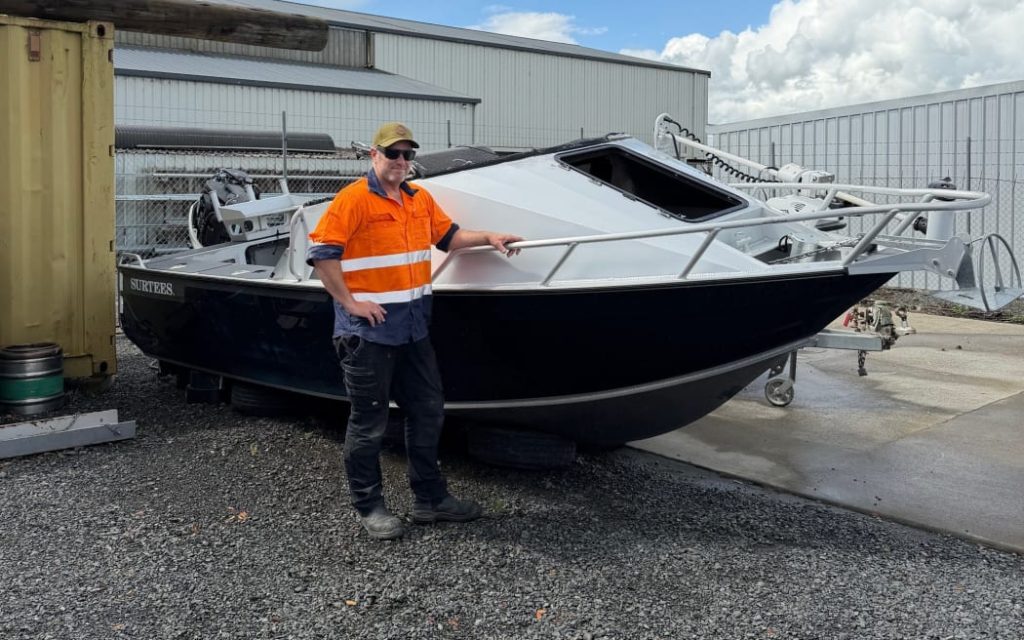
Maritime NZ’s principal advisor for recreational craft Matt Wood, has investigated many fatal incidents and knows the “fine line between fatal and non-fatal”.
He’s unequivocal in his assessment.
“Darren’s actions have saved the lives of his children, his friend and himself. Many people don’t survive these things, and he has, as a result of the preparation and things he did.”
Wood says the majority of boaties get into trouble and die close to shore, with bars particularly deadly.
“They’re extremely hazardous, and there’s a lot you need to do to cross safely – you need to make sure your boat’s seaworthy, and you’ve got the right safety equipment and knowledge.
“Be sure before you leave the shore.”
He says Teague did that.
He’d done a bar crossing course, his boat was fit-for-purpose, and maintained. He also had the right safety equipment, two forms of satellite-based emergency beacons – one on him and one on the boat – and the crew was wearing correctly fitted lifejackets, Wood says.
Despite that, things can still go pear-shaped.
Teague’s driver to get back to shore – seasickness – played a role in the accident, Wood says, but says once things had started to unravel and they were in the water, Teague made decisions that made a difference.
“They can call for help, and they stuck to the boat as long as they could – this increases your chances of being found and survival.
“Once they were separated from the boat, they found some floating squabs. They huddled, he calmed the kids, they didn’t panic, which is just fantastic actions that he took.
“Undoubtedly, if he hadn’t done those things … I think this would have ended differently.”
Prepare, because accidents can happen
Speaking to RNZ about that day, weeks later, isn’t easy.
“I’m not really one to do this,” Teague says, “but if I can help someone else, I will”.
The capsize hasn’t put him off fishing – he’s been out since and plans to get another boat – but it’s in the back of his mind, and his advice for others is simple.
Take a personal locator beacon, wear a lifejacket and do up the crutch strap (because “hanging in the water for over half an hour by your neck” is pretty uncomfortable). Be aware of your surroundings.
“I don’t really know how I would have done it differently today, other than manage the time of the tide when I was coming in.
“It was just one of those things, eh, you run off the road in a car too, it was just an accident. It was lucky we had everything in place, I guess, to get away with it.”
*Information on how to stay safe in the water can be found on the Maritime NZ and Coastguard websites, which also include a range of boating courses.
Written by , RNZ