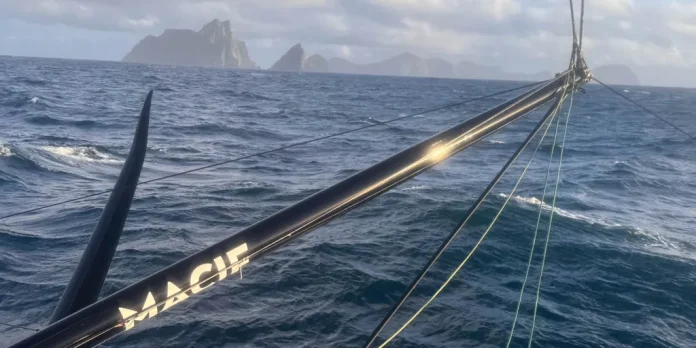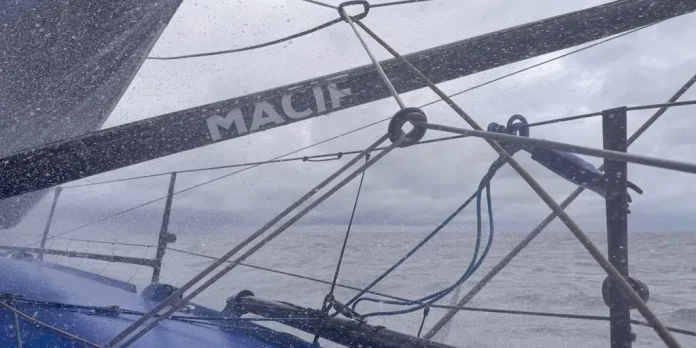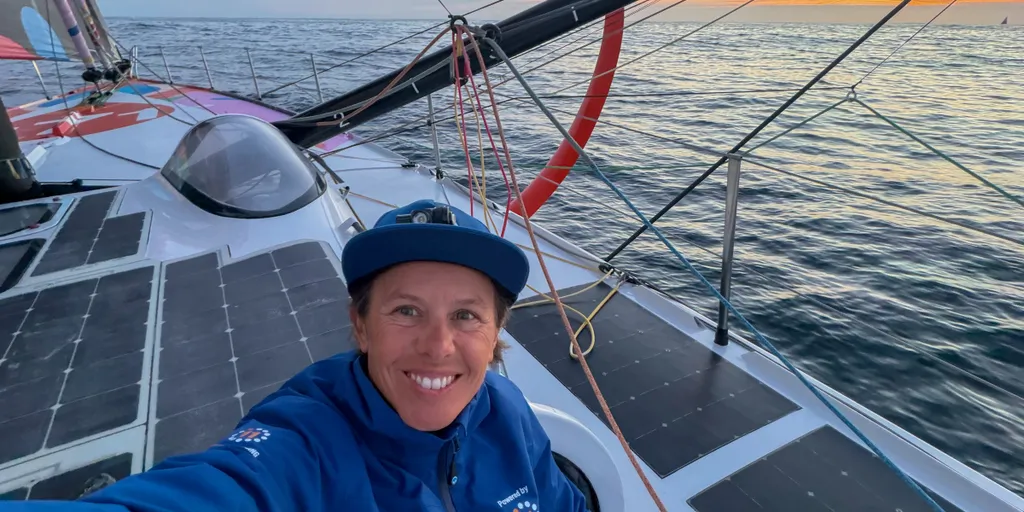
Light winds off the Vendée coast turned Sunday’s opening miles into a chess match none of the nine IMOCA skippers expected. What began as a gentle departure from Les Sables d’Olonne quickly became a trial of patience and precision, with competitors tacking relentlessly between Île d’Yeu and an offshore wind farm, wrestling with gusts that shifted faster than they could trim sails. By nightfall, the race had hardened. Speeds had climbed past 20 knots for the leaders, and the fleet was charging toward Brittany with the first proper weather system already visible on the horizon.
The send-off from Les Sables delivered raw emotion. Violette Dorange, skippering Initiatives Cœur, found herself caught off guard by the intensity of the moment. Retracing the departure channel where crowds lined the waterfront transported her straight back to Vendée Globe memories. “I nearly cried the whole way,” she said later. “Seeing so many people, it was hyper emotional.” Her competitor Francesca Clapcich, aboard 11th Hour Racing, echoed that sense of occasion. Having raced out of the same harbour in smaller boats, she recognised something different about leaving in an IMOCA. “It gives you frissons. You start to imagine what a Vendée Globe departure would feel like.”
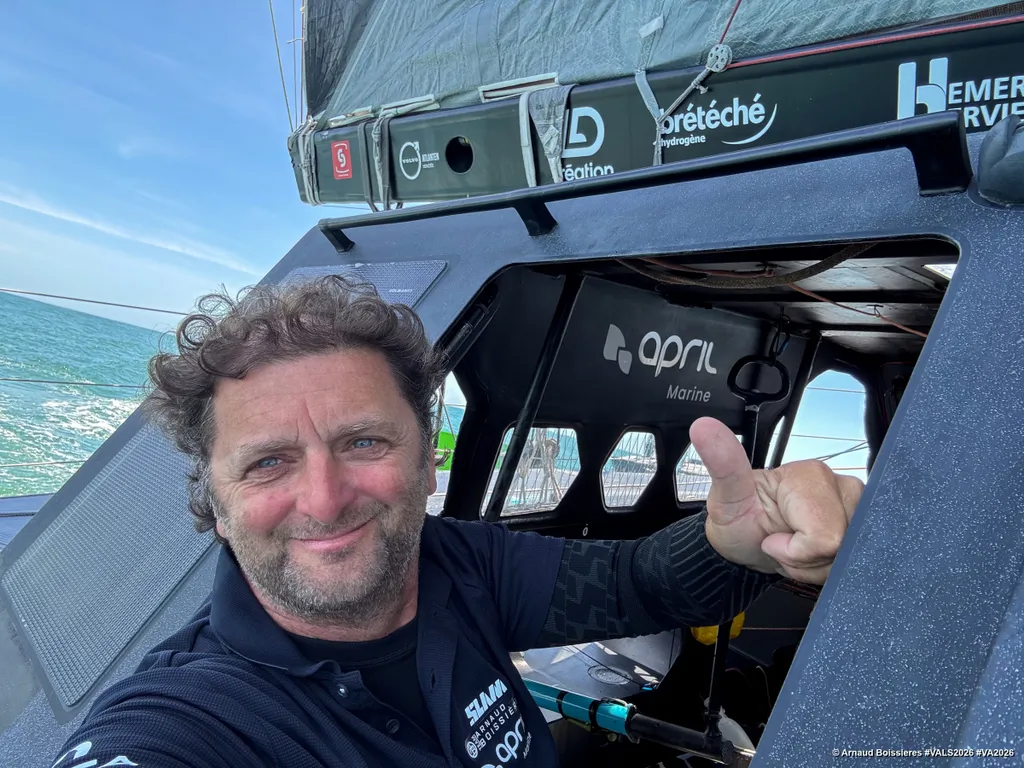
The emotion evaporated the moment they hit clear water. The real race demanded immediate attention: finding wind, reading the current, and making calls that would echo through the next 48 hours. The narrow channel between the island and the wind farm became a puzzle with no single answer. Manu Cousin and Arnaud Boissières (APRIL Marine) committed to the western option early. Ambrogio Beccaria (Allagrande Mapei) pushed east of the turbines. Others hunted the middle ground. Trajectories splintered within minutes.
What followed was brutal in its simplicity. Roll the jib. Unfurl it. Gybe again. Repeat. For hours, the crews felt less like ocean racers and more like workers in a gym, their bodies hammered by constant J0 manoeuvres under minimal wind. Dorange described the experience with understated candour: “We knitted a lot. Enormously a lot happened. Very sporty, even without real wind.” Clapcich admitted to miscalculation, hugging the coast expecting better pressure only to hit a wind shadow that set her back. Boissières shrugged at the outcome with wry recognition. Having backed his western gambit from the start, he watched as all three divergent routes converged anyway, dumping the whole fleet back together as if someone had rung a starting bell twice.



By dark, though, they had all accelerated hard. The second chapter was beginning.