Seven skippers in carbon-fibre racing yachts have just done something no sailor has done before: crossed the Arctic Circle while competing in a solo offshore race. Sam Goodchild led the charge yesterday, followed by Elodie Bonafous, Violette Dorange, and Ambrogio Beccaria. Francesca Clapcich crossed during the night, while Nico d’Estais and Arnaud Boissières were set to reach the 66th parallel this afternoon.
The Vendée Arctique represents a rare collision between extreme ocean racing and genuine polar exploration. When the fleet departed Les Sables-d’Olonne six days earlier, the dream was midnight sun, crystalline ice, and the kind of Arctic drama that graces magazine covers. Reality proved far less romantic.

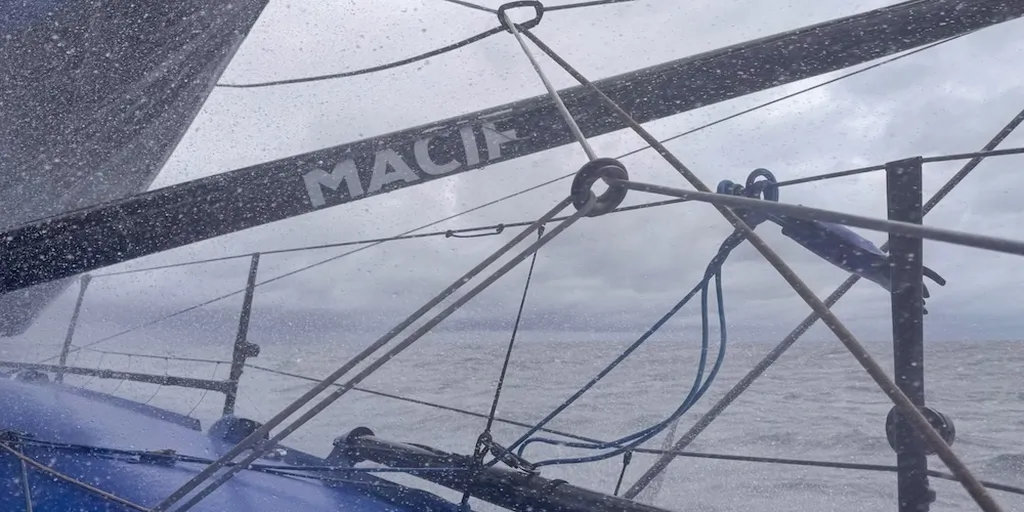
“Here it’s grey, grey, grey,” Goodchild reported from the lead. Bonafous, racing for Association Petits Princes, described it more harshly: fog and drizzle have reduced visibility to almost nothing, creating an atmosphere that feels genuinely bleak. The water, sky and clouds blur into one monochromatic haze. Dorange called the landscape lunar. D’Estais, aboard Café Joyeux, summed it up with dark humour: “Everything is grey—water, sky, clouds. It’s fifty shades of grey, but the family-friendly version.” Boissières added that the temperature had plummeted suddenly, and the cloud cover was so thick that the crew could barely see beyond the bow.
The Arctic Circle itself is drawn at latitude 66.5 degrees north, marking the southern boundary of the polar region. It spans 40,000 kilometres around the globe, enclosing some of Earth’s least hospitable terrain: northern Siberia, Greenland, and the far north of Canada. For adventure enthusiasts, the Arctic Circle belongs to that short list of places that concentrate imagination and longing—alongside desert crossings, unclimbed peaks, and once-impassable capes.

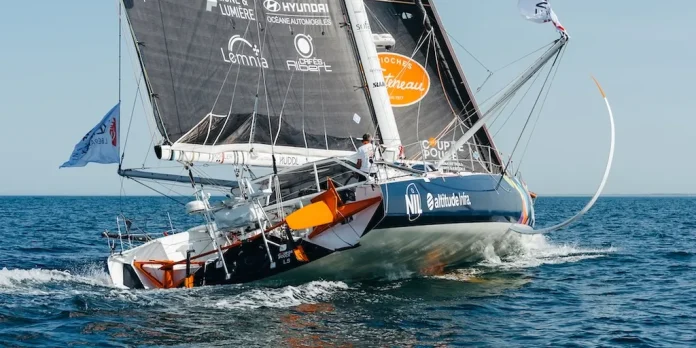
For competitive sailors, it had remained untouched. The Vendée Arctique changed that. These seven skippers are not expedition yachtspeople on a leisurely voyage of discovery; they are racers, pushing IMOCA boats hard across open ocean to reach a line on a map that has haunted explorers for centuries. They expected magic and got meteorology instead—fog banks, bitter wind, and the sobering realisation that the Arctic doesn’t perform on demand, even for those who’ve travelled 2,000 nautical miles to meet it.