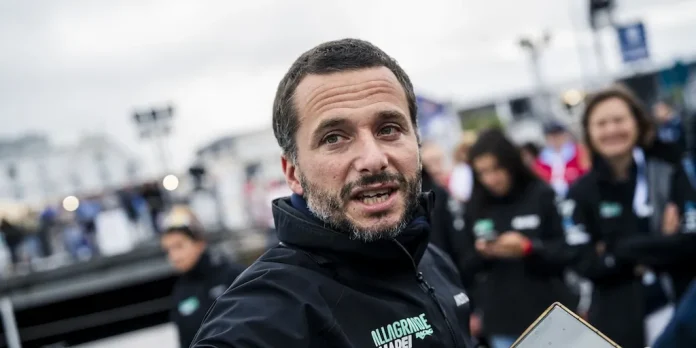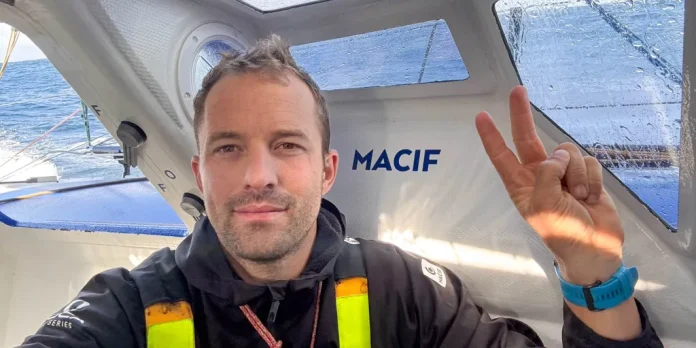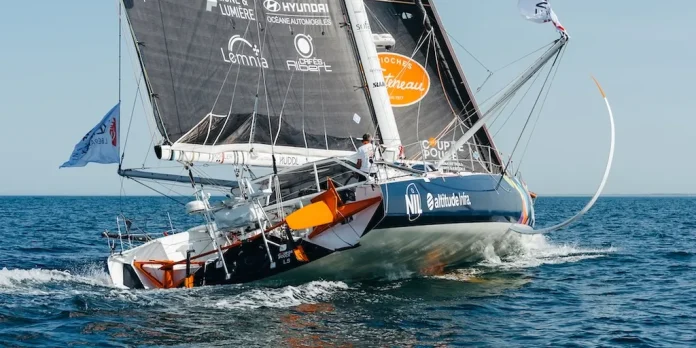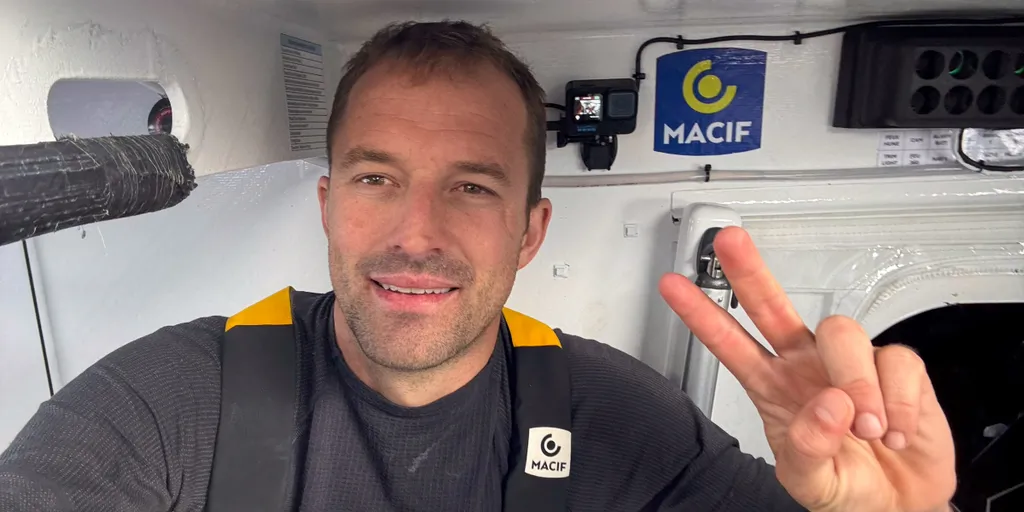
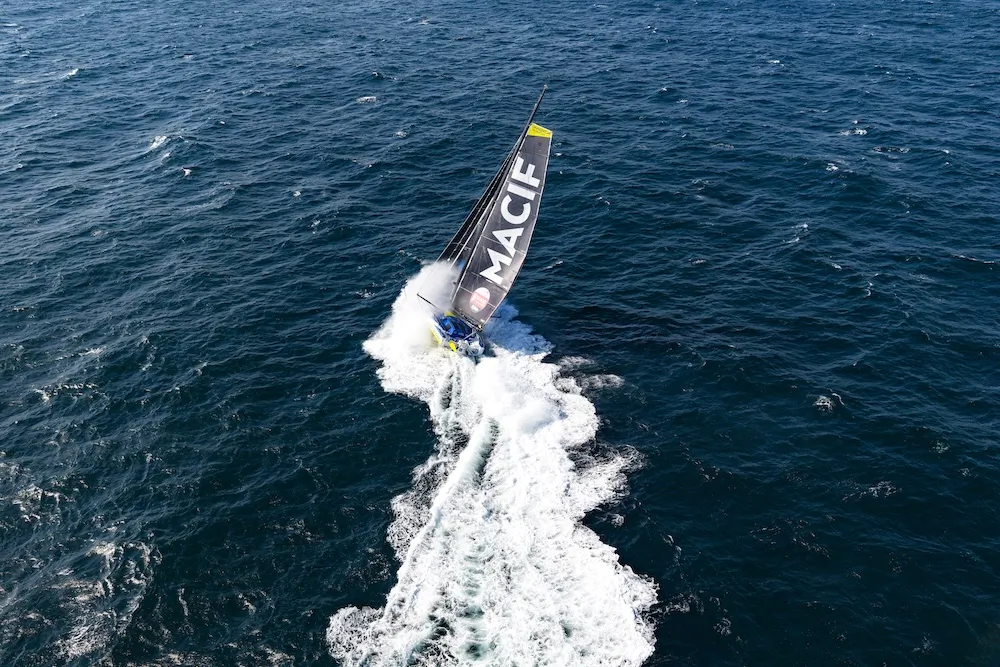
Sam Goodchild has finally caught his breath. After three days of relentless racing aboard MACIF Santé Prévoyance in the Vendée Arctique, the British skipper managed a proper sleep last night and is charging toward the Arctic Circle with renewed energy, though what awaits him in the next 24 hours will test him hard again.
Goodchild has led the race since Les Sables d’Olonne. When he checked in by radio this morning at around 9:28 NZST, he was candid about his shock at the race’s velocity. “I feel like we’ve lived ten days of sailing in only three days,” he said, “and in completely different conditions.”
The early part of the course has been a grinding affair. North of Ireland, where forecasts suggested conditions might ease, Goodchild encountered unstable winds, squalls, lulls and constant shifts. These are not boats that let their skippers rest easily. MACIF Santé Prévoyance accelerates on its foils one moment, then slams hard into waves the next. Goodchild barely slept until last night, when the wind dropped enough to give him real recovery time. “I don’t know how many hours I got,” he said, “but genuinely a lot.”
The reprieve is temporary. A deep depression is now forming directly across his route toward the Arctic Circle, and he cannot go around it. “It’s like bear hunting,” Goodchild explained with rough humour. “You can’t go around it, you have to go through it.” Wind above 30 knots is forecast, though he expects the worst to pass quickly before he emerges into lighter conditions and begins the long push south.

The crossing point itself remains fluid. Rather than committing to a specific latitude now, Goodchild is running multiple weather scenarios and watching where the forecasts converge. Routing options vary wildly. Some suggest passing east of the United Kingdom, while others favour the Irish Sea or the east coast of Ireland. A second major depression will sweep across Ireland in coming days and will largely dictate his return southward. “Aucune ne raconte vraiment la même histoire,” Goodchild said of the competing forecasts. His strategy is to keep as many options open as possible and decide when the data aligns.
He expects to cross the Arctic Circle in the early hours of tomorrow morning. When he does, it will mark the turn south on a course that demands he navigate another low-pressure system while managing variable winds and heavy seas. It is exactly what the race promised before the start, though he sounds genuinely surprised at how fast the whole thing is unfolding.
“I’m surprised at our speed. Tomorrow I’ll be at the Arctic Circle. It’s all compressed into three days.”