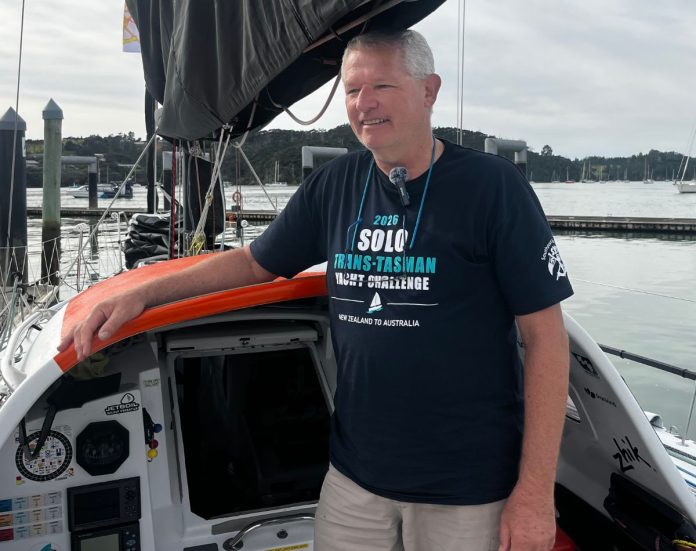
At 79, Malcolm Dickson bookends a Solo Trans-Tasman career with a second handicap win.
Bookended by wins
There are a few words for what Malcolm Dickson has done across nearly five decades of Solo Trans-Tasman racing. His career has been bookended — a handicap win in 1978 when the race was young and conditions turned cyclonic, and a handicap win again in 2026 at 79 years old, in some of the worst weather the crossing has produced in years. Everything in between — another two entries, a first across the line, a second, and now this — adds up to one of the most remarkable records in New Zealand offshore sailing.
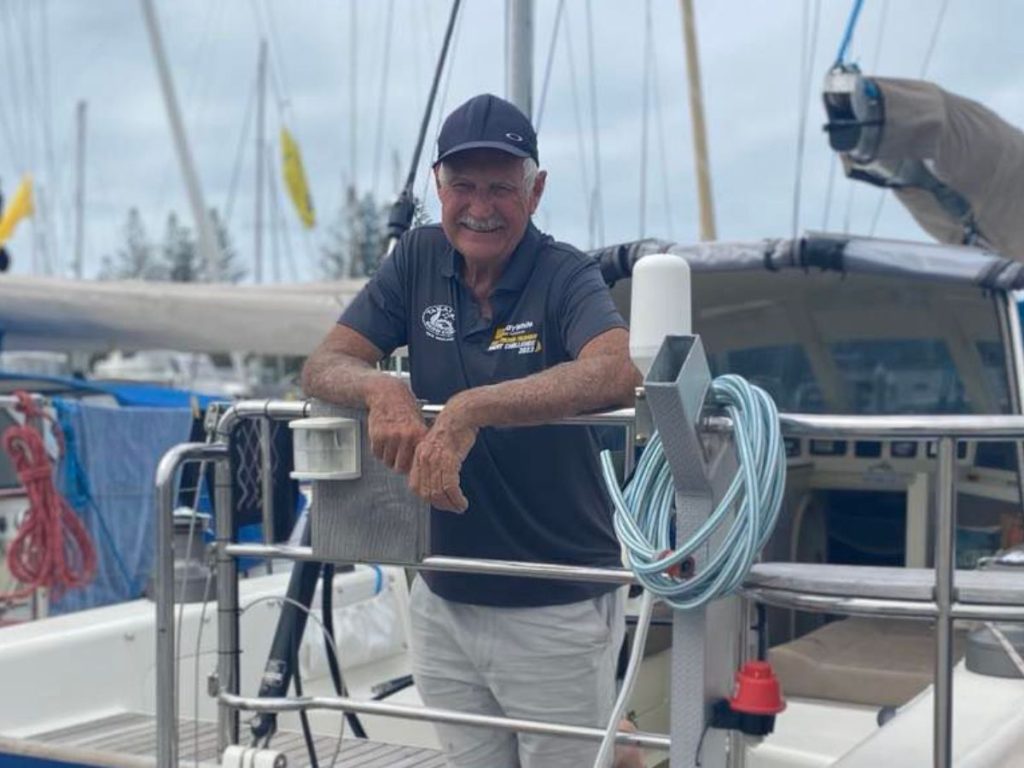
Dickson is emphatic, this 2026 edition was his last one.
“I think it’s probably time to hand on to the next generation. Step back and enviously watch them sail out at the start of the next race.”
No easy passage
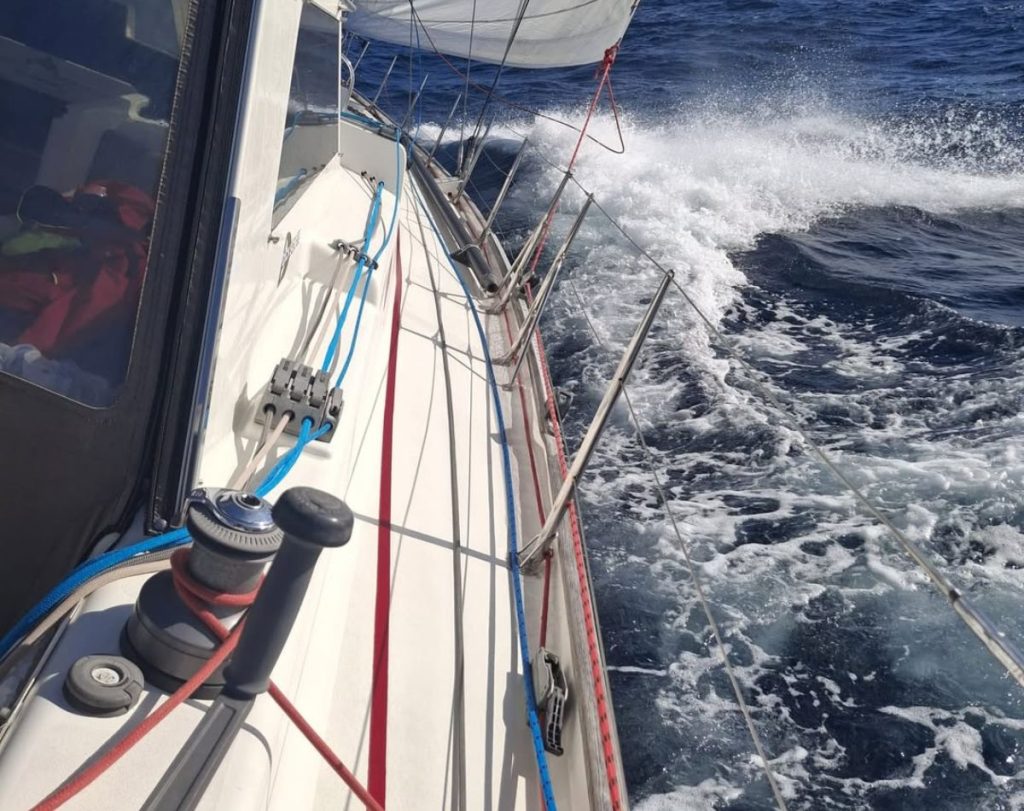
The 2026 race gave him nothing easy. Forty-eight knots off the top of the North Island in the opening days, conditions he knew from New Plymouth in 2023. Then, off Lord Howe Island, something worse. Fifty knots plus in squalls, briefly touching what he suspected was over sixty. He rolled away the genoa, tucked a deep reef in the main, and kept going.

“I didn’t have any significant breakages at all. All the systems continued to work as hoped.”
He had expected a close race with three boats, Bill Kidman’s Young Ross 12m Pretty Boy Floyd, Glen Jeffery’s Grand Soleil 50 Wave and Kevin Le Poidevin’s Lutre BOC Open 40 Roaring Forty. All three retired. Kevin’s withdrawal at Lord Howe, a structural failure that forced him to turn back, removed the most recent remaining contest. What remained was a battle with Peter Elkington’s Young 11 Pacman, and it went to the wire. The final night, knowing Pacman was close, Malcolm pushed Sarau hard rather than do what his body was asking him to do, sleep.
“I needed to push it to make sure he finished behind me. If there’d been another day in it I would have snatched more sleep, but I knew I’d be able to sleep after I finished.”
Sarau crossed the line in the early hours just after half-past-six in the morning as the light was beginning to show. Dickson had been sailing non-stop since he left Opua nearly 8 days earlier, the clock officially ticking over at 7 days 18 hours 38 minutes 44 seconds. The important figure for Dickson is the PHRF handicap is the time of 6 days 4 hours 56 minutes 35 seconds which saw him come first in the monohull PHRF handicap division.
The secret weapon
With winds and gusts so high, and asked how his 55-foot monohull Sarau coped, he said the boat was very sturdy, but the winner for him in this race was something most competitors overlook: the pilot house. Warm and dry throughout, this made it easier for him to readily go forward and trim sails or change a headsail without the hesitation that cold and exhaustion impose on open-cockpit sailors. It is not the first time we’ve heard this piece of wisdom from sailors who have been around the sailing circuit for years: keep your crew comfortable, and that comfort will pan out in the end.
Crossing ‘the Ditch’ alone: Malcolm Dickson and the rise of a record Solo fleet

“The contribution of the pilot house is probably underestimated. If you’re warm and dry, you tend to go and do things straight away. The performance gain isn’t obvious to many people, but it’s a big plus.”
Joan: steady as the boat itself
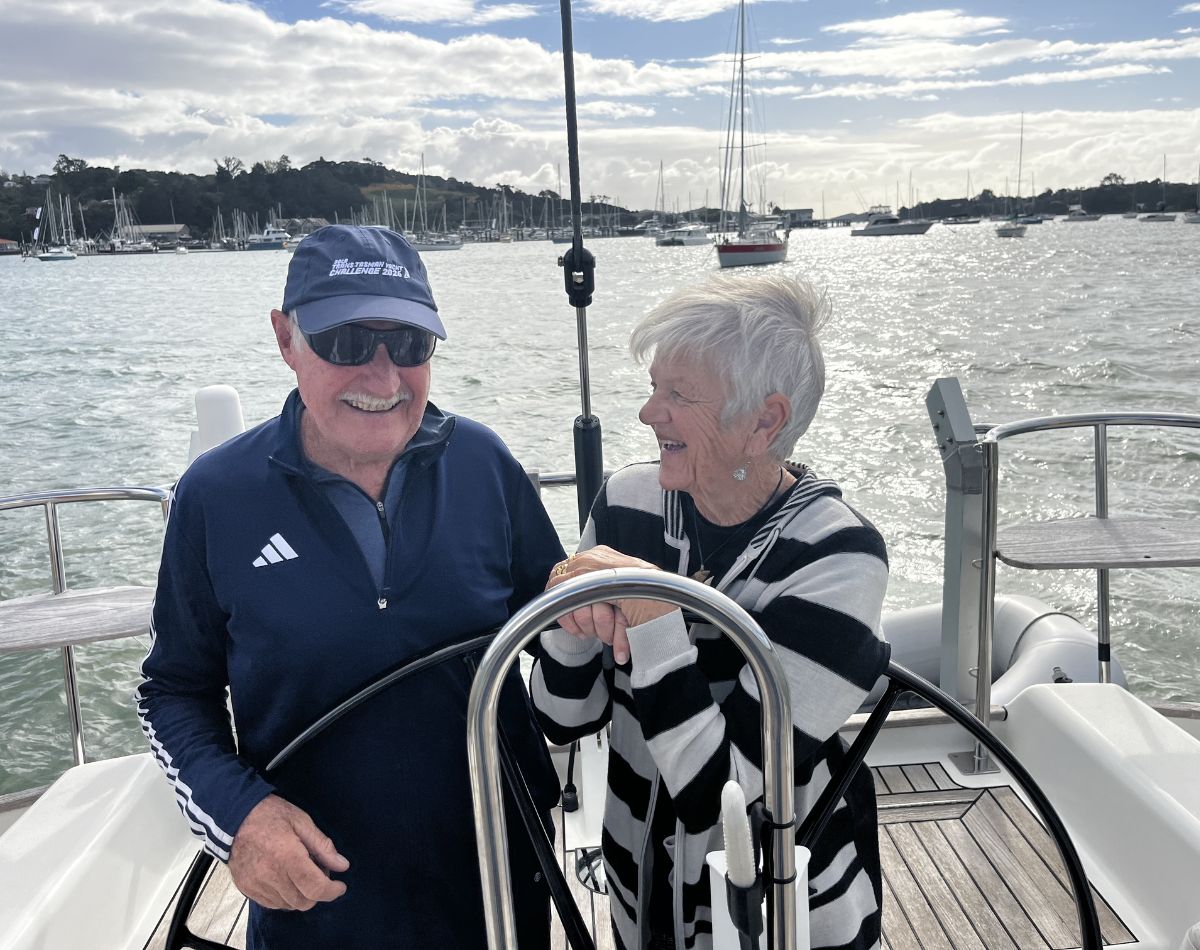
Joan Dickson, watching the tracker from New Zealand as the weather built, felt none of the anxiety those conditions might reasonably have caused. Her confidence in Malcolm and the boat runs deep, forged over years of hard miles together.
“Total confidence in Malcolm and the boat. It’s never been an issue knowing what we have put the boat through. She’ll always look after us.”
Sarau comes home
Joan will join Sarau for the trip home, along with the couple’s 16-year-old granddaughter. A fitting way to bring the boat back to the Bay of Islands.
1, 2, 3 and on Saturday, it will be Malcolm Dickson’s fourth Solo Trans-Tasman
After the return passage, the racing kit comes out, and the domestic comforts go back in. The microwave, the washing machine, the diesel heater, the dining table, all stripped out for the race, all going back. Sarau becomes a home again.
A race reborn
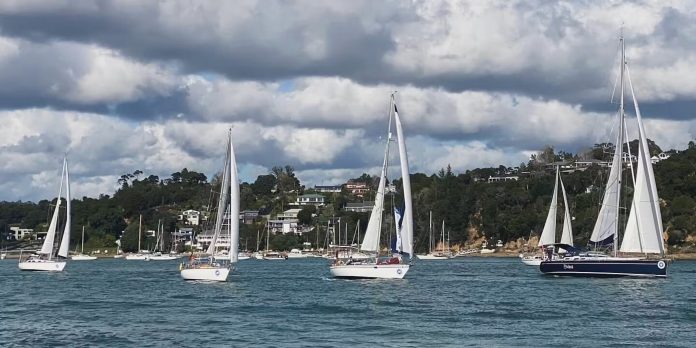
Malcolm was clear about the race’s move from New Plymouth to Ōpua, endorsing it without reservation. The gradual beat out of the Bay of Islands gives solo sailors time to find their feet before conditions build, something New Plymouth, with its straight exit into open water, could never offer.
“Opua is the logical place. A wonderful marina with all the services. I was pleasantly surprised at how well the start worked out.”
Watch this space
Race director Julie Kidman drew warm praise from a man who has watched this event across half a century.
“She’s basically driven it. She’s done a fantastic job, up there with the job that New Plymouth used to do. I think this race will be the pinnacle of shorthanded offshore racing in New Zealand. Watch this space.”


Fifteen boats left Ōpua. Four retired. Eleven finished. The hardest part, Malcolm noted, is simply getting to the start line.
He has got there four times. He won it twice, with nearly fifty years between those victories. At 79, he has earned the right to watch the next one from the shore, enviously, as he put it himself.