The request
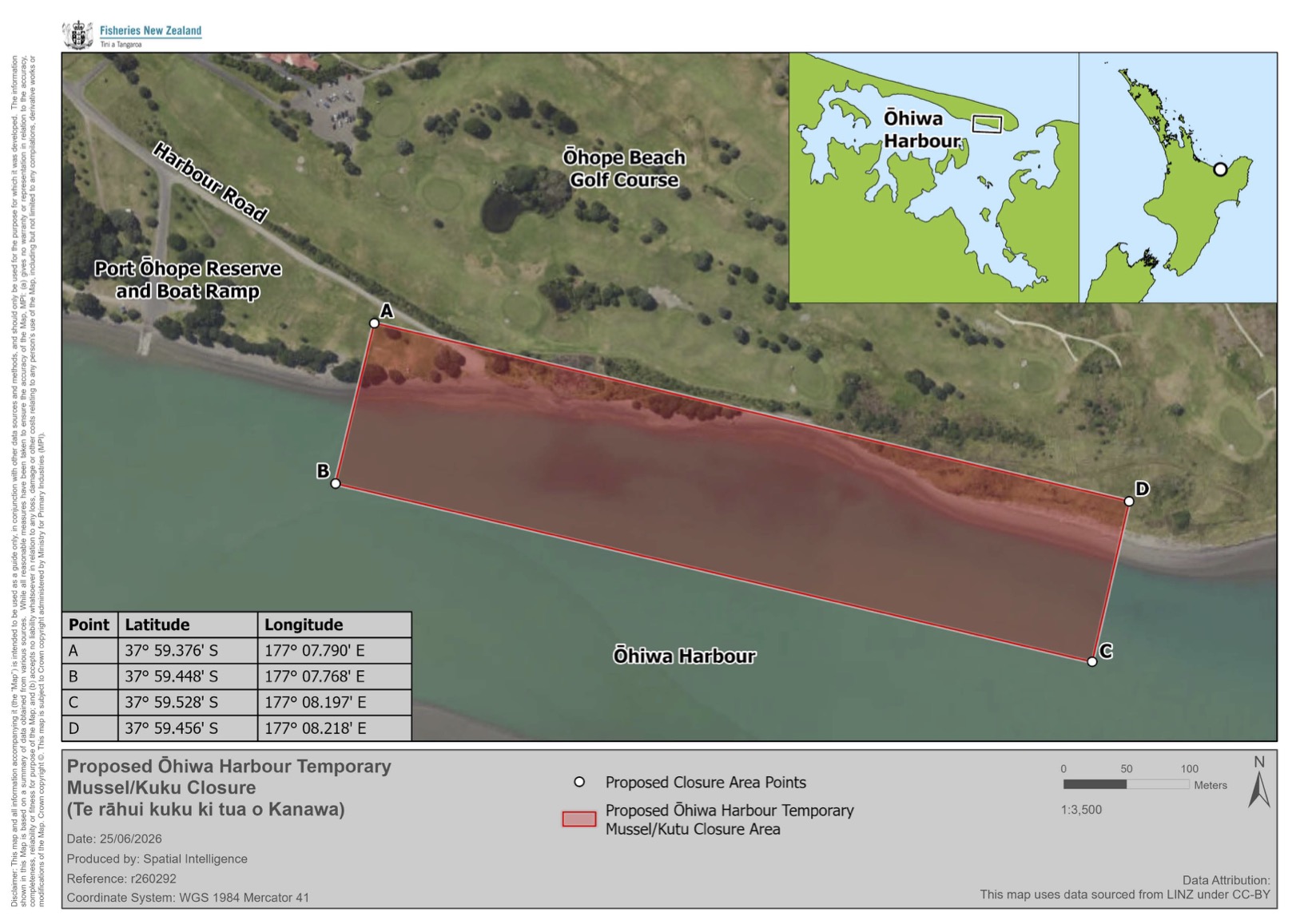
Lodged under section 186A of the Fisheries Act 1996, the request is named Te rāhui kuku ki tua o Kanawa and seeks to extend an existing closure over green lipped mussel beds in the harbour. It covers mussels only, no other species and no fishing method prohibition is included.
The proposed area covers about 100,000 square metres, roughly 650 metres of coastline near the end of Harbour Road, Ōhope. If approved, the closure would apply to everyone: recreational, commercial and customary fishers alike.
There is no traditional rāhui currently in place over the area, but Ngāti Awa’s application states the iwi plans to place one over the same area to run in tandem with the 186A closure. The iwi does not intend to issue any Customary Fisheries Authorisations for mussels in the area during that time.
The restoration behind the request
The application sets out the story behind the closure. Ōhiwa Harbour is known locally as the food basket of Tairongo. Scallops, oysters, cockles, pipi and a range of fish species are still harvested there, though not in the numbers of earlier generations, and mussels, once prolific with beds scattered throughout the harbour, have declined sharply.




Five years ago Ngāti Awa, working with neighbouring iwi, began a programme to regenerate the harbour’s mussel population. Research carried out through the iwi led Awhi mai awhi atu project pointed to sedimentation, human harvesting and seastar predation as the main causes of decline, with seastars in plague numbers doing the most damage.
The response has been hands-on. Hundreds of seastars have been trapped and physically removed from the old mussel beds. At the same time, the iwi began growing mussel spat on lines made from tīkouka (cabbage tree), then reseeded the beds once the spat were old enough to attach to the seafloor on their own.
The application notes the restoration work has drawn international recognition, including keynote invitations from the International Shellfish Restoration Forum in Washington and Indigenous restoration researchers at the University of Sydney, along with a BBC World feature. The project also won the National Supreme Award at the MPI Awards in Parliament in 2025.
Ngāti Awa calls the temporary closure fundamental to that success, and says continuing it, together with ongoing seastar trapping, is meant to give the reseeded mussels a clear run at reaching maturity.

Have your say
Submissions on the request close at 5pm on Friday 21 August 2026. These can be emailed to FMSubmissions@mpi.govt.nz or sent by post.