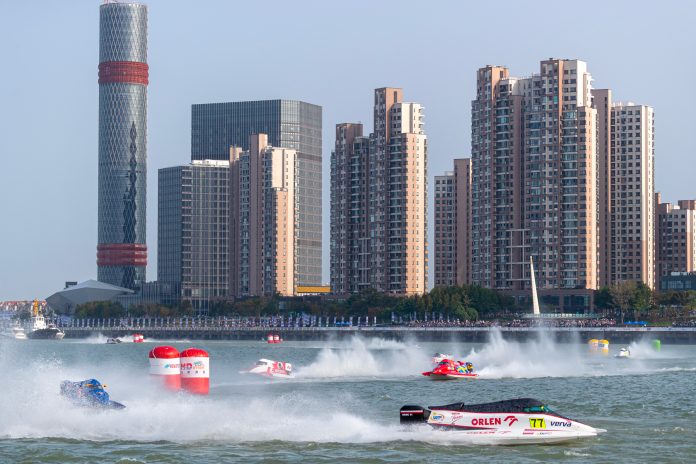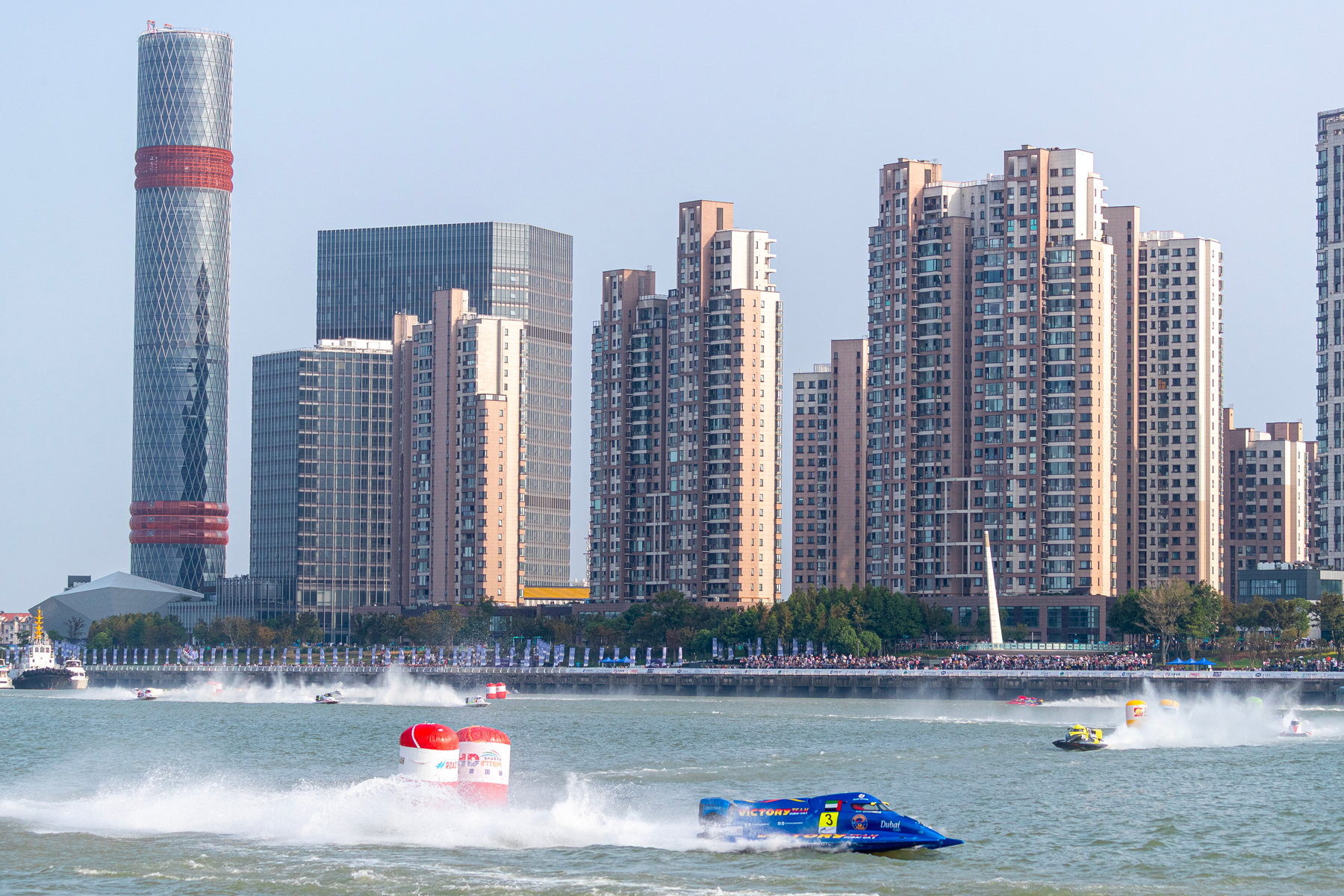
The world’s fastest circuit racers are back on Chinese waters this weekend, with F1H2O returning to Shanghai for the third round of the 2026 season. Teams arrived in the city during China’s National Day celebrations, catching fireworks and traditional performances before settling into serious racing business on open water circuits that have hosted the championship for over thirty years.
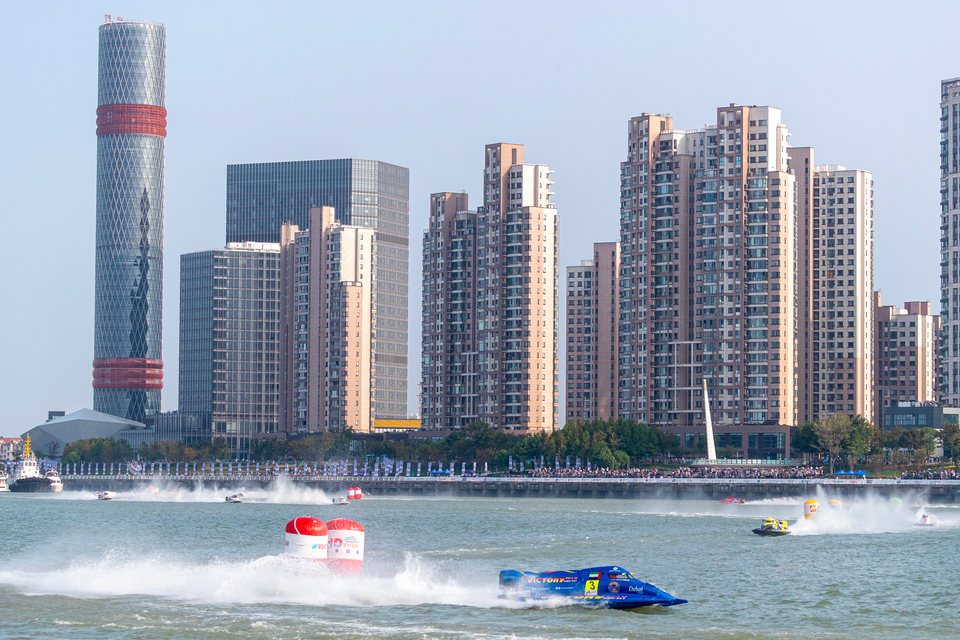
Shaun Torrente arrives as defending world champion with 40 points on the board, a position he’s earned through calculated strategy and raw speed. His recent victory at Kyrgyzstan came after a rough outing at Cagliari, where a barrel roll sent him out of contention. Stefan Arand, the season’s opening round winner, sits just four points behind on 36 despite engine failure in Kyrgyzstan that forced him to retire. The points gap remains tight enough that Sunday’s Sprint Races and Monday’s Grand Prix could reshape the entire championship picture.
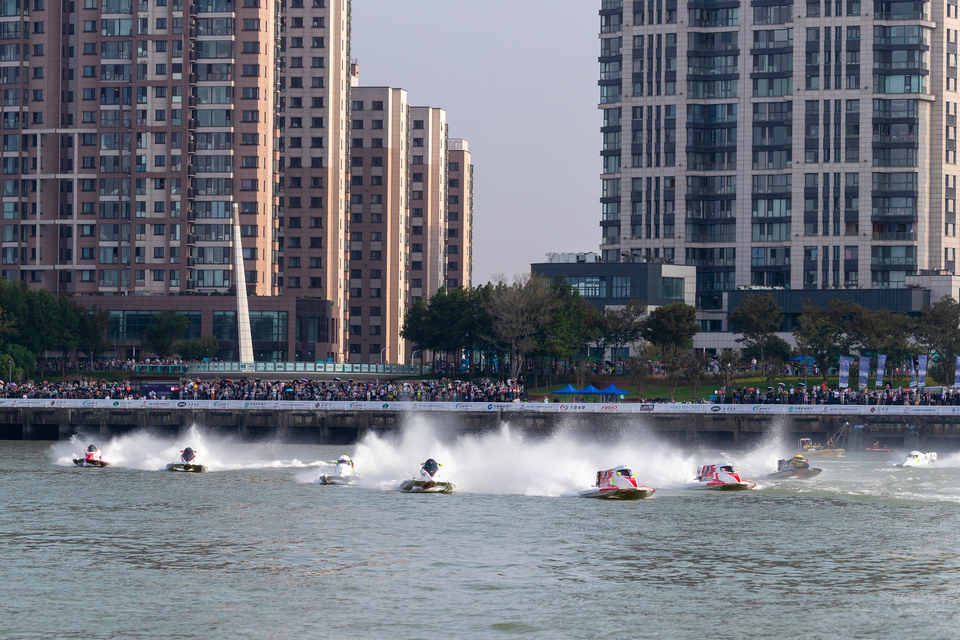
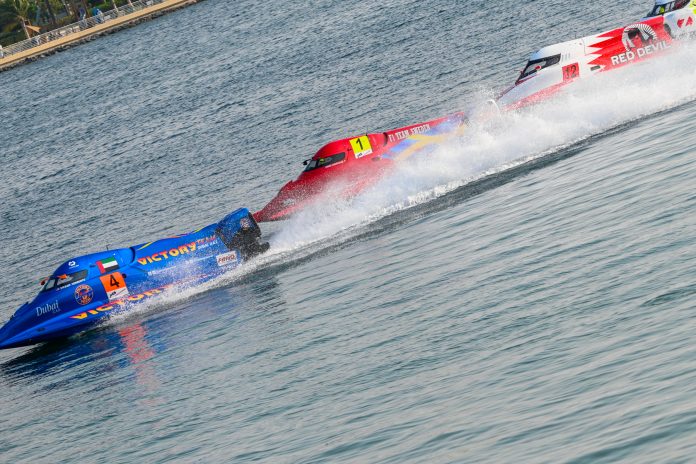
The single-seat hydroplanes that compete at F1H2O’s pinnacle level are nothing like the recreational speedboats most New Zealand boaters will ever pilot. These machines reach 220km/h across open water circuits, their hulls cutting through waves with the kind of precision that demands absolute commitment from drivers. Every turn, every acceleration, every decision to brake comes at speeds that leave almost no margin for error. A barrel roll isn’t a minor setback—it’s a mechanical disaster and a championship wound that takes real recovery to overcome.
What makes Shanghai particularly compelling this year is the genuine uncertainty hanging over the title race. Torrente has momentum, but Arand proved at the opening Grand Prix that he has the pace to win at the highest level. Neither driver can afford to have another car removed from contention by mechanical gremlins. The margins between success and failure on water are measured in hundredths of a second, and luck plays as much a role as talent over a full season.


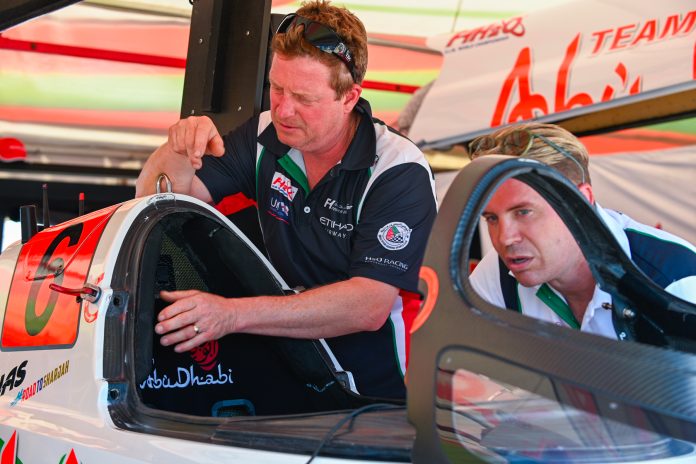
The Shanghai circuit returns F1H2O to waters it knows well. That familiarity matters in circuit racing, where drivers spend months studying every corner, every piece of shoreline, every subtle shift in water conditions. A driver who has raced here before carries knowledge in their muscle memory. The engines humming in the paddock right now will be fine-tuned to exploit whatever advantages this particular stretch of Chinese water offers.
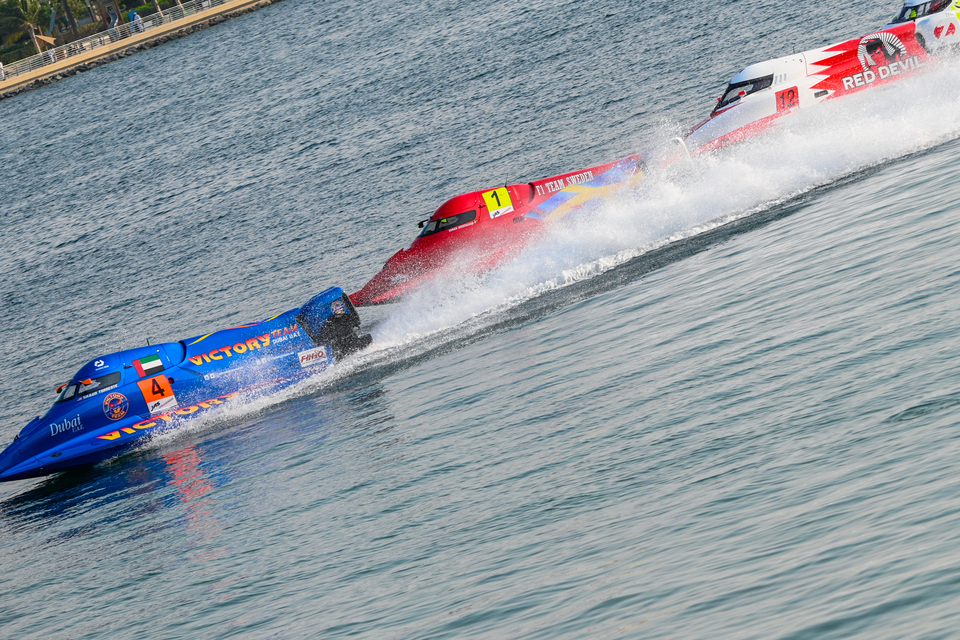
Racing gets underway Sunday with the Sprint format before Monday’s main event at 3:05pm. The winner here won’t necessarily claim the world championship, but they’ll send a message about which driver has solved Shanghai’s puzzle best. In a season where the standings remain genuinely open and mechanical reliability still looks like the deciding factor, that message could prove louder than anyone expects.