


A stable, spacious and remarkably practical 4.5m catamaran, the FatCat 4500 takes a different approach to small-boat design – and its tough polyethylene construction is a big part of the story.
There are plenty of ways to build a 4.5m boat, but the FatCat 4500 takes a decidedly different path. Rather than aluminium or fibreglass, its hull is roto-moulded polyethylene, while the catamaran configuration delivers the sort of beam, stability and usable space that is difficult to achieve in a conventional monohull of this length.
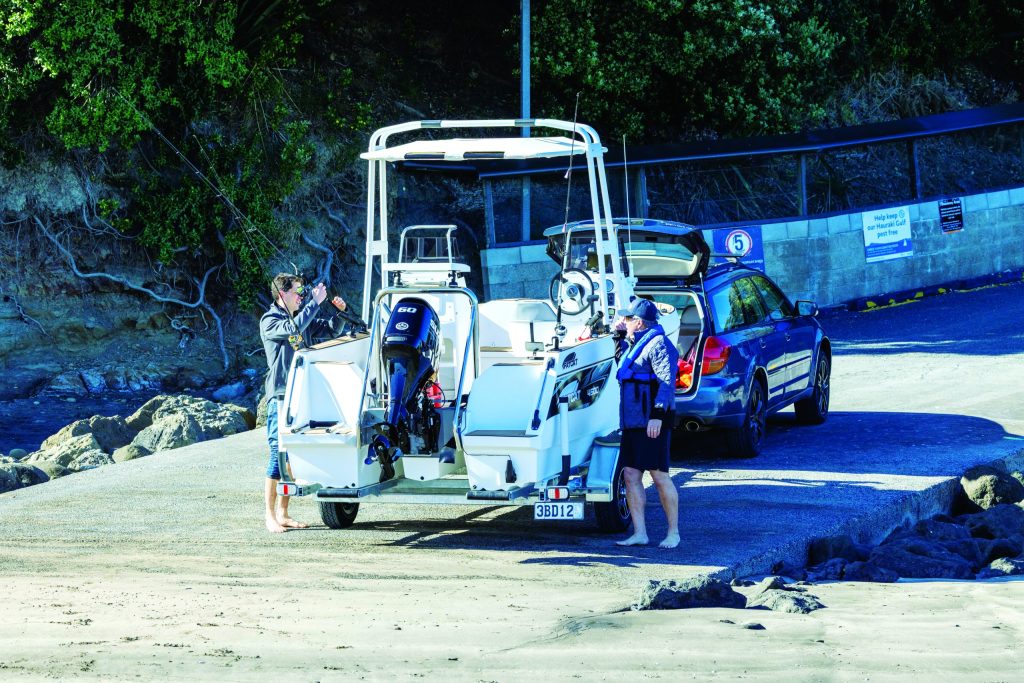
We joined FatCat Boats’ Blair McLay aboard the company’s new 4500 demonstrator at Army Bay, with the boat launched and ready to explore the waters off the Whangaparaoa Peninsula.
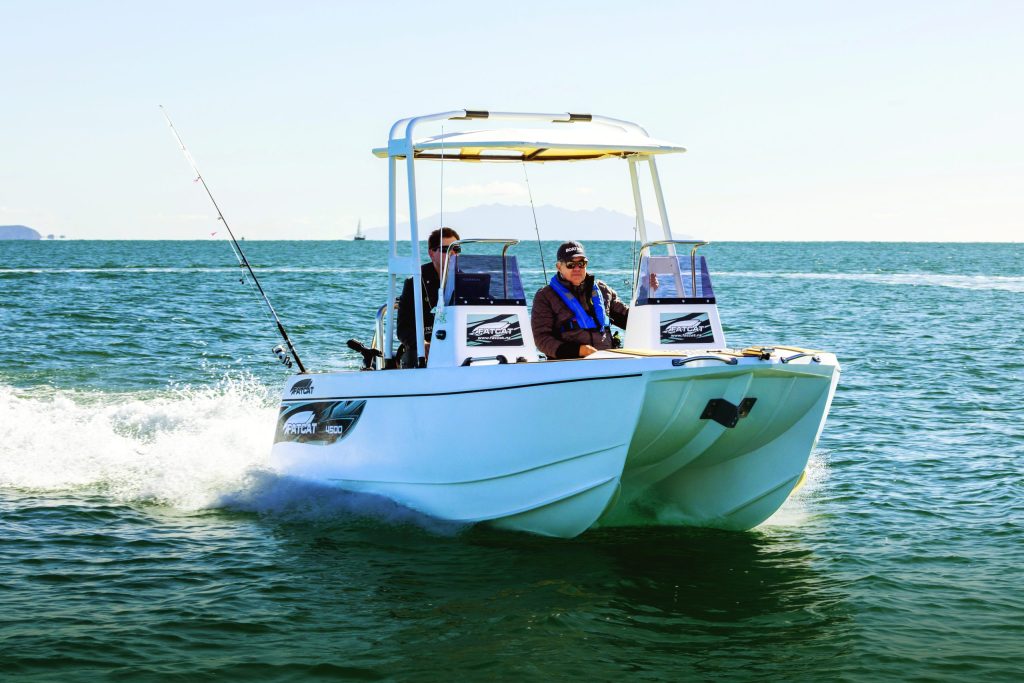
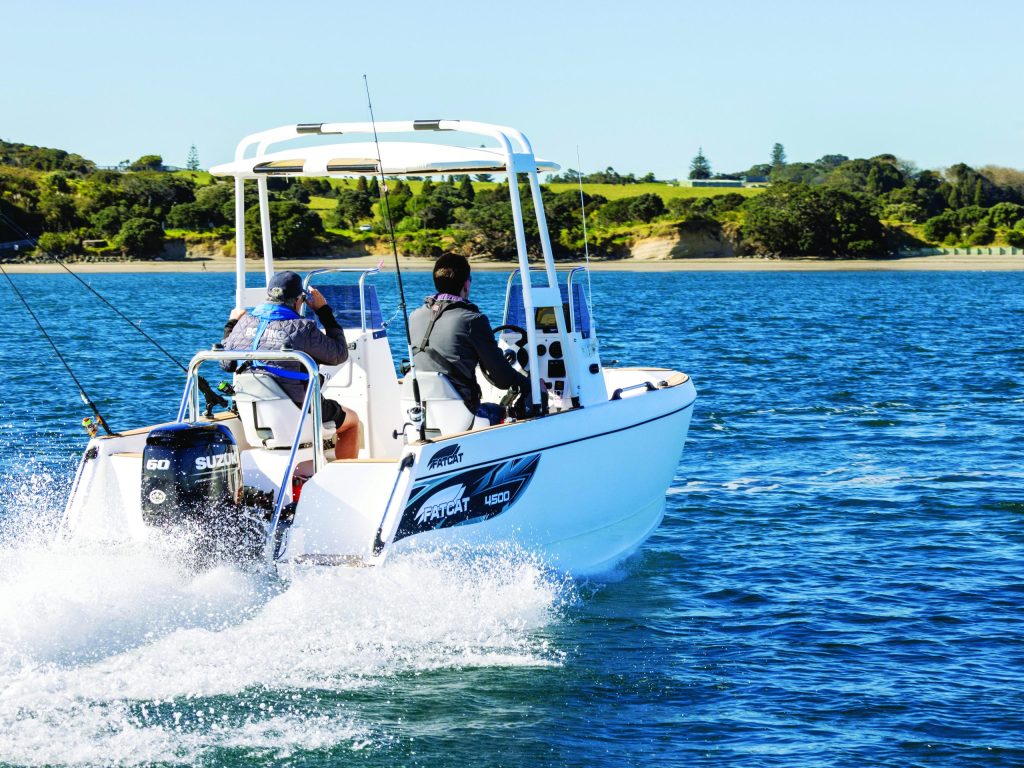
The first impression is just how much boat there is for 4.5m. The twin-console demonstrator has a remarkably open interior, with a completely flat cockpit sole that sits above the waterline and drains through scuppers at the transom.
One of the fundamental objectives behind the FatCat concept is stability. Moving around the cockpit produces very little change in the boat’s attitude, while several people can congregate along one side without the pronounced heel you might expect from a small monohull.
Built for space
The 4500’s beam makes a major contribution to its sense of space. There is room for six people, according to FatCat, with seating, storage and equipment arranged without making the boat feel cramped.
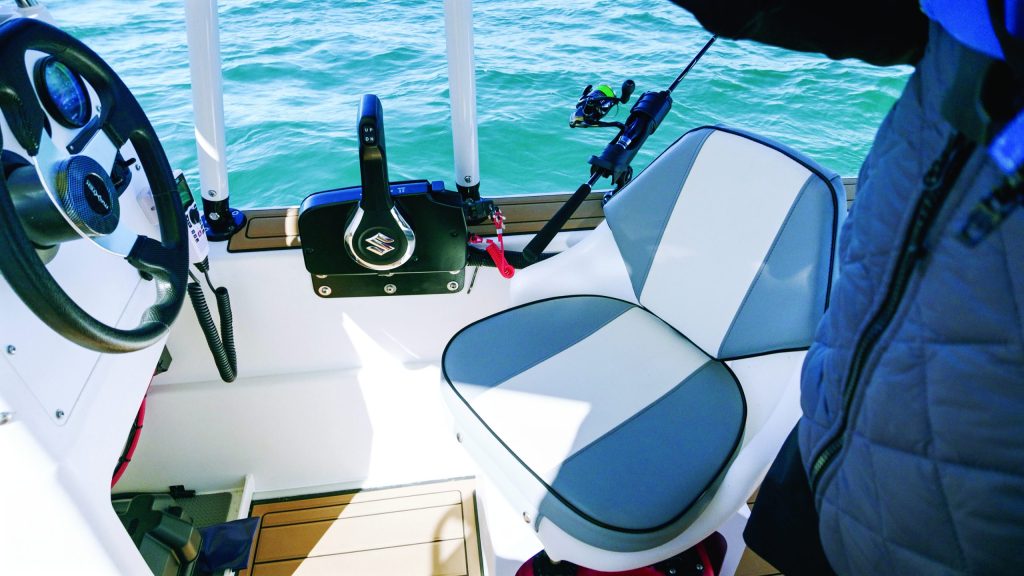
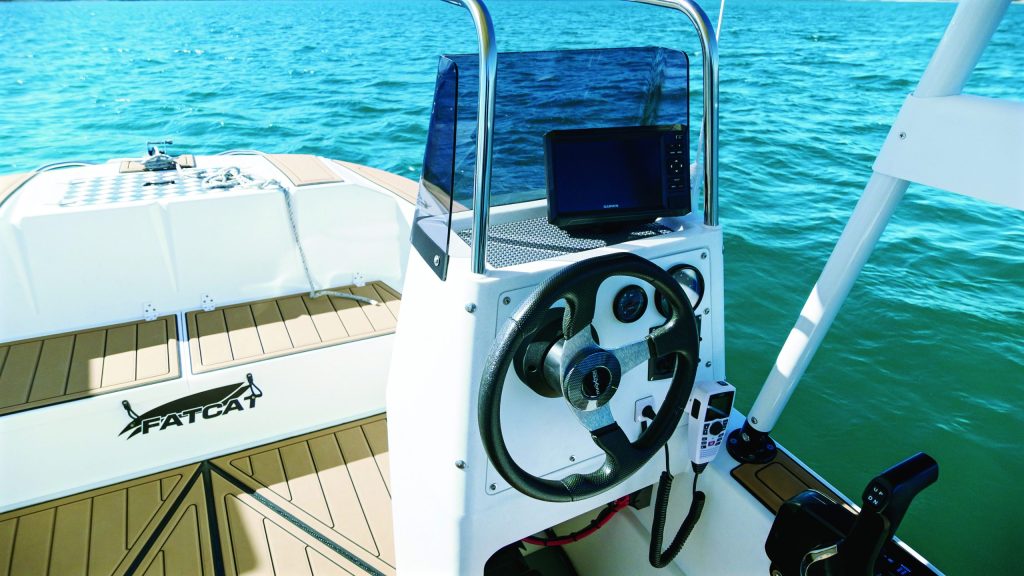
The demonstrator is fitted with two pedestal swivel seats ahead of the cockpit and a twin-console arrangement. The driver gets a well-equipped helm with Suzuki engine instrumentation and a Garmin multifunction display, while the windscreen provides useful shelter.
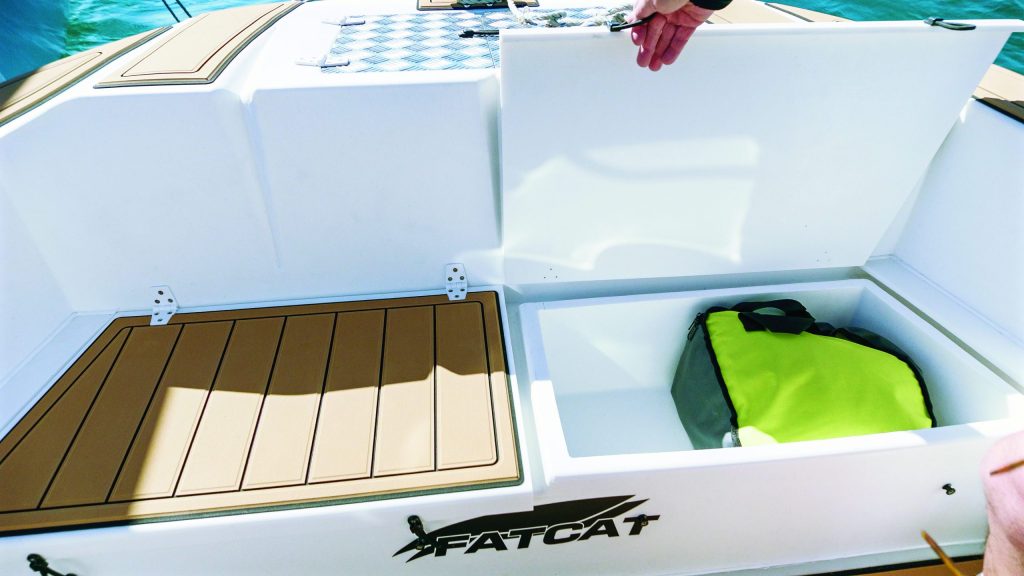
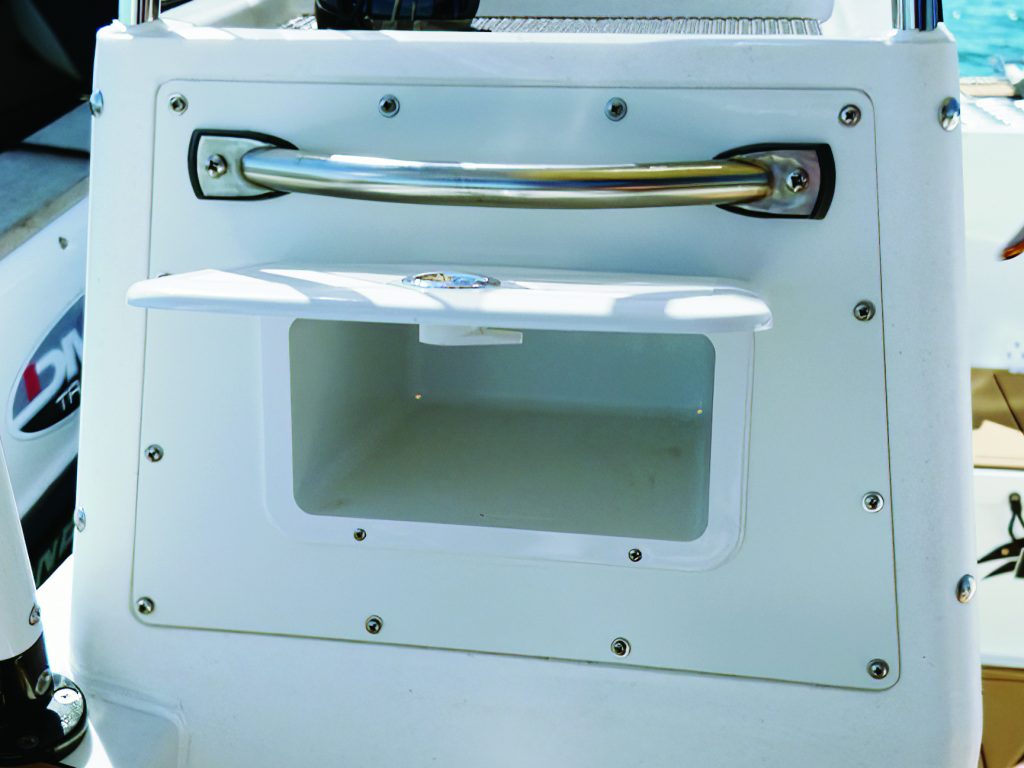
The passenger console incorporates a grab point and, below, there is a portable toilet – a feature that will have obvious appeal to families. There is also storage beneath the forward seating and a sizeable anchor locker in the bow.
At the transom, the open layout makes access straightforward, while a substantial stainless-steel staple provides a useful mounting point for accessories and a towing point for water toys. Rod holders, a bait board and other equipment can be fitted using Railblaza fittings.
Under the console seats are removeable tote tanks making refuelling a breeze, with the boat carrying 50 litres of fuel in two tanks. That arrangement keeps the weight low and central while making good use of otherwise wasted space.
The entire cockpit and deck are lined with Boat Dek. It is comfortable underfoot and, combined with the naturally softer surface of polyethylene, gives the boat a distinctly different feel from an aluminium hull.
The polyethylene difference
For anyone accustomed to aluminium or fibreglass boats, the FatCat’s construction is perhaps its most interesting feature.
The hull is manufactured from polyethylene using a roto-moulding process. Plastic powder is placed into a large mould, which is heated and rotated so the material melts and forms the hull shape before being cooled.
Some components and configurations are also fabricated from polyethylene sheet, using plastic-welding techniques.
The result is a material that feels very different from aluminium. At rest, the boat is notably quiet, without the familiar tapping and pinging that can occur with a metal hull. The polyethylene also has a warmer, softer tactile quality.
FatCat says that, for a given thickness, polyethylene is roughly one-third the weight of aluminium but is not as stiff, therefore the material used in construction is made thicker to achieve comparable overall weight and strength.
There are other advantages. Polyethylene is naturally buoyant, is recyclable, and is highly resistant to the sort of knocks and scrapes that can be a concern with other hull materials. Pulling the boat onto a beach or working around rocks and other hard objects is less likely to result in the sort of damage associated with scratched aluminium or chipped gelcoat.
For a small boat intended to be used hard, that toughness is a compelling proposition.
Designed, not just moulded
There is considerably more engineering behind the 4500 than its uncomplicated appearance might suggest.
FatCat founder Blair McLay has a background in composite engineering and previously worked with Pure Design and Team New Zealand. That experience has influenced the development of the FatCat hulls, particularly the company’s focus on stability and hydrodynamics.
The 4500 evolved from the smaller FatCat 4000. The initial objective was straightforward: create a small boat with the stability advantages of a catamaran while keeping the overall size and cost accessible.
Developing the hull involved extensive prototyping. Two prototypes were built and modified extensively before the final mould was committed to production – an important consideration when manufacturing a large roto-moulded hull.
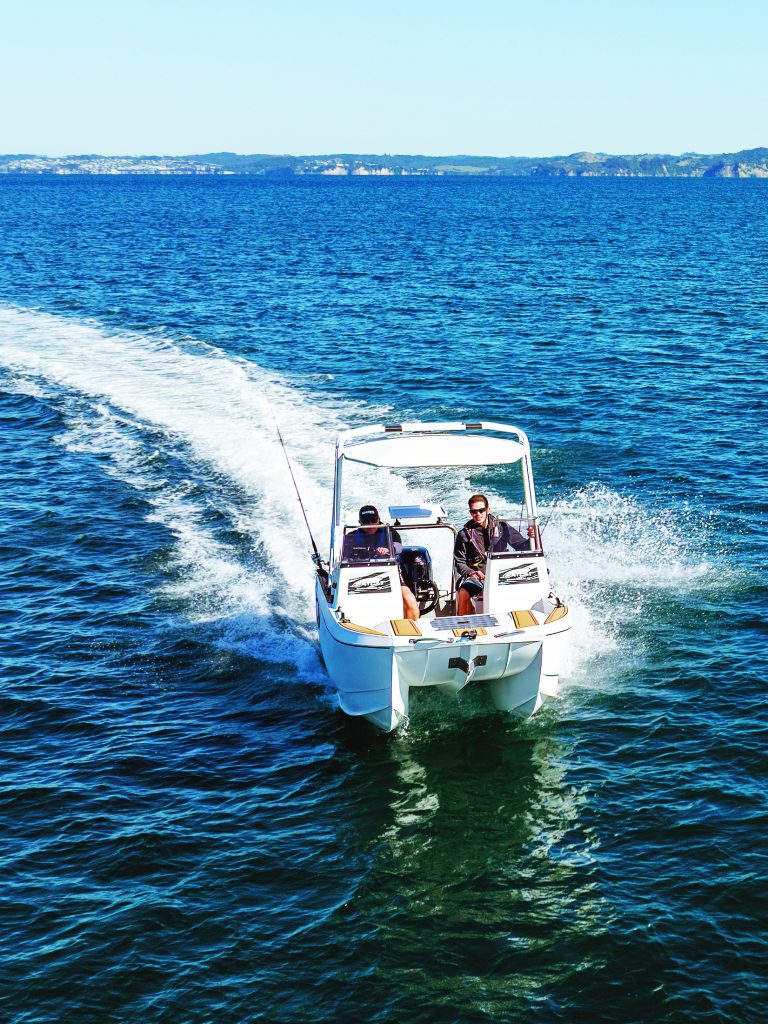
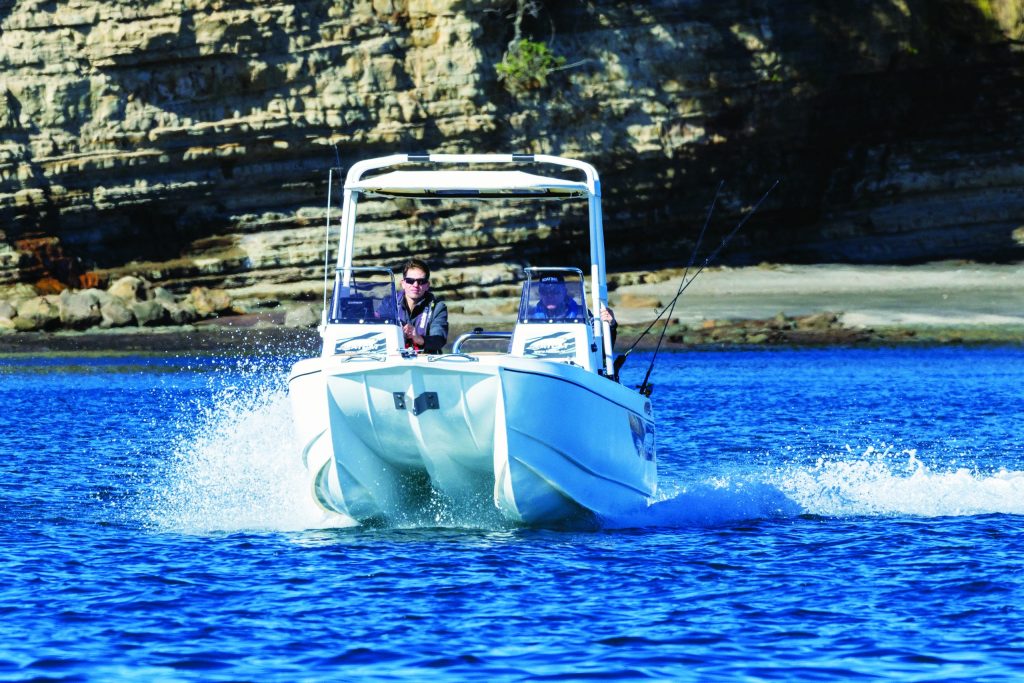
The resulting hull is described as semi-asymmetric, with an offset vee forward, incorporating a narrower inner section that flattens out aft and a larger outer section that maintains a deadrise angle to the transom. Double chines keep spray to a minimum and a central sponson helps manage water flow to the single centrally mounted outboard.
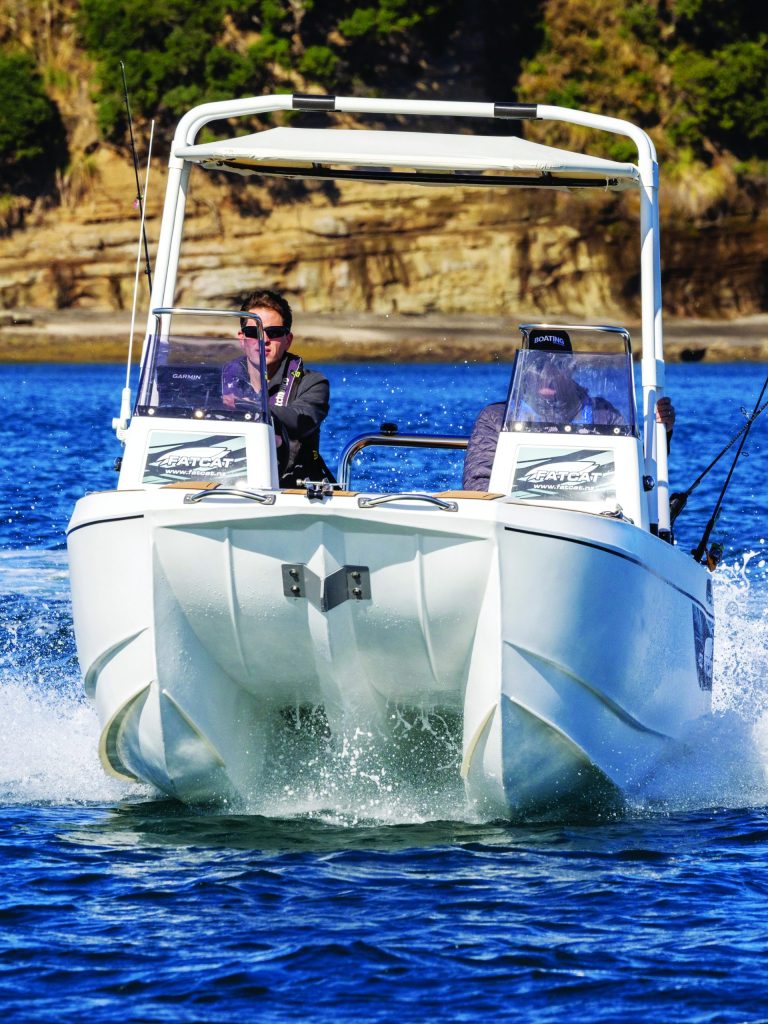
Rather than using twin engines, which would add considerably to the cost, FatCat designed the hull around a single outboard. Considerable development work went into eliminating cavitation, with around six different versions of the centre section tested before the current configuration was settled upon.
Performance
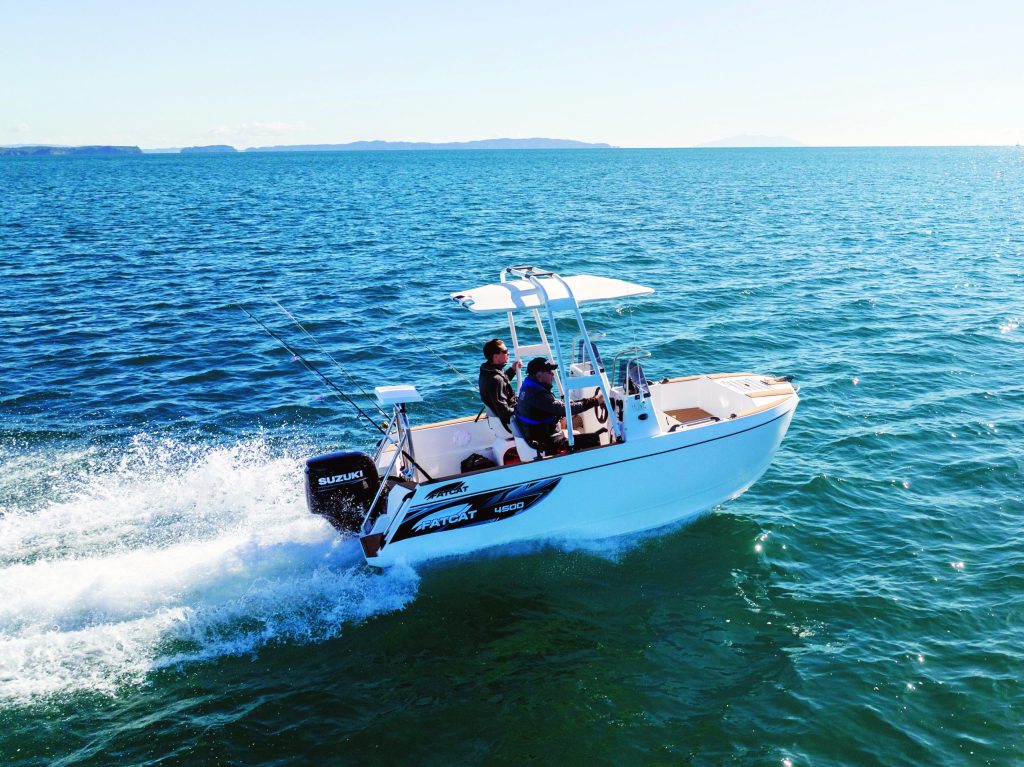
The Suzuki 60hp had plenty of grunt to push the FatCat onto the plane quickly and with minimal bow rise. Pushing the boat to near its maximum speed into, across, and downwind in the slight wind chop failed to generate any spray thanks to the factory fitted down-turning chine rails. Hard cornering resulted in a very composed flat turn. The sensation is more car-like for monohull boaters accustomed to ‘lean in’ through turns. Blair explained the design is intended to turn relatively flat through corners, rather than exhibiting the outward-leaning characteristics sometimes associated with catamarans.
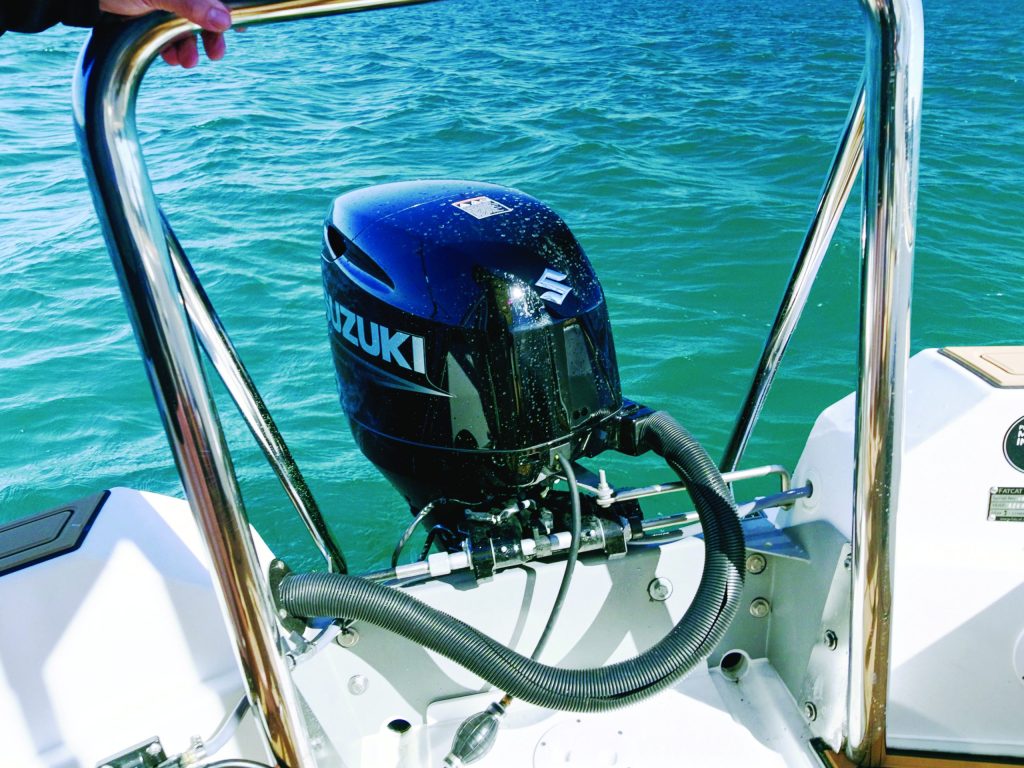
The engine trim had limited effect in altering the boat’s normally flat pitch angle. This set up was happiest trimmed well in. It that configuration the central sponson design delivers clean water to the propeller with minimal cavitation. We comfortably achieved 50kph (27 knots) at 6,000rpm with two up.
A wide, forgiving platform, the boat can accommodate different loading arrangements and passengers shifting around the deck without dramatically altering its attitude.
Suzuki power
The demonstrator is fitted with a 60hp Suzuki four-stroke, described by Blair as a particularly quiet engine. The 4500 can be fitted with up to 75hp, while FatCat is not tied to a particular engine manufacturer.
Honda, Yamaha, Mercury, Parsun and Suzuki are all options, the final choice able to reflect the customer’s preferred brand or, importantly, the availability of local servicing. That makes sense for a boat likely to appeal to owners outside the major centres. Ease of ownership and servicing can be just as important as outright engine performance.
A practical proposition
The 4500 is clearly intended to be more than a fishing boat, although its open layout and available accessories make it well suited to fishing.
FatCat says its customers range from families and first-time boaters to experienced owners downsizing from larger boats. That is a useful indication of where this design sits in the market.
For newcomers, the boat’s stability and relatively compact size should make launching, retrieving and handling manageable. For an owner moving down from a larger vessel, the appeal is different: a boat that is easier to tow, launch and maintain while retaining enough space for family and friends.
Various configurations reinforce that versatility: the 4500 can be specified as an open tiller-steer, a single or double centre console, a twin-console arrangement like the demonstrator, or a runabout configuration with a forward cabin or screen arrangement.
There are also several canopy options. The demonstrator has a targa top, with an aluminium frame and canvas cover. Centre-console versions can use a T-top, while folding biminis are available where garage storage or trailering height is important.
The targa top can be lowered if needed, with the canvas removable for longer journeys.
Stable by design
The FatCat 4500 is an interesting reminder that small-boat design doesn’t have to follow conventional formulas.
Its strengths are not about luxury fittings or unnecessary complexity. Instead, the emphasis is on three fundamentals: stability, safety and space.
The wide catamaran platform provides a stable working area, while the flat floor removes many of the trip hazards associated with small boats. The polyethylene hull brings toughness and a quieter, softer environment, while the range of configurations allows the basic hull to serve several different types of owners.
The 4500 feels like a boat designed around how people actually use small boats. People move around. They fish. Children and grandchildren climb aboard. Gear gets loaded. Owners can tow and launch their boats solo. Sometimes the boat gets pulled onto a beach.
The FatCat concept has clearly been developed with those realities in mind.
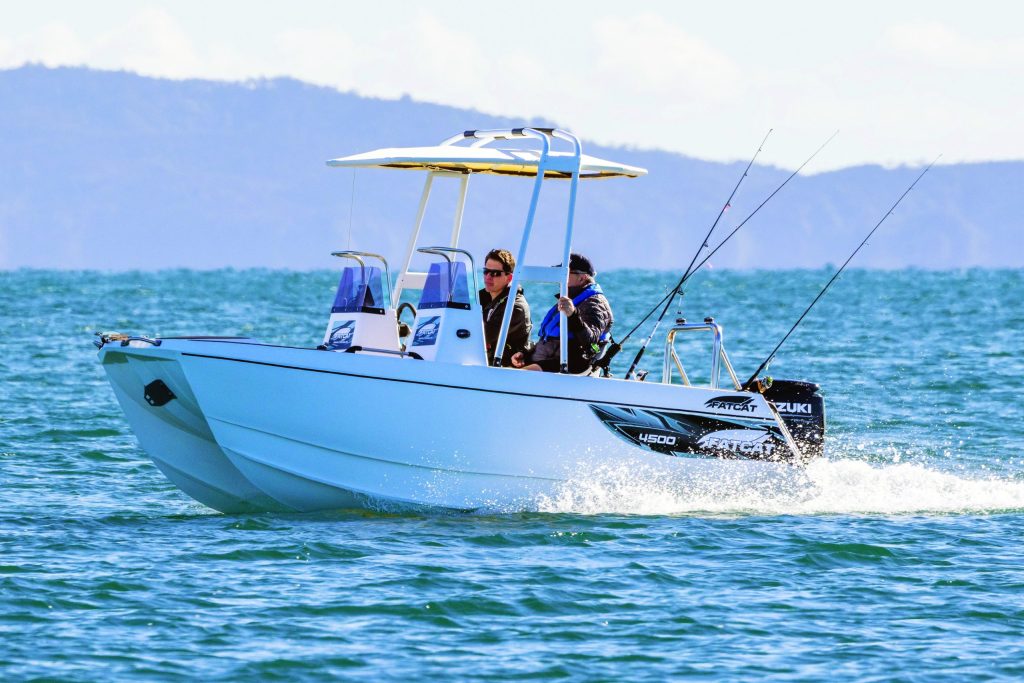
At 4.5m, the FatCat 4500 remains compact enough to be approachable, but the combination of catamaran stability, generous beam and intelligent use of space gives it considerably more presence than its length might suggest. For anyone looking for a small, straightforward boat that prioritises stability, durability and usable space over convention, it offers a distinctly different proposition.
