It does not matter what vessel you have – the basic stability principles are the same. Simply put, stability is best achieved by keeping the boat’s centre of gravity (of all of the combined weight) low down and directly above the centre of the upward force on the hull (centre of buoyancy). As you add weight to the vessel the centre of gravity moves upwards.
Loading your boat beyond its safe carrying capacity with too many people or too much gear can cause the boat to become unstable, resulting in capsize or swamping. Prevailing weather conditions and the sea-state can further compromise the margin of safety. To make the right decisions to keep the vessel safe, a skipper needs to understand the many factors that can affect stability.
Stability can change throughout a trip, so it’s important to understand why this occurs. For example, if you use fuel from builtin tanks and then load lots of people on the cabin roof on the way home the vessel will become ‘top-heavy’ and more susceptible to excessive rolling.
Get to know how your boat feels in normal operation and be aware of any changes in responsiveness. If the boat begins to feel a little slow in recovering from wave motion you may need to move any added weight further down in the hull. Here are some tips on maintaining a vessel’s stability.
1. Keep weight low

New equipment added higher up on a vessel – or replacing gear with heavier equipment – raises the centre of gravity and reduces the boat’s stability. If you are planning major alterations to your boat, consult a boatbuilder or marine surveyor. In smaller boats minor changes in weight distribution can produce large effects – a good day’s fishing might reduce freeboard and a small wave or powerboat wash might cause the boat to flood.
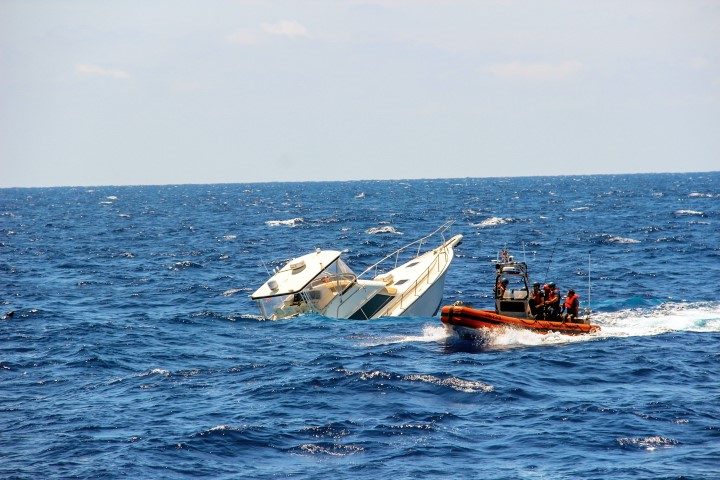
The Coast Guard prepares to transfer four mariners from their capsizing vessel Aug. 5, 2018 near Freeport, Texas. The mariners were transported to the Bridge Bait boat ramp with no medical concerns.
U.S. Coast Guard photo by Station Freeport.
2. Avoid overloading
This is particularly relevant for smaller boats where people can move about the boat and drastically alter the centre of gravity and freeboard (if they all move to one side). Many locally-built trailer boats carry the Coastguard ‘CPC certified’ plate which gives guidance on a number of factors, including loading. If you’re looking to buy a boat ensure it carries this plate.

Alcohol and boating don’t mix so be sensible and avoid
weighing your boat down with beers – make space for the day’s catch and have a drink when you’re home safe and sound.
3. Keep excess water out
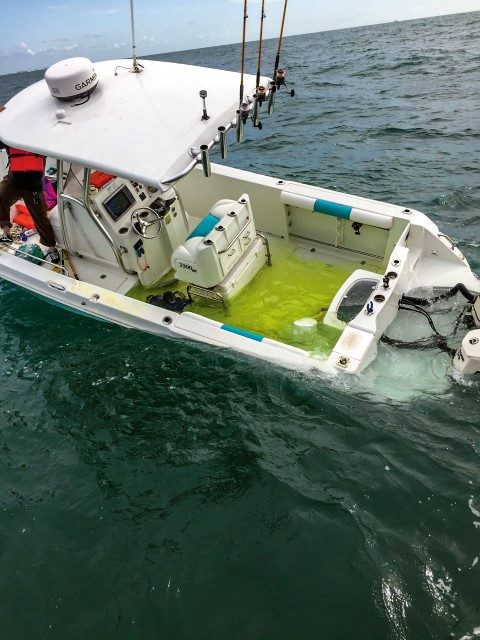
A wave on deck can ‘downflood’ the accommodation areas and add tonnes of extra weight and produce a strong rolling force (known as ‘free-surface effect’). The extra weight drastically lowers freeboard, raises the centre of gravity and, when the water shifts, tries to roll the boat over.
4. Secure the load
Stow a vessel’s gear on or as near the centreline, as close to the middle or the boat, as possible. Secure it so that it can withstand wave impact, rolling and wind loading without shifting.
LEARN MORE As a skipper, you are responsible for the safety of everyone on board and for the safe operation of the vessel. A Coastguard Boating Education Day Skipper course is an introduction to boating safety and knowledge. Visit www.boatingeducation.org.nz for more information.