


Roger Hill Yacht Design prepared the plans for this boat some years ago on behalf of a client with the surname Camp. He was after a lightweight, simple, displacement-type vessel able to cruise economically and easily accommodate up to four people for overnight stays or longer.
Roger Hill came up with a round bilge LDL (light displacement to length) design that would be relatively easy to build and should be able to achieve speeds of between 16 and 18 knots, depending on power and weight. Unfortunately, the client’s better half, when she learned of the cost, put paid to the project, so the plans for the Camp Cruiser were filed away in Hill’s bottom drawer.
Enter retired ex-Matakana boatbuilder Peter Parvin, now residing in Napier. Peter worked with Roger on many projects over the years, building lots of Hill’s designs, both multihulls and monohulls. Now in his eighties, Parvin contacted Hill a few years ago looking for a project to keep him busy in his retirement.
Cue the Camp Cruiser in Hill’s bottom drawer. Parvin had seen it before – it was Parvin who Hill had asked for an estimate of build hours that spooked the original clients.
Seeing the plans again, Peter decided the boat would suit him quite nicely: seven and a half metres in length, simple construction he could undertake himself in the garage at home, modest outboard power, a tidy turn of speed, and around 150 nautical miles of cruising range. He thought it would be just the ticket for a bit of fishing out of Napier, and he quite liked the look of it as well, with its nod to the classic styling of yesteryear.
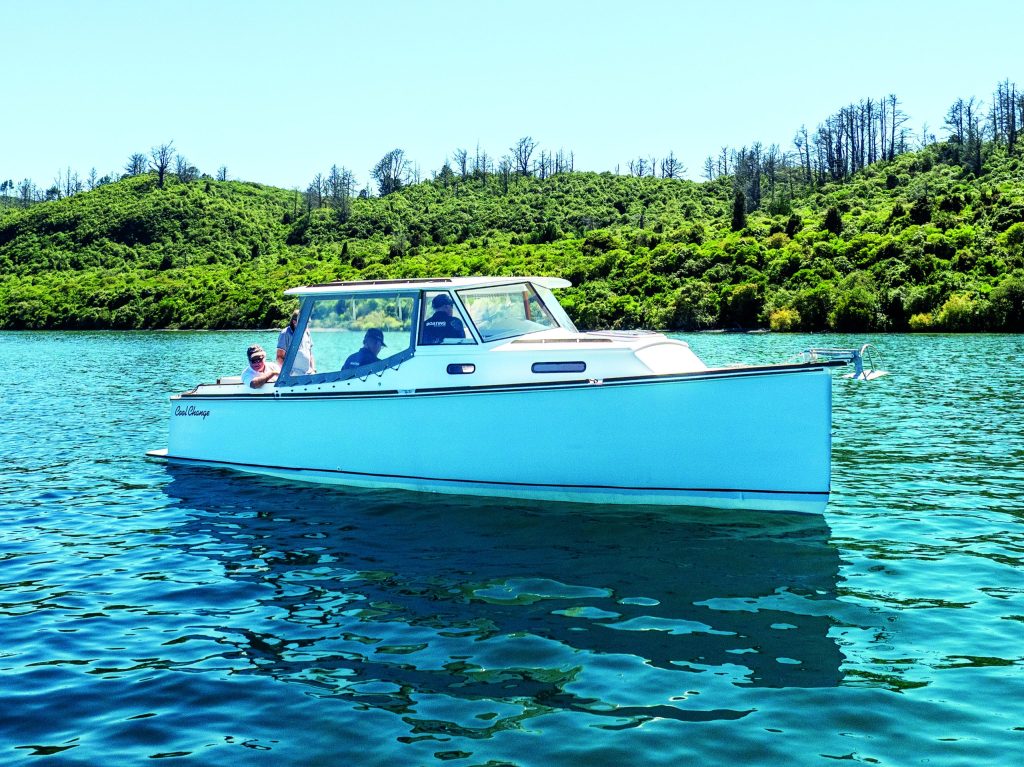
Cool Change took Peter five years to complete, working on it as and when he had time and money. The construction is strip paulownia, resin-sealed and glassed on both sides with 600g triaxial cloth overlaid with 200g plain weave cloth on the outside and triaxial cloth inside. The hull shell provides the strength and rigidity – there are no stringers, and bulkheads were kept to just the minimum required.
The hull structure is visible under the gunwales behind the side seats, and it’s evident the boat has been built to a high standard. With a light displacement of around 1,800kg as reviewed with fuel and water onboard – 2,150kg including the trailer – Parvin has obviously paid attention to weight during the build process.
The concept of light displacement-to-length (LDL) vessels is nothing new, although modern materials and boatbuilding techniques arguably make such designs more attainable –
and relevant – than ever before. What such boats do is cheat the hydrodynamic laws that determine the hull speed of a displacement vessel. Whereas a ‘normal’ 7.5m displacement vessel would have a theoretical hull speed of less than 7 knots, Cool Change manages more than twice that with just 60hp (maximum hull speed is calculated for 50hp), while
a sister ship in Noosa, Queensland, built from light composites, has reached 19 knots.
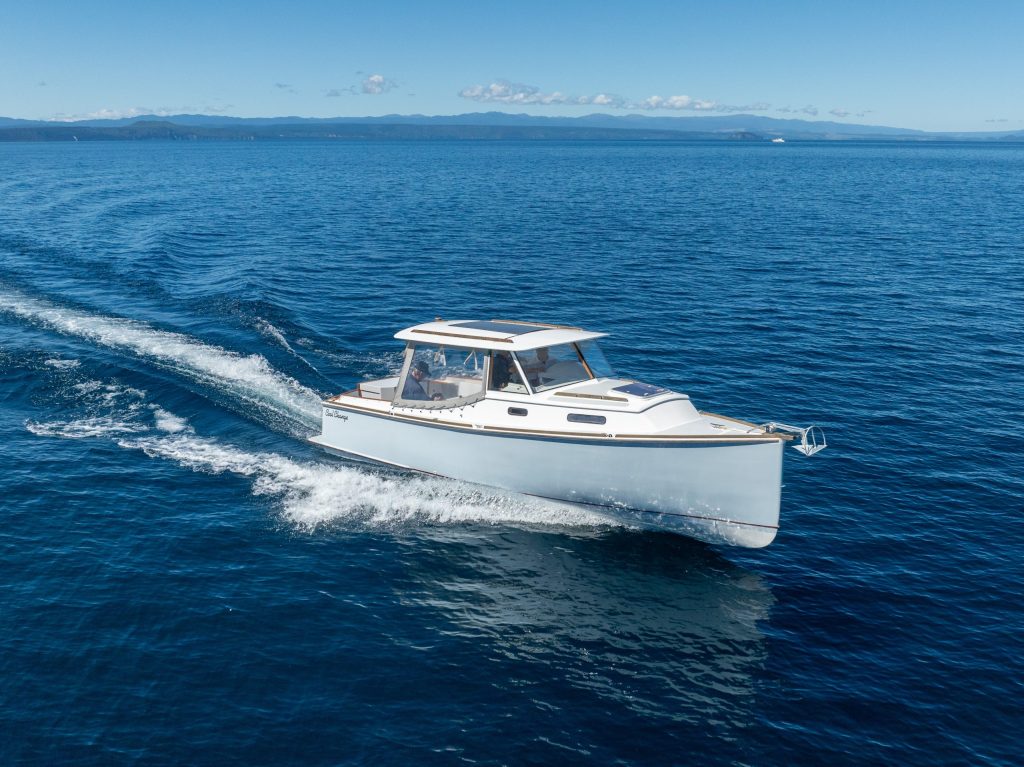
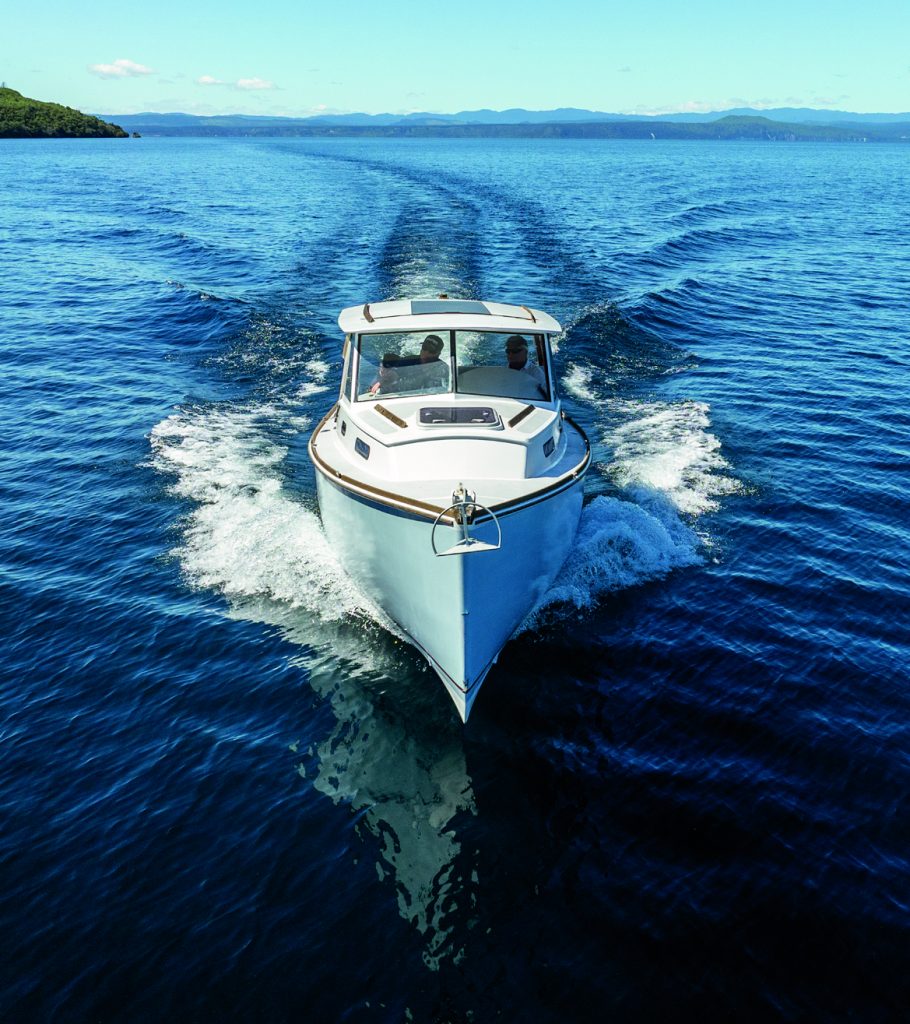
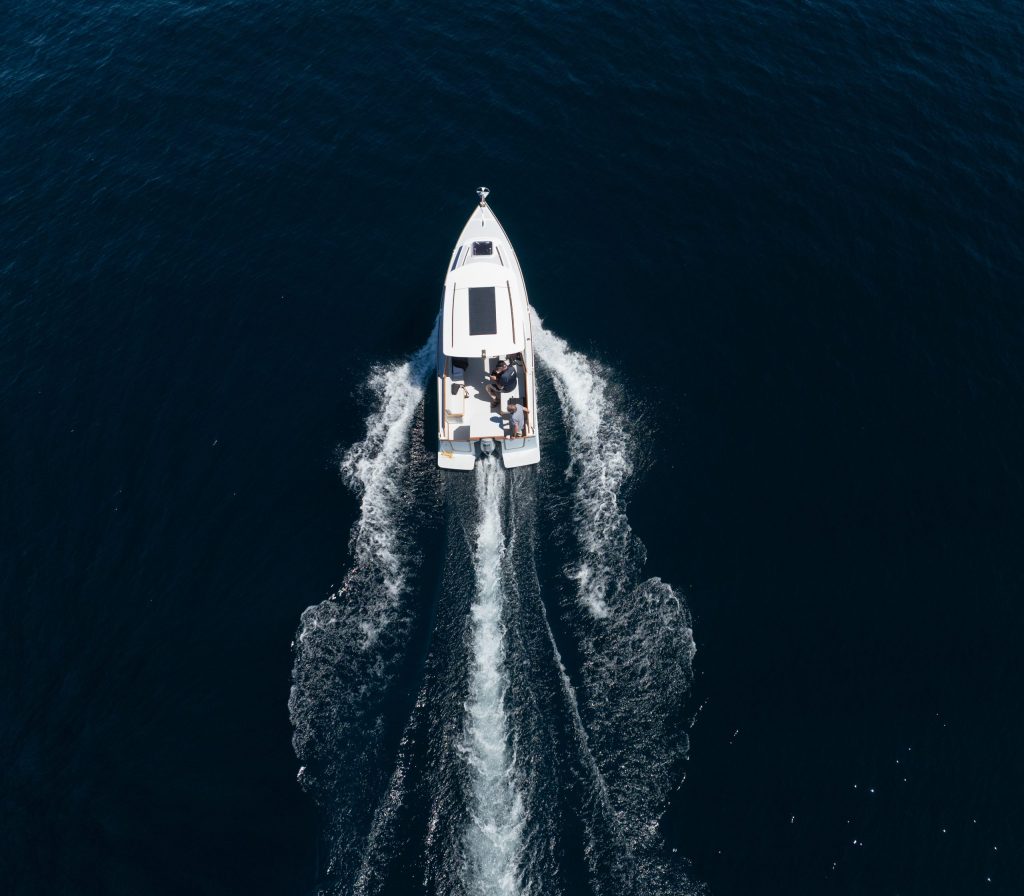
This speed advantage is attained by a combination of very light displacement (weight), a long waterline length with a very fine entry to cut through the water, and a flat run aft. The boat is widest at the transom, and seen from above (or below), it’s shaped very much like an arrowhead.
Hill explains: “The plane of the waterline at the entry point is very fine, and as it progresses aft, it has a hollow section to maintain the fineness before it widens out. So the finer you can get that, without distorting the hull over it, the less drag you have. But as a very light boat with a round bilge, it’s inherently tippy, so it’s important to get the maximum beam on the waterline to give you the inherent hull stability you need. That’s why the shape of the waterline is such that the widest point is at the transom.”
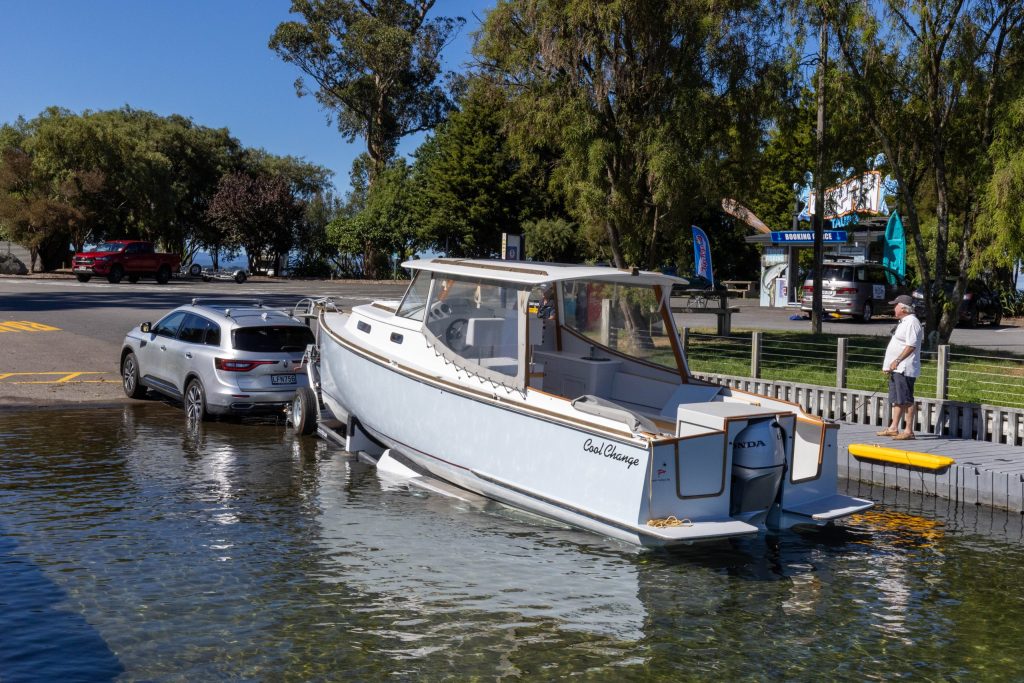
Roger Hill and the Boating NZ crew met up with Peter Parvin and Cool Change in Taupo. Sadly, for Parvin – who is recovering from shoulder surgery – the boat has become more than he can manage, especially getting it in and out of his tight driveway at home, for which he requires a cumbersome winch system. “It’s just become too much of an effort to get the boat in and out, so I’m not using it enough. It’s time for someone else to enjoy it,” he explains. Cool Change is up for sale on a Taupo boatyard.
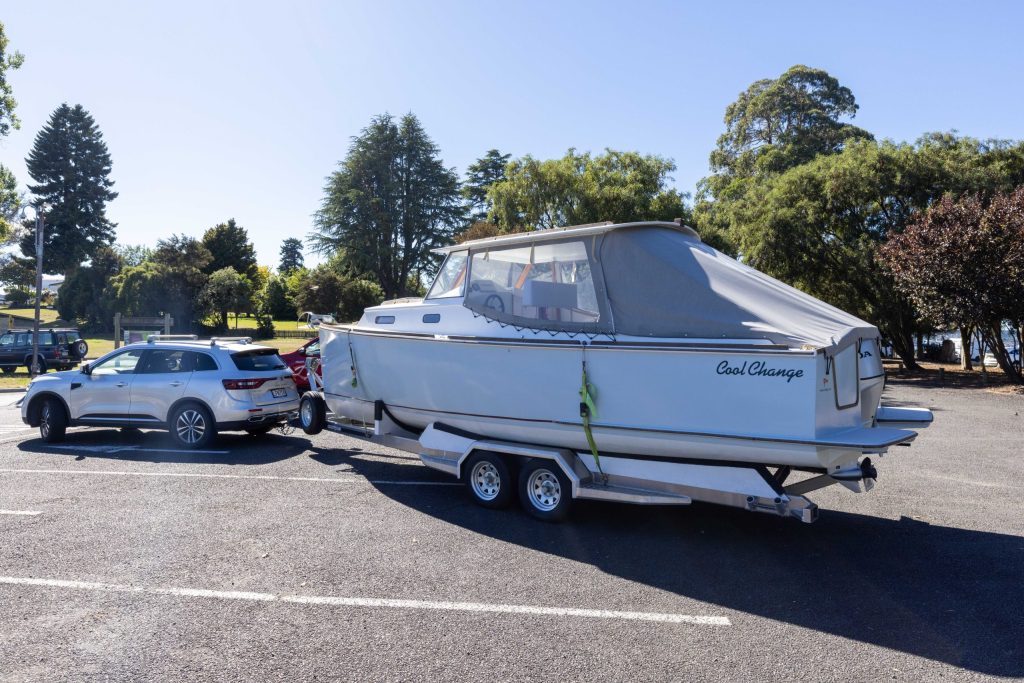
First impressions are that the boat looks quite large on its aluminium tandem-axle trailer, but Parvin happily tows it behind a modest-sized SUV. The trailer has override brakes on one axle.
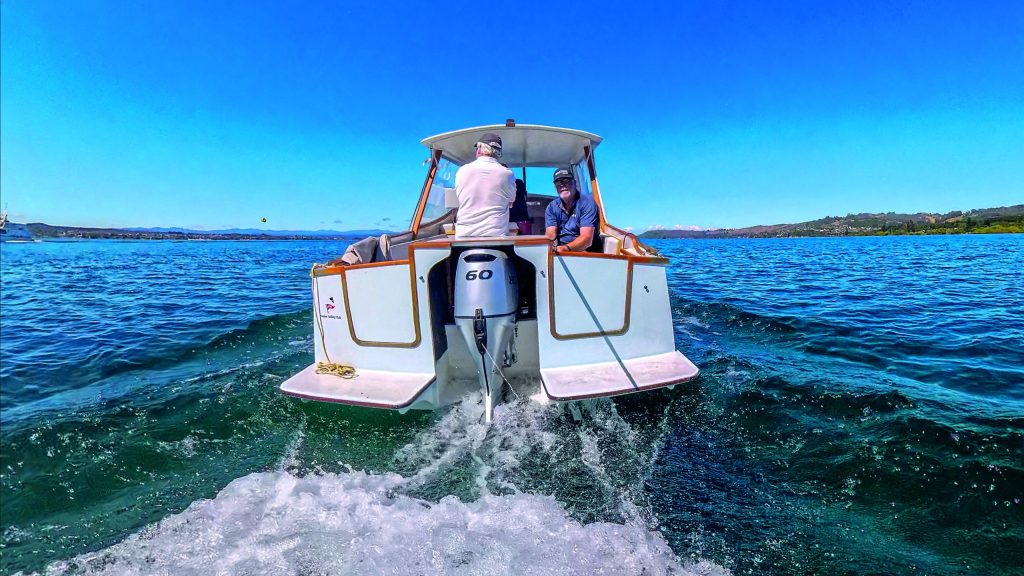
With the boat floated off the trailer bunks, we stepped aboard and headed out onto the Great Lake. Once clear of the five-knot zone, Peter got the boat up to cruising speed, a very comfortable 12 knots at 4,000rpm. I immediately noticed how quiet it was, with noise from the Honda outboard nestled in its box at the transom quite muted, as was noise from the hull’s passage through the water. At cruising speed the fuel burn was around six litres per hour, and Hill estimates the range on a full tank of 91 octane petrol at around 150 nautical miles.
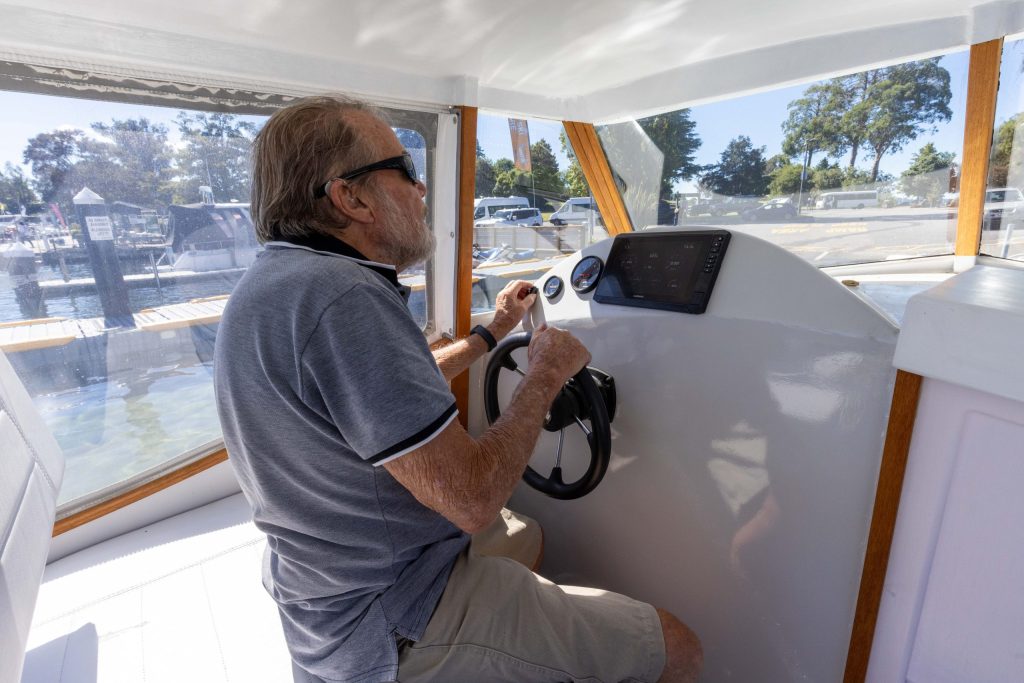
Pushing the throttle all the way forward propelled the boat to an indicated 15 knots on the 9-inch Garmin MFD, which displayed engine, speed, and navigation data. That’s with four adults aboard and a partial load of fuel and water.
Another knot or two might be possible in light trim, while 14 knots is probably more realistic with 130 litres of fuel in the belly, 150 litres of freshwater, and a full complement of gear and crew. The fuel and water tanks are situated low down in the hull for stability, so while this is a round-bilged, narrow vessel, especially forward of the helm, stability at rest is rather good, and the short keel ensures it tracks straight under power. From some angles Cool Change underway almost looks like a WWI destroyer, which isn’t too surprising since high speed naval vessels also exploited fine bows and extreme beam-to-waterline ratios.
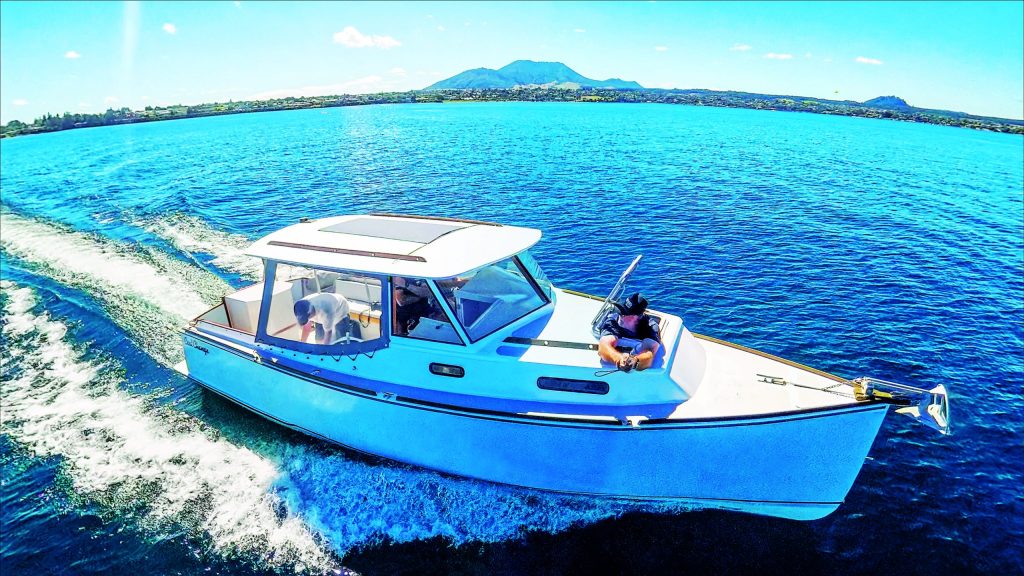
Because it’s a displacement vessel, there’s no discernible bow lift under acceleration, and Cool Change runs level regardless of speed. Consequently, vision ahead through the two-pane windscreen is good, despite the long bow – the slightly elevated helm position works well. Mullions are relatively narrow, and the roof extends well aft over the cockpit with dome-in clear plastic side windows and a full cockpit cover with more clears for camping, trailering, and storage.
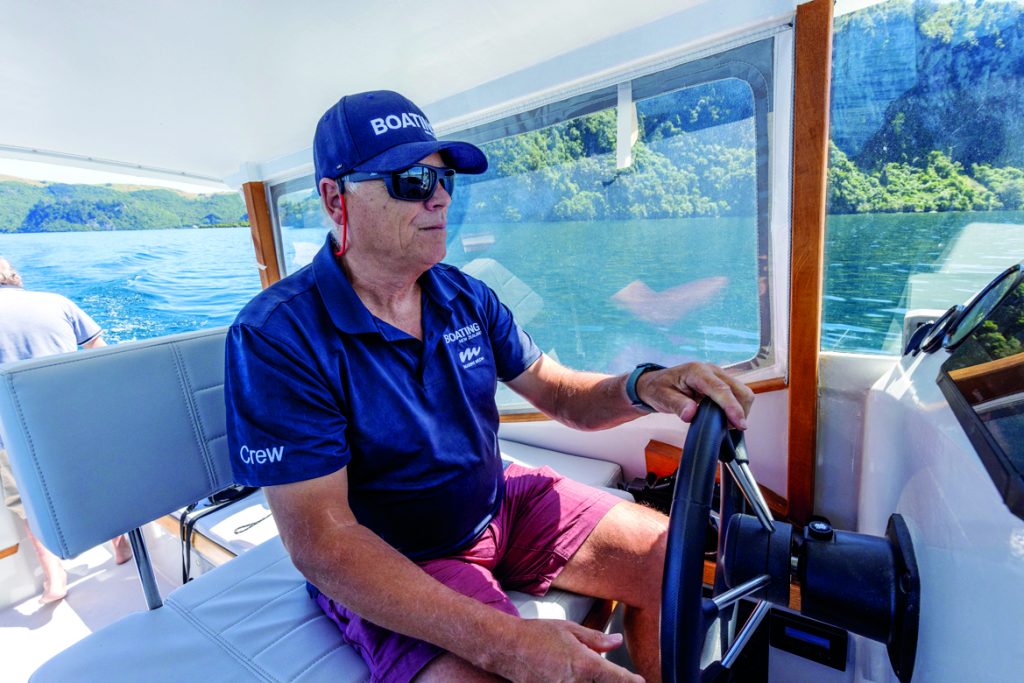
The helm is on the port side featuring a simple two-person bench seat, pipe footrests, and a curved, painted timber dashboard for the MFD, the anchor switch (Viper drum winch, Sarca anchor), and a few analogue outboard motor gauges. Steering is mechanical (cable), courtesy of Honda, as is the throttle and shift.
There are seats down either side of the cockpit, which slide out to form daybeds or berths, using the backrests as infill cushions. There’s useful storage underneath, best accessed via locker doors down each side and at the ends.
The engine box is aft amidships, with lift-out transom doors on either side providing access to the swim steps beside the motor. The engine box has a hinged lid for easier engine servicing, and the canopy covers and clears can enclose the whole of the cockpit for overnighting, allowing Cool Change to sleep four.
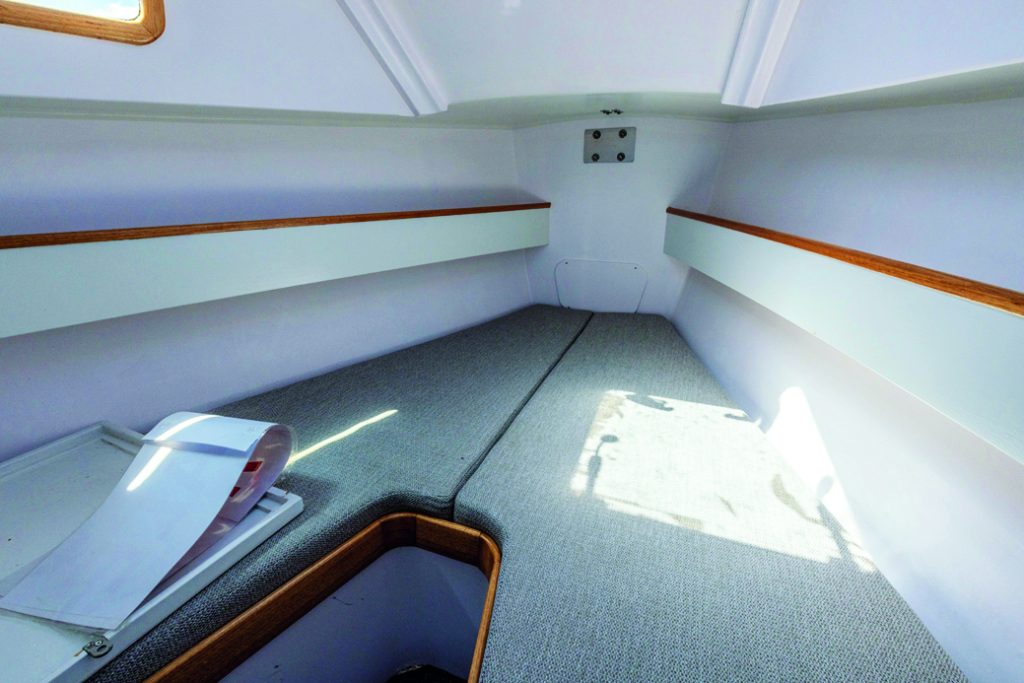
Like the cockpit layout, the v-berth forward cabin is arranged simply and with practicality in mind. Directly in front of the helm is an enclosed head, equipped with a chemical toilet, a small mirror, a shelf, a shallow storage locker, and a small portlight. There’s seated headroom, and it’s quite spacious for the boat’s size.
So too the berths and the forecabin dimensions in general, thanks to the vessel’s long waterline and plumb bow. The cabin is narrow at the pointy end but long, and there’s standing headroom inside the companionway door beside the cooker. It can be closed off by yacht-style companionway doors, lockable for security.
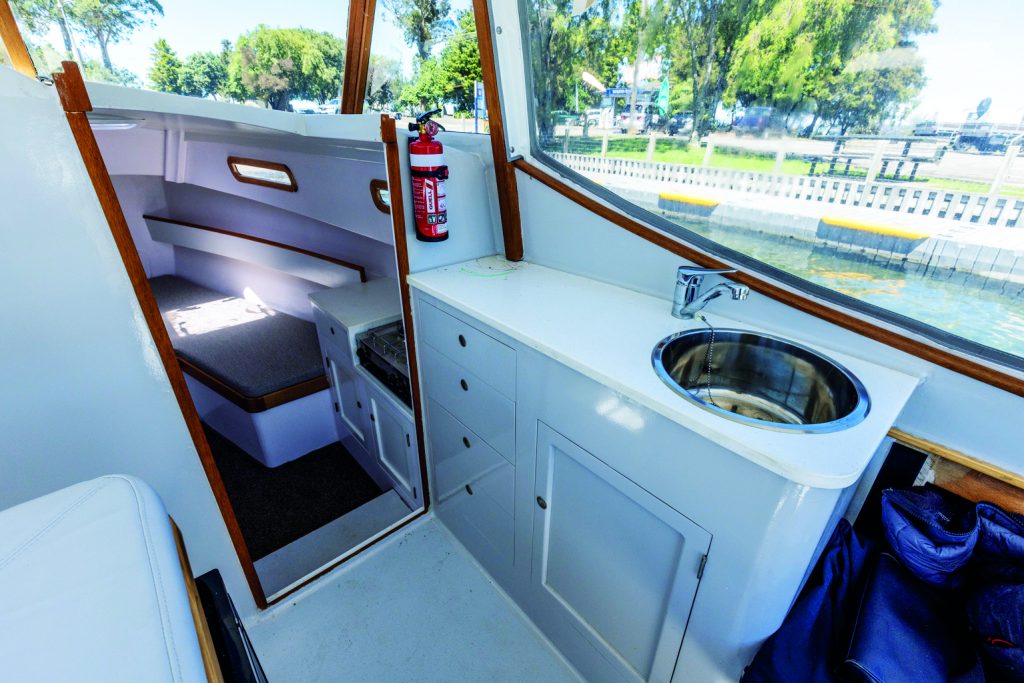
The galley is split between the forward cabin and the cockpit. The forward cabin gets the two-burner gas cooker, some food prep bench space, plus a bit of drawer storage. The cockpit gets the sink, more bench space, and additional drawer and locker storage opposite the helm station – the fridge is tucked under the helm seat. Although the galley is at different levels, it works well.
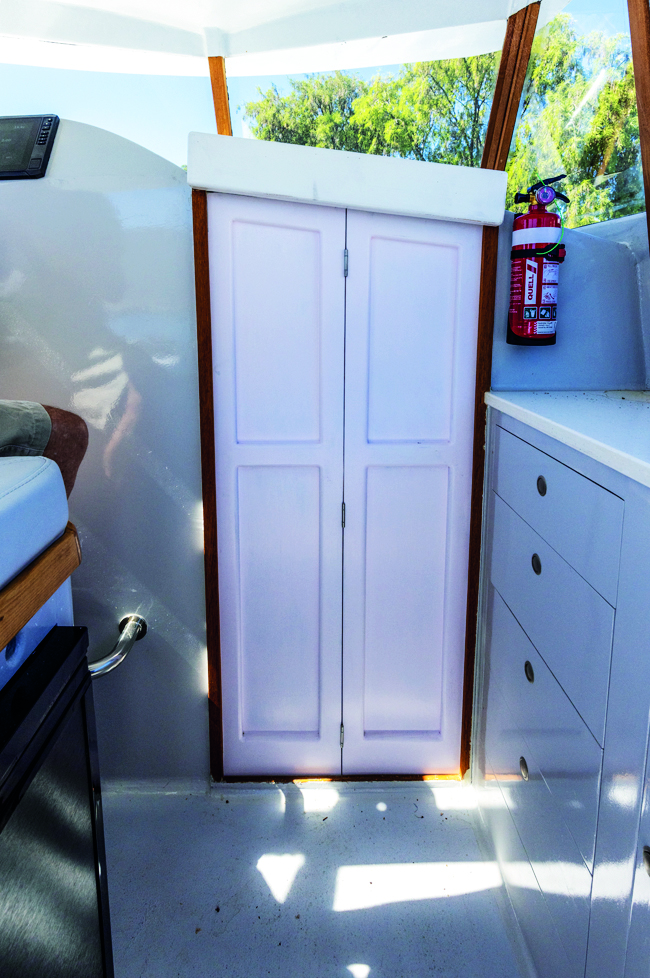
The boat’s interior is hand-finished with teak-look trim; some of it is solid hardwood and some of it veneer to save weight. Like the boat’s rather attractive two-tone hull, Parvin painted the interior himself using a brush. It looks fine, if not quite superyacht standard, but hey, superyachts are not usually built by octogenarians in their garages!
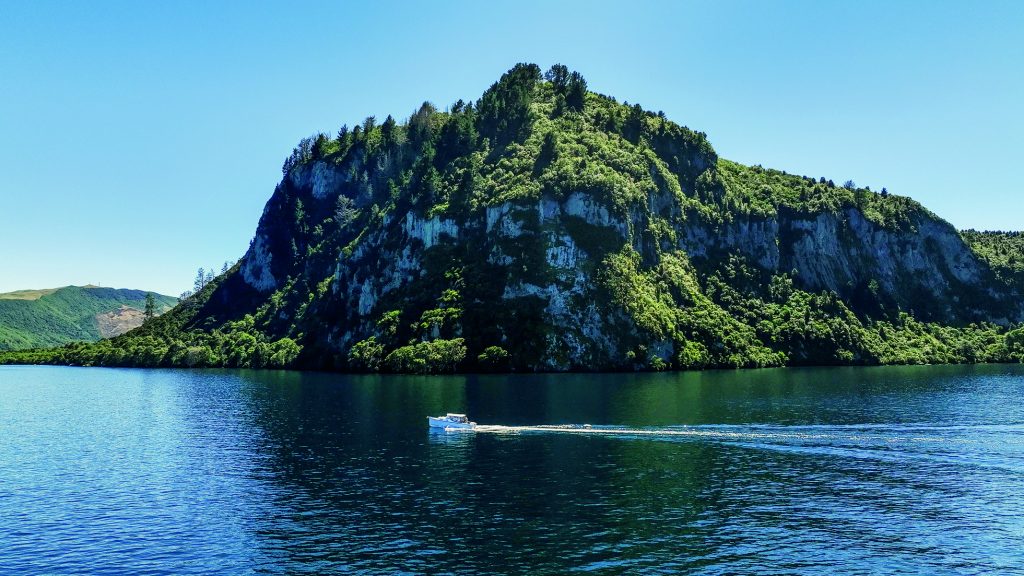
Cool Change is an interesting vessel and different enough that I really enjoyed the few hours I spent aboard her. The Camp Cruiser concept reminds us that boats come in all shapes and sizes and that there are still designs out there that are reasonably cheap to build, cheap to power and to run, and which will provide fuss-free, enjoyable boating indefinitely. The fact that such a boat is also easily trailerable opens up so many potential boating and cruising opportunities around the country, in saltwater and fresh.
Peter Parvin will definitely miss Cool Change, but he’s adamant he’s got one more project left in him; only this time it will be a boat small enough to fit in his driveway.
Highlights
- Light enough to tow behind most SUVs
- Suitable build materials include composite panels and strip cedar
- Requires only modest power to reach peak performance
- Quiet operation, good range at 12 knot cruise speed
Specifications
- LOA: 7.54m
- Length: 7.43m
- Beam: 2.45m
- Draught: 0.365 (hull only)
- Engine: 1 x Honda 60hp outboard (50hp design spec)
- Berths: 2 plus 2 in the saloon
- Cabins: 1
- Passengers: 8
- Displacement: 1,800kg (dry, as built); 2,170kg fully loaded, 2pp
- Fuel: 130 litres
- Water: 150 litres
- Cruise speed: 12 knots
- Max speed: 16/17 knots
Prof build price: $300,000 plus GST
Plans price: $3,000 plus GST
Built by: Peter Parvin
Designer: Roger Hill Yacht Design (www.powercatsnz.com)
Watch it: On YouTube
