“Lighter, smaller, stronger” may be a well-worn tagline for new technology, but it’s a very relevant description for the new battery systems now available to power your boat.
Words by Mark Seabrook
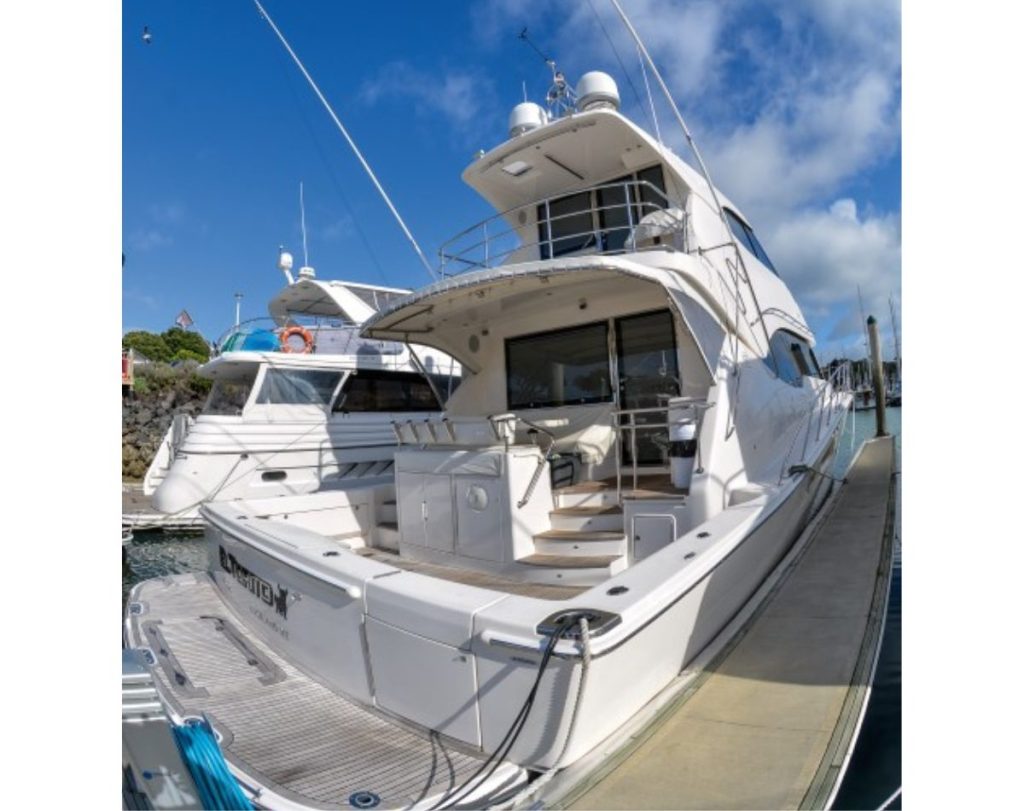
When R Marine Flagship’s Service Manager Adam Hadfield was asked by a customer to replace a 24-volt battery bank in his Riviera 70, due to loss of capacity and depth of charge, it was the perfect time to consider new battery technology.
“The previous AGM power system provided battery storage for 50% of a total of 1,200 amp-hours, or 600 available amp-hours. The batteries weighed 1,200kg and their footprint took up more than a square metre,” recounts Adam.

The decline in the batteries was most apparent at night, when the falling voltage automatically triggered the genset to start – waking everyone on board.
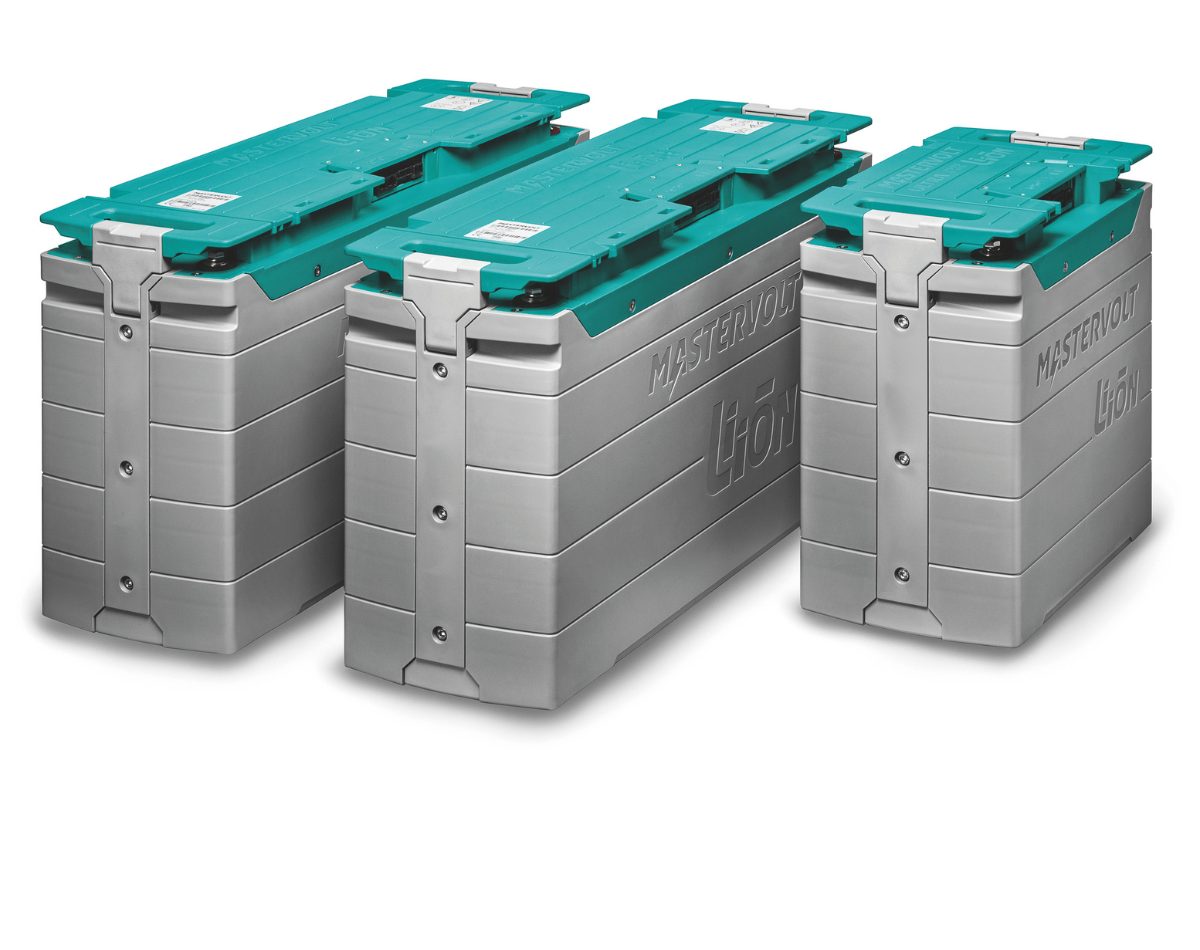
He and the owner elected to swap the old batteries with a Mastervolt lithium-ion alternative. The company’s technology is highly regarded and is particularly well-proven in the gruelling conditions of the Volvo Ocean Race.
Flagship installed four Mastervolt MLI Ultra 24/5000 batteries for a combined 720 amp-hours. These batteries can be cycled down to 80% discharge, giving 576 available amp-hours.
The most obvious advantage of the new system is the reduction in weight. The original AGM batteries weighed 1,200kg – the lithium-ion equivalent is just 290kg. This weight saving alone raised the transom 70mm out of the water, providing additional boat performance and economy, not to mention far more space in the lazarette.
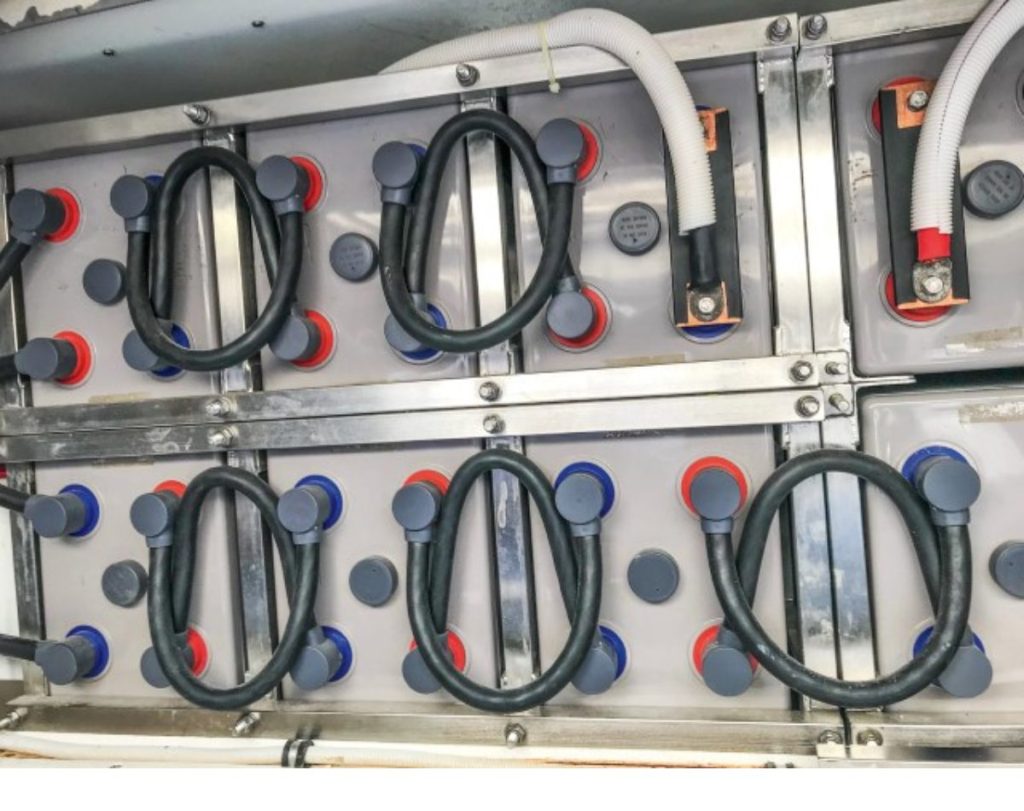
The previous battery footprint was 855mm x 1,450mm, versus the lithium-ion system’s 622mm x 788mm – a 50% reduction in space.
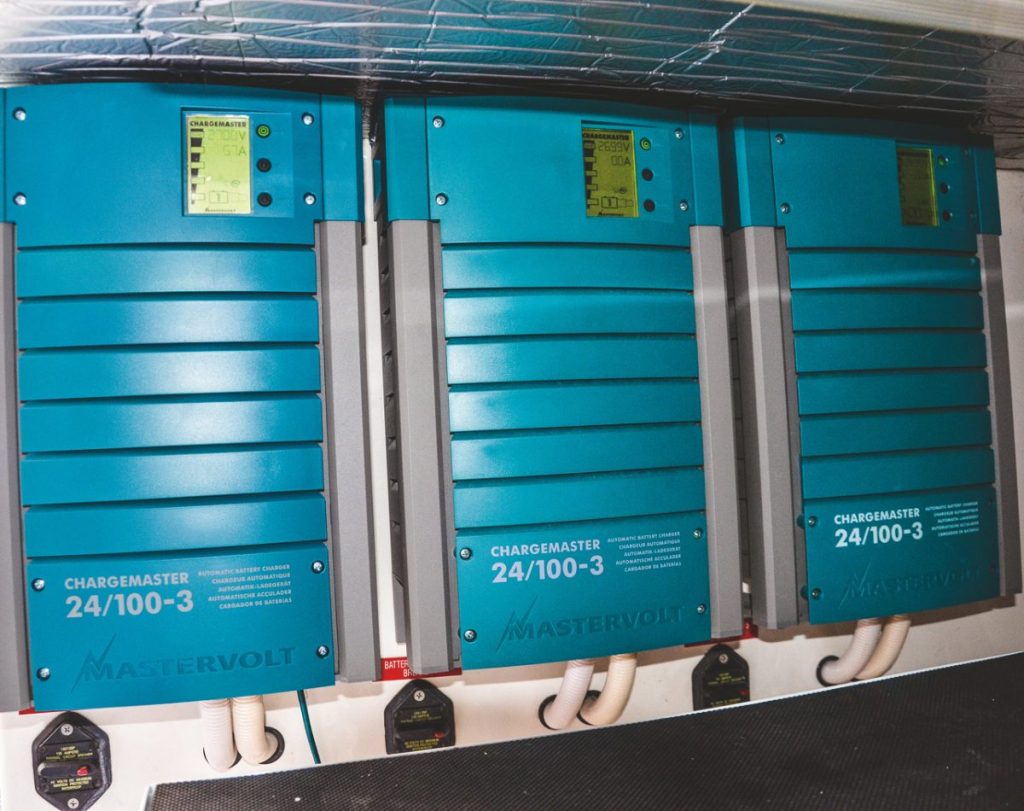
Recharge time is also impressive. A typical AGM system can take 5–7 hours to get from 50% discharge to full, and the last 10–15% seems to take forever. The lithium-ion batteries can be charged in half that time.
“With a similar 1,200 amp-hour lithium-ion system upgrade, using dual engine alternators throwing out 350 amps, you can get from 80% discharge to 100% in 2.5 hours,” says Adam. “And there is no memory effect or slow charge phase.”
The new batteries also offer greater ‘independence.’ There is less reliance on auxiliary engines and gensets.
The new batteries also offer greater independence. There is less reliance on auxiliary engines and gensets – a saving on weight, space, and fuel – and the low hum of noise pollution across a secluded anchorage is eliminated.
The faster recharge time from the main engine alternator replaces the need for a generator. Simply motoring to the next fishing spot or moving to another bay returns 80–90% of the system charge to power the boat through the night.
Battery life and performance
Battery life is as important as its performance – and it has a direct effect on the maintenance schedule (and the owner’s wallet).
Battery life is determined by how many charge/discharge cycles it endures. On average, traditional batteries can cycle 500–600 times over a 3–4-year period – the lithium-ion equivalent can provide up to 3,000 cycles.

If managed correctly, lithium-ion batteries have a lifespan of at least 10 years. In reality, the average recreational boat user could take more than 15 years to clock up 3,000 cycles – three times the cycles and lifespan of traditional batteries.
A real-world upgradeAuckland yachtie Matthew O’Donoghue is a relatively recent convert to lithium-ion, having equipped his Roberts 53 ketch Defiant with the battery technology two years ago. He initially fitted four 250Ah hybrid batteries in 2005, along with a 200-amp alternator and a 200-amp battery charger powered by a genset. He limited discharge to 75% to preserve battery life.  The refrigeration system consumed most of the onboard energy while cruising, and recharge times were long. Eventually, the batteries failed, and he replaced them with three 300Ah lithium-ion batteries. One of the immediate advantages was the increased storage space, followed by dramatically reduced charging time – from eight hours down to about one hour. The batteries can accept very high charging currents, up to nearly 400 amps, until around 95% capacity. 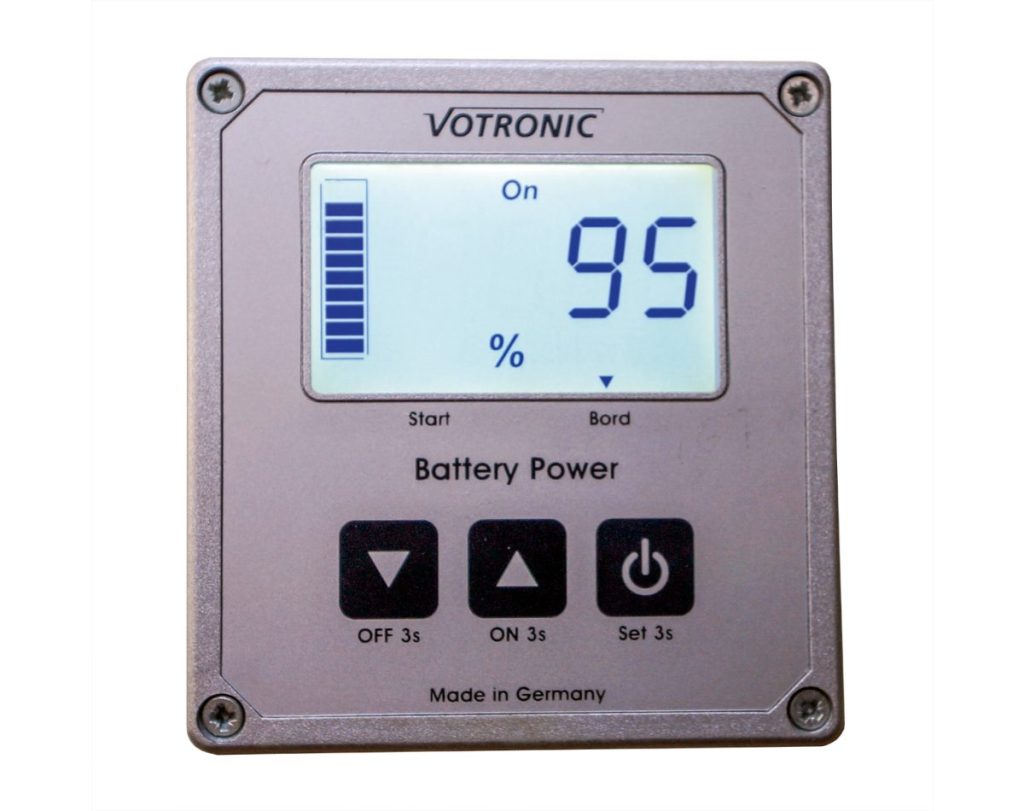 Another benefit is that lithium-ion batteries maintain around 13.2 volts until nearly depleted. “Although they are considerably more expensive, I think they are the way to go—and these batteries will probably outlast me.” |
Lithium-ion explained
Most cranking and deep-cycle batteries use a combination of lead plates and sulfuric acid (electrolyte) to store electrical energy in liquid form. There are three common types of lead-acid batteries: flooded (or wet cell), gel cell, and absorbed glass mat (AGM).
When lithium-ion emerged as a battery technology in the early 1970s, there were concerns around its volatility. But it has evolved, and safety margins are now so conservative we use lithium-ion daily in cell phones.
Handheld electronics mostly use lithium-ion batteries based on lithium cobalt oxide (LiCoO2), which offers high energy density but can present safety risks.
Mastervolt batteries use lithium iron phosphate (LiFePO4), which offers lower energy density but longer life, greater stability, and is the safest known chemistry for lithium-ion batteries.
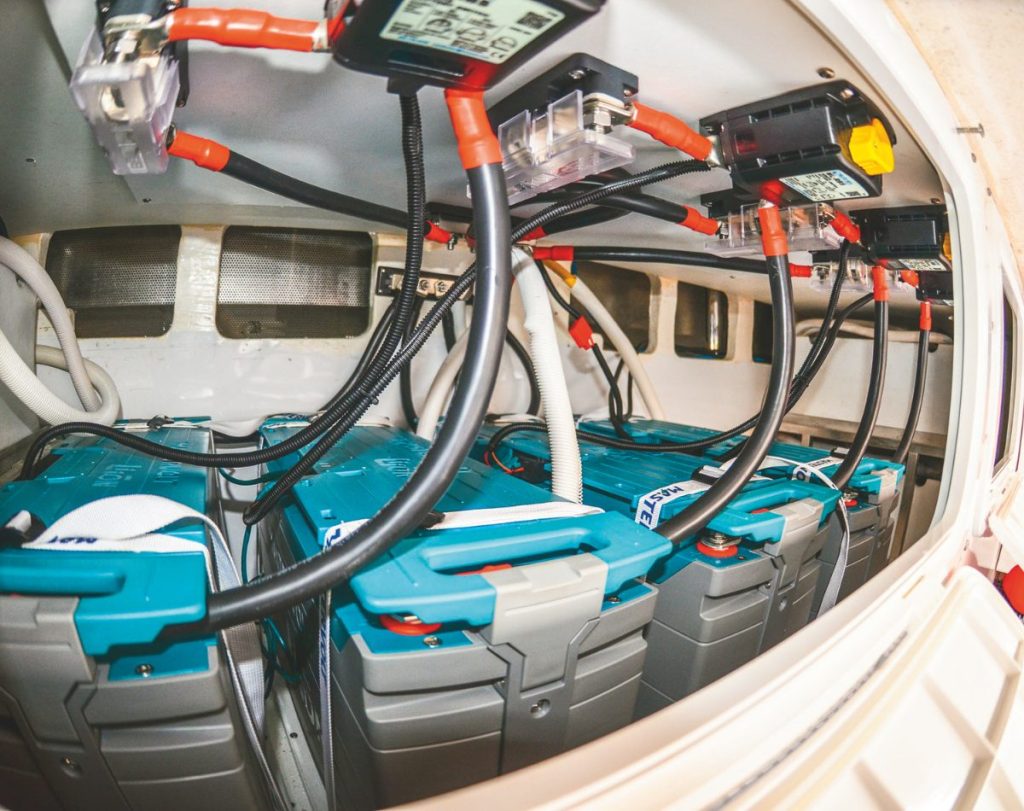
As with all lithium-ion batteries, the charge/discharge cycling process needs to be monitored and managed. Mastervolt batteries have the battery management system built into each battery, including safety switches for protection.
“There are a lot of ageing electrical systems out there,” says Adam, “and this is compounded by an ever-increasing power demand for more appliances, bigger screens, new chartplotters, and devices of all kinds.”
A good way to view an upgrade – or to simply maintain a boat’s current electrical system – is to ask the “10-year boat question”: if you plan to own your boat for the next 10 years, an investment in this technology will serve you well – both in cost and benefit.
In simple terms, the increased usable capacity and lifespan of lithium-ion more than offsets the increased cost of the investment over a traditional battery technology.
As with all lithium-ion batteries, the charge/discharge cycling process needs to be monitored and managed.
He is quick to point out that the technology is not a direct drop-in replacement solution – it’s an integrated system.
The key components for lithium-ion battery technology replacement include:
- A high-output alternator
- A smart regulator
- Monitoring instruments
- Higher-rupture fusing
Adequate ventilation and breathing space between batteries still applies, though orientation of lithium-ion batteries is not a problem, as they can be positioned on their side and in any direction – ideal for heeling yachts.
TABLE TO COMPARE TRADITIONAL FLOODED, AGM AND MASTER VOLT LITHIUM-ION BATTERIES FOR A BOAT BETWEEN 40–55FT
| TRADITIONAL | RATING | AGM | RATING | LITHIUM ION | RATING | |
|---|---|---|---|---|---|---|
| LIFESPAN | 3–4 YEARS EXPECTED LIFE | ⭐ | 3–4 YEARS EXPECTED LIFE | ⭐ | 10+ YEARS EXPECTED LIFE | ⭐⭐⭐⭐⭐ |
| CYCLES | 500 CYCLES | ⭐ | 600 CYCLES | ⭐⭐ | 3000+ CYCLES | ⭐⭐⭐⭐⭐ |
| CHARGING & FUSING REQUIREMENTS | Standard alternator provides slow recharge | ⭐ | Standard alternator provides slow recharge | ⭐ | High output alternator enables fast recharge | ⭐⭐⭐⭐⭐ |
| CHARGE TIME | ~8 hours | ⭐ | 6–8 hours | ⭐⭐ | ~2.5 hours | ⭐⭐⭐⭐⭐ |
| USABLE | ~50% usable capacity | ⭐⭐ | ~50% usable capacity | ⭐⭐ | ~80% usable capacity | ⭐⭐⭐⭐⭐ |
| WEIGHT (~570–600AH) | 1200KG | ⭐ | 1200KG | ⭐ | 290KG | ⭐⭐⭐⭐⭐ |
| RELIABILITY | Prone to sulphation | ⭐ | Moderate protection | ⭐⭐ | Smart BMS & no memory effect | ⭐⭐⭐⭐⭐ |
| INVESTMENT | Low cost | $ | Medium cost | $$ | Higher upfront, better lifetime value | $$$ |
MORE INFORMATION visit www.bepmarine.com