An Auckland man found out the hard way why you should never use an open flame to check for a gas leak. He suffered serious burns when his lighter caused an explosion on his vessel.
Luckily, both the Auckland Westpac Rescue Helicopter and Coastguard were alerted and were able to get the fire under control and the man to hospital for treatment.
His pain serves as a stark reminder of how dangerous gas leaks are, not to mention how important it is to use a safe method to check for them. There are ways you can prevent a gas leak from becoming serious, without hurting yourself in the process.
GAS DANGERS

LPG is a common fuel for cookers on boats and the need to have a gas detector and a shut-off valve is well-known. If you don’t have a detector and a reminder note in the galley to “Turn off gas at the bottle”, a trip to the chandlery is probably timely. Once you have one, check that the control unit is functioning properly, the detectors are properly located, and avoid the temptation to ignore the alarm or to override it.
Carbon monoxide is a less well-known but lethal gas for boaties. Carbon monoxide poisoning has caused a number of boating deaths and often occurs when engine exhaust gas leaks or generator fumes are ‘sucked’ back into the cockpit and cabin.
The gas is colourless, odourless and tasteless – and it can kill you in a matter of minutes. High levels of carbon monoxide are particularly dangerous when you’re asleep because you’re unable to detect the early symptoms such as tiredness, drowsiness, headache, nausea, and pains in the chest and stomach. In the US the frequency of deaths from carbon monoxide poisoning has resulted in recommendations not to run a generator overnight when at anchor.
THE RIGHT DETECTOR




A gas detector alerts you to gas leaks or fuel fumes. Different types of detectors detect combustible, flammable and toxic gases.
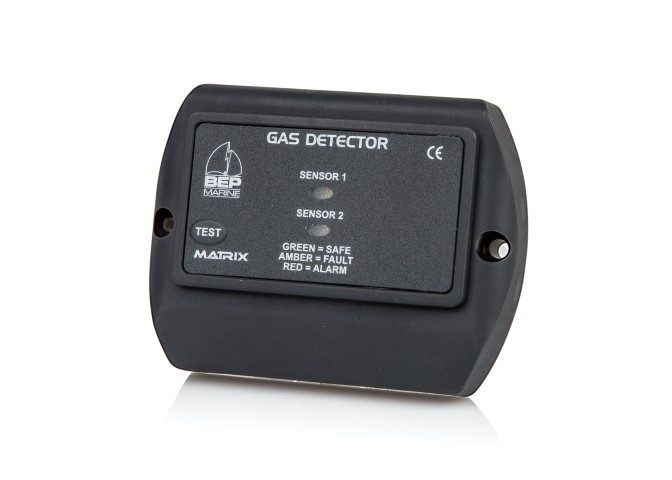
Marine gas detectors can provide an early warning before gas concentrations reach a level that can cause an explosion or cause unconsciousness. Their warnings are either visual (a flashing light) or aural (sounding an alarm). Some gas detectors even automatically shut off the solenoid valve fitted to a LPG gas bottle.
When fitting your gas detector, make sure you have it in the right place. LPG and petrol vapours are heavier than air and will settle in the lowest areas of a boat – usually the bilges. Sensors should therefore be fitted low down, though above levels likely to be flooded.
Most chandleries and marine electricians carry a range of good quality gas detectors.
UPSKILL YOUR KNOWLEDGE
While a proper gas detector helps to prevent catastrophes such as an explosion or poisoning, it’s not entirely foolproof and accidents at sea can happen at any time.