Nine IMOCA skippers are about to sail where the class has never ventured before. The Vendée Arctique 2026 will push them across the Arctic Circle, into waters colder than anything they’ve encountered in the Vendée Globe, with 24-hour daylight and systems that behave like nothing else they know.
The numbers tell the story. Air temperature drops from around 30 degrees Celsius at the start in Les Sables-d’Olonne to roughly 5 degrees at the polar circle. Water temperature plummets from 16 degrees on the Vendée coast to below 5 degrees in the north. And the light never stops. For ten days—a duration none of these skippers has faced solo on their current IMOCA—the sun won’t set.
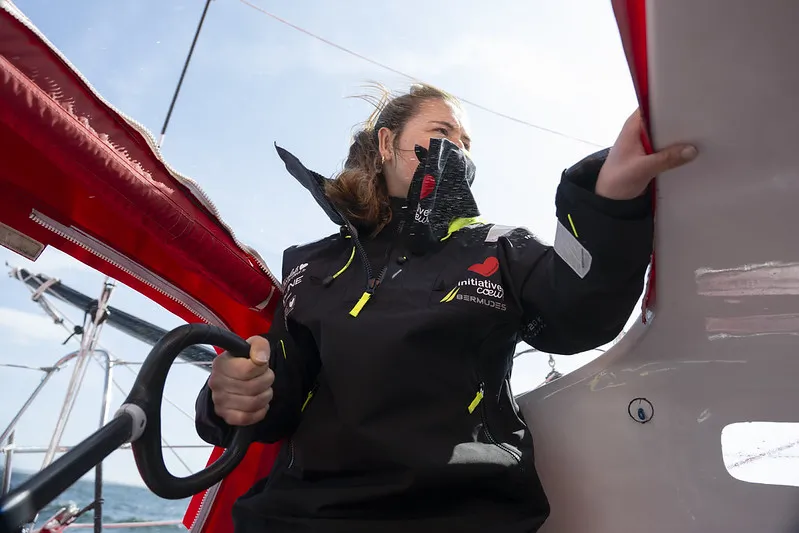
Four years ago, the fleet tackled the second edition of this race towards Iceland. Those who were there remember it as something close to brutal. A violent depression swept across the course, forced the organisers to shorten the race, and nearly let three non-foiling yachts crash the top ten. Arnaud Boissières, competing on April Marine, was blunt about it: “Those were hellish conditions, really difficult to live through.”
This year, the organisers have made it harder still. After clearing Ireland, skippers can choose their route around Iceland. They pick their own latitude to reach the Arctic Circle. They navigate their own path home. Freedom of routing sounds elegant until you’re making a decision in a 30-knot low-pressure system that’s followed by another one, and then another.
Christian Dumard, the race meteorologist, explained what that means. “There will be many changes in wind conditions, many transitions and therefore many manoeuvres. We know for certain they will have to manage many transitions—it won’t be like the Vendée Globe where you can have two to four days of stable conditions.” A gybe takes close to 45 minutes in single-handed sailing. The skippers will repeat it dozens of times.
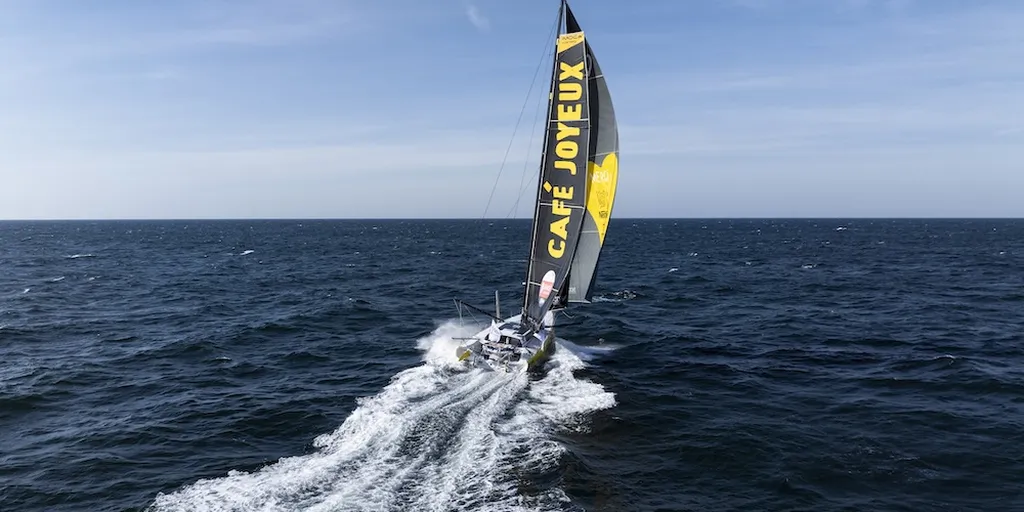
Cold air is denser than warm air. That means more pressure in the sails, more performance, but also more stress on the boats and the bodies driving them. Nico d’Estais, sailing Café Joyeux, said simply: “We’re preparing by bringing really warm clothes to get through it.” Some skippers are considering small electric heaters, gear that made the Southern Ocean sections of the Vendée Globe bearable.
Elodie Bonafous on Association Petits Princes – Quéguiner calls it “a race that promises to be long and demanding.” The rhythm management, the ability to hold together when conditions turn raw—it comes down to endurance. Corentin Horeau summed it up plainly: “We know it’ll be a real physical and psychological challenge.”
That’s what drives them north anyway.