There’s a version of the NorthStar SailGP Team that wing trimmer Paul Campbell-James says is the best outfit in SailGP.
He should know – a veteran of SailGP and one of the most respected athletes on the water, Campbell-James has raced in every season so far. The challenge, he explains with disarming honesty, has been making it show up consistently enough to matter.
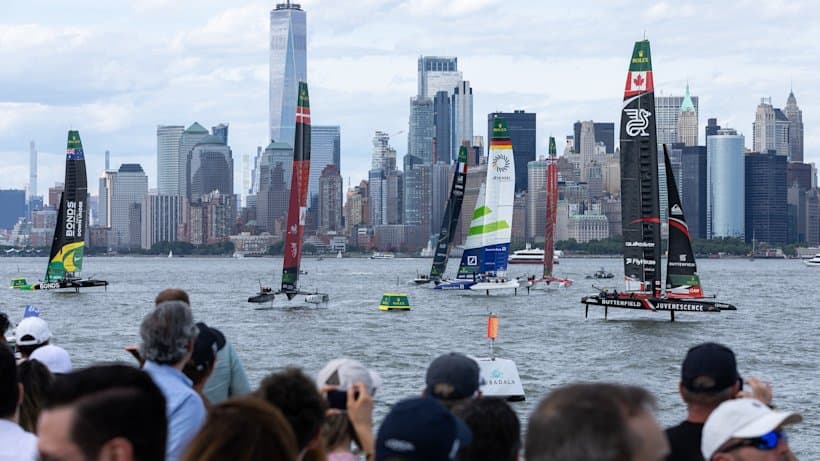
After a podium drought stretching back more than a year, a solid result in Bermuda followed by third at the Mubadala New York Sail Grand Prix offered the clearest sign yet that the Canadian team are finding that version of themselves again – and at the perfect moment, with a home event in Halifax just over a week away.

“We saw some real shoots of encouragement in Bermuda,” says Campbell-James. “We had good starts, were moving through the fleet and were in contention going into the last race. There were moments where we made some really punchy decisions and gained places. Then in New York we got back on the podium for the first time in more than a year. That felt like a long time coming, but it also felt like really good timing with Halifax coming up. Hopefully it’s the start of some momentum heading into our home event and the European leg of the season.”
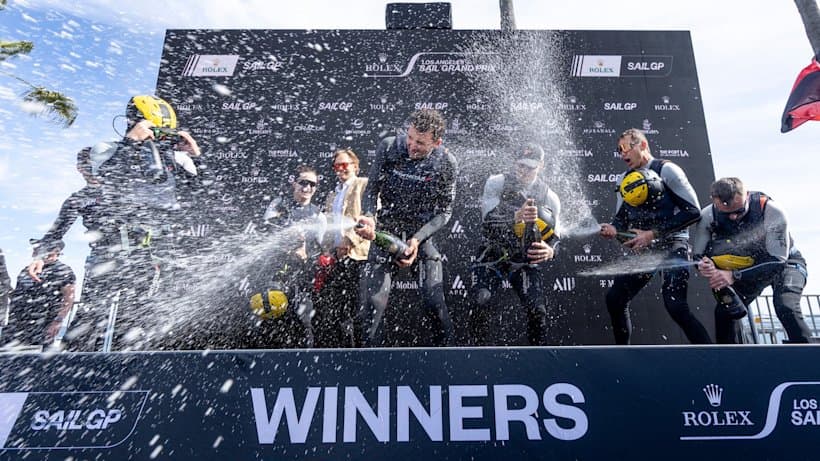
The wait had been a long one – 14 months to be precise. NorthStar’s last podium before New York came at the Oracle San Francisco Sail Grand Prix back in March 2025; the third in a string of top three finishes including an event win in Los Angeles that proved the team has what it takes to roll with SailGP’s best.
But the early-season success wasn’t to last, and NorthStar entered into a run of Grands Prix results that saw them ultimately finish the 2025 Season mid-fleet in sixth. After targeting a strong start in 2026, the early part of this season had brought its own particular frustration. Having identified poor starts as a weakness heading into the new season, the team had sharpened that area considerably – only to find other cracks opening up.
“We were pretty disappointed with how the beginning of the season went in terms of results,” says Campbell-James. “We’d identified a few areas we wanted to improve, particularly our starts, which we felt were fairly poor last year. Ironically, that seems to have flipped on its head a little bit this season. We’ve actually been starting pretty well, but maybe we’ve focused too much on that and not enough on the nitty-gritty of sailing the boat. We haven’t been moving forward through the fleet and, if anything, we’ve been going backwards.”

As NorthStar fans will tell you, the team’s consistency has been maddening: capable of brilliance one race and invisibility the next.
“We have moments where we’re the best team on the water and moments where we can’t break into the top 10,” Campbell-James admits. “Working out which version of the team is going to show up on a given day has been a big part of our analysis. We’ve been doing a huge amount of work between events to understand exactly why that is.”
The turning point, he believes, was deceptively simple: time on the water. A full training day in Bermuda – five and a half hours of uninterrupted sailing – gave the team something SailGP’s relentless schedule rarely affords.
“The biggest difference for us was getting that training day in Bermuda,” says Campbell-James. “We managed about five and a half hours on the water on the Friday and it felt like something we’d really been missing. Looking back now, it feels like that was the start of a resurgence for the team.”
The scarcity of training time is one of SailGP’s defining challenges. A good race weekend might yield 60 minutes of competitive sailing. Teams then disperse, heading home to spend valuable time with friends and family before the next event comes round. The emphasis is firmly put on which team can hit the ground running in each venue the fastest – and when results aren’t going your way, it makes a comeback all the more difficult.
“When you’re in a rut, getting out of it is really hard because there’s so little time on the water,” says Campbell-James. “Even on a good weekend, you might only race for 20 or 30 minutes. Compared to Olympic sailors, who can spend more time on the water in a week than we do in a year, that’s the biggest challenge. Time together in the boat is incredibly valuable.”
Every hour in the F50 counts more heavily still because the boat itself demands so much. Campbell-James describes a machine that tolerates nothing less than total precision from every crew member simultaneously.
“The F50 is one of the hardest boats I’ve ever sailed in terms of the number of jobs happening at once,” he says. “During a maneuver there can be eight things that need to happen within five seconds, all timed perfectly. And that’s just for one person. There are five or six people on board all doing the same. The amount going on is phenomenal.”





The complexity is compounded further by the constantly shifting variables between events – different wing sizes, different foil configurations, sometimes different crew.
“No two days in SailGP are the same,” says Campbell-James. “You’re constantly adapting. A lot of the lessons you’ve learned might not be relevant again for months because you haven’t sailed that setup since. That’s why hitting the ground running is so important.”
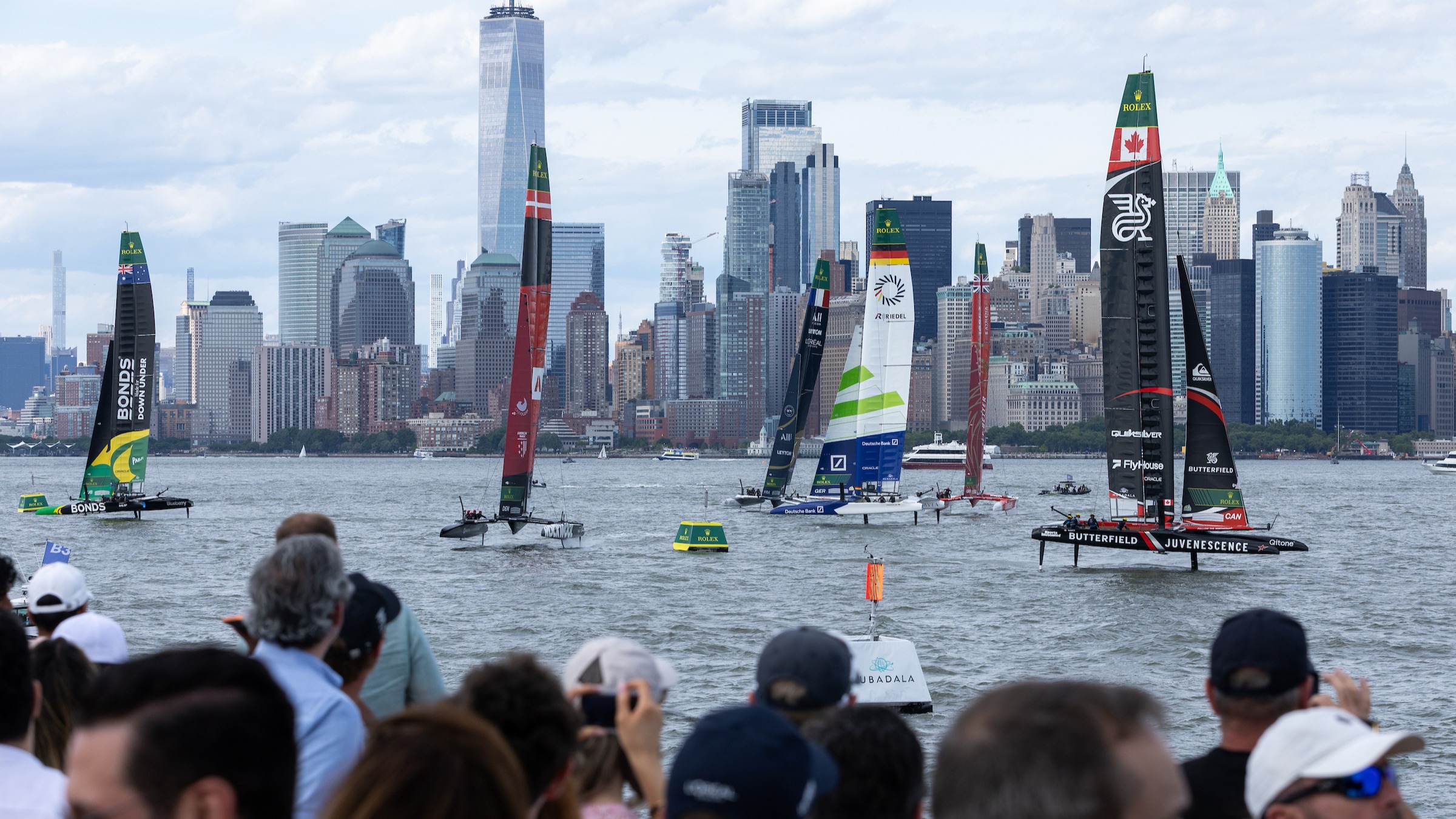
In New York, NorthStar had to wait until the second day to get their chance to compete as high winds limited racing on the opening day to just three boats. But when they did, they took it. Across just three races, they overtook nine boats – a return that would be eye-catching across a full seven-race regatta, let alone a compressed Championship Sunday.
“Those overtakes were the most significant thing about New York was that we overtook nine boats across the weekend in just three races,” says Campbell-James. “To do it in three races was awesome. It was a real confidence boost heading into Halifax.”
The Final itself, against the Bonds Flying Roos and Emirates GBR – the two teams who have dominated the season’s podiums – was a lesson rather than a celebration. NorthStar finished third, a result they will not be satisfied with repeating.
“It was great to make the Final, but it felt like we were up against the two most experienced Final teams of the last couple of years and that showed,” says Campbell-James. “We didn’t execute the race particularly well and never really felt like we were in it. But it was valuable experience. We hadn’t raced a Final for more than a year and that puts us in a much stronger position moving forward.”
Moving forward, the team head to their home event in Halifax, Nova Scotia, with a newfound confidence and the knowledge that thousands of fans will be cheering for them.
“Having a home event probably adds a little bit of pressure, but more than anything it adds excitement,” says Campbell-James. “There’ll be thousands of supporters there, lots of family members and plenty of people cheering us on. That’s what makes it special.”
NorthStar will arrive knowing they are capable of more than they have shown for much of this season. Ninth in the championship, but within touching distance of the teams ahead after New York’s points haul – and with the appetite matching the ambition.
“We’re in a much better position points-wise than we were before New York,” says Campbell-James. “Suddenly the teams ahead of us are within touching distance again. There’s still a long way to go and we’ll need a few things to go our way, but if we can put together a few more podiums over the next few events, it keeps the dream of making the top three alive.”
Third in the Final at Halifax, then? Don’t count on it being enough.
“Getting into the Final in New York was a massive relief, but if we get into the Final in Halifax and finish third again, we’ll be disappointed,” Campbell-James says. “We want to put on a better show than that and really fight for the win.”