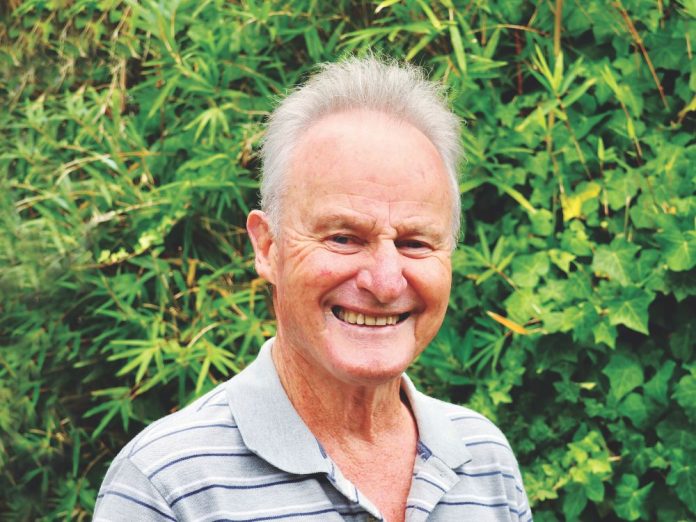
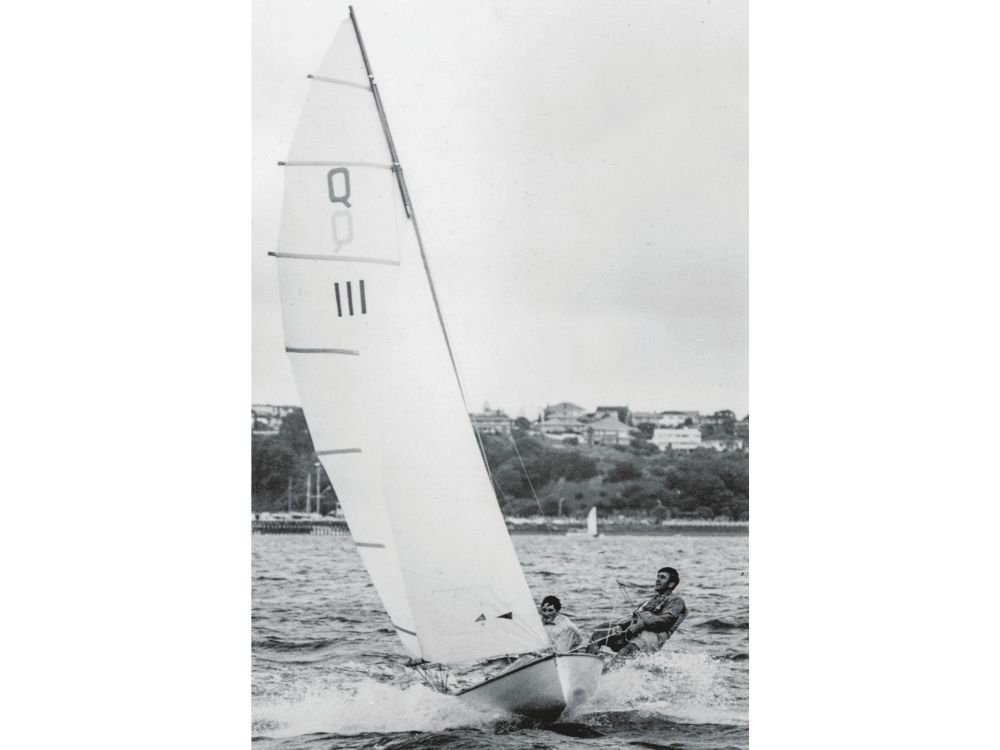
In 1966 Beverley Coles was the first woman to represent New Zealand in yachting overseas. It was on Sydney Harbour in the Interdominion 12 Foot Championship for the Silasec Trophy with her 12ft Q Class yacht Quahlee. Beverley and her boat were amongst the twelve representatives chosen at the trials in Auckland.
Part 2 of a 2 part series. Part 1 | Part 2
But first, let me show how Beverley had feistiness and salt in her blood from her forebears. Her 3x grandfather was Commander John Reed Bindon RN, born in 1781, who entered the Royal Navy from the Naval Academy as a Midshipman at the age of 12, retiring in 1814 after service in many engagements such as the battle of Cape Vincent, against Algerian pirates and off Cadiz. In 1806 he married Sarah Vereker in County Clare, Ireland. Several of their descendants were mariners, Anglican churchmen and noted scholars. Sarah was a cousin of Lord Gort, Charles Vereker, Second Viscount, formerly a Midshipman in the Royal Navy himself, but later a Colonel in the British Army and Governor of County Galway.
Going down a couple of generations of Irish gentry, Beverley’s great-grandfather was William Francis Vereker Bindon, born in County Tyrone in 1851. His father, an eminent surgeon, his mother and his five brothers, emigrated to Auckland in 1866. The Bindons were excellent athletes and soon starred in local cricket matches, rugby and athletics. Yachting attracted William and the youngest brother James Crossley Bindon. In October 1880 they bought the crack open sailing boat Toy from Charles Bailey Sr. She was a 24ft centre-boarder which Bailey had built to ship around the country to regattas to race for the significant prizemoney. Bailey won at Wellington, Auckland and Tauranga regattas and proclaimed Toy as “The Champion of New Zealand.” The Bindons decked her in so, in the parlance of the time, she became a ‘yacht’. They built a shed for her on the beach at St George’s Bay and sold her in 1884 to Tonga.

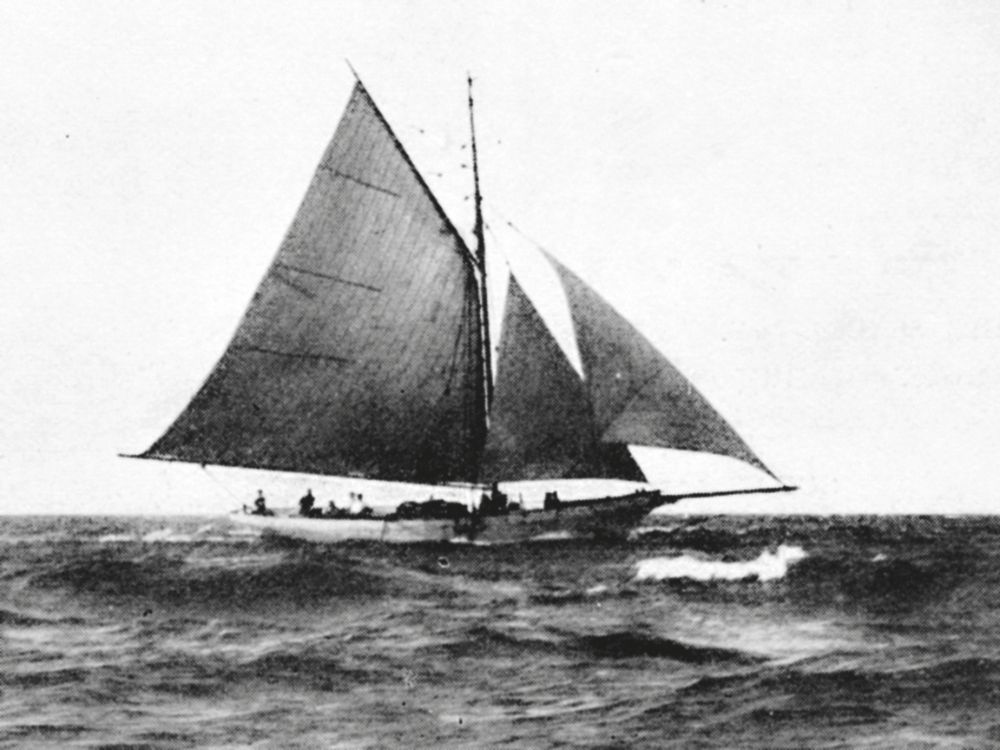
In 1886 the brothers commissioned Carr & Sons to build the 40ft straight-stem keel yacht they named Maritana. They later had her lengthened and had a now-fashionable clipper bow grafted on. The Bindons cruised her extensively, once to Tom Bowling Bay to the west of North Cape. She had some good victories on the Waitematā then, in January 1891, Maritana was the first yacht to venture the passage from Auckland to Wellington. In a heroic trip, W. F. Vereker Bindon sailed her down the east coast to take part in the Wellington Regatta, arriving just too late for the event. I’ll save that rattling good yarn for a later issue.
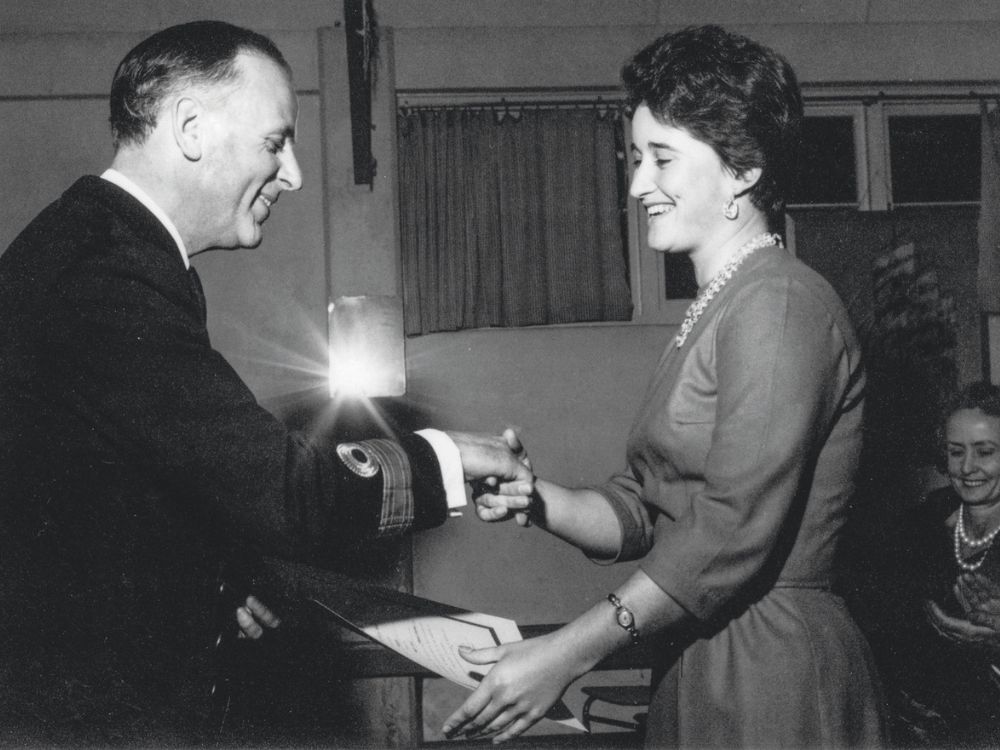
W. F. Vereker Bindon’s daughter Ruby married Auckland jeweller William Houston Worrall in 1907. There were two prominent W.H. Worralls in business in Auckland at the time. William Henry Worrall (no relation) was Commodore of the N.Z. Power Boat Association with two fine launches named Kirita.
Beverley’s Worrall grandparents lived at Hamurana, on the corner of McLean Street and New North Road, Mt Albert, where they had extensive planting and a large greenhouse, plus a mysterious volcanic tunnel known as ‘The Cave’, complete with glowworms, which went back into Mount Albert – exciting stuff for grandchildren like Beverley. Ruby’s daughter Hazel married shoe manufacturer Willis Coles in 1939. They lived in Grande Avenue, not far from Hamurana. Beverley was their eldest child. She did her primary schooling at Owairaka and secondary at Diocesan.
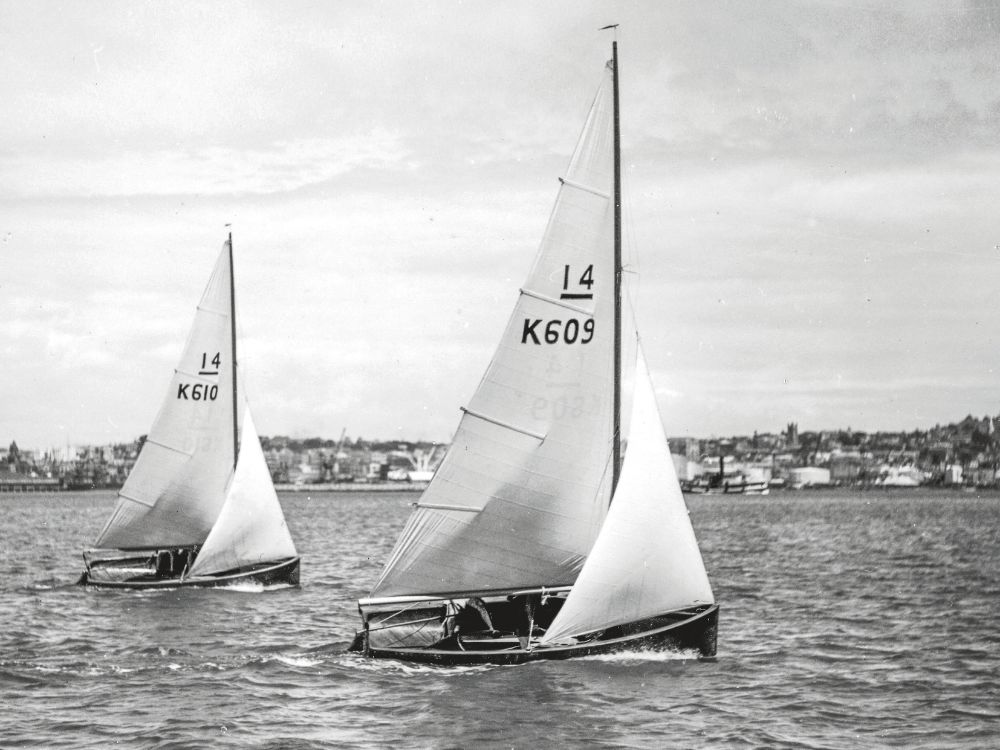
In 1948 Hazel’s younger sister Betty Worrall married Jim Smale from Takapuna. Jim and his brother Geoff had started in Frostbites at Wakatere Boating Club but were now eyeing the international classes. In 1951 Colin Wild built twin International 14s for them; Geoff’s was Atua-hau and Jim’s was Zephyranthes. In the last issue I mentioned Geoff and Ralph Roberts’ success with Atua-hau at Cowes on the Solent in 1956, which was a huge influence on Beverley.

The Coles had a beach property at Manly on the Whangaparaoa Peninsula. Jim Smale and Betty spent part of the summer of 1951 as guests at Manly. Jim took Beverley, then just 10 years old, out for a sail in Zephyranthes. They canned out but Beverley was so excited by the experience that yachting dominated her thoughts from that time onwards. In 1954 Jim helped Beverley to choose her first yacht, Aquila, a clinker National 12 registered as Pennant 57. This English development class arose with an Uffa Fox design in 1936 as a starter boat for the International 14s. Keith Atkinson of Browns Bay built several. They raced with the Pennant Class, but the local breed of 12-footers tended to be lighter and out-performed the English design.
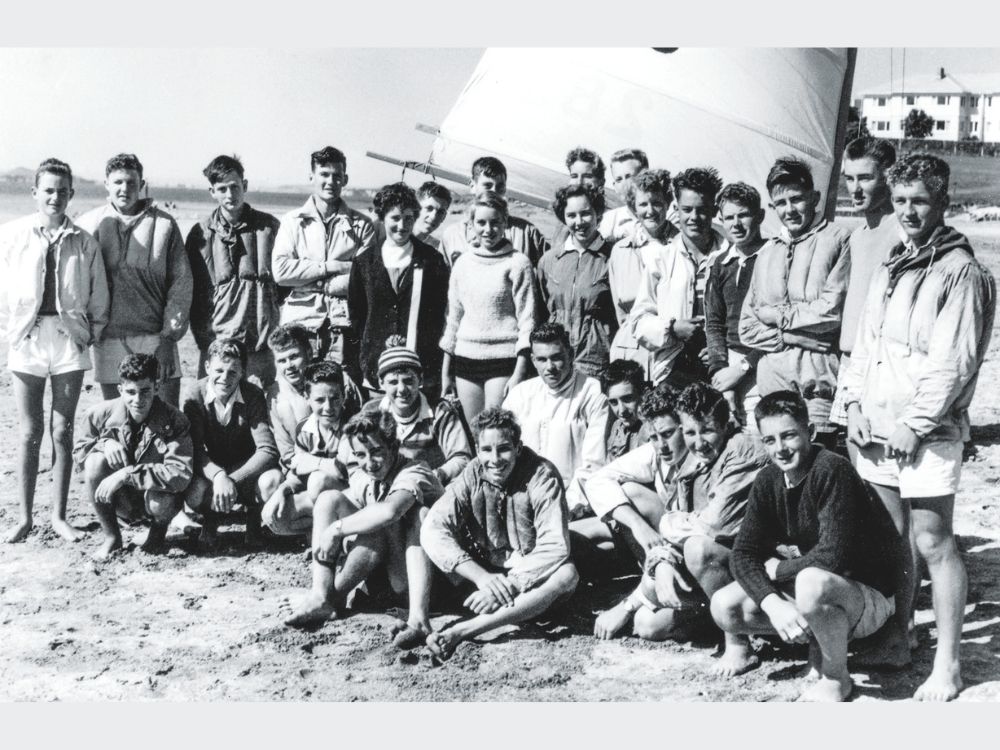
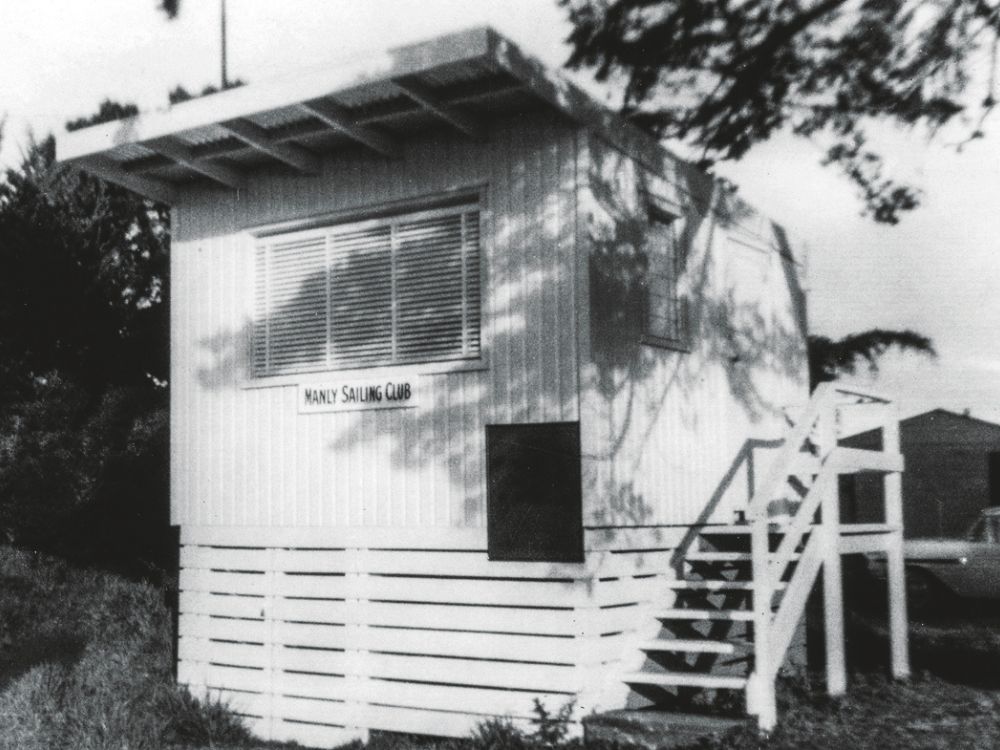
There was good competitive sailing at Manly over the summer holidays with the Manly Sailing Club which operated during the six weeks over summer, initially from Jim Grayson’s waterfront home, then in 1959, from a small clubhouse built on the beach. The Manly sailors learned to handle big stuff in the northeasters coming in direct from the Pacific. In 1957 Beverley became the Manly Sailing Club’s secretary and provided club news to John Malitte, the editor of Sea Spray magazine under the byline ‘Bev’. In November 1958 Beverley represented Diocesan in the annual Intersecondary Schools Frostbite championship at Wakatere Boating Club at Narrow Neck.
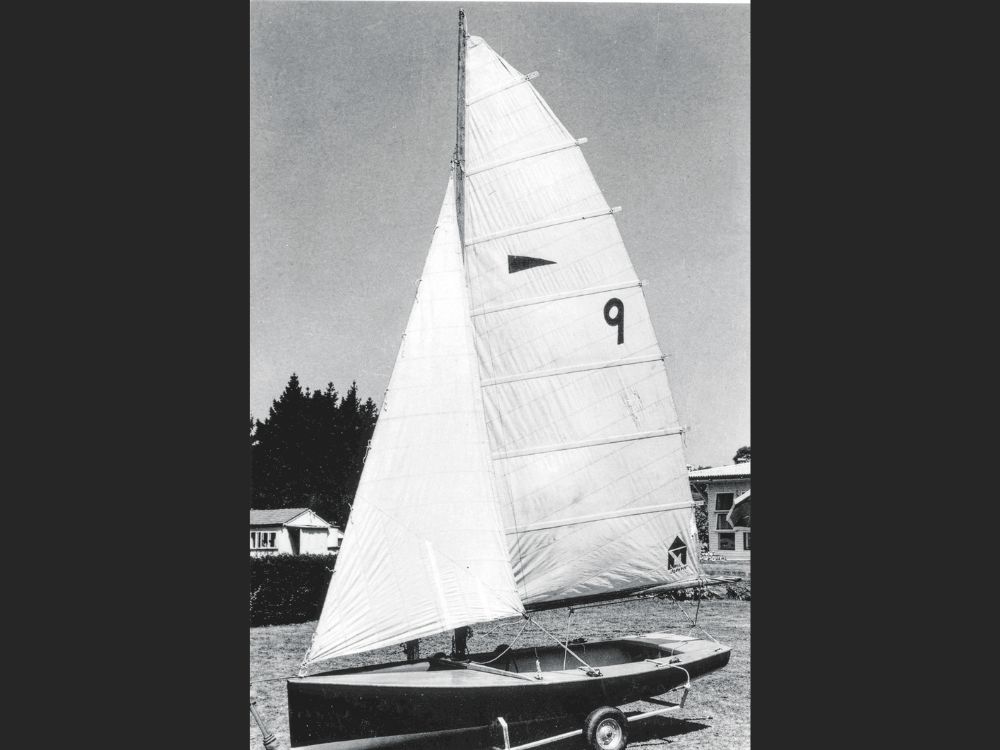
Another summer visitor to the Coles’ Manly property with his Zephyr was Des Townson who suggested that Beverley buy another Pennant 12-footer, a lighter boat he had designed, Mercury Pennant 9, a beautiful craft that showed the seeds of his later superb 12-footer Nimble and the Zephyr class itself. At the same time, she had the Moth Karere as a knockabout.
After leaving school, Beverley worked as a secretary for Arthur Yates but her skills at writing made her gravitate to Sea Spray where John Malitte took her on as assistant editor at the age of 22. Her main task was proof-reading and helping John to lay up the text for the printers. She wrote up local centre-board events, particularly the blossoming 12-footers as they were emerging from the chrysalis of the restricted Pennant class to the much more exciting unrestricted Q Class, racing at Tamaki Yacht Club. Beverley had a natural direct and engaging style of writing and became the voice of the movement in Sea Spray.
Under her byline, ‘Bev’, Beverley covered the trials for the 1964 Interdominion 12 Foot Champs held by the new Auckland Sailing Club, which had been formed in 1963 to cater for the Auckland Flying Squadron of 18-footers and the unrestricted Q Class 12-footers with their common interests in TransPacific contests, common crews, designers and builders. She became the Secretary of the new club.
John Mallitte allowed Beverley to cover the Sydney Interdominion races for Sea Spray. In the April issue of Boating New Zealand I related how John Chapple, sailing for Australia this time, won the Silasec Trophy for the third time in a row with Sopranino.
Beverley produced an in-depth but most entertaining analysis of the races in the March 1964 issue of Sea Spray. Beverley was enormously taken with the Sydney yachting scene. She came home, left her job with Sea Spray, sold Mercury and returned to Sydney with a job at Roly Tasker Sails. She got into the newspapers by crewing in the 18ft skiff San Jose.
The Sydney 18-footer skiff crews, the ‘Bluewater Bushmen’, were appalled at having a woman in their midst to inhibit their language and their freedom to piddle overboard. There was a protest, a most unusual event in Sydney, but it was defeated.

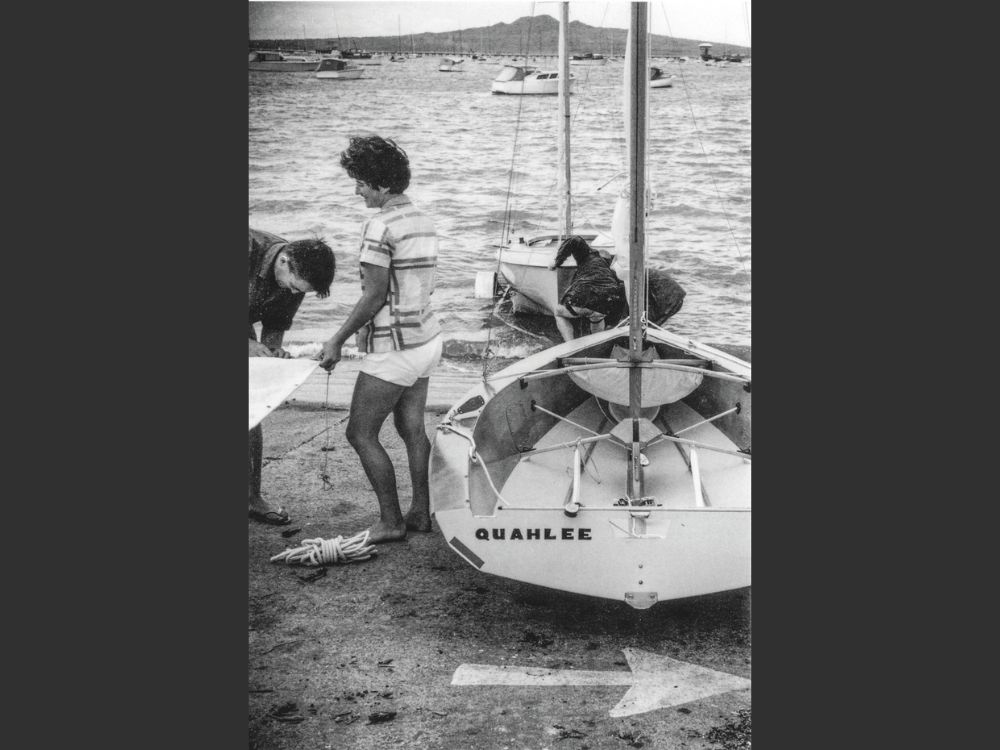
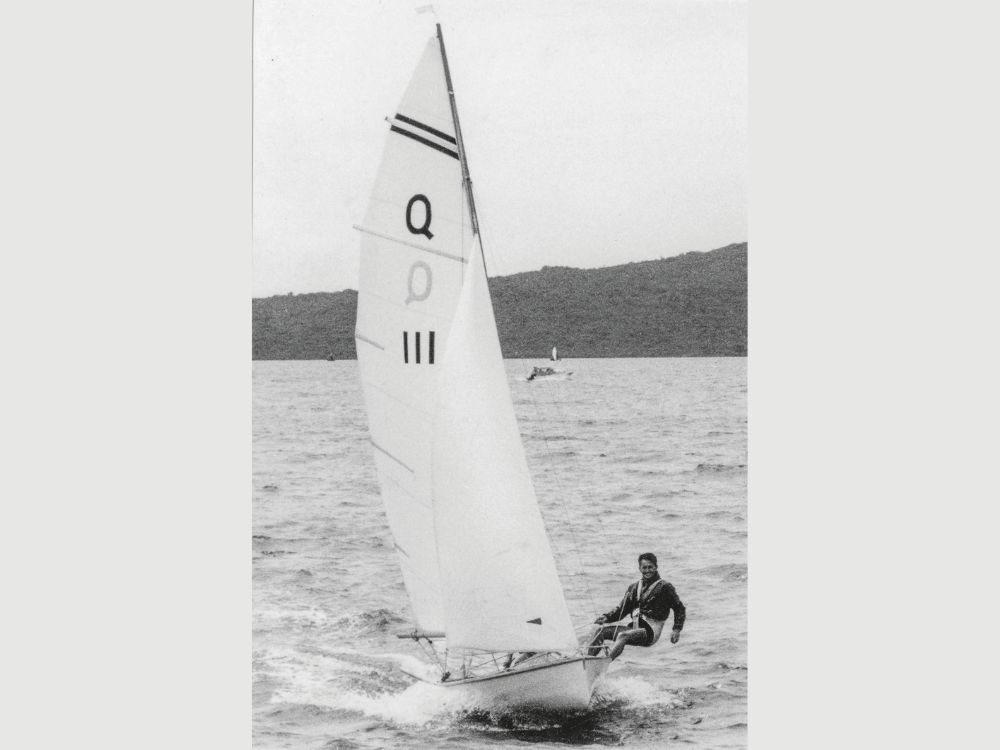
She now determined to take on the males and get involved in future contests as a skipper. She came back home at the beginning of 1965, got John Chapple to design for her a new, extreme 12-footer, Quahlee, had it built by Jim McKay on the North Shore, trained at Judo five times a week to get fit (got a black belt eventually) and threw herself into learning to sail Quahlee competitively at the top level.
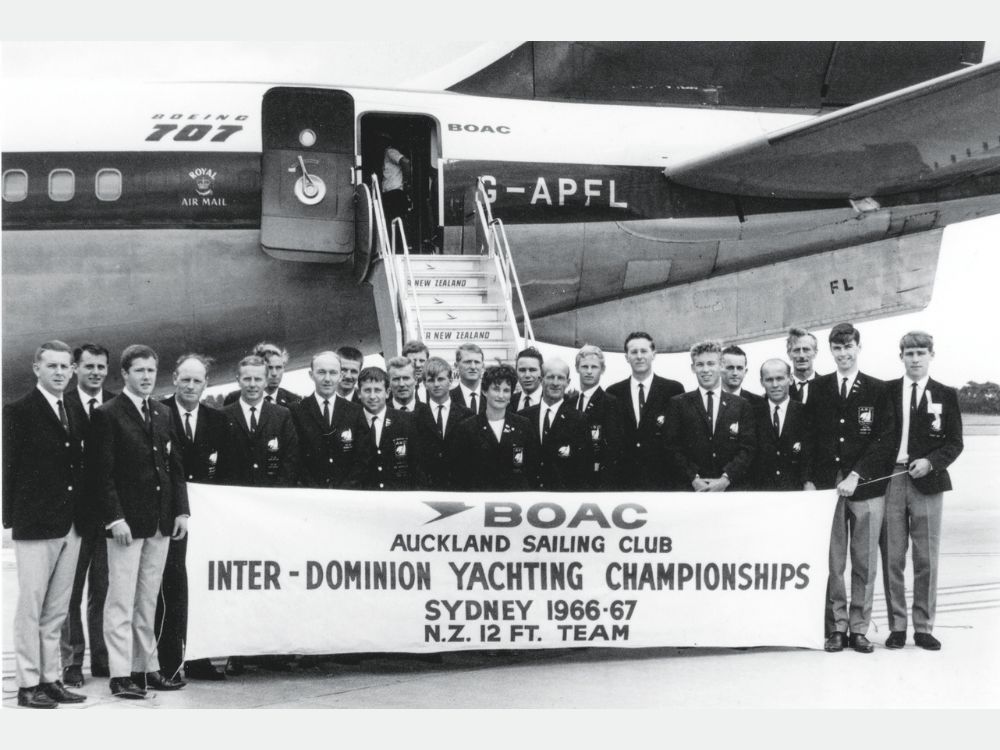
With forward hand Dave Mills, an experienced Javelin skipper, Quahlee had two very successful seasons. Beverley says, “In 1966 as the leadup to the Interdom trials we finished first in two races and third in three, as well as winning the Princess of the Waves and the Anniversary Regatta, best results in the heavier weather conditions. In one race in September 1966, we led the fleet home by 15 minutes which upset a few.” At Easter 1966 she got a fourth at the Freshwater Championships at Rotorua, a third in the 1966 Q Class Championships and finished the season with a sixth in the fleet of 22 in the November 1966 Interdominion trials. This guaranteed Beverley a berth in the team of twelve boats and crews to represent New Zealand in Sydney for the Silasec Trophy in January 1967.
As Secretary of the Auckland Sailing Club Beverley had the task of organising the air tickets and accommodation for the team and the many supporters, the customs clearances and shipping of boats, not only for the 12-footers, but also for the Flying Squadron 18-footers sailing in Sydney for the Giltinan Trophy at the same time. It was a massive task. Beverley says, “there was no sponsorship back then, so everyone had to pay their own way. The Q Class was a very supportive fleet where everyone helped everyone else. We always, somehow, found the money to go.”
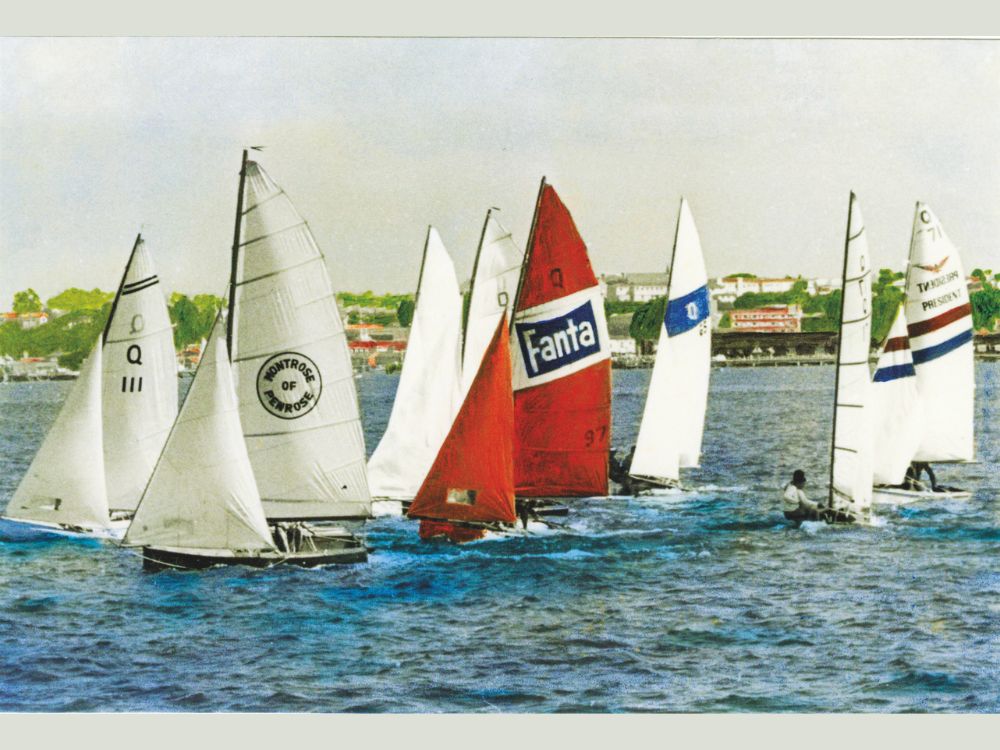
Despite her massive task of nurse-maiding 70 or so crewmembers and supporters, Beverley, Dave and Quahlee managed to make the start in all of the races although sometimes a little after the fleet had left. They did very well, even after a capsize and automatic disqualification in the third heat in a 45-knot Sydney southerly buster. They finished fifth of the 12 New Zealand boats and twelfth overall in the field of 24. Beverley went on to a hugely active sailing life. Her radical new glass and foam Chapple-designed 12-footer Quahlee Two self-destructed in its first race. She was married to fellow Q Class sailor Rodney Davidson for 24 years and cruised and raced with him in the Caribbean, California, Sweden and the canals of Europe. The kaleidoscope of their sailing adventures would have amazed even Bev’s bold great grandfather W. F. Vereker Bindon.
The Davidsons swallowed the anchor in 1973 and returned to Auckland where they had two daughters. Rodney kept on sailing in a Soling which they later converted to a day-sailer.
Beverley now lives on an immaculate rural property near Wellsford. She remains very active and is still a remarkably good writer with a knack of getting to the heart of events and reporting them in an insightful way. She is planning a book which, from a preview, I recommend should be on your shortlist to read. BNZ
Part 2 of a 2 part series. Part 1 | Part 2