Fortunate fellow
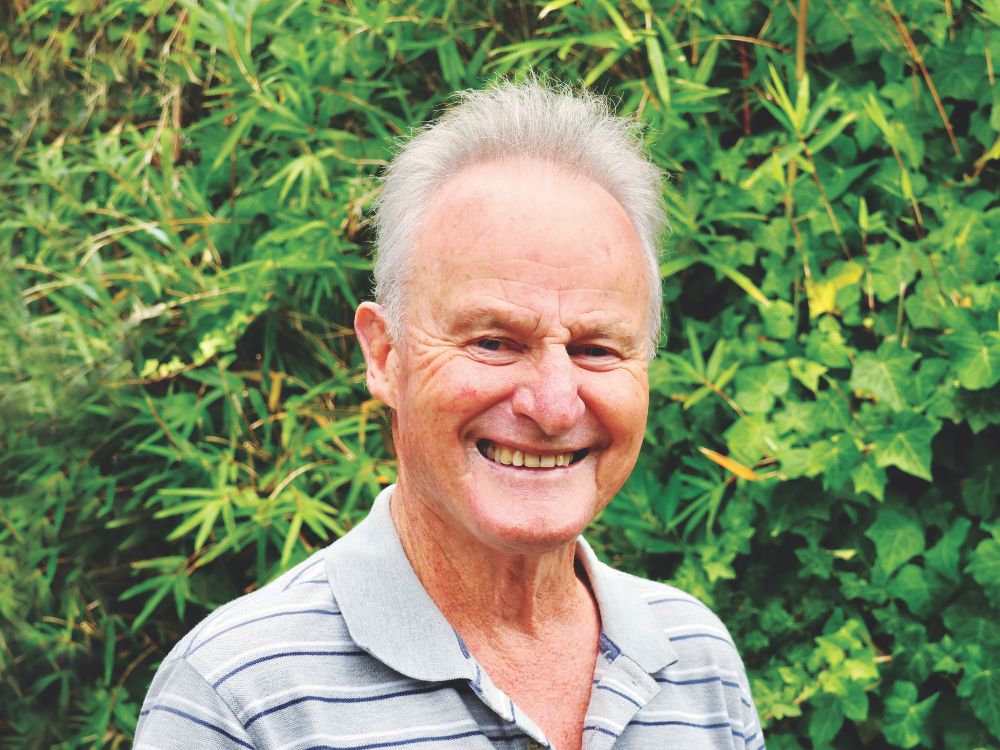
During the 1970s and 80s, Epiglass was the leading force in the marine coating industry. Russell Pauling worked at Epiglass for 44 years, from start-up to its corporate takeover, experiencing all the shenanigans in between. This is his story.
Born in New Lynn, West Auckland, in 1943, Pauling had always dreamed of becoming a boatbuilder. After leaving school at age 15, Pauling walked the streets around Westhaven seeking a boatbuilding apprenticeship, but nothing was available. He tried to get a builder’s apprenticeship, but when that was unsuccessful, he took a warehouseman’s position at Sonata Industries in 1959.
Owned by the late Peter and Logan Colmore-Williams, Sonata Laboratories Ltd’s primary business was hairdressing products, and Pauling’s role involved packaging these for distribution. Peter Colmore-Williams was a trained chemist and an avid sailor. Through him, Sonata had developed and was selling a small range of marine epoxy products: a glue, a filler, and a sheathing resin named Epiglue, Epifill, and EP 90, respectively. At this stage, Sonata’s emerging marine division consisted of the late Trevor Geldard and two warehouse staff.
In 1961, the Colmore-Williams brothers split Sonata into two parts; Logan kept the hairdressing business, while Peter led the marine division. Operating from Cartwright Road in Glen Eden, Peter named his company Consolidated Chemicals and branded its products Epiglass.

Geldard was promoted to General Manager and, as his later career showed, he was an astute judge of people and their potential.
“One day Trevor came up to me and said, ‘Why don’t you move down the back and join us?'”
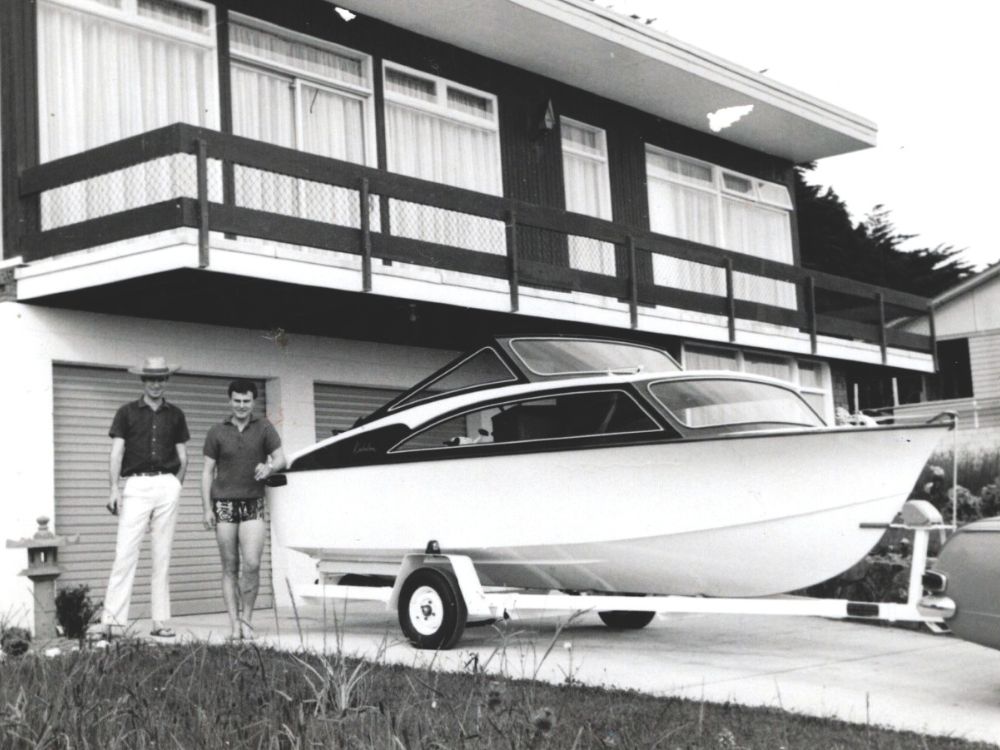
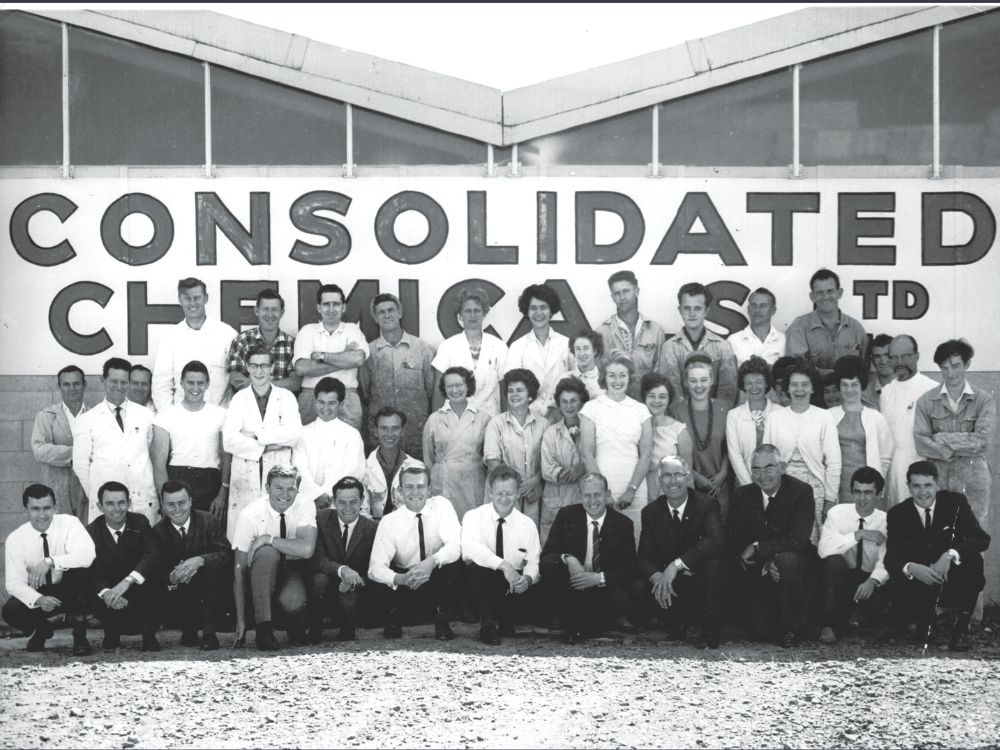
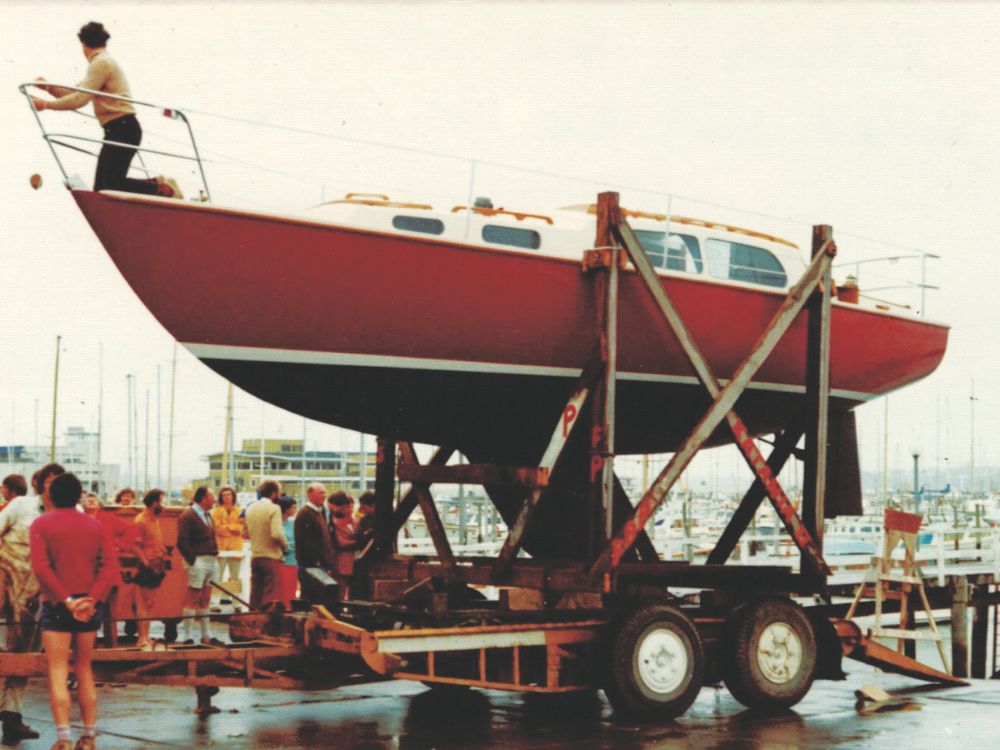
Accepting the offer, little did Pauling know that this decision would lead to a lifelong career in the marine industry. After two years of packaging marine products, in 1963 Geldard promoted Pauling to Epiglass’s Auckland sales representative.THIS PAGE: Clockwise from top: Two of the boats built by Pauling – a Pelin Aquarius and a Nova 28; Consolidated Chemicals staff photo, early 1970s.
Epiglass financed Pauling’s new car, with his contribution being £150. Hard to accept now, but back then it was standard for employees to contribute towards the purchase price. Pauling bought a Ford Cortina 1300cc and was reimbursed at 10 pence per mile. A thrifty Pauling managed to pay off his car and later purchased another Cortina, this time the Deluxe model with its whopping 1500cc engine.

Over time, Pauling’s territory expanded; in addition to Auckland, he sold and demonstrated Epiglass products in the Bay of Plenty, Waikato, and the Bay of Islands. Pauling would spend a week in each region, which meant that three out of every four weeks he was away from home.
While Pauling mainly focused on marine stores, he also visited trade outlets, paint and hardware shops, and boatbuilders. One of Epiglass’s key selling techniques at the time was conducting in-store product demonstrations. Pauling would conduct up to 40 demonstrations per year, with local retailers arranging suitable boats – perhaps one ready to be sheathed in epoxy and glass. Many sales resulted from these demonstrations, as boaties recognised the advantages of sheathing boats in epoxy and glass.
By the late 1960s, Epiglass had developed a range of two-pack paints to complement their earlier lineup of Marinecoat single-pack alkyd paints. Their colours had names many seasoned readers will fondly recall: Spinnaker Red, Cove Green, Squall Blue, Rescue Orange, Silhouette Black, and Surf White. To achieve in-between shades, secret formulas for mixing the stock colours were developed. For example, this writer has the late Des Townson’s little black book of Epiglass formulas for achieving the correct colours for his yachts.
| “I remember one sale was for 30,000 litres of paint for the ferry Aramoana. |
Peter Colmore-Williams was the technical wizard and chemist.
“Peter, as an industrial chemist, was so creative that he kept the company at the forefront of technology for so long. He was an incredible chemist.”
Given their long friendship, Colmore-Williams often supplied the late boatbuilder John Lidgard with new products to test and report back on.
Although Epiglass experienced significant growth thanks to Geldard, it remained a family-oriented business and a great place to work.
“Trevor was a great leader. I had tremendous respect for him.”
However, further expansion was restricted by a lack of capital, and in 1977, Consolidated Chemicals accepted an offer from A.G. Healing, which had interests in paint, bicycles, and electroplating. After renaming itself Healing Industries, Geldard was promoted to Assistant Manager under CEO Bert Christensen. Three years later, Geldard became CEO of Healing Industries, which, besides the Epiglass products and bicycles, added house paints, industrial coatings, and Michelin tyres to its range.
However, in the 1980s, a new wave of business leaders, highly focussed on expansion, acquisitions, and profits, began to influence New Zealand businesses.
With the marine sector performing well, Epiglass secured a distributorship for LPL Products’ high-performance membrane coatings used in factories, high-rise buildings, and industrial tanks. Pauling was promoted once again to lead sales for these products, which involved extensive cold calling.
The next step for the Epiglass brand was acquiring Trans Ocean Paints (TOP), a company specialising in products for the commercial shipping industry. TOP was based in the Netherlands and operated worldwide by selling licences to produce its products in various countries.
Once again, Pauling was promoted to sell the TOP products. Ships use a lot more paint than pleasure boats, so rather than four-litre tins of paint, Pauling was selling numerous dozens of 20-litre drums. Pauling’s customers included New Zealand Railways, New Zealand Shipping, and Sandfords Fisheries.
“I remember one sale was for 30,000 litres of paint for the ferry Aramoana. She was sailed to Singapore to be sandblasted and painted up there.”
Pauling was regularly flown to overseas conferences in Greece, Peru, Singapore, Indonesia, and France to attend TOP conferences.
TOP eventually offered Pauling the role of World Marketing Manager, and while tempted, he chose to remain in New Zealand.
“I didn’t want to relocate away from my family,” he said.
Epiglass’s main rival over the years was International Paints, based in Newcastle, England. A global marine coatings company with a strong focus on the bottom line, International Paints acquired Epiglass in 1989 (see sidebar).
International Paints introduced a sharper business focus to what was left of Epiglass. The friendly, family atmosphere, club-level sponsorships, and focus on individual boaties’ painting and coating needs disappeared. Now, everything revolved around the bottom line; specialised lines and those that sold poorly were axed, and customer service became a cost rather than an investment in customer loyalty. Nonetheless, according to Pauling, who had been promoted to Sales and Products Manager, despite lower turnover, bottom-line profitability improved.
Pauling stayed on for several years, wisely keeping a low profile while those around him came and went.
“There were so many changes, and many people got burned out and had to leave.”
A savvy operator, Pauling had invested in a solid pension plan and, at his own pace, retired at age 60 in 2003.
“Being at the forefront of a lot of the changes, retirement seemed a good option.” A wise call.
When he retired, Pauling had spent 44 years with essentially the same company, despite it having eight different owners during that time. He started with Epiglass when their products were mixed in a concrete mixer and when sheathing boats in fibreglass was considered rocket science, progressing to the widespread use of high-tech GRP construction, carbon fibre and New Zealand’s successful defence of the America’s Cup at home.
Since then, Pauling has organised an annual Christmas party for ex-Epiglass employees. Even after all these years, this event still attracts 25 to 30 people each year and speaks volumes about the atmosphere Geldard created at Epiglass.
|
EPIGLASS OWNERSHIP
In 1982, Peter Colmore-Williams sold his shares in Healing Industries to the EMCO Group, a collection of companies originating from the New Zealand Motor Corporation. EMCO recognised that Healing Industries had capital reserves exceeding its share value and purchased enough additional shares on the open market to gain control of the company. 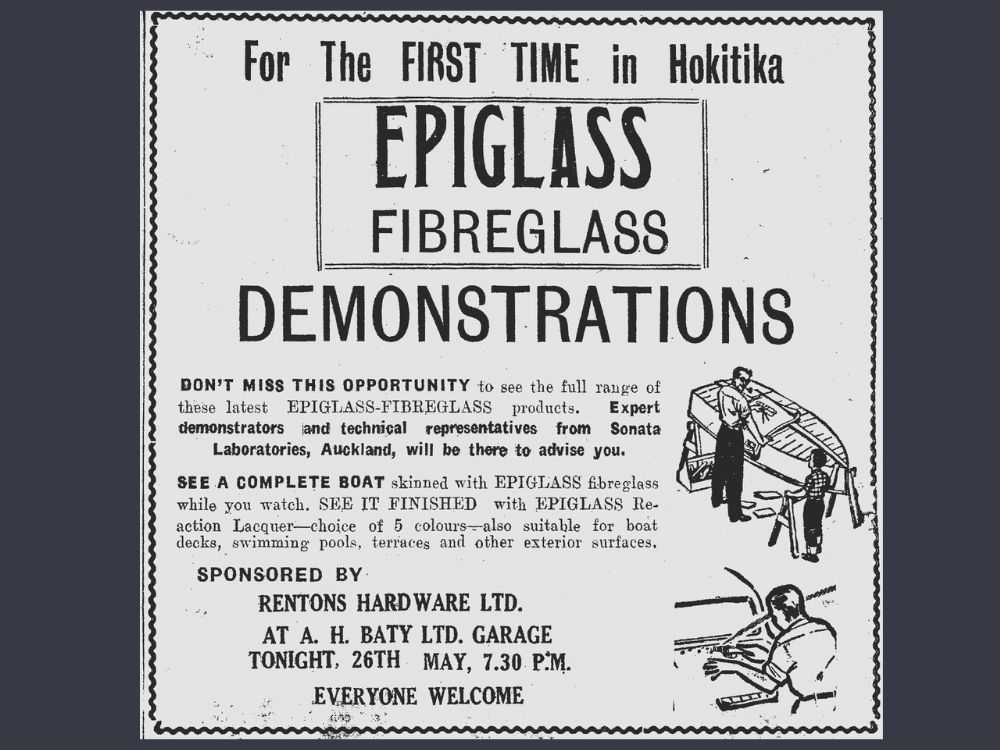 Then, the late Trevor Geldard, who was the General Manager, recognised what was happening and tried to organise a management buy-out of the Epiglass division, but he couldn’t compete with EMCO. Later, Ron Brierley made an unsuccessful bid for EMCO, but Steel and Tube outbid him and acquired Healing Industries. Leading up to the acquisition, Steel and Tube stressed the importance of people, but this was just PR spin, their real goal was higher profits. Dissatisfied with the new management, Geldard resigned three months before the 1987 share market crash. Two years later, Steel and Tube sold the Epiglass division of Healing Industries to Courtaulds, the owner of International Paints and a competitor to Epiglass. While International Paints continued to market some Epiglass products, such as Epiglue, Epifill, and Everdure, it discontinued all others, effectively erasing the Epiglass brand. In 1998, AkzoNobel, a well-established Scandinavian company that produces chemicals, paints, resins, and man-made fibres, acquired Courtaulds, along with International Paints. Geldard, widely regarded as the man who made the Epiglass brand a marine icon, understandably felt betrayed by these events. “It seemed like an exercise in the futility of human endeavour,” he told this writer in 2000 with sadness in his eyes. “We started Epiglass with passion, we had great people, with great skills and fantastic products. Then along comes this corporate high flyer who bought the company, flicked it off to a competitor who killed it.” A sad end for a marine icon. |
Since retiring, Pauling has made the most of his time. Besides enjoying more moments with his two children and five grandchildren, he took up golf, table tennis, and model yacht building, of which he has completed around 40. And, of course, he spends more time sailing.
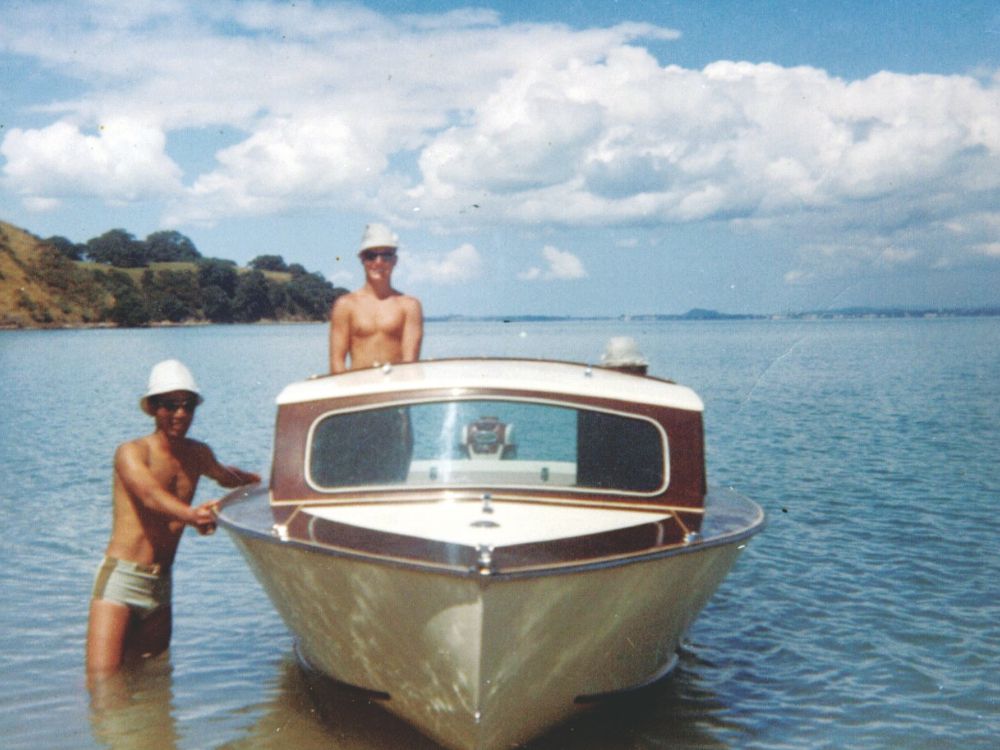
Pauling, a keen amateur boatbuilder, has constructed a Lidgard Falcon 15 runabout, a Pelin Aquarius, and in 1973, an Alan Wright Nova 28, which they named Katania II. The Paulings owned Katania II for 18 years before selling her to purchase the Townson 34 Soliloquy, which they have now owned for 33 years and use regularly.
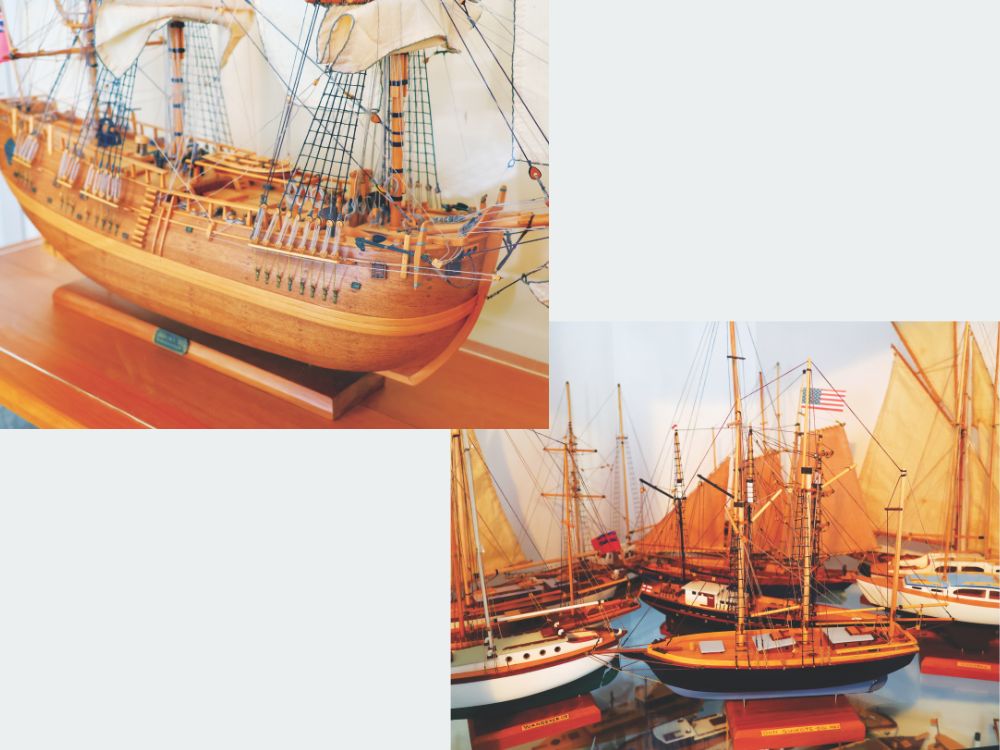
Russell Pauling defies his 82 years. His memory is sharp and well-organised, and he moved around like a man half his age as he enthusiastically showed this writer over his collection of model boats.
Proof once again that age is mostly a state of mind. We should all be so fortunate. BNZ