Guillou takes the long way around
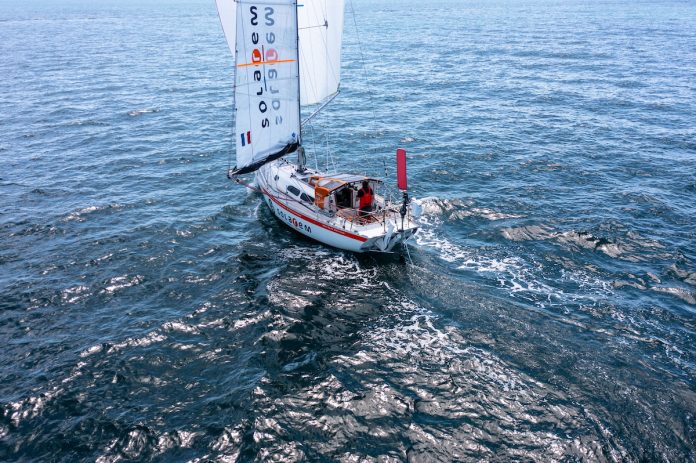
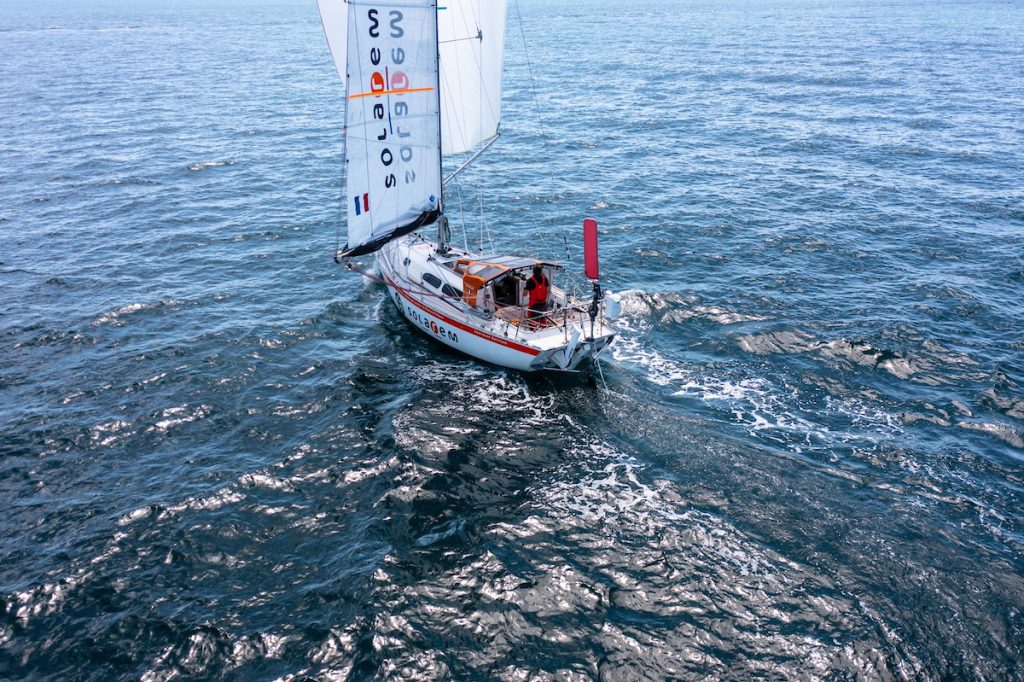
Damien Guillou has spent much of the past week sailing away from the Cape of Good Hope. The Frenchman still leads the Golden Globe Race, but a succession of South Atlantic depressions has made a direct course east impossible.
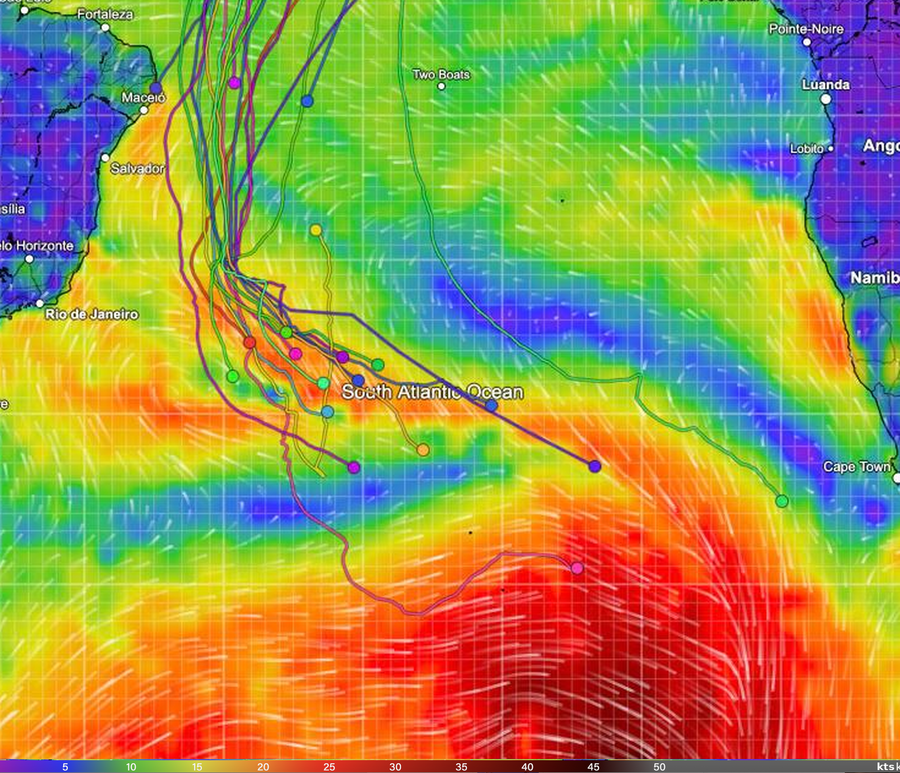
A particularly deep low dominated the weather forecasts over the weekend. Early predictions showed gusts exceeding 90 knots near its centre, with seas that no skipper would willingly encounter. Guillou altered course aboard Solarem, at one stage heading some 260 nautical miles northeast to put more distance between himself and the worst of the weather.
The detour cost him valuable miles, although his lead over Ertan Beskardes remained substantial.
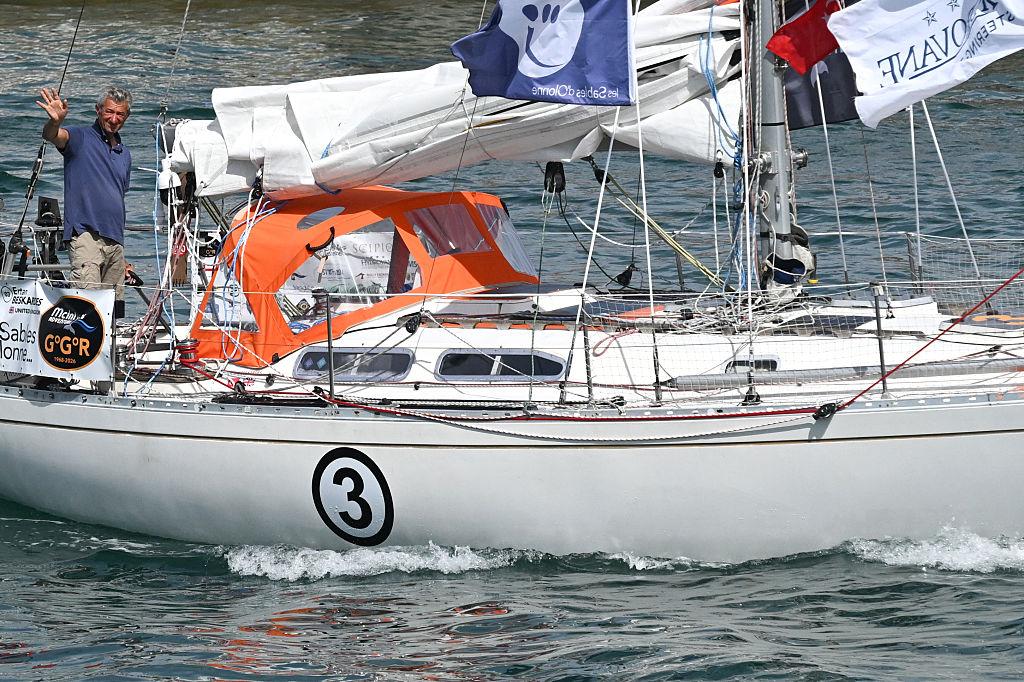
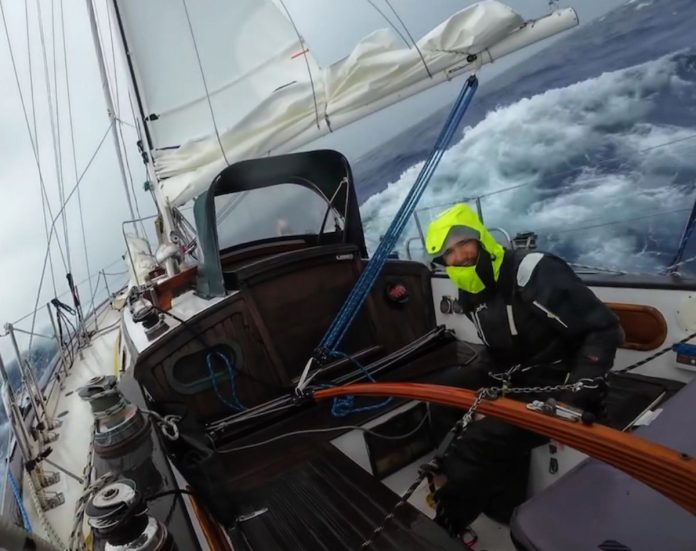
By Monday, 26 October, the forecast had improved. The depression had tightened around its centre, leaving a corridor of less severe conditions along Guillou’s route. Race chairman Don McIntyre estimated that Solarem was running under storm jib alone in around 40 knots, with gusts to 60 and seas of four to five metres.

Further south, the forecast still showed waves reaching nine metres.
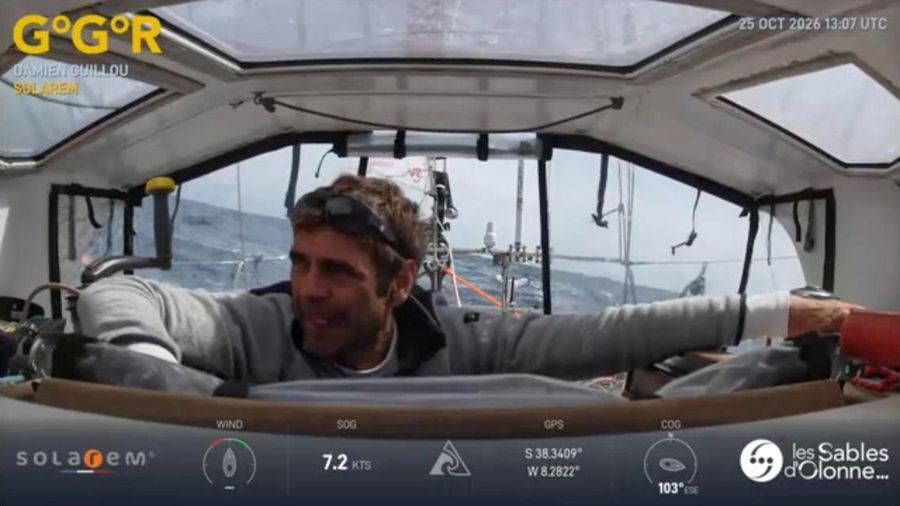
Guillou subsequently described the passage in one of his broadcasts. Without wind instruments, he could only estimate the strength of the blow, putting it somewhere between 40 and 50 knots.
The wind itself had caused few problems. The sea was another matter.
As the breeze eased and shifted, Solarem began struggling with the steep waves. Water repeatedly filled the cockpit, and Guillou discovered a small leak he had yet to trace. The saloon remained reasonably dry, although dampness had spread throughout the yacht.

Then the wind disappeared, leaving the boat rolling in a heavy swell with little pressure to keep the sails drawing.
Guillou had barely recovered before another depression appeared on the forecast. This second system was expected to bring sustained winds around 40 knots, gusts approaching 60 and seas of five to seven metres.
By the 28 October report, his advantage over Beskardes had grown to 577 nautical miles. The leader had preserved his yacht and much of his advantage, but the weather had given him little opportunity to settle into a sustained easterly run.
Beskardes struggles for miles while Lodolo takes the weather
For Ertan Beskardes, second place has brought a different set of frustrations.
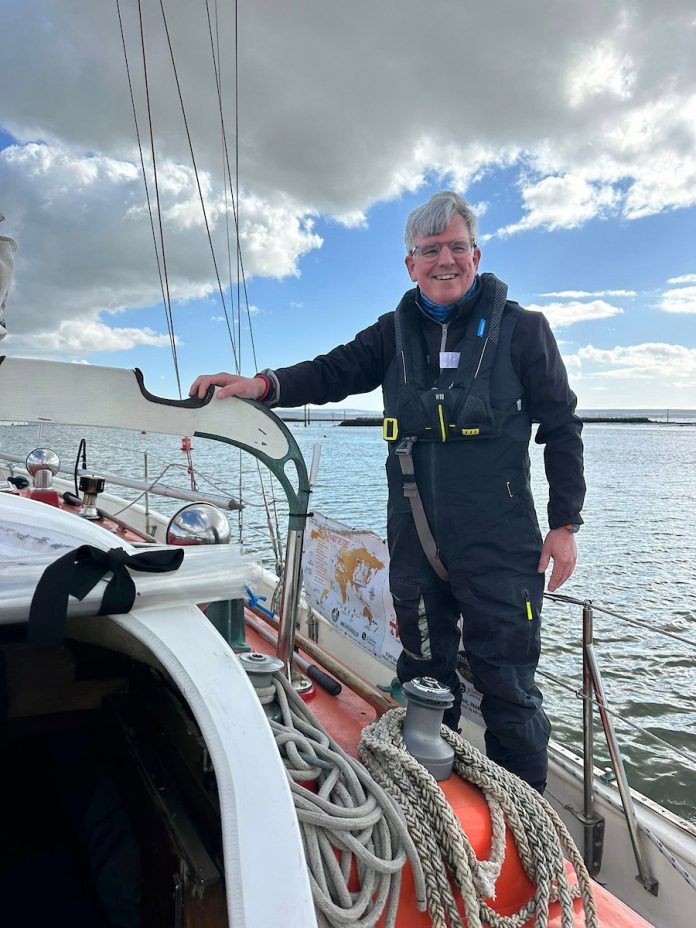
Aboard Miss Beagle, the British skipper has spent days trying to establish a reliable course southeast. He deliberately stayed north of the worst weather, waiting for the depressions to pass before committing to higher latitudes.
The decision kept him clear of the strongest winds, but progress has been painfully inconsistent.
During Tuesday’s broadcast, Beskardes described setting his spinnaker pole three times in a single morning. He would settle the yacht on a broad reach, only for the wind to swing and force another sail adjustment. Within minutes, he might be reaching with the genoa before returning to a wing and wing arrangement.
He covered 112 nautical miles that day, although the distance concealed a considerable amount of work.
Beskardes wants to reach 44 or 45 degrees south, where he hopes to find more dependable westerlies. He has been monitoring the Cape Town Radio forecasts carefully, looking for a route that keeps him clear of the strongest conditions.
There has also been maintenance to attend to. A topping lift that appeared sound externally proved badly deteriorated inside. Beskardes replaced it with spare rope, working in his harness while the yacht continued south.
Third placed Andrea Lodolo has already experienced the weather Beskardes is trying to avoid.
The Italian reported gusts of around 60 knots and a heavy sea aboard BiBi. He remained on watch throughout the night, adjusting sail as conditions changed.
When he contacted race management afterwards, he reported no damage. BiBi was already reaching in 25 to 30 knots of southwesterly wind, with a four metre swell.
Lodolo sounded pleased with how the yacht had performed. His 24 hour run of 98 nautical miles was modest, but he had come through the blow with boat and rig intact.
The tracker placed him 736 nautical miles behind Guillou in the 28 October report. He remains third, although the conditions ahead offer little certainty about how quickly he can close the gap.
A second retirement and trouble throughout the fleet
Pat Lawless’s second attempt at the Golden Globe Race has ended in disappointment.
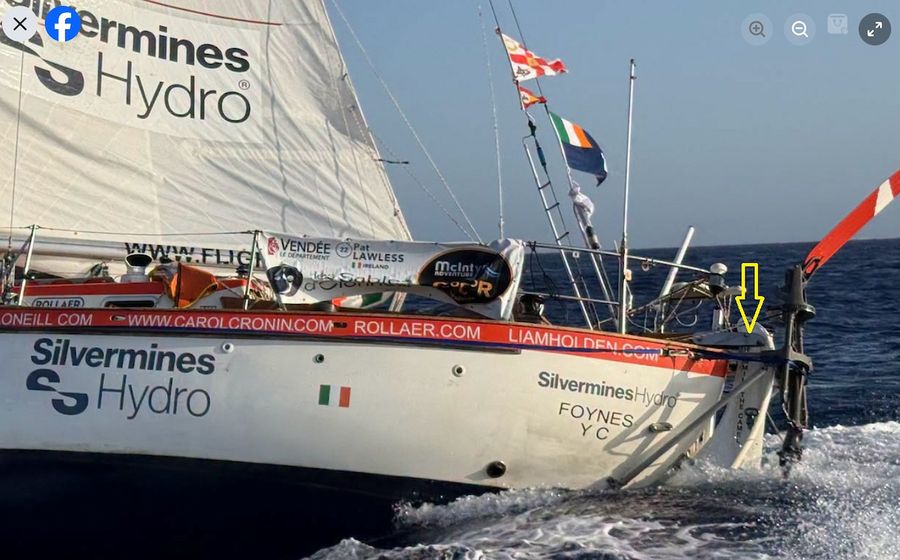
The Irish skipper retired aboard Silvermines Hydro following failures involving his Solent stay and steering gear. Two riveted fastenings in the fitting connecting the tiller to the rudder head had failed, leaving him without a repair he considered suitable for the Southern Ocean.
Lawless turned north rather than risk continuing with compromised equipment.
It is a particularly bitter result after his 2022 campaign ended following a windvane steering failure. This time, he had been among the leading competitors before the problems developed.
Louis Kerdelhué has also retired. His yacht, IE Charge, reached Recife in Brazil after a difficult passage involving light winds, contaminated drinking water and genoa furling problems. He initially sought refuge while considering repairs, but subsequently entered the marina and confirmed his retirement.
The remaining skippers have their own lists of jobs.
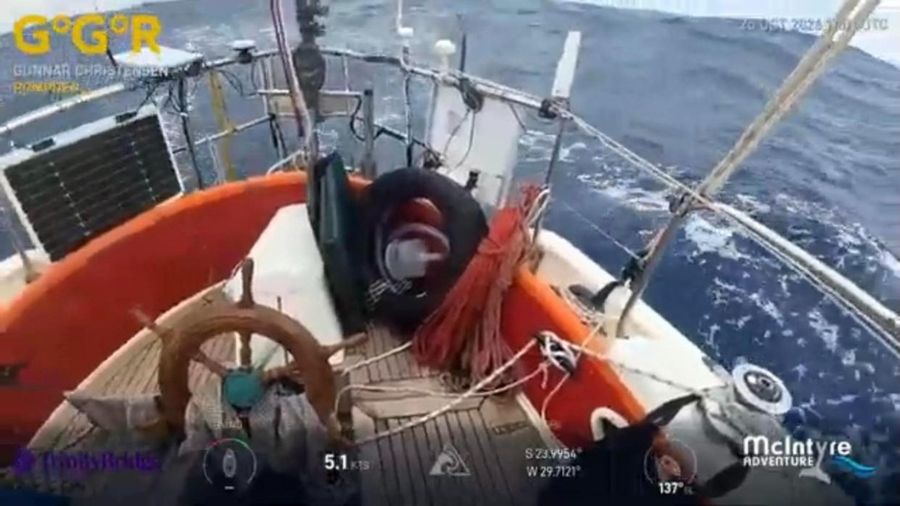
Gunnar Christensen spent more than an hour sorting tangled halyards aboard Pompoen after a securing line chafed through. The lines had worked loose and become entangled around the deck and rigging. He tackled the mess in darkness, with 20 to 25 knots of wind and waves coming aboard.
His automatic bilge pump float switch has also failed. He now operates the pump on a timer, backed up by a high water alarm.
Aboard Showgirl, Mara Løvenskiold Kveseth has been dealing with a troublesome headsail furler. A retaining screw worked loose, allowing part of the telescopic foil to move and making the sail difficult to furl.
Isa Rosli, meanwhile, has spent hours removing goose barnacles from the hull of Olleanna. The growth has been costing him speed, a frustrating handicap when the fleet is so closely matched.
Daniel Pinsky has had more immediate concerns aboard Exodus. Heavy weather caught him before he could move far enough north to avoid it. He reported winds around 35 knots, with stronger gusts, and was advised to run comfortably with the breeze.
With the wind expected to swing from northwest towards south, the sea threatened to become increasingly confused. His 24 hour progress fell to 102 nautical miles.
These problems are accumulating at a difficult stage of the race. The yachts have been at sea for nearly two months, yet the longest and most demanding part of the circumnavigation still lies ahead.
Fourth place remains anyone’s race
The standings behind the first three yachts have become particularly close.
At the 28 October update, Kveseth held fourth aboard Showgirl, with Etienne Messikommer, Pinsky, Guido Cantini and Henry Wootton occupying the next four positions.
Just 98 nautical miles separated the five yachts.
That margin is small enough for a favourable wind shift, a few hours becalmed or an unexpected repair to change the order.
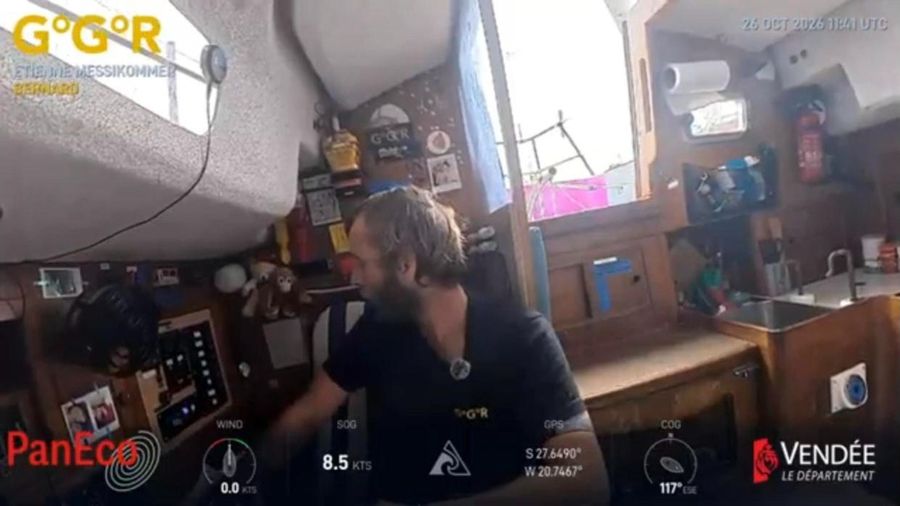
Messikommer has been sailing strongly aboard Bernard. Earlier in the week, he recorded a 161 nautical mile day, the best in the fleet over that period. He was subsequently seen making more than eight knots as he worked southeast.
Wootton has also found good pace aboard Privateer. His 172 nautical mile run was the best reported on 28 October, giving him an opportunity to close on the boats ahead.
Kveseth, however, has made it clear that she is not particularly concerned with racing the other skippers. She has kept north of the worst weather and remains focused on preserving Showgirl for the passage ahead.
Christensen has taken a similarly cautious approach aboard Pompoen. His conservative sail plan has left him towards the back of the fleet, but he believes looking after the boat gives him the best chance of reaching the finish.
There is plenty of racing still to come. For those in the middle of the fleet, the next few weather systems could prove as important as anything they have achieved since leaving France.
Good Hope remains some distance away
The Cape of Good Hope is the next major landmark, although Guillou has been unable to make the approach he might have wanted.
During Monday’s broadcast, he estimated that Solarem was still 1,200 to 1,300 nautical miles from the Cape. He thought the passage might take another ten days, depending on the weather.
The second depression now threatens to slow him again. Behind it, forecasts show a developing South Atlantic high, with headwinds and areas of very light air.
For the yachts further north, that could mean another frustrating period searching for breeze. Those already further south may have a better chance of remaining in stronger winds, although the forecasts are changing as each system develops.
Guillou has shown that he is prepared to sacrifice distance rather than expose Solarem to unnecessary punishment. His lead gives him some freedom to make those decisions.
Beskardes has been equally deliberate, choosing to wait north of the strongest weather rather than follow the leader into the higher latitudes. Lodolo has taken a harder blow and emerged without reported damage.
Behind them, the close contest for fourth place continues, while Lawless and Kerdelhué have become the latest skippers to leave the race.
The next few days should reveal whether Guillou can finally establish a more direct course towards Good Hope, or whether the South Atlantic has further delays in store.
He has already sailed thousands of miles to reach this point. The Cape is still ahead, and beyond it lie the Indian Ocean and the long passage through the Southern Ocean.