The Arctic circle looms as something more than a line on a map for the IMOCA fleet in the Vendée Arctique. It represents a crossing into waters that competitive offshore sailing rarely visits, where daylight never truly dies and the sea merges into a monotone grey that tests both boat and mind.
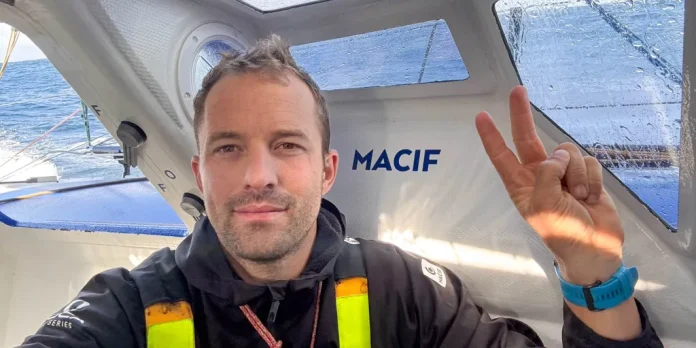
Sam Goodchild aboard MACIF Santé Prévoyance will likely punch through that boundary around 9:30–10:00 NZST on Thursday morning, becoming the first competitor to cross 66° North in the race’s history. Élodie Bonafous in Association Petits Princes – Quéguiner should follow within hours. The moment carries weight beyond the symbolic—it marks a turning point in strategy, a frontier after which the long descent back to Les Sables d’Olonne begins in earnest.
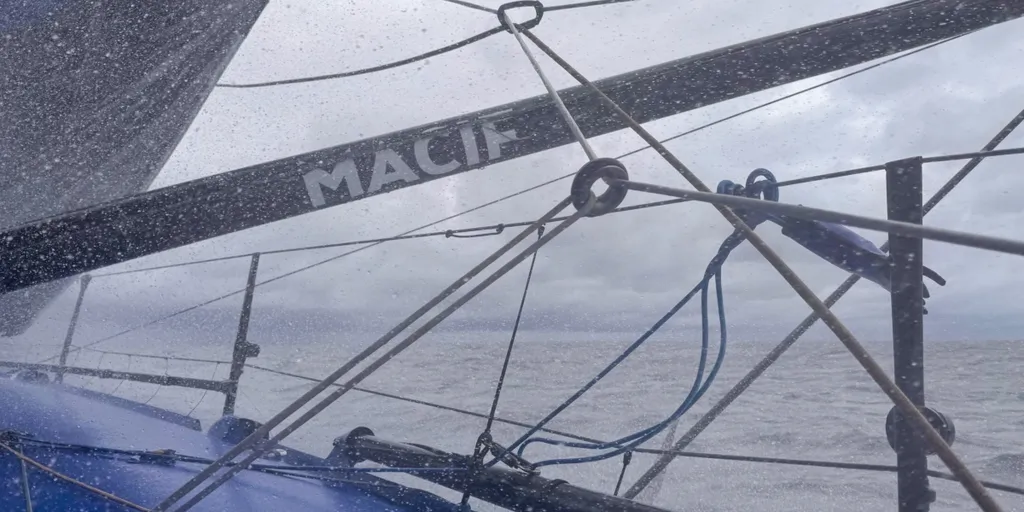
The passage north has transformed the race day by day. The Hebrides gave way to the Faroes, and now the Arctic circle beckons. The light flattens. The sky descends. Contrast drains away. “It’s grey, grey, grey,” Goodchild reported in the early hours. “Either fog or cloud everywhere. It genuinely feels like the Southern Ocean sometimes.” Yet the Arctic offers something the Southern Ocean never does: the sun simply doesn’t set. At 3:30 in the morning, Goodchild watched it still hanging above the horizon, filtered through cloud. At midnight or one o’clock, no headlamp needed.

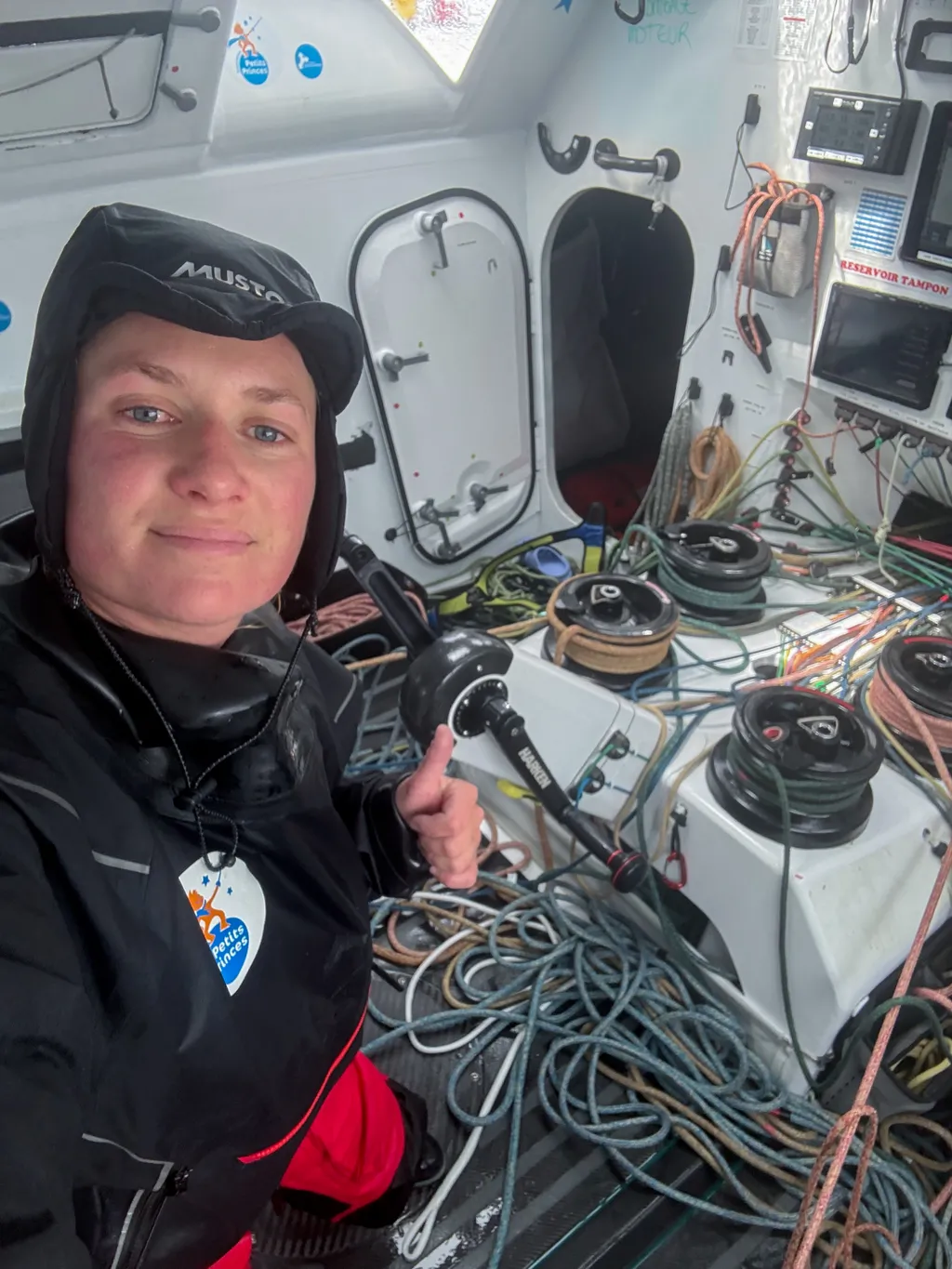
The cold creeps in gradually, but moisture proves the real adversary. Goodchild described condensation coating every surface inside the boat, a relentless damp that makes rest difficult and routine tasks exhausting. Bonafous pulled out her heaviest layers days ago. “Everything is drenched or half-drenched,” she said. “The humidity makes everything harder.” For her, the landscape carries an edge of unease, something almost menacing in its barrenness.
For skippers schooled in Southern Ocean racing, the comparison feels natural. The monotony, the cold, the sense of stepping beyond the mapped world—all resonate. But this Arctic passage, ancient and austere, will be brief. Behind that symbolic crossing, the real race is already resolving. The strategic decisions made in these grey waters will ripple through the downwind run home. The emotional high of crossing 66° North will fade quickly against the arithmetic of wind, current and boat handling that decides who takes line honours back to France. That is how offshore racing works: wonder and urgency occupy the same moment, and the clock never stops.