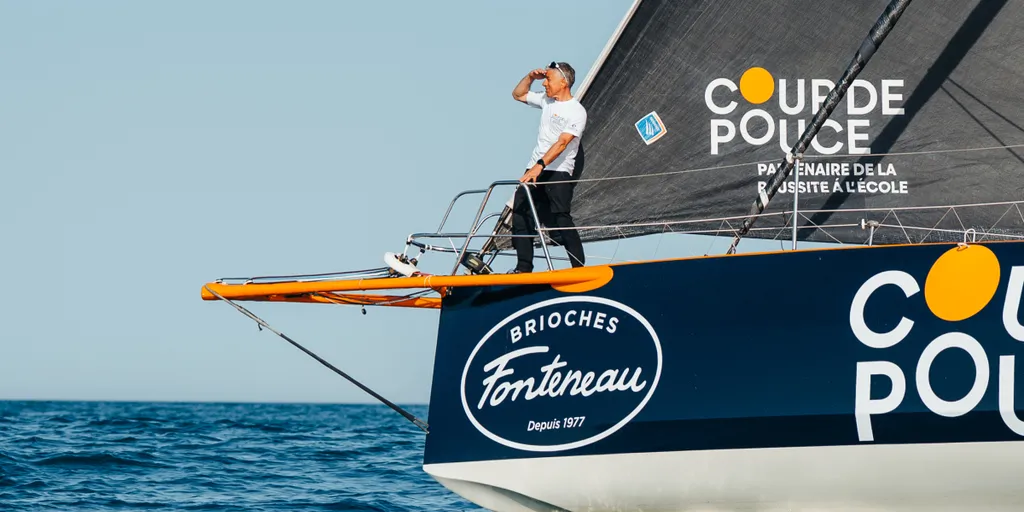
With barely 150 nautical miles separating him from the finish line, Manu Cousin is discovering what countless offshore sailors before him have learned: the final stretch of a race can feel longer than everything that came before.
The skipper of Coup de Pouce has been at sea for thirteen days on the Vendée Arctique, and he remains the sole competitor still battling toward Les Sables d’Olonne. On Saturday morning, he was positioned off the Breton coast, just hours away by calculation, yet something more frustrating than distance now stood between him and the finish. A vast zone of light winds sprawled across the Bay of Biscay, threatening to delay his arrival from Saturday evening until sometime Sunday morning.
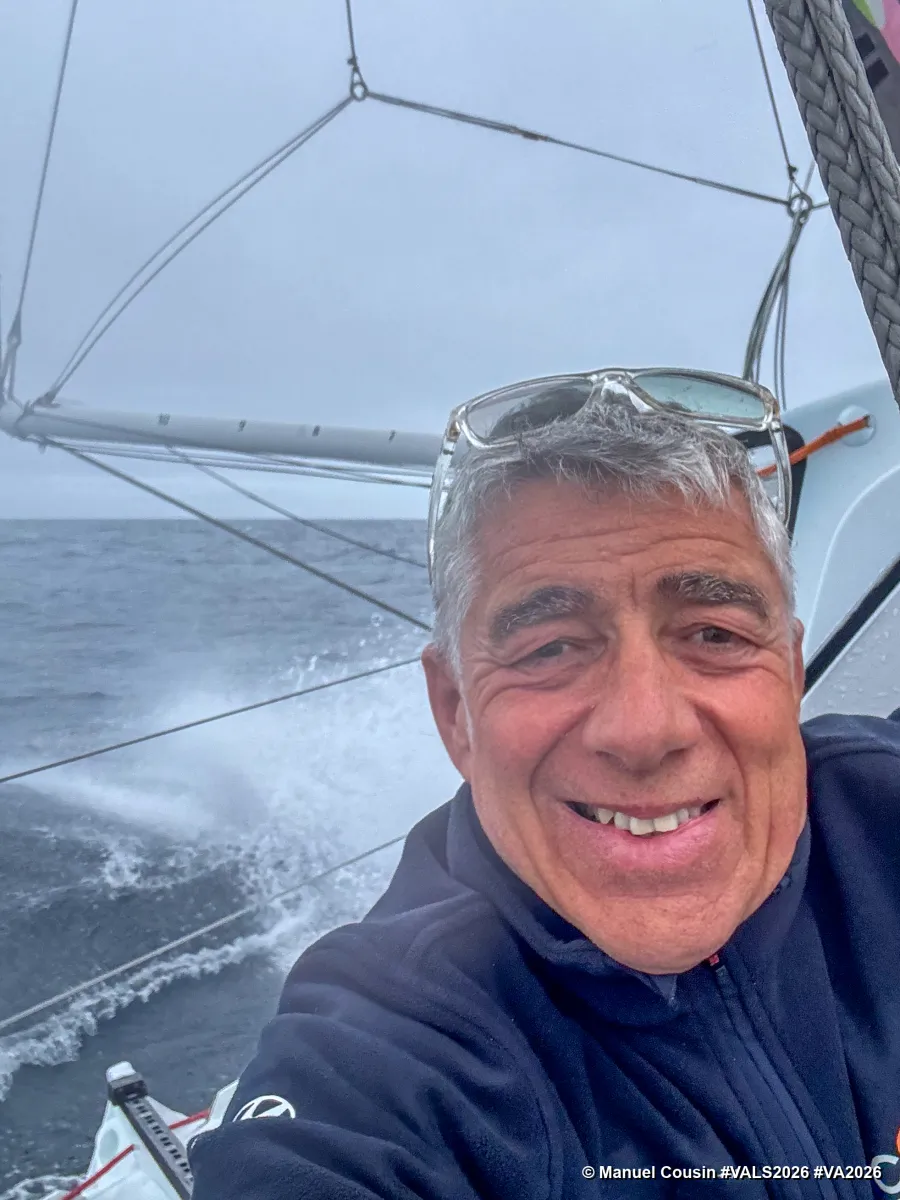
The meteorological taunting has been relentless. After frontal systems, squalls, long close-hauled sections and repeated windless patches across nearly 3,000 nautical miles of racing, Cousin now faced yet another test of patience. “The last miles are often the longest,” he acknowledged. “I’m really in the funnel of the finish now. Until yesterday, a Saturday evening arrival still seemed possible. Unfortunately the wind is dropping, and I expect to arrive Sunday morning instead. That’s what makes everything feel stretched out: this very light wind that’s likely to stay with me all the way to the line.”
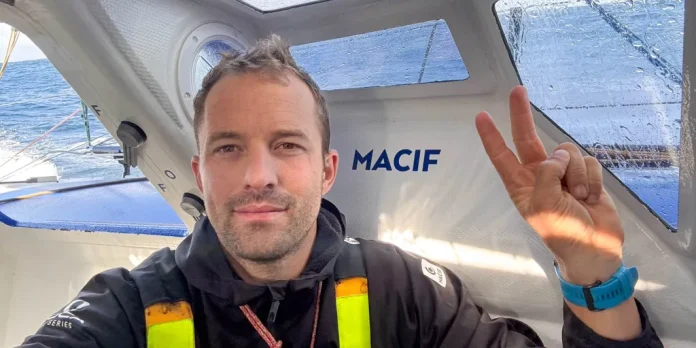
After two weeks confined to a small boat, the human cost shows everywhere. Cousin’s movements have slowed. Reflexes have dulled. His eyes carry the weight of broken sleep—fragments snatched between watches, a few minutes here, half an hour seized there. A precarious rhythm that became routine weeks ago now exacts its toll.

The grey, humid blanket covering the water offers little relief. “I’m still in fog and can’t see much outside,” he said. “So I’m watching the boat settings, the AIS, the radar. I’m really hoping to find some sun again, because I’m starting to seriously miss it.” Fatigue has crept into every cell. Mistakes grow expensive at this stage. Concentration, harder to maintain.
Yet the most dangerous aspect of the final miles has nothing to do with navigation difficulty. The real peril arrives when exhaustion peaks, when a skipper’s mental edge has worn thin but the mind insists the finish is near enough to reach. That collision between fatigue and proximity to land has caught sailors before. Cousin knew what lay ahead. One more night at least. One more stretch of waiting while the wind made up its mind.