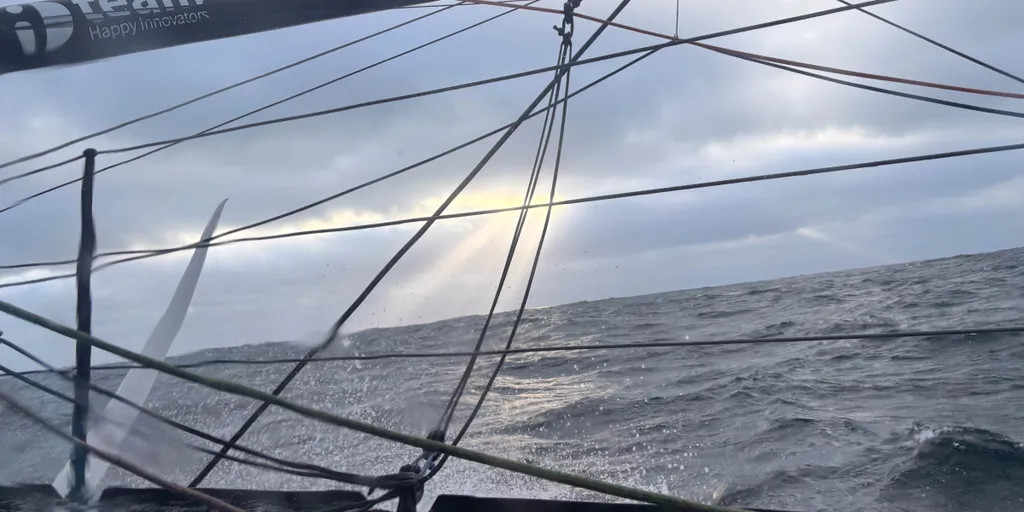
For the first time in the Vendée Arctique – Les Sables d’Olonne’s history, IMOCA yachts have crossed the Arctic Circle. Three editions of the race have come and gone; twice before, the fleet turned back before reaching 66° North. This year, all the pieces aligned.
The Arctic Circle remained an invisible frontier, a line that refused passage. Like mountaineers hunting Everest, sailors chasing polar latitudes learn the same hard lesson: conditions decide who gets through. The boats could be fast. The skippers could be sharp. The routes could be flawlessly plotted. But if the North Atlantic decides to lock the gate, nobody passes.
This time it did open, and the difference came down to a single decision made by race officials before the start. In previous years, competitors had to navigate around a single waypoint buried in the far north, a fixed point that forced all boats through a narrow corridor. This year, the race committee scrapped that approach. Instead of a waypoint, they drew a line: cross 66° North somewhere along its length. Pick your own path.
“It’s having a line to cross instead of a single point to round,” Christian Dumard, the race’s meteorological consultant, explained. “That opens up the game enormously. Each skipper can build a trajectory based on the conditions they want to find or avoid.”

The difference sounds small on paper. In practice, it transformed the puzzle. Skippers could now choose whether to push west, hunt a direct route or play the weather as it unfolded. In the Arctic, where meteorology writes the rules and enforces them ruthlessly, that flexibility changed everything.
The boundary had taunted the fleet for years, a symbolic frontier that separated the race’s ambition from its reach. Geography and weather had kept it at arm’s length. This time, the course design and a fortunate meeting of wind patterns allowed the IMOCA class to write a new chapter in their polar history. The Arctic Circle finally opened its doors, and the fleet sailed through.