For decades, sailing disputes have followed a familiar pattern: boats return to shore, crews lodge protests, and hours later—sometimes much later—the jury renders its verdict. This year’s Tour Voile Figaro Beneteau 3 series is changing that dynamic by introducing semi-direct arbitrage, a system that empowers on-water umpires to resolve rule violations instantly, right where they happen.
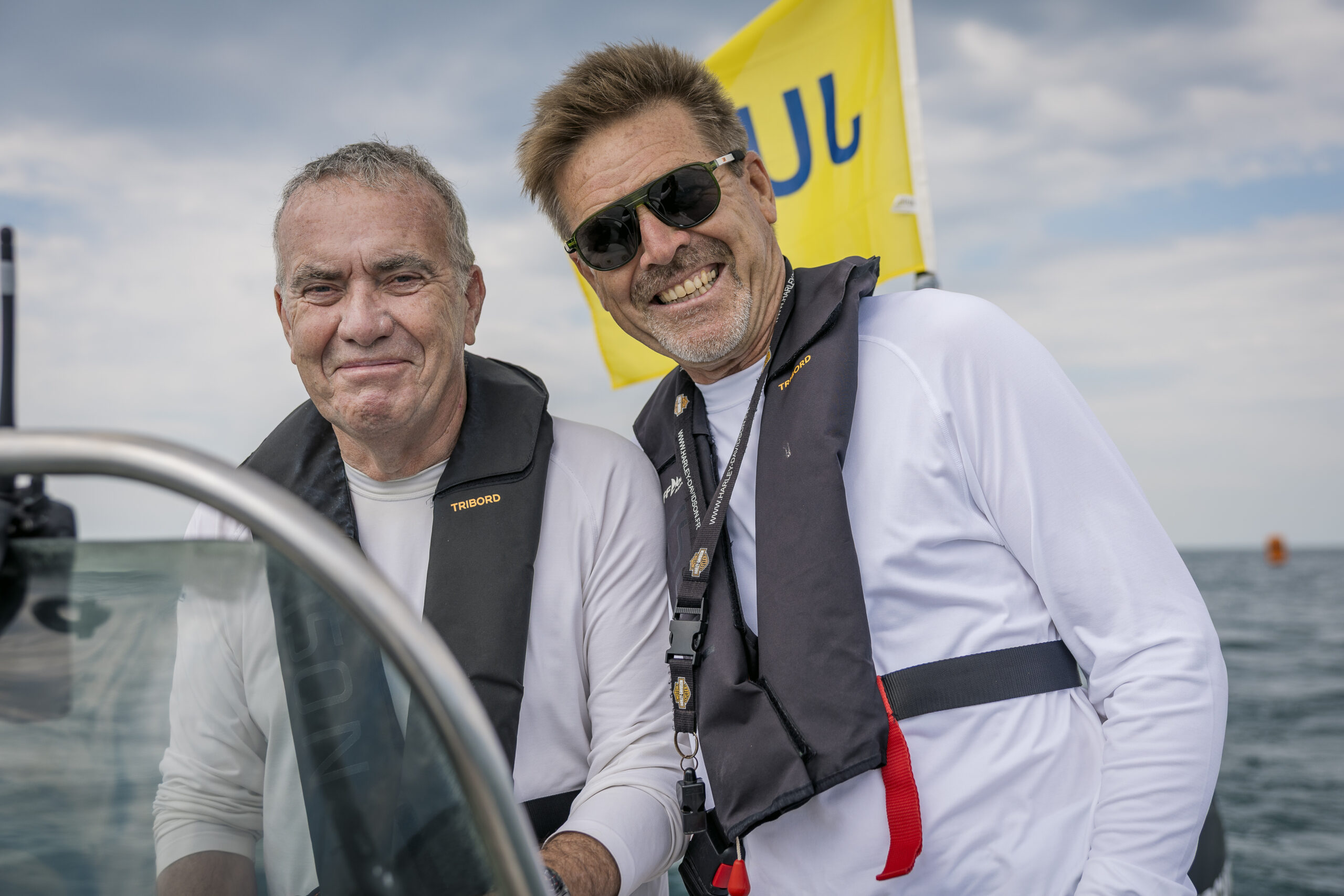
Two international-level judges now follow the fleet aboard a rigid inflatable, positioned to observe racing incidents as they unfold. Georges Priol, an international judge, and Thierry Poirey, a national judge and international umpire, watch for breaches of Chapter 2 rules—those governing interactions between boats. When a crew believes a rule has been broken, they hoist a red flag. The arbiters then make an immediate call: if an infraction is confirmed, a red flag signals a penalty, and the offending boat must execute a 360-degree penalty turn. A green-and-white flag indicates no violation occurred. If an incident falls outside their remit or involves a different category of complaint, the case reverts to traditional post-race examination ashore.
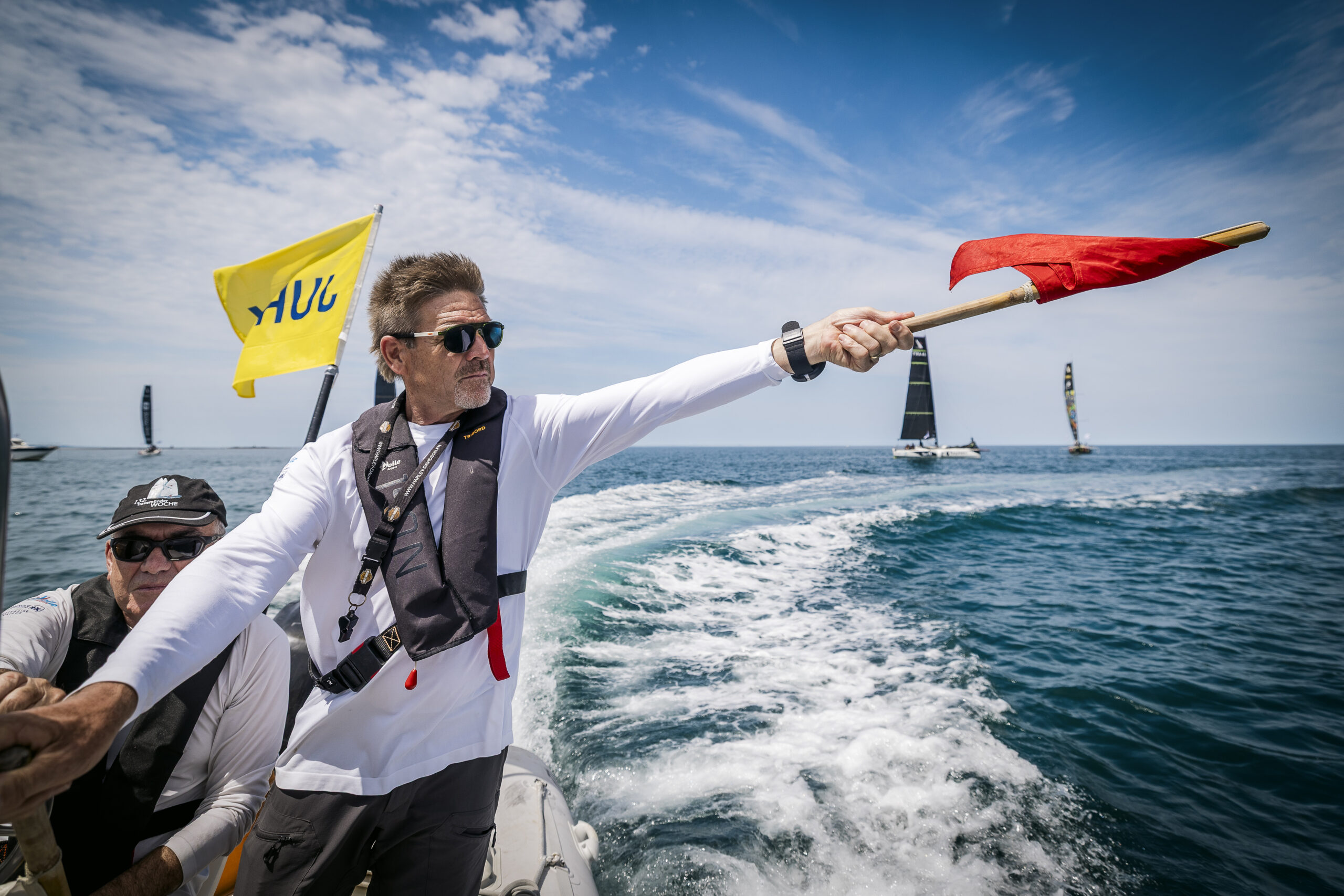
Borrowed from the Maxi Fleet
The system originated in the 1990s within the Maxi yacht community and represents a pragmatic middle ground. It differs sharply from full direct arbitrage—used in match racing and team racing, where every situation is judged on the spot—and from traditional arbitrage, where all disputes wait for shore-based review. “It’s a good balance,” Poirey explains. “In direct arbitrage, every case is treated on the water. Here, we only intervene in well-defined situations.”

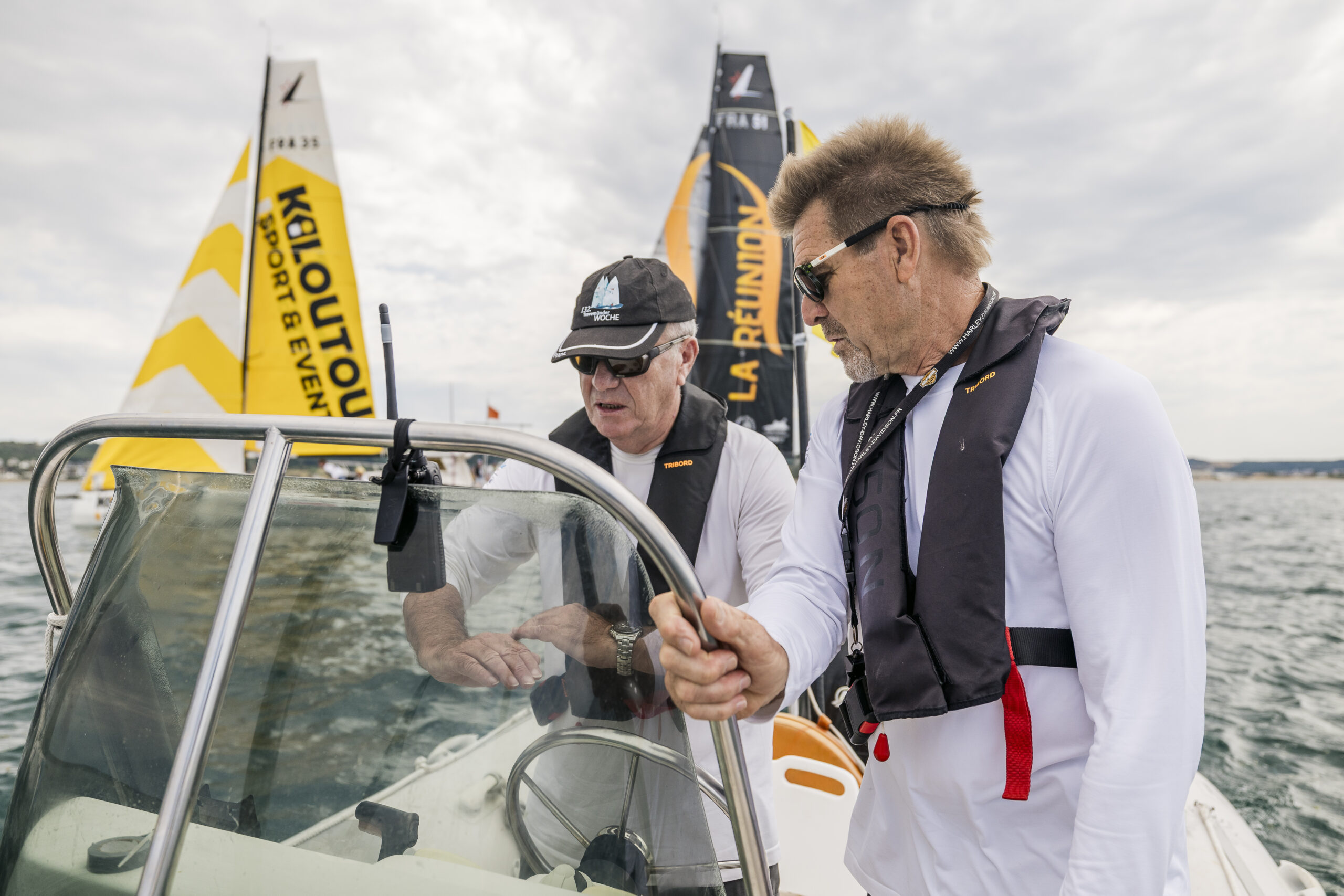
For the umpires themselves, the work demands intense focus and tactical positioning. “You need to be in the right spot to observe situations, much like a football referee hunting for the best angle,” Poirey notes. “What’s exciting is being completely immersed in the action.” This proximity also deepens their engagement with crews. Traditionally, umpires debrief with competitors ashore about incidents witnessed at sea, enriching their understanding of the rules and accelerating their development as helmsmen and tacticians.
Faster Verdicts, Clearer Racing
The practical gains are substantial. Post-race jury workload drops dramatically. “It’s a huge time saver,” Priol says. “If previously ten protests arrived in the evening, more than half are now resolved directly on the water. It streamlines the jury’s work enormously.” Competitors benefit equally. “They know immediately where they stand. They get a decision without waiting hours, which brings real clarity to the racing.”
With a competitive fleet in this edition, the system covers the vast majority of incidents effectively. “On a larger fleet, obviously you can’t be everywhere at once,” Priol acknowledges. “But in this format, it’s particularly efficient.” The change may seem subtle to spectators ashore, but it represents a quiet modernization of how Tour Voile regatta disputes are resolved—moving justice from the protest room to the race course itself.