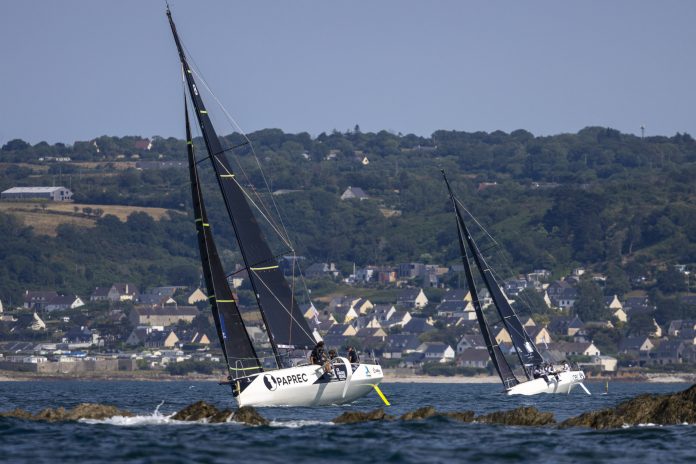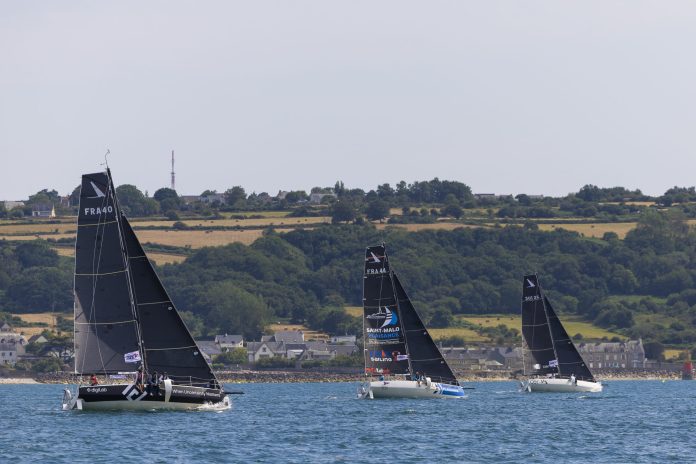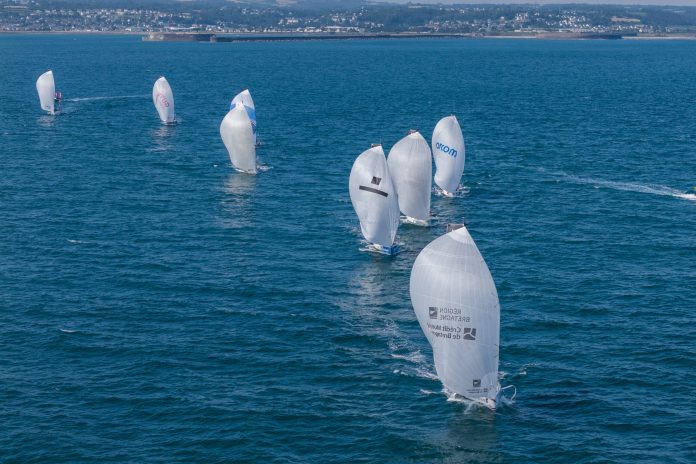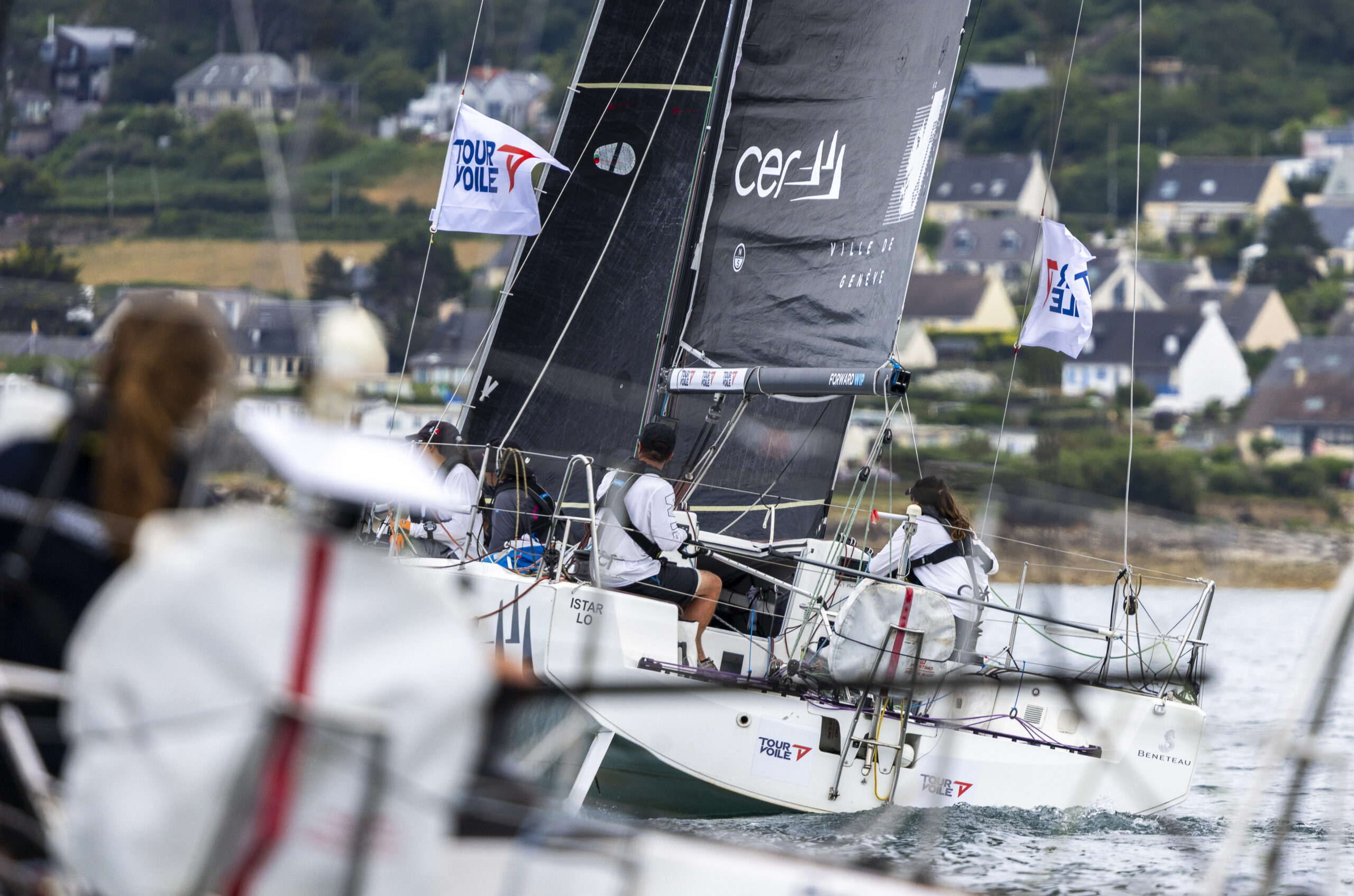
After two days of inshore racing around the Grand Prix de Cherbourg-en-Cotentin, the Tour Voile shifts into blue-water mode. This Sunday, the nine Figaro Beneteau 3 crews will leave the dock at 11 o’clock and set off at noon for the first offshore leg of the 47th edition, bound for Saint-Malo via a 226-nautical-mile course that threads past Needles Fairway near the western tip of the Isle of Wight.
The passage will consume roughly 28 to 30 hours of sailing time and marks a fundamental change in character for the race. The short, sharp tactical skirmishes of the coastal rounds give way to something else entirely—reading currents, plotting strategy, and managing effort across an extended night at sea. Crews will need new skills and mental resilience to handle the demands of extended offshore sailing.
Currents Will Rule the Day
Race director Yann Chateau laid out the key challenges. The first beat to windward should keep the fleet bunched together, he explained, because crews will have a helpful current pushing them east toward the English coast. But the two Channel crossings, while appearing straightforward on paper with a solid southwest wind forecast, will be decided by subtle choices—and mistakes.
“The details matter enormously,” Chateau said. Anticipating current effects early will be critical to shaping the right track; small tactical decisions could quickly compound into meaningful gaps between boats. These small choices could rapidly make the difference, he emphasized, noting how unforgiving offshore navigation becomes when every crew is operating at peak performance.

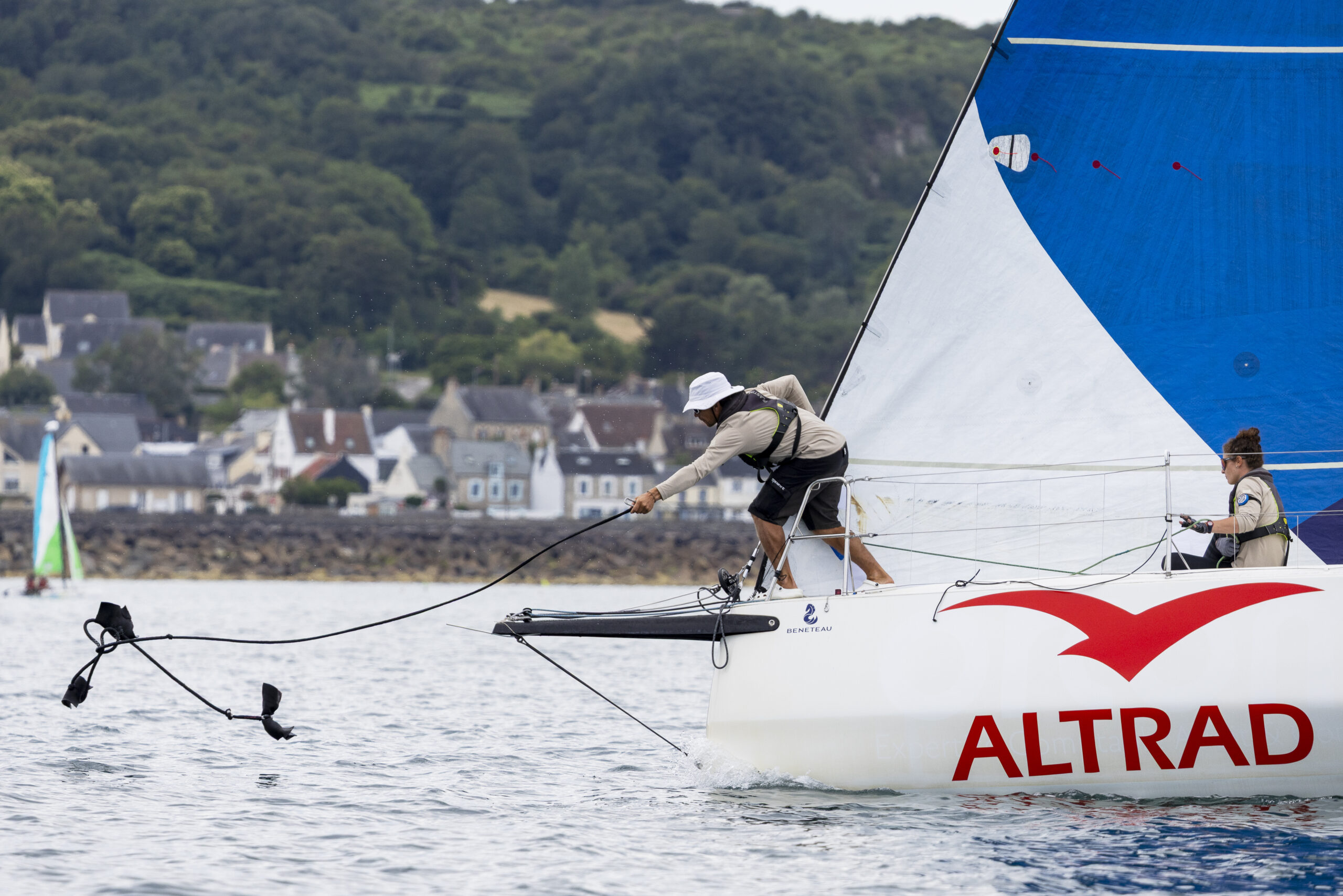
The transit through Raz Blanchard—a notorious tidal gate—will be another turning point. The fleet will pass through with the tide in their favour, but expect a wind shift and a drop in breeze once they clear it. This transition will force crews to adapt their sail trim and strategy on the fly, reshaping the competitive picture in real time.
From there, the complexity multiplies. The west coast of the Cotentin peninsula is studded with islands and rocky plateaus, offering numerous routing options and tactical choices. Chateau expects this stretch to deliver the most decision-making of the leg, where crews will face competing options based on wind, current, and boat handling priorities. The richness of tactical options here reflects what separates competent sailing from winning sailing.
The final 30 miles will be sailed in a large loop off Saint-Malo, where weak wind and a strong tide will remain in play until the finish. “Anything is possible right up to the end,” Chateau said, reflecting the unpredictability that defines offshore rallies where conditions and relative positioning can shift dramatically in the closing hours.




The consistency of the fleet over the first two inshore days—where competition was tight and margins were small—suggests the offshore leg will unfold in much the same fashion. “I expect the crews to stay in contact with each other for a long time,” Chateau predicted. “Only the finest tactical choices will gradually create separation.” That close racing will test not just boat handling but patience and nerve as well, with crews forced to make critical decisions in fatigue and uncertain conditions.