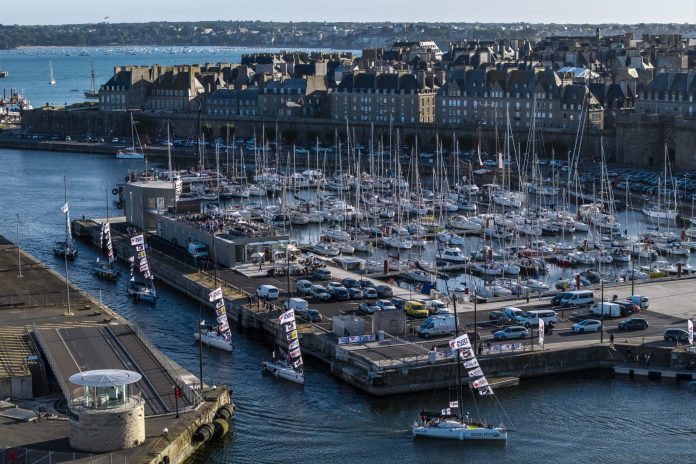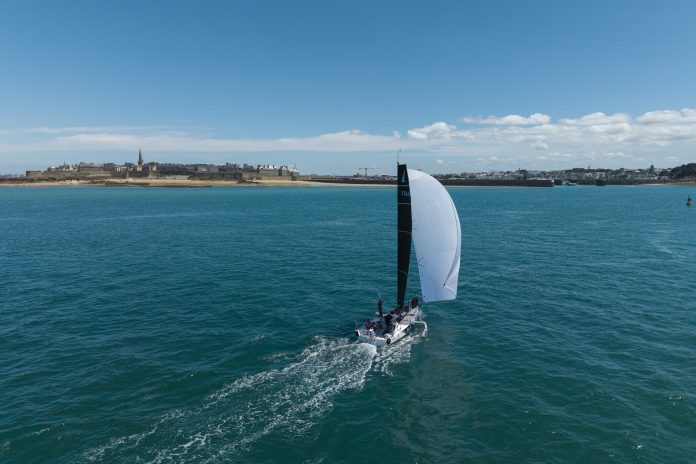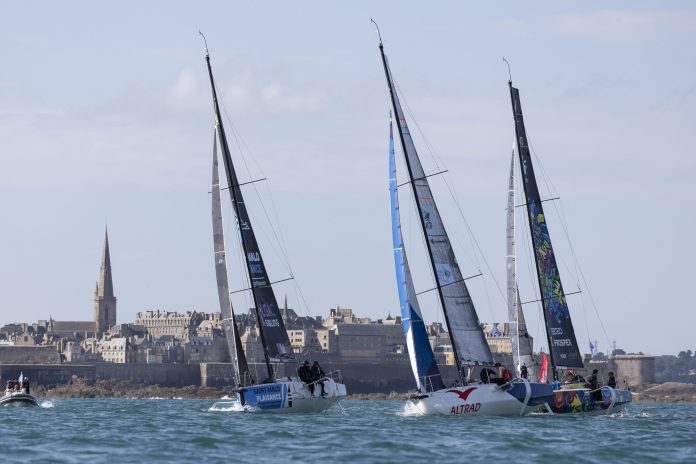
The second leg of the Tour Voile offshore racing series has become a study in tactical oscillation, with raw boat speed gradually surrendering to piloting precision and coastal cunning. After pushing hard out of Saint-Malo yesterday afternoon, the Figaro Beneteau 3 fleet spent the following hours navigating a long loop past Sercq and Granville before turning back toward the coast, where a 180-mile stage continues to shift in favour of those who can read the water.
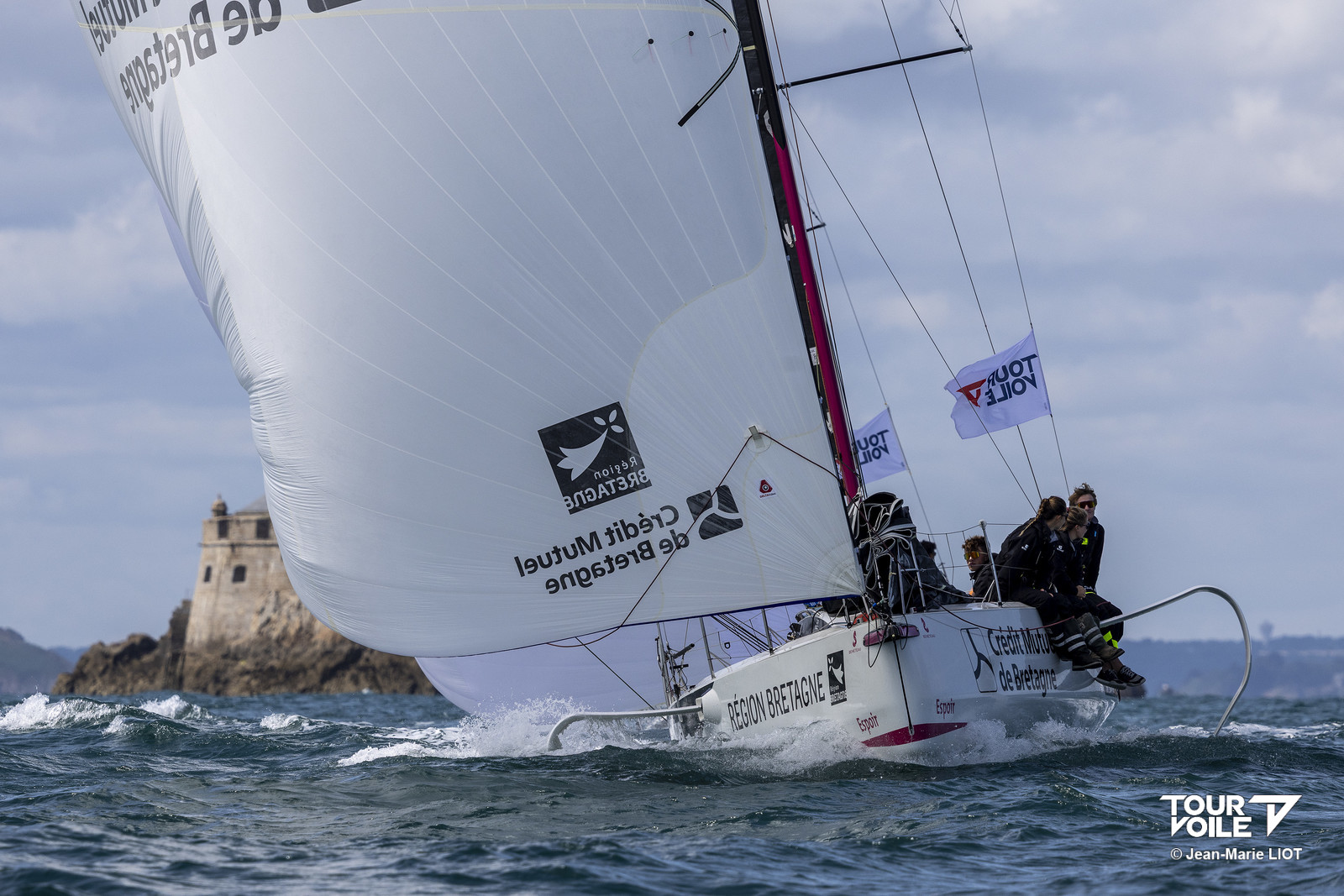
Dunkerque – Kiloutou held the early advantage, with skipper Arthur Meurisse and his crew first to round Men Mar. But Région Bretagne – CMB Espoir, helmed by Paul Loiseau, seized control as the race progressed, delivering what race director Yann Chateau described as a commanding display between Sercq and Granville.
Building a Dominant Lead Through Pure Pace
In winds around 20 knots, Région Bretagne – CMB Espoir constructed a lead of nearly two miles over their closest rivals through superior boat handling and speed alone. “They passed the northern crew at the first mark, then gained the advantage purely on their speed,” Chateau said. “Building nearly two miles in those conditions is relatively impressive.” The crew snatched sleep between manoeuvres, grabbing micro-naps before returning immediately to the grind.
Yet Meurisse remained confident despite the deficit. “They’ve got a bit of a lead, but we’re not going to let them sail off quietly. We’re going to keep attacking,” the Dunkerque skipper said in a video update. That belief may be justified—the race is far from decided.


Finesse Takes Over as Conditions Shift
The race’s character transformed entirely after the Videcoq mark. The long, fast downwind gave way to treacherous coastal navigation: counter-currents, shore effects, and the millimetre-precise trajectories that separate winners from the rest. Teams hunted for every tenth of a knot by threading narrow passages where jagged rocks loomed dangerously close. “We just did a beautiful rock-dodging sequence,” Meurisse recounted. “We grabbed some sleep as usual, but we stayed hard at it. I’m really happy with our line. There were some hairy passages with the rocky outcrops—we clenched a bit, but this is exactly what we love in Figaro Beneteau racing.”
The next critical juncture arrives at the Taureau mark, expected around 13:00 for the leaders. Strategic divergence is already emerging: some crews will hug the coast to minimise current effect, while others plot to break away and catch an anticipated rightward wind shift earlier. “This is where the choices become really interesting,” Chateau explained. “The whole question is how long to stay protected and when to go hunt for that wind swing. The earlier you catch it, the more advantage you can build.”
A final leg to Plérin awaits, with multiple gybes to negotiate. In Figaro Beneteau racing, the closing miles have a habit of reshuffling the deck entirely.