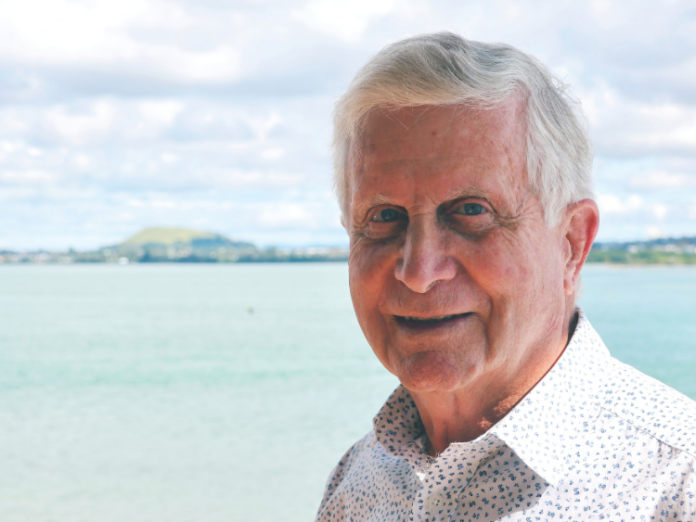
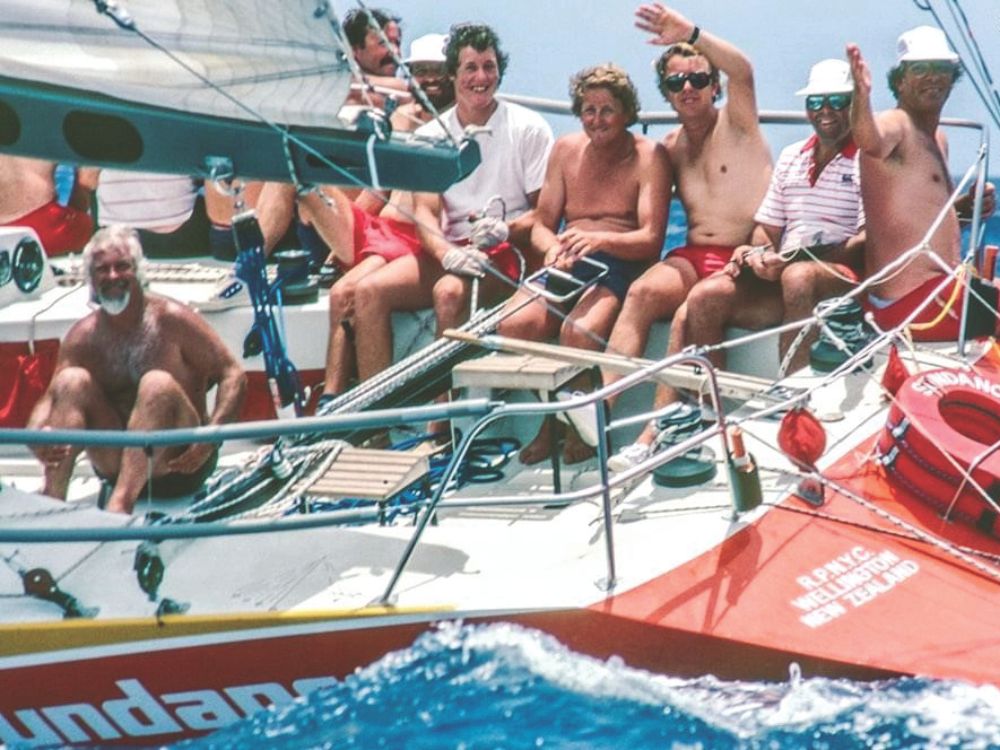
In 1980, a relatively unknown Wellington sailor, Richard Macalister, then aged 21, was chosen to be part of Sir Peter Blake’s Ceramco crew for the 1981-82 Whitbread Around the World Race. A few years later, Macalister established what’s now the highly successful marine business, Kiwi Yachting, which has since expanded internationally. Impressively, he’s also found time to do a lot of yacht racing, and this is his story.
Macalister’s story should begin with his grandfather, Sir Robert Lachlan Macalister, who bought land in Blackwood Bay, Queen Charlotte Sound, in the Marlborough Sounds back in 1925. Born in 1957 in Wellington, Macalister grew up in Blackwood Bay and was mucking about in boats from an early age.
“It was a bit like Swallows and Amazons growing up, and during the holidays, I would be in or around boats the whole time. We had total freedom.”
By the time he was 18, Macalister was taking his father’s Stewart 39 Nirvana out cruising with his mates, and had already completed two Pacific voyages.

Fast-forward a couple of years, and Macalister had nearly finished a Bachelor of Science degree at Wellington University. He had intended to enter the mussel-farming industry until an advertisement changed everything.
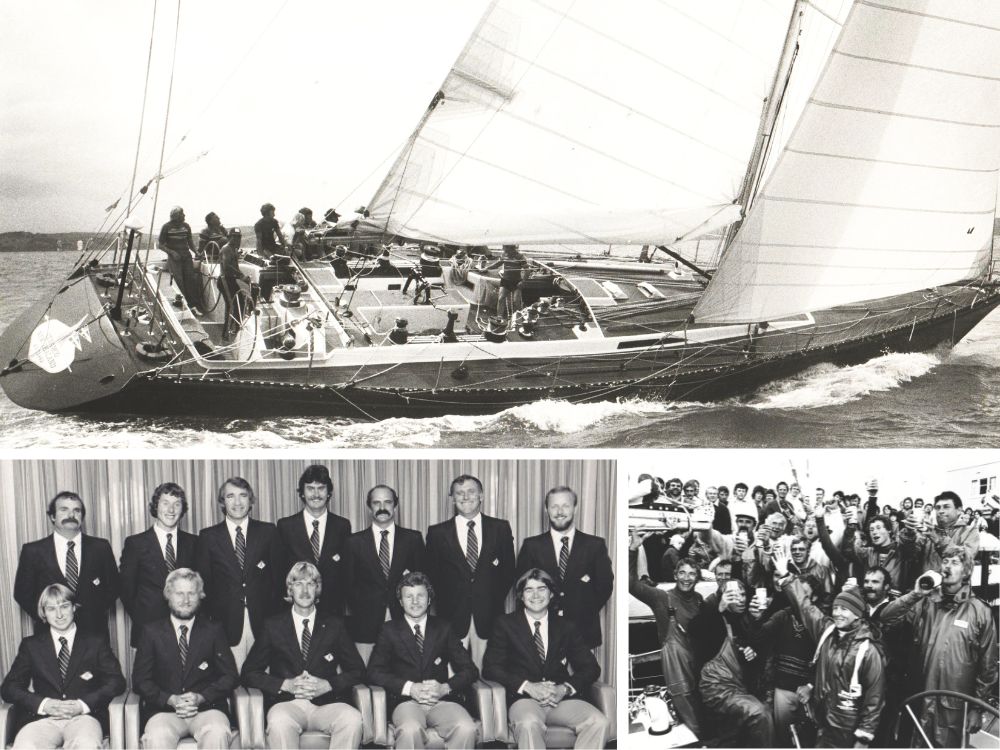
The late Peter Blake (later Sir Peter) had persuaded the late Sir Tom Clark to fund New Zealand’s first attempt at the then Whitbread Around the World Race.
“I was in a boat coming back to Queen Charlotte after a research project on mussels, and I heard Peter say he was looking for crew. I thought, ‘I’ll have a go.’”
Cheekily, with 240 other applicants, Macalister applied, was granted an interview, made the shortlist, and was eventually
selected. At 21, Macalister finished university with his BSc Honours and went straight into the Ceramco campaign, then the most high-profile yachting campaign this country had produced.

The Bruce Farr-designed Ceramco’s performance in the 1981-82 Whitbread, especially in the Southern Ocean, is well documented and gave Macalister a serious taste for offshore sailing. As one of four key heavy-weather helmsmen on board Ceramco, Macalister found the experience both terrifying and exhilarating.
“I wonder now, where did I develop that knack for heavy weather sailing? It came from mucking about in boats; it was a feeling. The key to steering Ceramco was keeping the boat under the rig.”
Ceramco’s mast failure in the first leg cost her any chance of a handicap win, and Blake was more than eager for another try. Macalister jumped at the chance to join Blake for the 1985-6 Whitbread, but changed his mind when Clarke and Blake turned to Ron Holland for what became Lion New Zealand. Sensing Holland’s heavier displacement approach was flawed, Macalister left the campaign to become a professional sailor.
Another member of Ceramco’s crew was Wellingtonian Geoff Stagg, who, after the race, joined the Farr team. Apart from selling Farr boats, Stagg helped commission and race them in key regattas. Long-time friends, over the next 15 years, Macalister joined Stagg for many of those races.
“We did miles and miles together, all the important regattas.”
Meantime, lawn mower company Masport had acquired several marine businesses, including Barient (winches) and Gibb (hardware). In 1985, Peter Walker, a long-time mate of Farr’s, recommended Macalister as sales manager for Masport’s marine division.
A few years later, after Ron Brierley had purchased Masport, Macalister founded Kiwi Yachting and obtained Masport’s New Zealand distribution rights for Barient, Barlow, and Gibb. Within a couple of years, Macalister had also added Lewmar winches and B&G electronics to the range.
Interestingly, Macalister’s first major customer was Blake, who purchased all the winches, hydraulics, and hardware for his Steinlager I and II campaigns from Kiwi Yachting. Macalister quickly became the preferred supplier for new boats from the Farr office.
In addition to the wholesale business, Macalister regularly oversaw the construction of new racing yachts in New Zealand at that time.
“When a new boat was being built, say at Cookson’s, I’d go down once a week, check progress, report back to the Farr office, and approve the next progress payment.”
Macalister always made time for sailing. Besides sailing with Stagg, from 1988 to 2003, he raced as Ed Baird’s tactician on the world match-racing circuit.
“I think we finished on the podium every year I sailed with Ed.” A natural communicator, Macalister believes that much of running a business is about engaging with people and building and maintaining relationships. His first employee, the late Russell Carter, was with Macalister for 31 years.
“He was so capable that I could go sailing for weeks at a time and leave the company safe in his hands.”
Another key employee is Macalister’s wife, Isabel (nee Ray), who joined the business in 1984.
“I’ve been very lucky that Isabel has embraced everything I do, wanted to share in it, and never stopped me from doing anything.”
Fast-forward to 2008, when Dean Barker acquired a 25% shareholding in the company, which later increased to 50%.
While the original plan was for Macalister to sell out completely after 10 years, 18 years later, with Barker busy on the sailing circuit, Macalister continues managing the company.
Around the same time, Macalister recognised the need for Kiwi Yachting to expand into manufacturing as well as distribution.
“As a distributor, you’re at the whim of other companies, who may get sold or bought out. Strategically, I decided we needed to
own some of our own brands.”
To that end, in 2009, Kiwi Yachting bought the Swedish electronics company Nexus. Unfortunately, the purchase coincided with the fallout from the 2008 recession, and it took some months to restructure the company to reverse its haemorrhaging cash flow.
Macalister transformed the company into a highly successful and profitable operation within 18 months. Others noticed the turnaround, and in 2012, Garmin made Kiwi Yachting’s management an offer they couldn’t refuse.
“That was the start of Kiwi Yachting going from a distribution company to dipping its feet into manufacturing.”
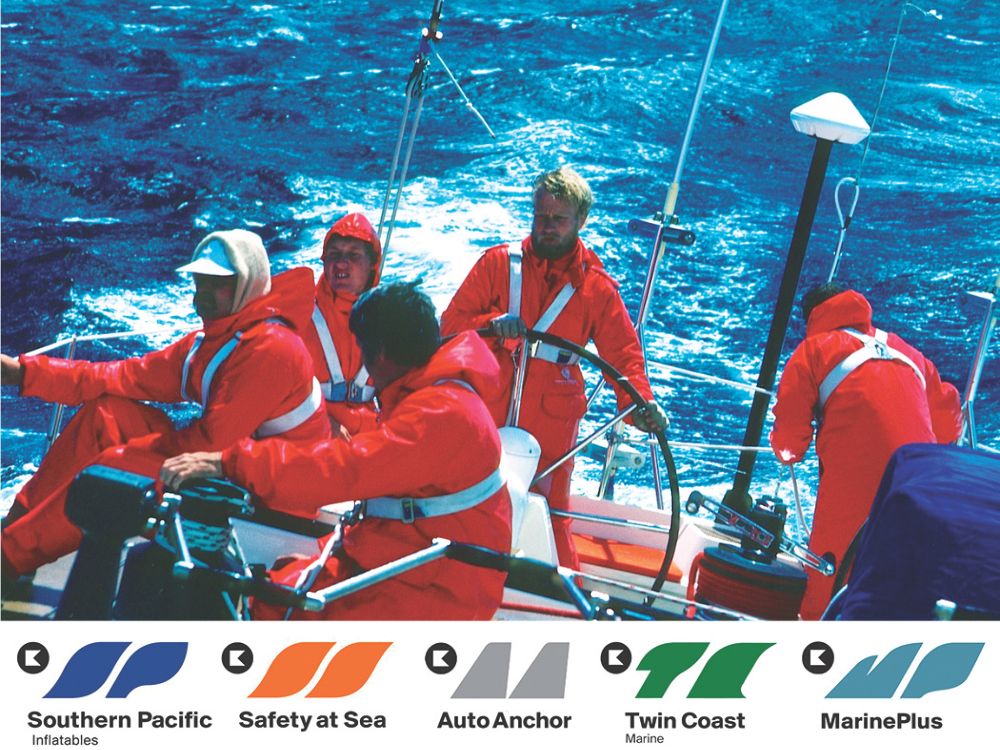
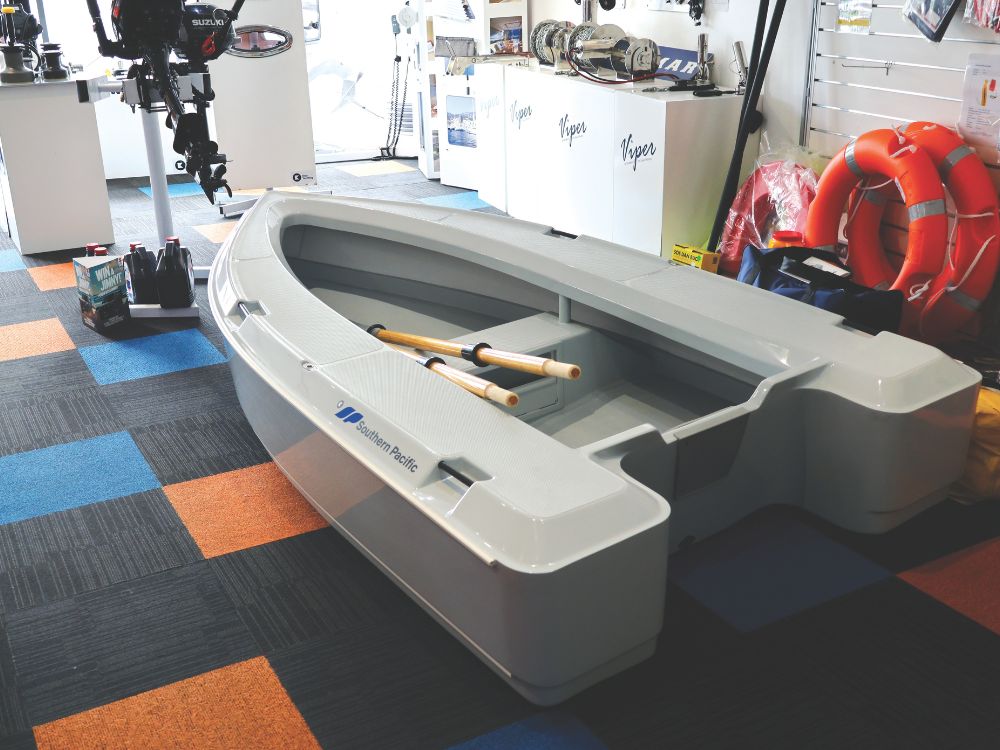
Other Kiwi Yachting company purchases have been keepers. AutoAnchor was purchased in 2013, along with Southern Pacific Inflatables (SPI). They also bought Marine Plus, an Australian distribution company, in 2016, giving them a wholesale base across the Tasman.
“We were aware that many NZ companies go over to Australia and just get flamed. We didn’t change anything for two years, then made some adjustments in line with our thinking, and now it’s going extremely well.”
One key difference when doing business in Australia is that it is much more litigious, and deals done on a handshake cannot be relied upon – contracts and proper paperwork are essential.
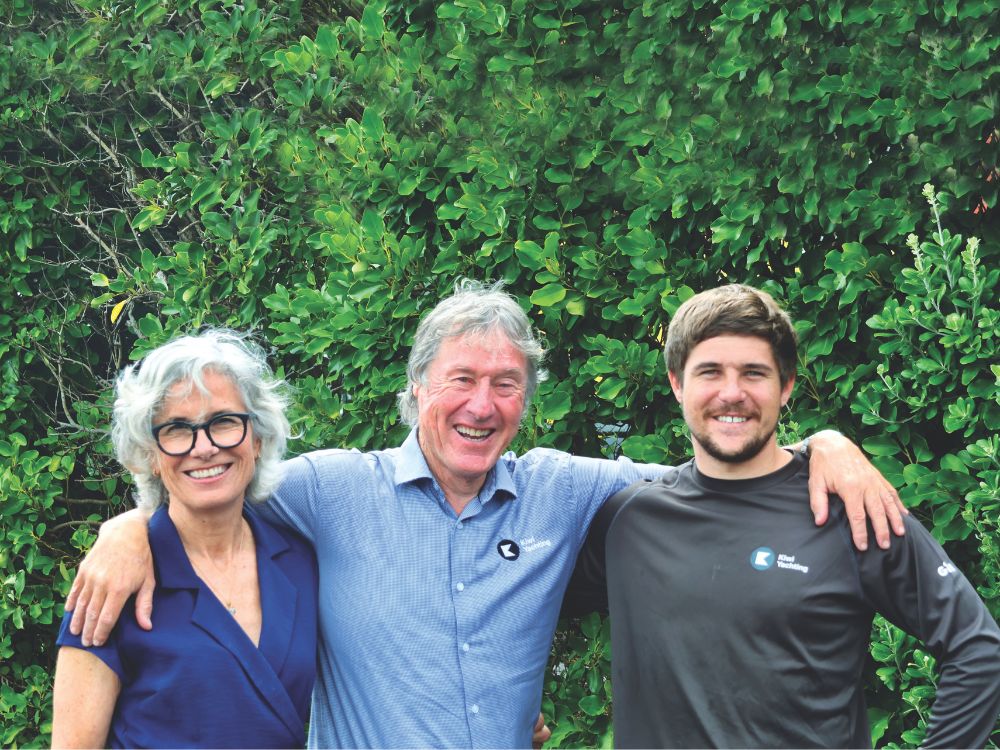
Kiwi Yachting is a family business. Macalister’s daughter Monique is now the General Manager of the Australian Marine Plus division, while son Stuart works in sales and service in the New Zealand operation. The couple’s other son, Robert, is a builder and, on the day this writer visited Kiwi Yachting, was busy building a 200m2 factory extension.
Their other Auckland operation is the SPI boatbuilding in Kumeu. Besides the inflatables SPI is known for, it now builds aluminium and GRP boats. SPI is also currently setting up a boatbuilding operation in Indonesia.
“It’s a shame we couldn’t do that here (NZ), but we have to be competitive in overseas markets, and we can’t do that if operating solely in New Zealand.”
Looking back on his career, Macalister’s advice for youngsters dreaming of setting up their own business is simple: do it when you’re young.
“Give it a go, see if you can make it. But do it before you get married and have children, because, like it or not, life changes then.”
Wise words from someone who has been there, done that.
Macalister still recalls the advice Blake gave him early in the Ceramco campaign.
“Peter said, ‘The world’s your oyster because you have choices – go sailing or use your degree.’ And I look back now at the professional sailors I sailed with then, who are still on the professional circuit and probably have been through two or three marriages. If I hadn’t gone out on my own, that could have been me.”
Conscious of his good fortune, Macalister is a firm believer in giving back to the industry. He served as Commodore of the Royal Akarana Yacht Club, initiating the redevelopment of its clubhouse. He has also been President of the New Zealand Marine, where his major focus was on revamping the apprenticeship scheme.
Macalister’s certainly done some miles sailing; 11 Sydney-Hobarts, six Admirals Cups, a dozen One Ton Cups, numerous Clipper and Kenwood Cups, 15 years with Ed Baird on the World Match Racing circuit and much more.
With all those nautical miles under his belt, Macalister is a huge believer that the single most important piece of safety equipment is a person’s harness and safety tether.
“If you can stay with your boat, you’re probably going to be OK. If you fall overboard and are lost, then you’re going to have a problem.”
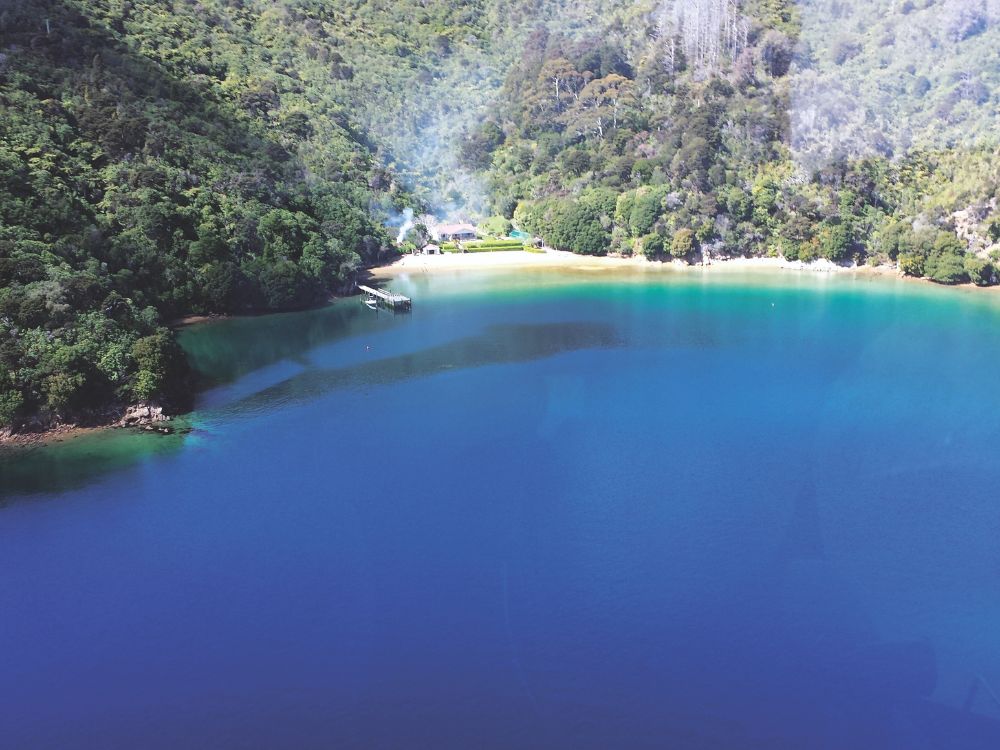
This story started in Blackwood Bay, which is a nice spot to end it. The Macalister family has kept a house there for four generations. Like most family estates, there have been family problems. Those have been sorted, and a trust Macalister set up now owns it.
“The property was something I felt needed to be preserved and stay in the family for another 100 years. However, it needed a major investment, or it would have fallen down and been lost.”
The family have regular breaks there, where Macalister gets back to his roots, simply mucking about in boats.
“I’ve been very privileged,” he said more than once during our time together.
Proof once again of the old adage: find your passion, build a career from it, and you’ll never work a day in your life. BNZ