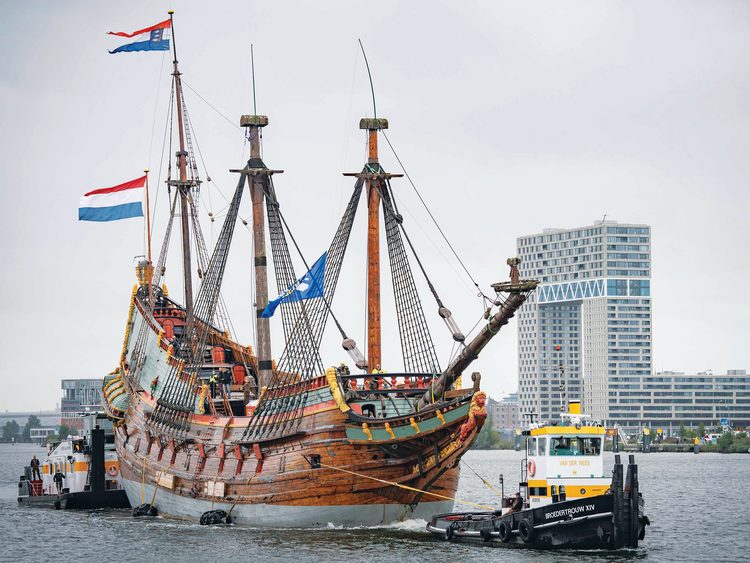
The Batavia, the full-scale reconstruction of a 1628 Dutch East India Company vessel, arrived at Damen Shiprepair Amsterdam on September 19 after a six-hour tow by two Koninklijke Van der Wees tugs. The 56.6-metre ship travelled afloat on her own hull, with masts standing, and will be placed in a specially engineered cradle as part of her permanent relocation to Museum Batavialand in Lelystad.
A fragile historic vessel
Because the 31-year-old timber hull is too fragile for transport on a pontoon, Batavia was towed in the water with her full rig intact. Weather conditions were tightly monitored to minimise hull movement. Guns, much of the ballast, and other weight were removed, while temporary steel supports were installed to strengthen the structure before dry-docking.
Precision dry-docking
The operation is the result of 14 months of planning. A 39.7-metre cradle, weighing more than 100 tonnes, was assembled on a submerged pontoon in Dry Dock 4. After two tugs positioned Batavia above it, the dock was drained, allowing the ship to settle onto its supports under controlled conditions.
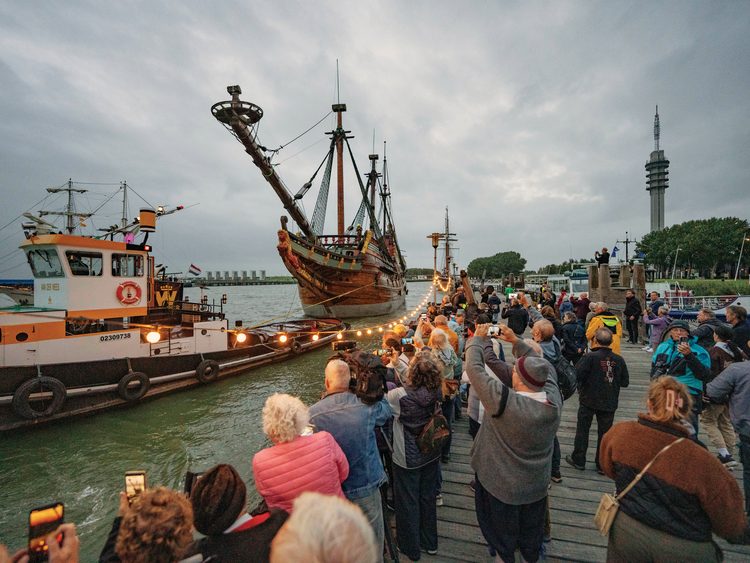
Once dry, remaining gaps between hull and cradle are filled with timber. The ship will then be returned to the quay for final ballast removal before departing Amsterdam at a weight of nearly 650 tonnes.

Collaboration across specialists
The cradle and transport system required 10 months of engineering. FaraFlash, Q3 Heavy Lift, Kuperus & Gardenier, Niron Staal, and Trans Global Projects each contributed specialist expertise in design, verification, fabrication, logistics, risk management, and permitting.
According to project partners, the move combines complex engineering with the preservation of Dutch maritime heritage. Batavia was scheduled to return to Lelystad on October 1 and be moved ashore at Museum Batavialand on October 2 as part of the museum’s redevelopment programme.