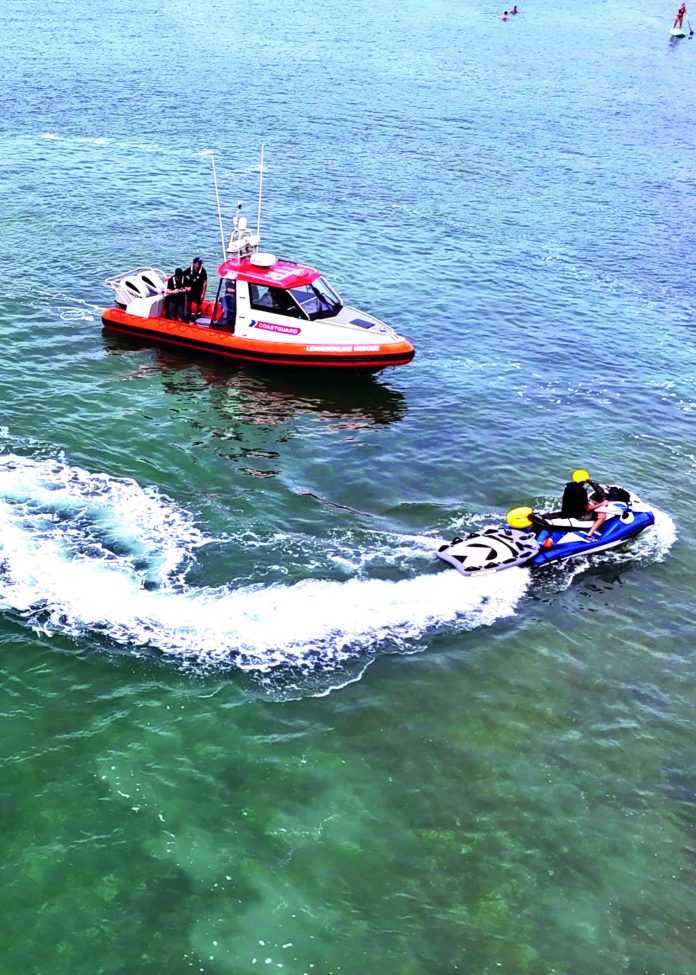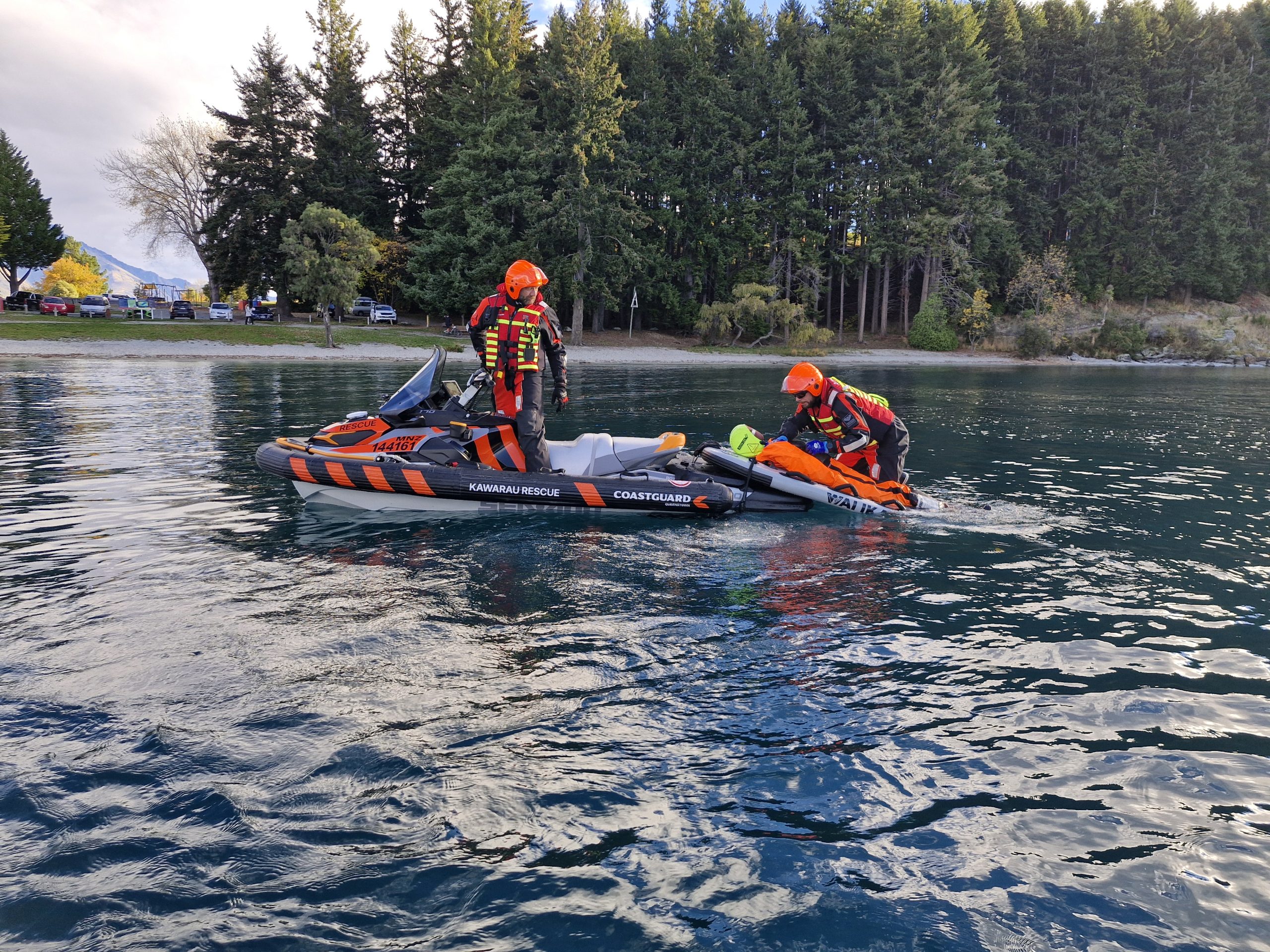
The rescue watercraft joins the unit’s existing rescue vessel, Queenstown Rescue, adding an agile option for the shallow water and tight shoreline that larger vessels can struggle to reach quickly. It gives Coastguard Queenstown another way to respond to time-critical incidents, such as swimmers in distress or people in trouble close to shore.
Coastguard Queenstown responds to several callouts each year, as the region’s lakes and rivers are heavily used, and incidents can turn serious quickly. The rescue watercraft adds flexibility for local search and rescue and supports Coastguard Queenstown’s work with key local partners, including Queenstown Airport, and its coverage of water-based events in the region.
“This new capability means we can get to people faster, especially in the spots our larger rescue boat just can’t reach quickly, close to shore, in shallow water, or along the rockier parts of the lake. It’s another tool that helps our volunteers respond when time really matters,” says Phil Blakely, President of Coastguard Queenstown.
The unit is starting with two qualified rescue watercraft operators, with three more expected to complete training by the end of the year. Becoming a qualified operator involves advanced handling training in rough water, working with specialist gear such as drysuits, rescue sleds and helmet communications. It also involves training alongside search and rescue partners including New Zealand Police and LandSAR, as part of nationally consistent standards applied across all Coastguard units.
”Coastguard’s rescue watercraft capability on Lake Whakatipu is a welcome addition to the search and rescue resources available in the region. It gives responders another fast, agile option for reaching people in areas that can be hard to access quickly and reinforces the strong multi-agency relationship Police already has with Coastguard here,” says Senior Sergeant John Fookes, Queenstown Police Search and Rescue Coordinator.
In its initial phase the rescue watercraft will operate on Lake Whakatipu, with support to Lakes Wanaka, Hawea, Twizel, and Clyde, further work is being carried out to expand these areas to moving water such as the Kawarau river, and some coastal areas around Riverton.
The addition follows similar rescue watercraft rollouts at Coastguard Titirangi on the Manukau Harbour and Coastguard West Coast on the Grey River Bar, as Coastguard continues to build rescue watercraft capability in regions around the country where fast, agile access can make the difference.
“Coastguard is a volunteer-powered charity, and this capability only exists because of the time our local volunteers have put into training. We’re proud of what they’ve achieved to get us here,” Blakely says.
A donation from the Hugo Trust to Coastguard Queenstown, made in memory of Rick Murrell, went towards the rescue watercraft.
On Sunday 29 November, Coastguard Queenstown will open the base to the public for a community open day from 10am, giving locals and visitors the chance to see the rescue watercraft up close and meet the volunteers who operate it.
Ahead of the launch, the rescue watercraft will also take part in the region’s Search and Rescue Exercise (SAREX) on 21 November, giving crews a further chance to put the capability through its paces.
Coastguard Queenstown would like to recognise all the support and assistance Coastguard national support office have given the unit in getting this vital new asset operational, as the rescue watercraft program is relatively new in the organisation there has been a lot of work setting the new requirements and operational documents.